



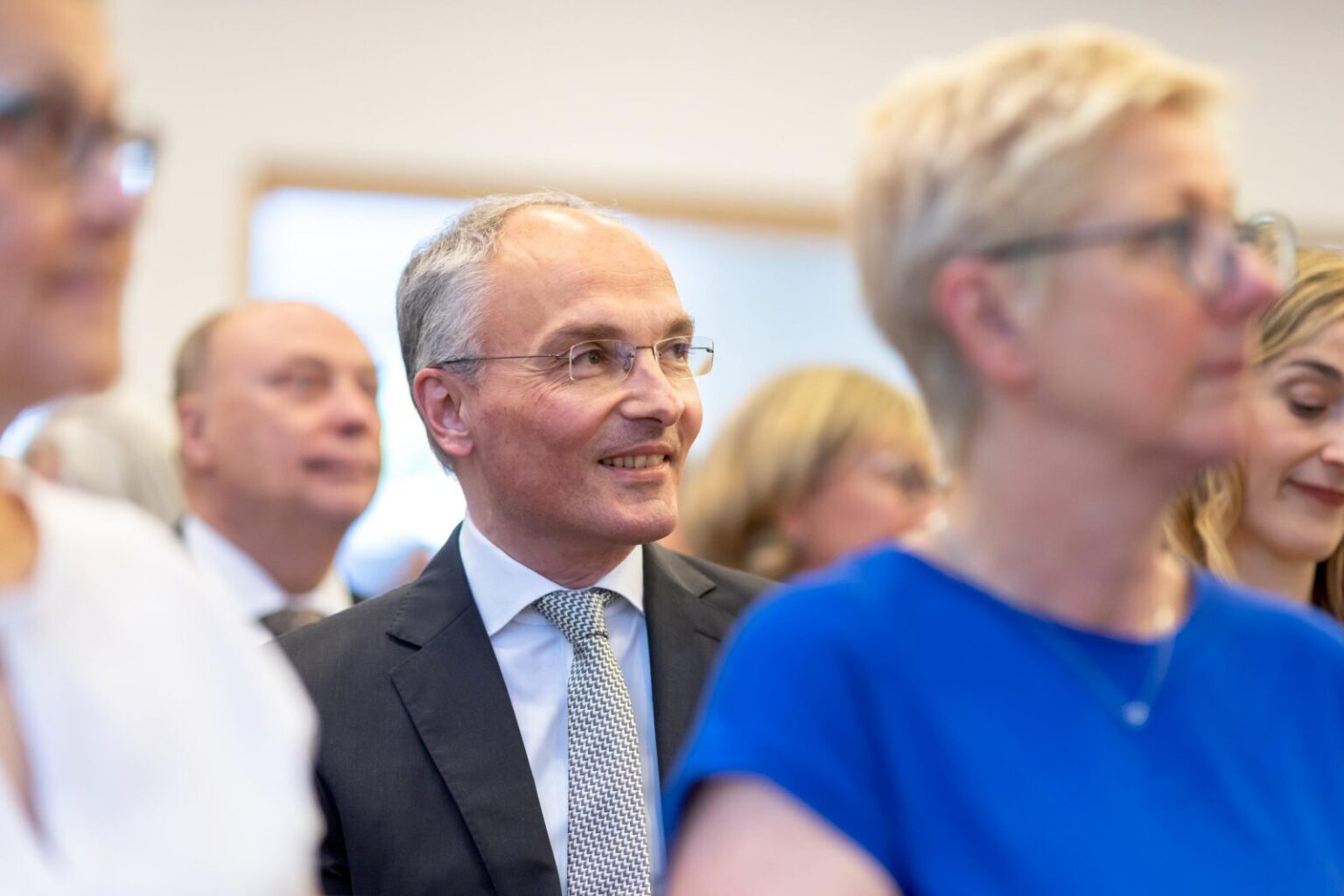
Not power, but love and closeness to others: In the first interview, the Chief Apostle Helper shows how he thinks, feels – and believes.
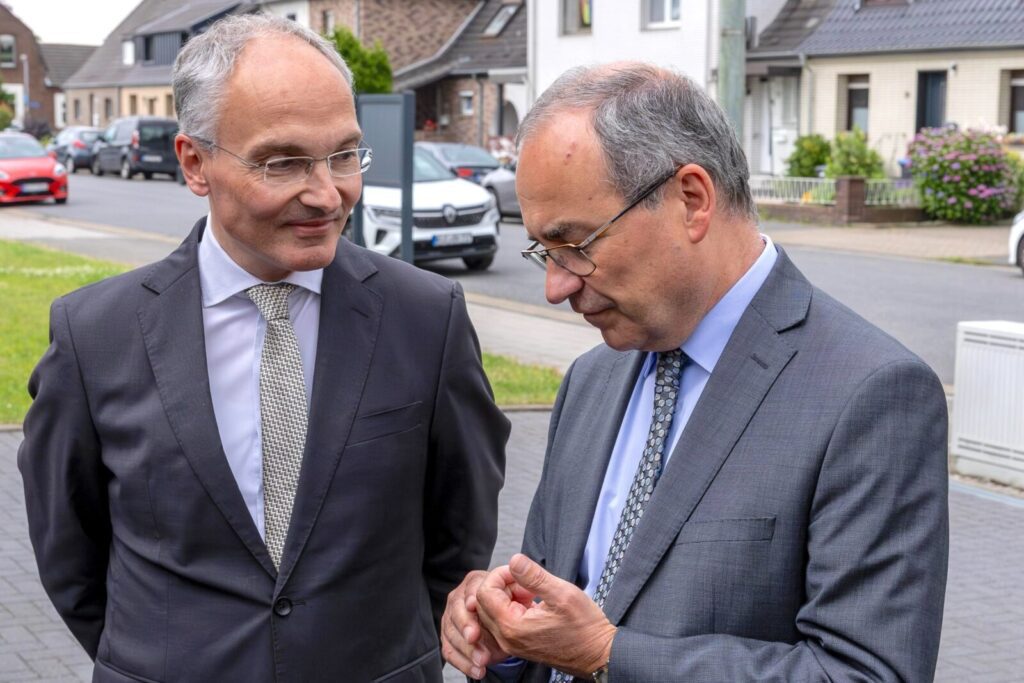
Since Yesterday it is official! With the appointment of Helge Mutschler as Chief Apostle Helper, the New Apostolic Church has a designated successor to Chief Apostle Jean-Luc Schneider. There’s still a good way to go before his ordination on Pentecost 2026 – time to get to know the worldwide Church. And time for the worldwide congregation to get to know him as well. Prior to this, he has already answered first questions in an interview with the Head of Communications of the New Apostolic Church International – openly, honestly and with an audible heartbeat.
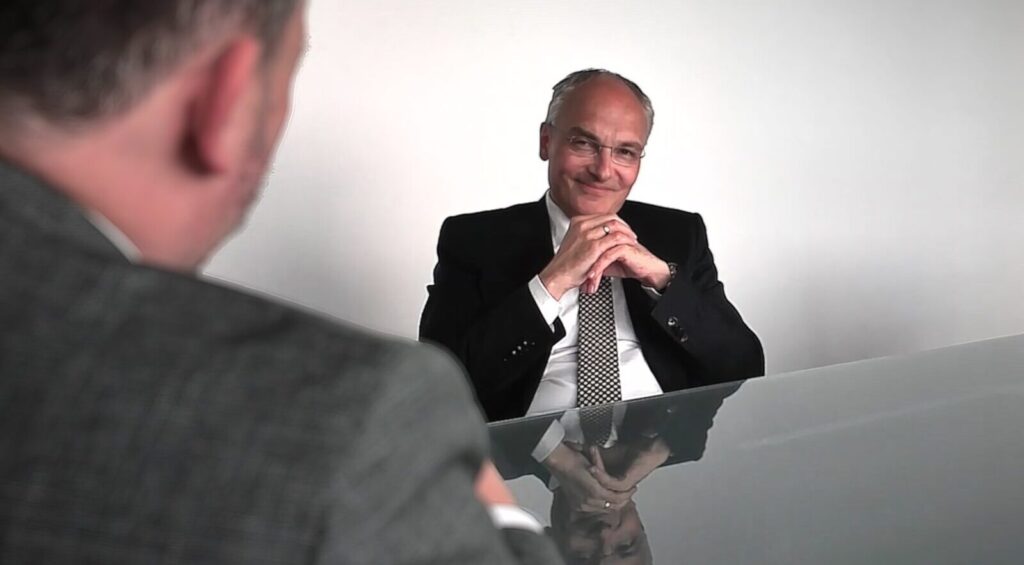
Dear Apostle, a few numbers to start with. You are the 875th Apostle of the New Apostolic Church and in about one year you will be ordained as the tenth Chief Apostle. At that time, you will also have said “yes” to a spiritual ministry or task ten times. Can you still remember your first “yes”?
Well… when I was to become a sub-deacon, I knew about it. Back then, in autumn 1994, the district elder visited me in my parents’ living room in Freudenstadt. I knew that I was going to move to Hanover to study shortly afterwards. That’s why I told him “Hans, I’m on the point of going to Hanover to study, it doesn’t make any sense to take up a ministry here.” I can still remember his reaction very well. He proclaimed loudly: «Ministry is Ministry». (laughs). That may sound a bit special from today’s perspective, but I have to say that broke the resistance – not because of the words, but I felt that there was something big behind it and that a “No” was now impossible. Regarding the other levels of ministry, the step from deacon to priest was very big for me and I had to think about it for a while. I had already felt my “yes” from the beginning, but I needed time. Even more time was needed when it came to becoming an apostle. Even though I trusted God’s call, the whole thing was not so easy for me. I had a job that I loved and becoming an apostle changes your whole life. But this “yes”, combined with the vow of faithfullness to Jesus Christ and the Chief Apostle, was something I felt very deeply and gave it consciously.
Oh well… and now with the questions about the function of the Chief Apostle Helper… (short pause). For me, I immediately felt inside: This thing is so big. But if the Chief Apostle comes to me with this question, this comes from God. He has prayed for that. I have no other way than to put all my trust into God. And so I accept it… I accept this call with a very clear inner “yes” based on faith and trust in God.
Over the last 50 years, our church has kept moving. Which good old tradition is close to your heart – and which development has been particularly significant for you?
Pastoral care! Pastoral care was a pillar of our church. Such a beautiful tradition. And I can well imagine that this will once again take centre stage. It’s about building relationships, but also about maintaining relationships. I’d love for that to happen… to awaken a «passion for pastoral care”. Because it can also be a wonderful experience for all ministers. Pastoral care unites. And where there is connectedness, that’s where the comfort and joy of heaven begin.
Regarding development, I am remembering Chief Apostle Urwyler and personal responsibility. I am very happy about that. I am pleased that it is becoming more and more possible to talk about faith without fear. Talking about faith without bias and eye-to-eye has so much value. I no longer feel the pressure or expectation of how you have to be or how you have to think, but more acceptance and tolerance – permission to be, and I think that’s a wonderful development.
For some it’s too fast, for others too slow. Some ask: “Is this still my church?” Others: “Can it ever become my home?” So, who can you do right, who should you do right?
For me, it’s not about „doing right“ to somebody. That is not my job or the job of the apostolate. It’s about truth and clarity. And there is truth… What is truth? Jesus Christ.
Around this truth there is diversity and a wide variety of perspectives.
Imagine a colorful field of flowers—that’s how varied a community can be.
And how wonderful it is when we can say: I see you, and I respect you, even if you’re different.
Because I am also different from you. And I also need the other person to say from their perspective: I appreciate you, Helge, in your difference. That’s good for me too.
Speaking of unity in diversity: People are often enthusiastic about diversity in other countries, but have problems with it at home. How can it work?
As already mentioned: I am absolutely a fan of the “colourful flower field”. But diversity only works through dialogue. Dialogue is about moving together through differences without wanting to remove them. Dialogue includes: I value the otherness of others.
Love for God and our neighbour as well as our shared faith and our principles of faith, the awaited return of Christ, the apostle ministry and so on… all contribute to unity. That unites us.
And if we remain in good communication, diversity can succeed in this unity.
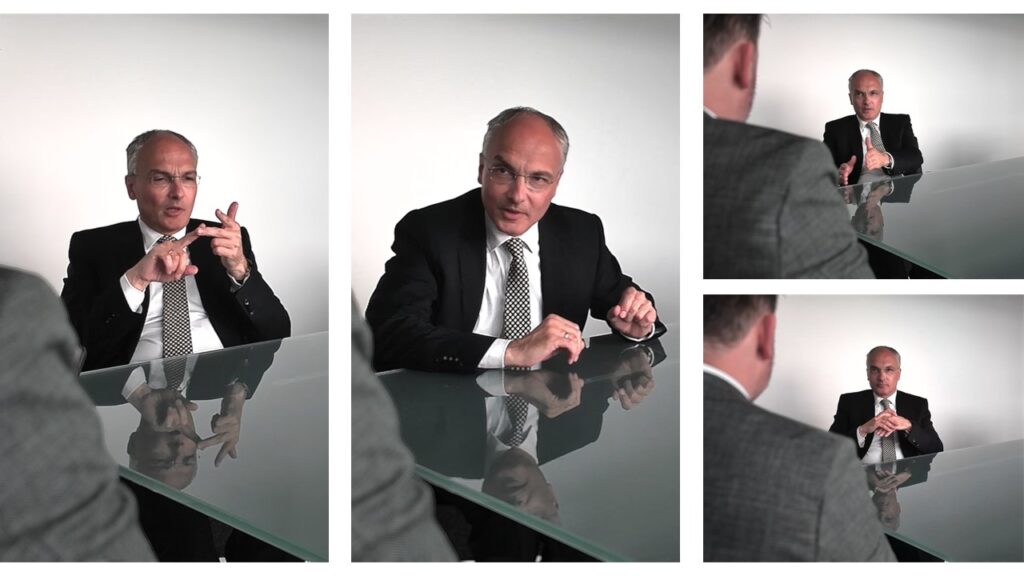
Were there situations in which you distanced yourself emotionally from God? How did you “find your way back”?
Yes, I have definitely experienced these situations. In a difficult phase of my life, I distanced myself from God and blamed him. This went on for a while and then something wonderful happened. I felt that this God, from whom I had turned away, was staying with me. I thought I was already very strong and stubborn. But he was even more stubborn. (laughs) This God doesn’t move away, he remains faithful in my life. And when I realized that, it happened quite quickly and the day came when I turned to him completely again, stood before God with open arms, regarded his majesty and said like Job: “Now I lay my hands on my mouth and will speak no more.” I was completely amazed by this God, by his grace… and I still am.
You mention Job…
I read the book of Job so often during that time and tried to find answers in it. I can really empathize with how Job’s friends are wrong… those know-it-all, oh-so-wise friends. In the discussions with Job’s friends, I couldn’t find an answer for myself… Until at some point at the end of the book of Job, the light dawned on me. Job challenges God. God responds: So, Job, I have heard your questions. Now I have a few questions for you: Who created the earth? Who created the stars? – and so on. This goes on for quite a while. Job is silent – humbly. But God continues. Job doesn’t get off that easily. And at the very end of the book, Job only says: “Now I know that you God can do anything.” The dialogue is over, the case solved.
It took me a long time to understand this.
The answer to suffering is so simple as well as so difficult.
The answer to suffering is: God.
(silent)
He who is able to accept it, let him accept it.
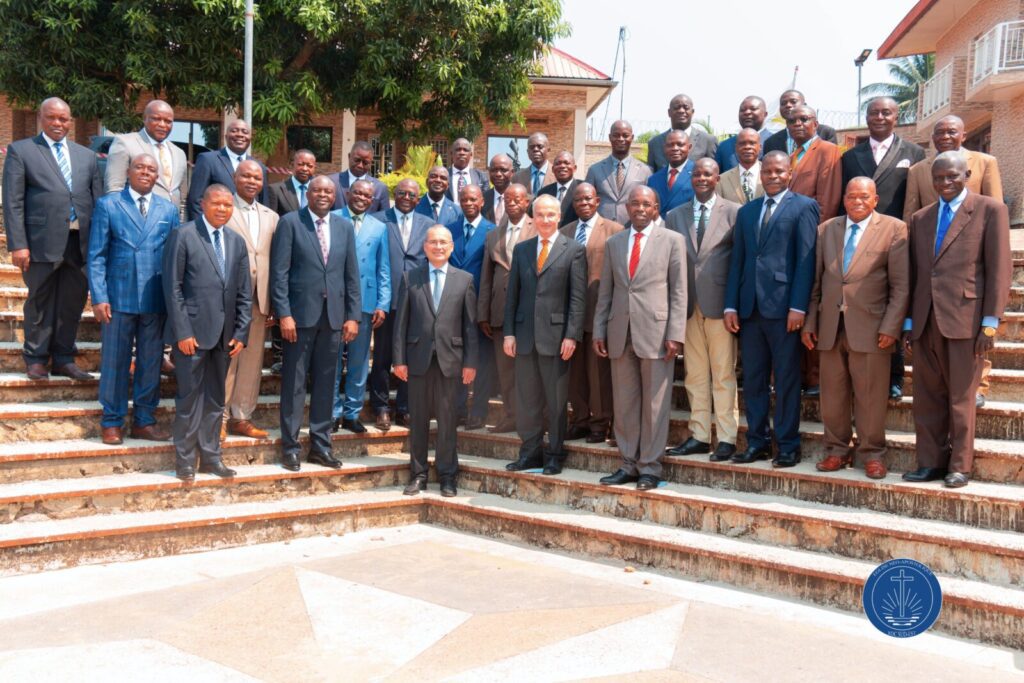
You have also been part of the District Apostle Meeting since 2021. How was the first time you met?
(laughs) That was a technical test run three days before the digital District Apostle Meeting during the pandemic. One by one, we turned on the microphone to check that everything was working.
The first face-to-face meeting was really impressive. I was of course very respectful of all these established and experienced men of God. Then the Chief Apostle calls on you in front of everyone and asks for your opinion. That was quite exciting… but on the other hand, I felt a very warm welcome, really loving. That made it easy for me.
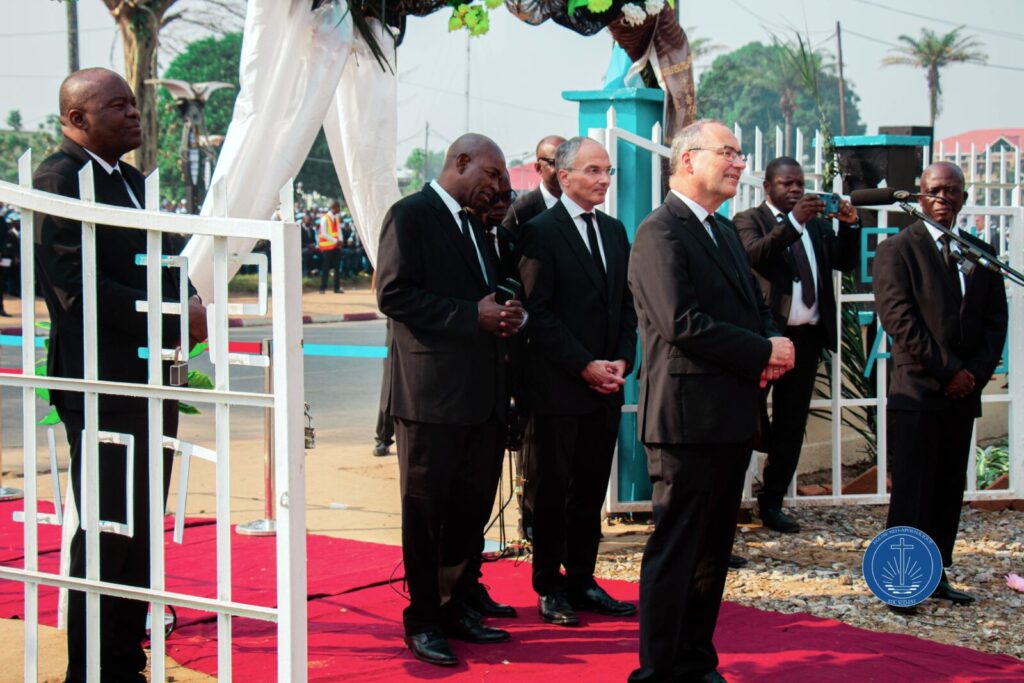
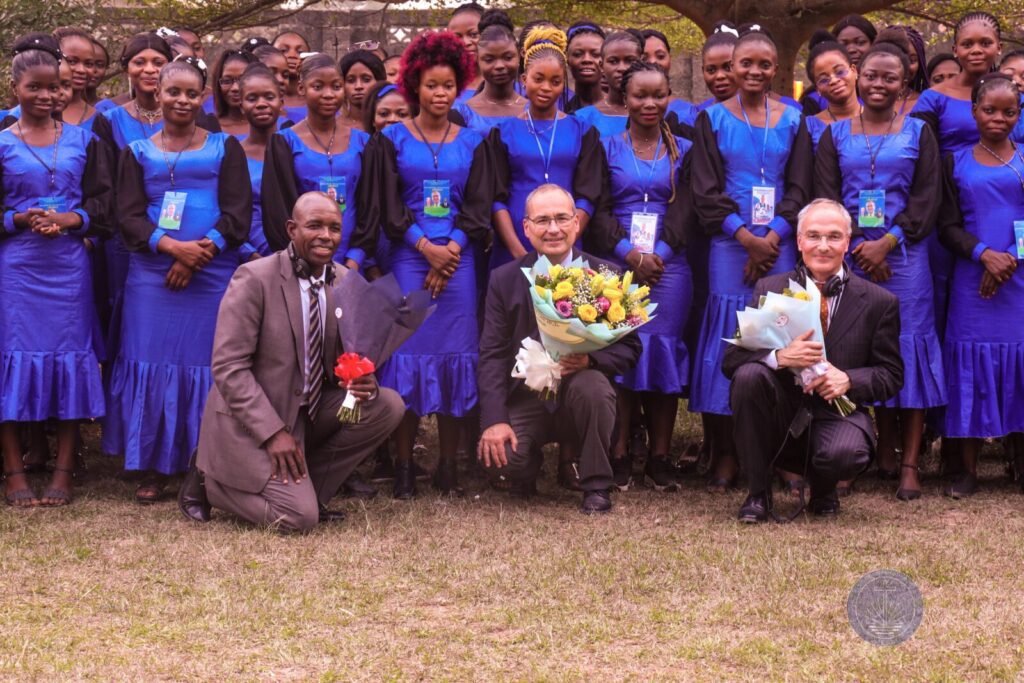
On many of your previous trips, you have also celebrated church services on a very small scale. For example, about a year ago in Greenland. In 2023, on the other hand, you were in Congo with the Chief Apostle and had fellowship with almost 30,000 believers in Kananga. How would you describe this different experience?
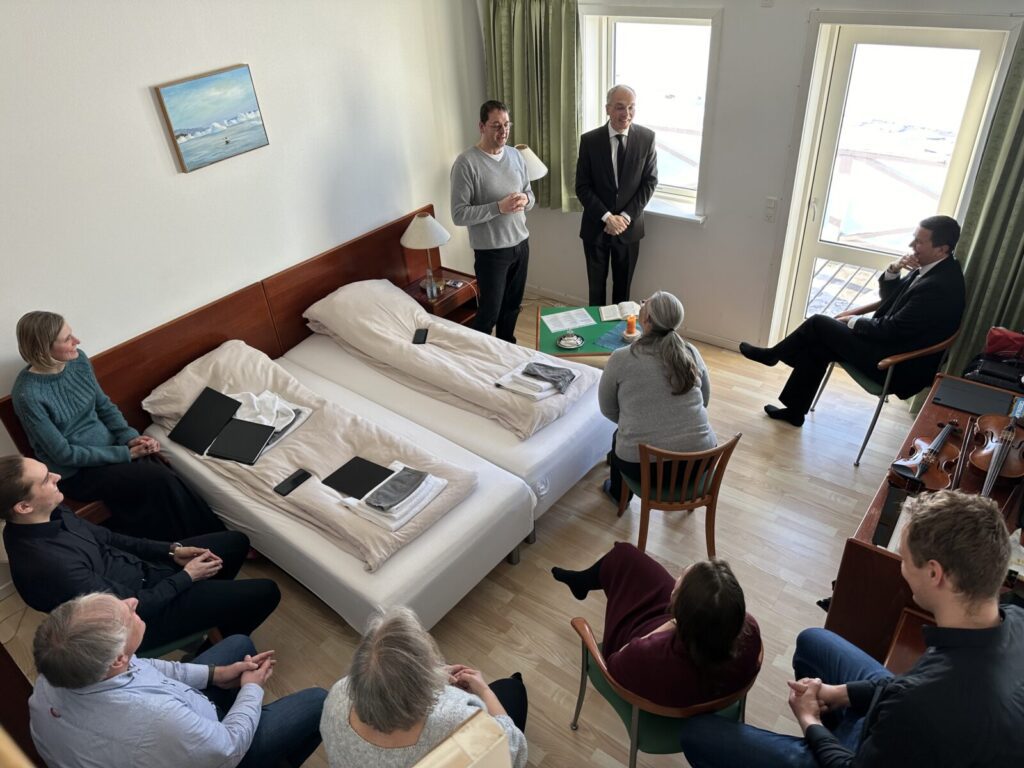
On Greenland, in Ilulissat, I celebrated a divine service with one sister together with my travel group. That’s very close, very intense and very familiar. It was incredibly beautiful and moving.
On the other hand, there is the example of Kananga in the Congo, where 26,000 brothers and sisters had gathered, or the IYC 2019. There it is almost impossible to see the individual person. Especially in large halls, the altar is always well lighted, which means that you only perceive a large mass. And that makes it much more difficult to establish a direct connection with the individual. Nevertheless – I always felt this – there is something in the air, a connection through the power of the Holy Spirit… so I wouldn’t say that it is more anonymous. But only the Holy Spirit can create that. I appreciate both.
On the one hand: I am good as I am – created in God’s image. On the other hand: I am a sinner because I do not always fulfill God’s will. How does that fit together?
That doesn’t go together. This ambivalence is ambivalence that doesn’t go together. Just like fire and water don’t go together. On our Day of Prayer and Repentance, as in every divine service before the Lord’s Prayer, we try again and again to become aware that we are sinners. Totally trapped in sin… without any chance of getting out of it ourselves. But on the other hand, we also develop the awareness again and again: God forgives.
Because God accepts me as I am.
So perhaps this is only an apparent contradiction after all.
God is explicit, but people are inconsistent. Do we sometimes make the Christian faith too complicated? – If so, how simple is it actually?
At its core, the whole thing is very simple: God is love and in love there is no fear. And perfect love banishes fear. These are not complicated statements, but the deepest truth. Loving the Lord and our neighbour is actually nothing complicated.
We must always return to this simple faith.
Helge Mutschler
Helge Mutschler was born on 8 August 1974 and grew up with three siblings in Freudenstadt in the Black Forest. After graduating from high school and completing his civil service, Helge Mutschler began his law studies in 1995 at the University of Hannover. After successfully completing his university studies and being admitted to the bar in 2003, he took over the management of the Lower Saxony Chamber of Tax Consultants. In 2005, he received his doctorate in law. Helge Mutschler has been married to his wife, Ann Juliette, since 2007. The family lives with their children in Hannover, the capital of the federal state of Lower Saxony.
At just 20 years of age, he received his first ministry as a Sub-deacon. Further spiritual functions and ordinations followed. In 2015, Chief Apostle Jean-Luc Schneider ordained him an Apostle at the age of 41. Six years later, in 2021, he was appointed District Apostle Helper for Northern and Eastern Germany. In this role, he looked after congregations in Germany as well as the New Apostolic Christians in Great Britain, Ireland, Northern Europe, Russia, and Central Asia.
Since 2024, the District Apostle Helper has served as an advisor to the Chief Apostle as part of the Coordination Group of the New Apostolic Church International.
With his assignment as Chief Apostle Helper on Pentecost 2025, the question of the succession of the international Church leadership has been answered.