




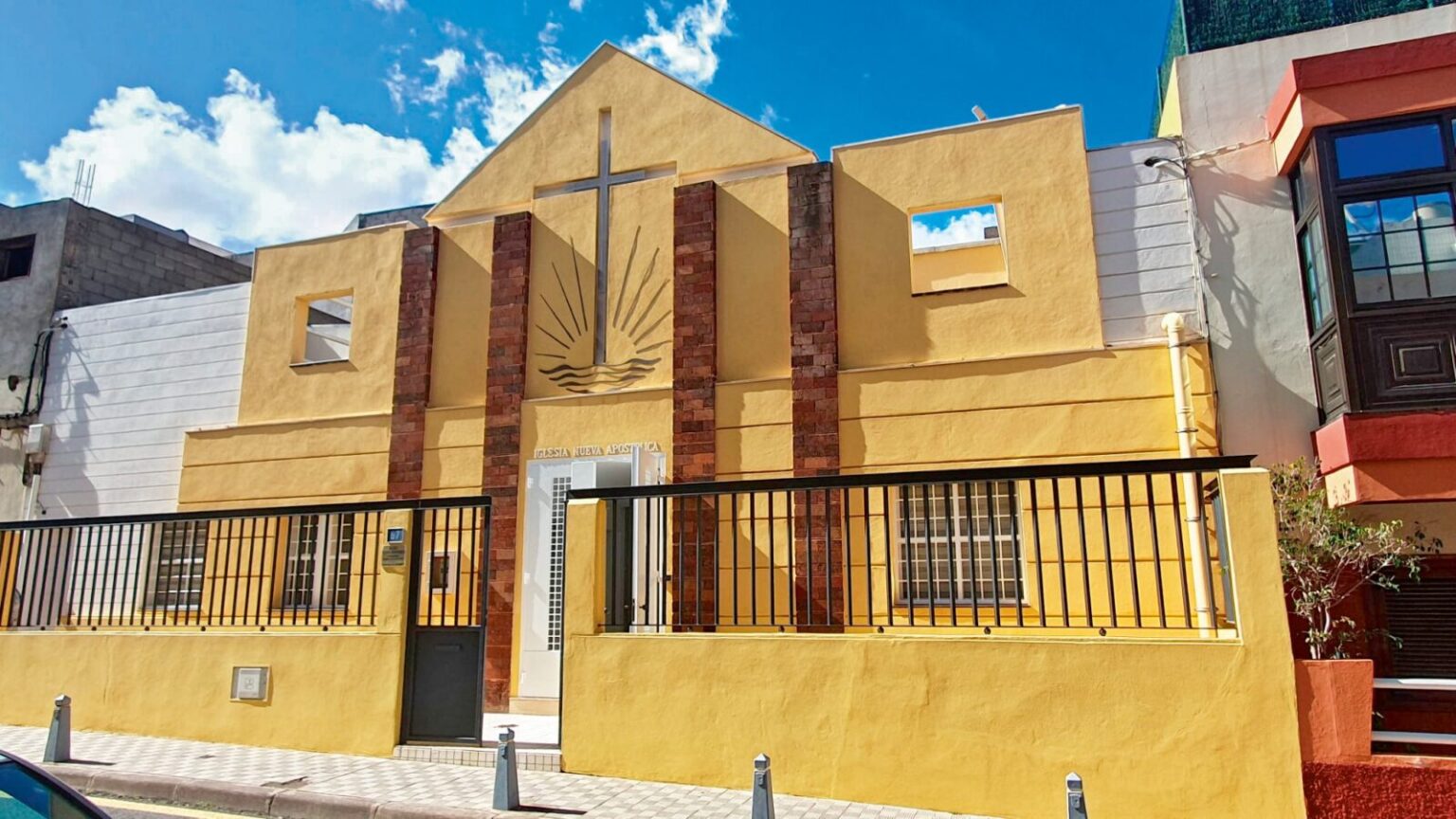
There are five New Apostolic congregations on the Canary Islands. Holidaymakers, people spending the winter there, and new arrivals come together here.
The Canary Islands are a popular destination for those looking for a welcome escape from the cold and wet winter months in the northern hemisphere. The archipelago in the Atlantic belongs to Spain and is located not far from the coast of northwestern Africa. The seven islands, which are home to just over two million people, are visited by around 16 million tourists every year. Most stay for a week or two, but some spend several months a year there.
The New Apostolic Church offers members who spend six months or more there and attend divine services to have themselves registered as members in the local church. “If brothers and sisters don’t receive pastoral care for six months because they are not in their home congregation, that’s too long,” says Claus Ruthardt. He is the rector of the Tenerife-North congregation and, as deputy district rector, is also responsible for the four other congregations on the Canary Islands.
Far-reaching decision
Claus Ruthardt and his wife, Sabine, have lived in Tenerife since 2009. Before that they had spent their holidays there every year. During a visit in 2007, the then rector told him that the congregation urgently needed an organist, a conductor, and a Priest. Two years later, the couple had made their decision and started a new life on Tenerife. “After we had made the decision to emigrate, it was amazing to see how God prepared the way,” Claus Ruthardt says.
He was ordained a Priest for Tenerife in 2012, appointed Evangelist and rector of the Tenerife-North congregation in 2015, and has also been a District Evangelist since 2017. His weekends are spent travelling: Sunday service in Tenerife, preceded or followed by a divine service in one of the other congregations. As it would take far too long by ship, he uses domestic flights that connect all the islands. He is often not back until Monday.
A new start on Tenerife
“For the future, I hope that our rector will receive some assistance,” Gerhard Frischknecht says, whom everyone calls Hardy. In 1972, his parents-in-law bought an apartment on the island during a holiday in Tenerife. He and his wife Hedy spent their holidays there every year since 1993. In 2011, the couple then moved from Switzerland to Tenerife.
Hardy, now 82 years old, was a minister for 44 years, 33 of which he served as a Priest. His advice—not just for holidaymakers: “Get involved right from the start, attend the divine services, introduce yourself, talk to the other members.” If you leave straight after the divine service, you will not make any friends in the congregation.” Hedy and Hardy’s neighbours know that they are both New Apostolic.
Language is not an obstacle
Before Marina and Rainer came to Tenerife for the first time in 2015, they had already spent several years in Venezuela and spoke fluent Spanish. They liked it so much on the Canary Island that they flew there again that same year and bought an apartment. Since Rainer’s retirement in 2016—he was the rector of the Berghausen-Pfinztal congregation in Germany—the two of them usually spend seven to eight months a year on Tenerife.
German-speaking believers are in the majority in two Canarian congregations: in Tenerife-North and on La Palma. “If there are no Spanish-speaking people in the service, we sing and preach in German,” Claus Ruthardt reports. “You have to be flexible. Canary Islanders do not attend New Apostolic divine services. Most of the Spanish-speaking members are immigrants from Argentina, Uruguay, or other South American countries,” Claus Ruthardt says. They live and work in the islands.
A beautiful small congregation
Frank Haselier officially became a resident of the Canary Islands a few weeks ago. He spent his first holiday in the Canary Islands in 2018 on Fuerteventura. And because it was so beautiful the next trip there followed four months later. His congregation in Germany was very small. He was ordained a Deacon there in 2021 and did not want to leave the rector alone with the work. But then the congregation was closed. Since he can work remote as a freelancer, Frank left Germany.
He describes the congregation on Fuerteventura as small but very beautiful. Compared to other congregations in the Canary Islands, it is nicely equipped with ministers: there is the rector, who is also responsible for the congregation on Grand Canary Island, two Priests, and a Deacon, that is Frank. There is a church café after every service, regular discussions, and a small choir.
How does he look at his life today? “I didn’t understand some of the things in my life when they happened. But in hindsight, I realise that God prepared my path 25 years ago so that I can be here on Fuerteventura today.” For the future, Frank Haselier hopes that the congregation will continue to grow. He has decided to talk more often about the Church and his faith.
The background: The New Apostolic Church on the Canary Islands
The history of the New Apostolic Church on Tenerife began in 1983. In the beginning, divine services were held once a month, in German. Ministers flew in from Switzerland, and later a Priest from Valencia in mainland Spain saw to the pastoral care. In 1985, District Apostle Richard Fehr dedicated the first church, today’s Tenerife-North congregation. In 2008, a mission was established in the south of the island, where some Spanish-speaking members worked in hotels. In 2013, the mission of Tenerife-South was officially designated a congregation. As the distance between the two congregations is 85 kilometres, the members have little contact with each other. In addition to the two congregations on Tenerife, there is now also one each on Grand Canary Island, La Palma, and Fuerteventura.
Potos: private
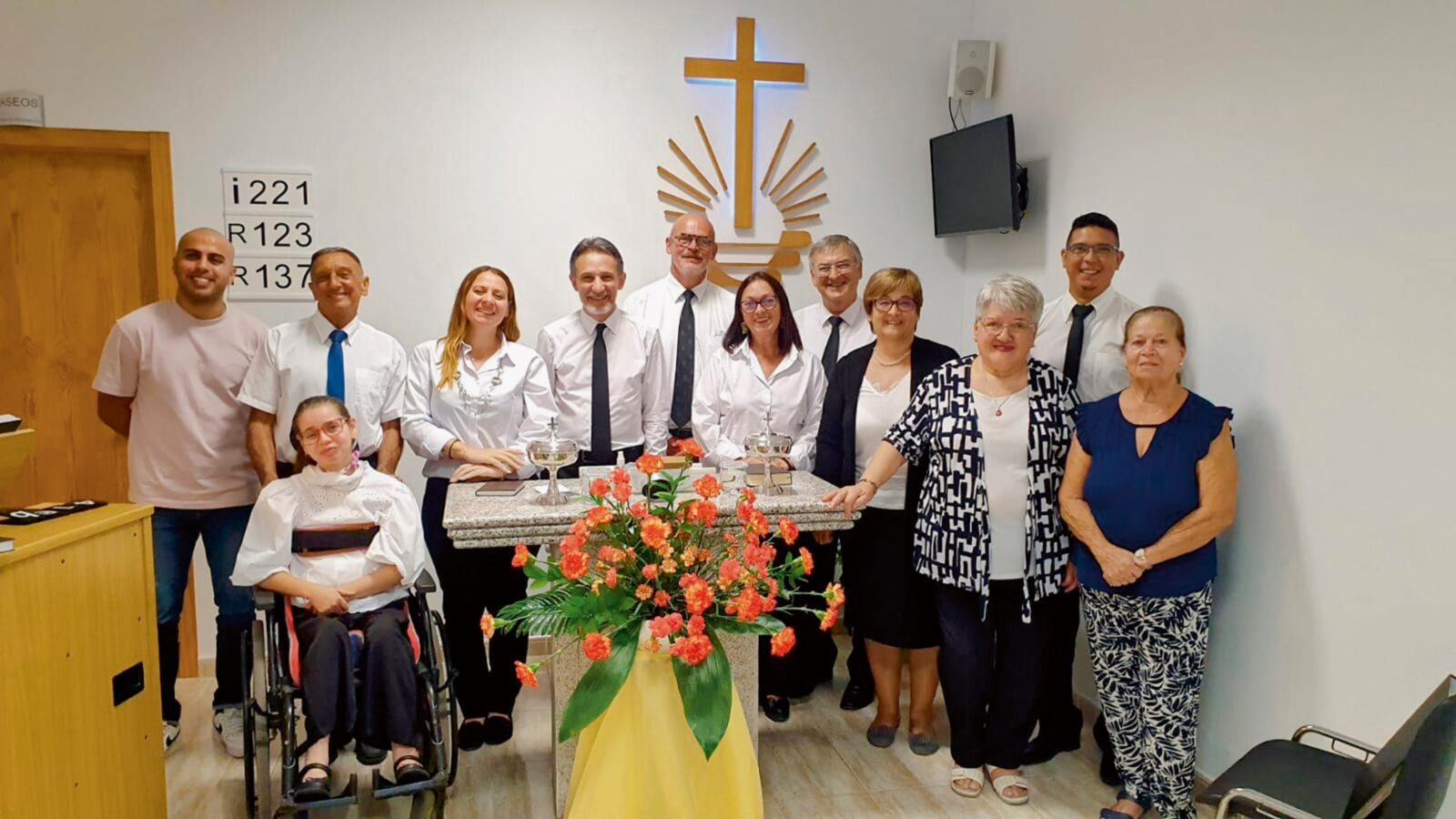
Members from Fuerteventura after the divine service
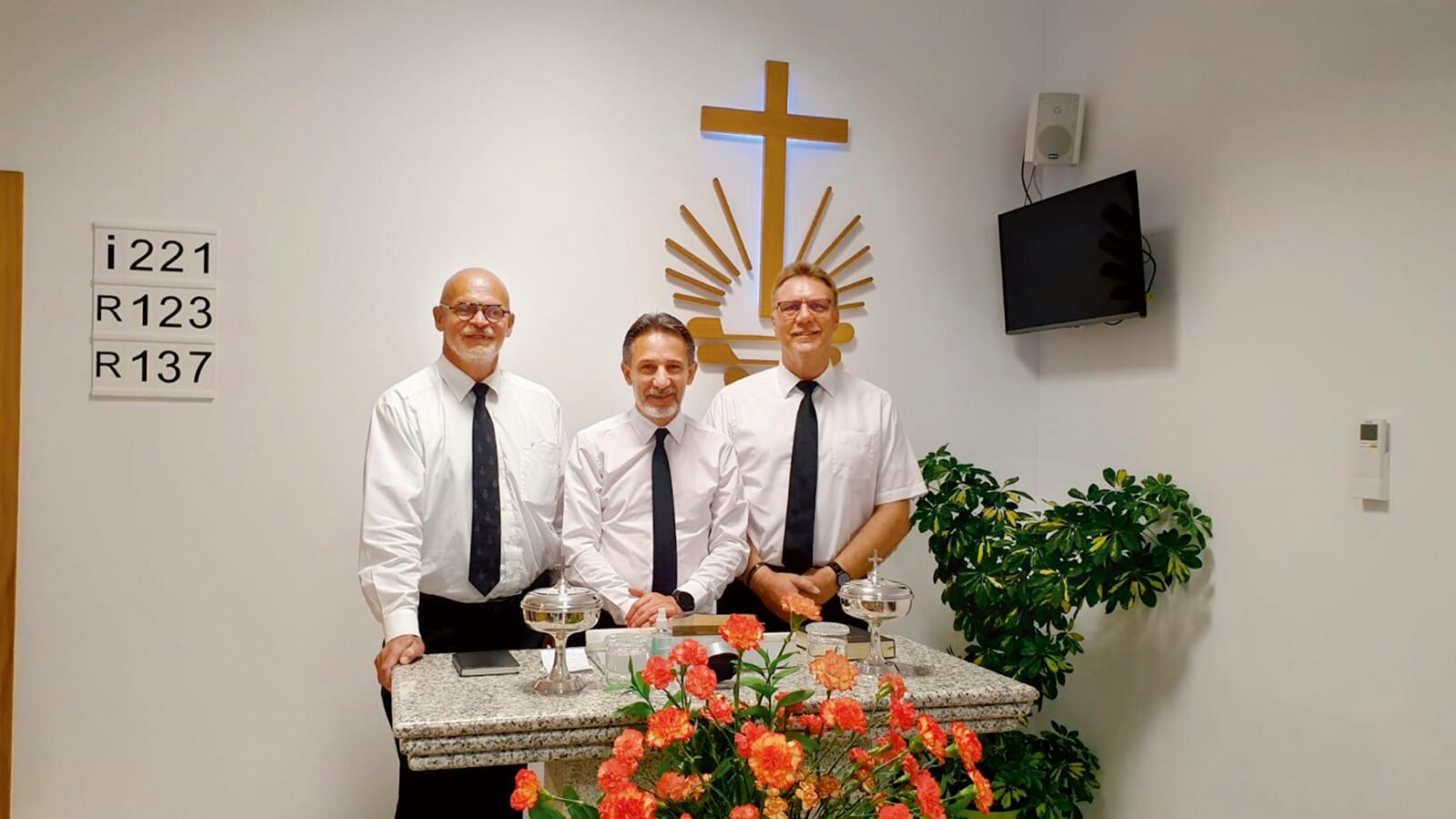
Fuerteventura: Bishop Victor Alganza (centre) with Claus Ruthardt (right) and Frank Haselier, who interpreted
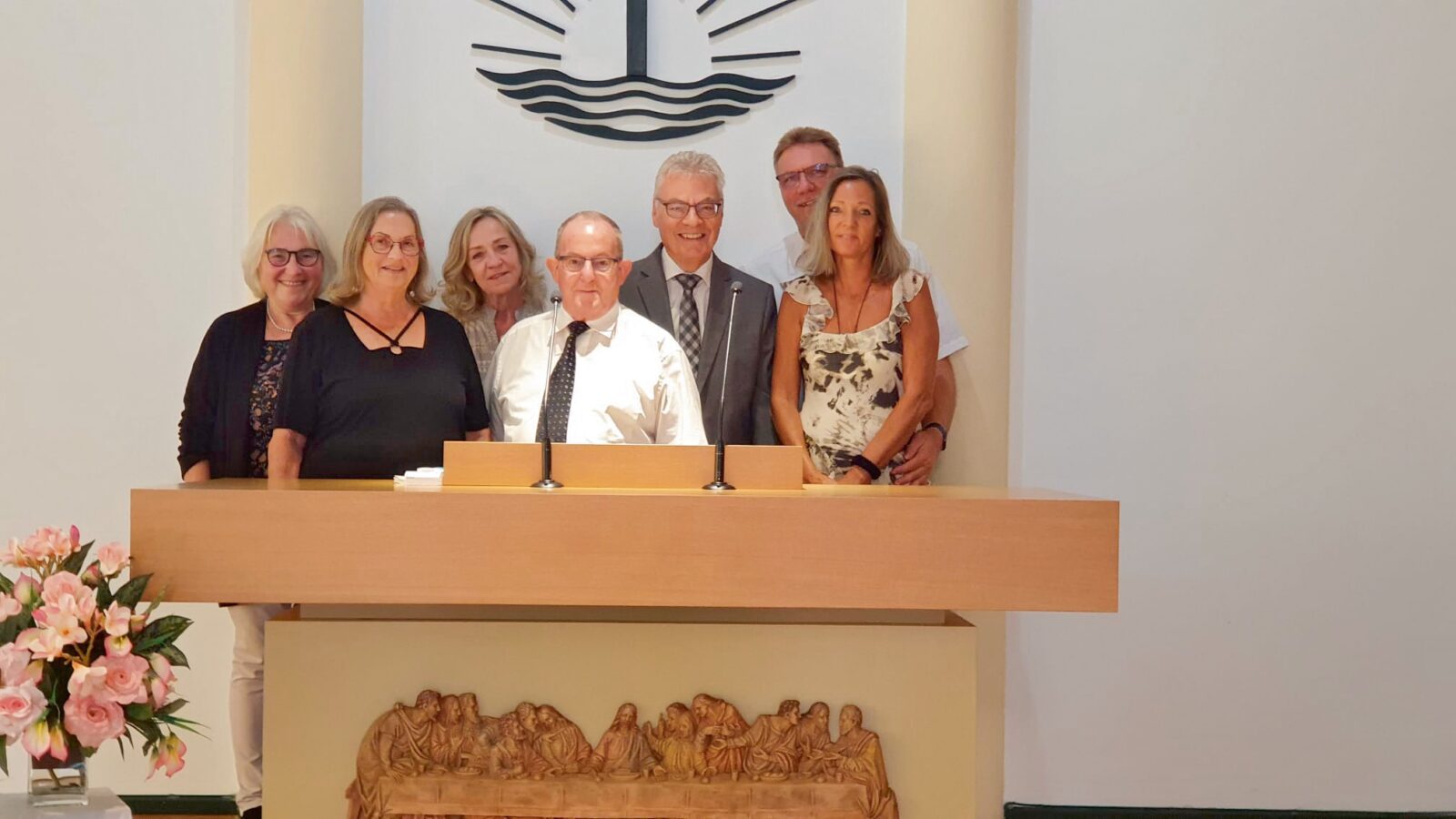
District Evangelist Claus Ruthardt (far right, at the back) with retired ministers and their wives in Tenerife-North
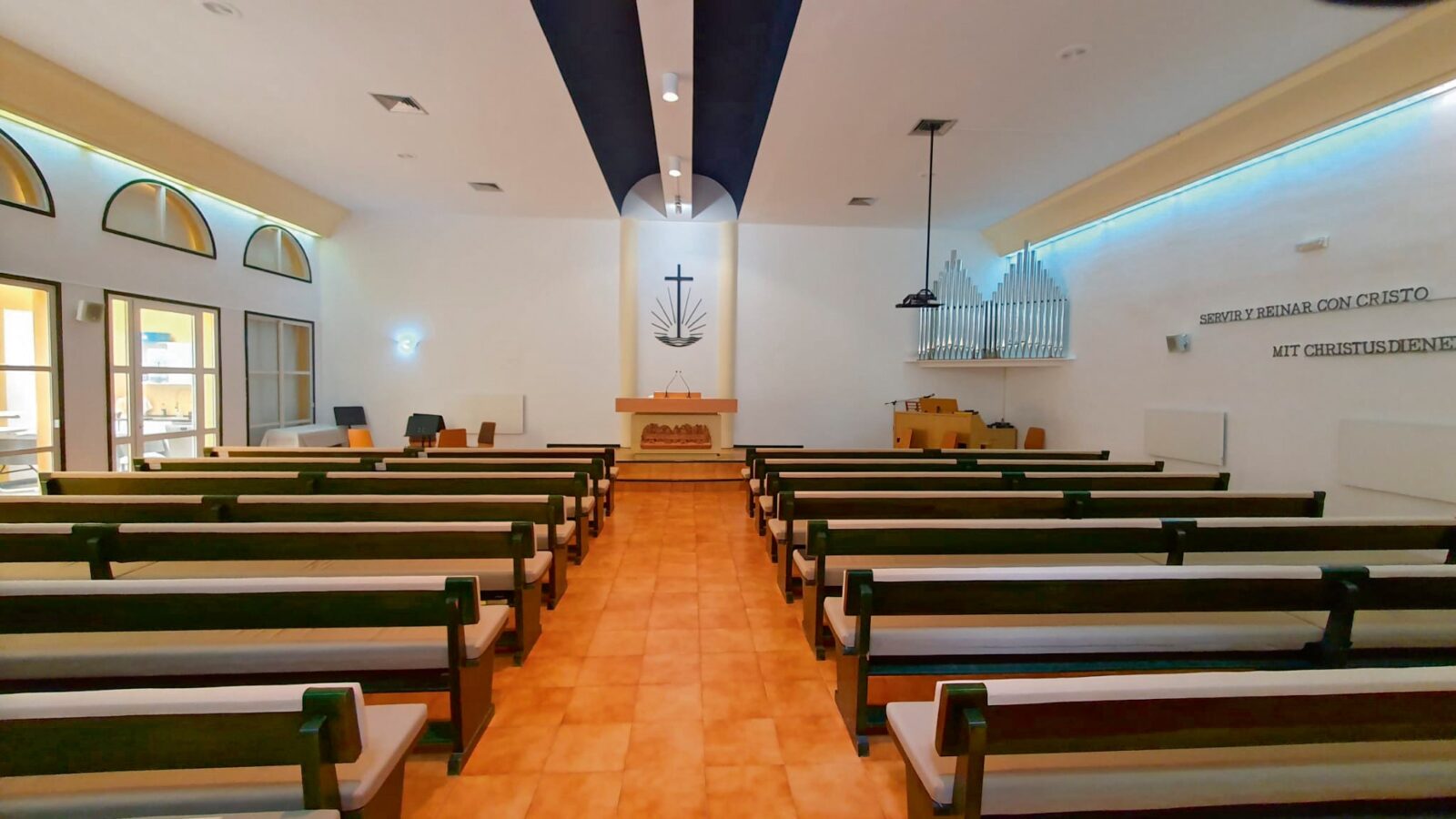
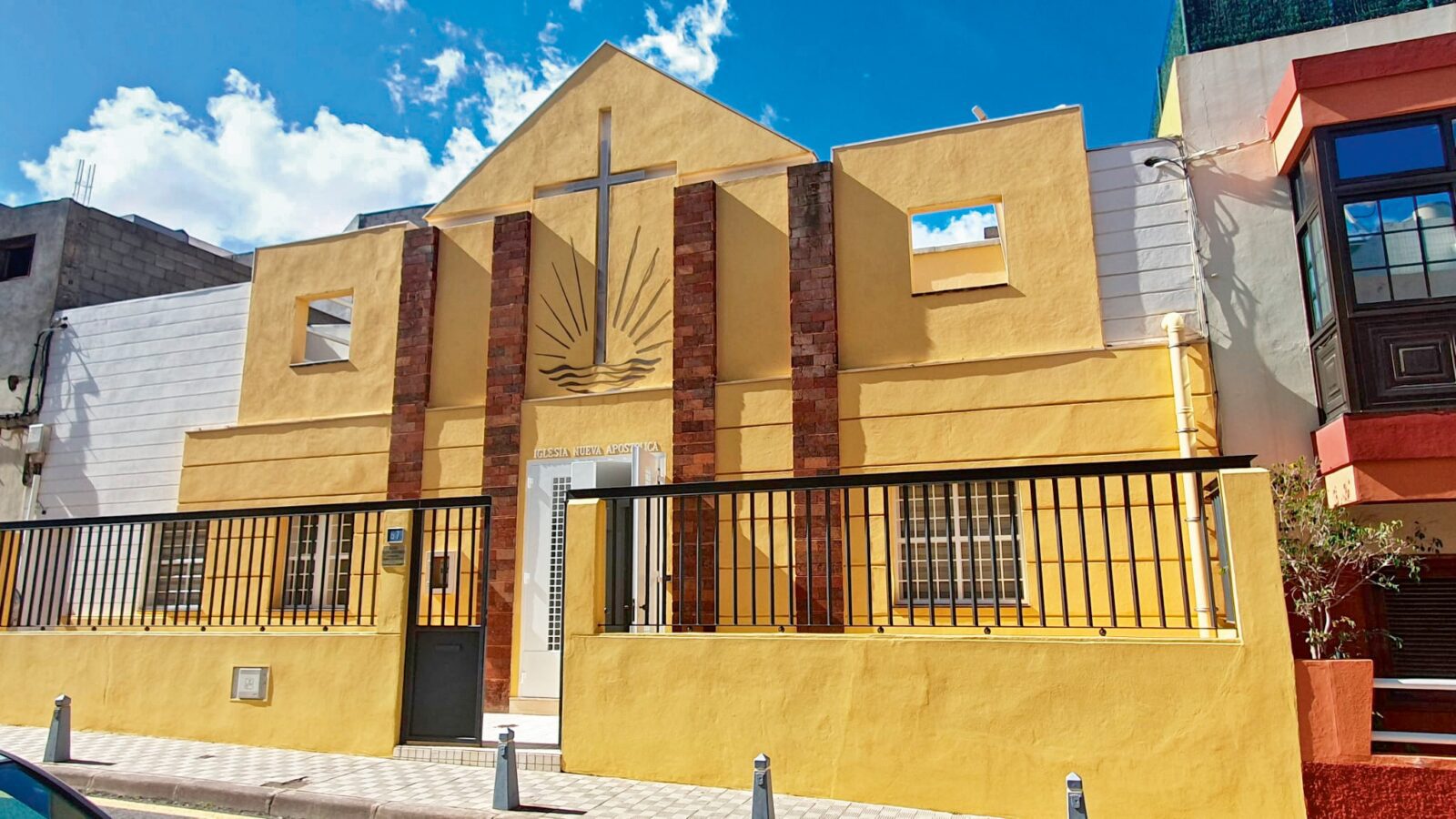
Our church Tenerife-North