




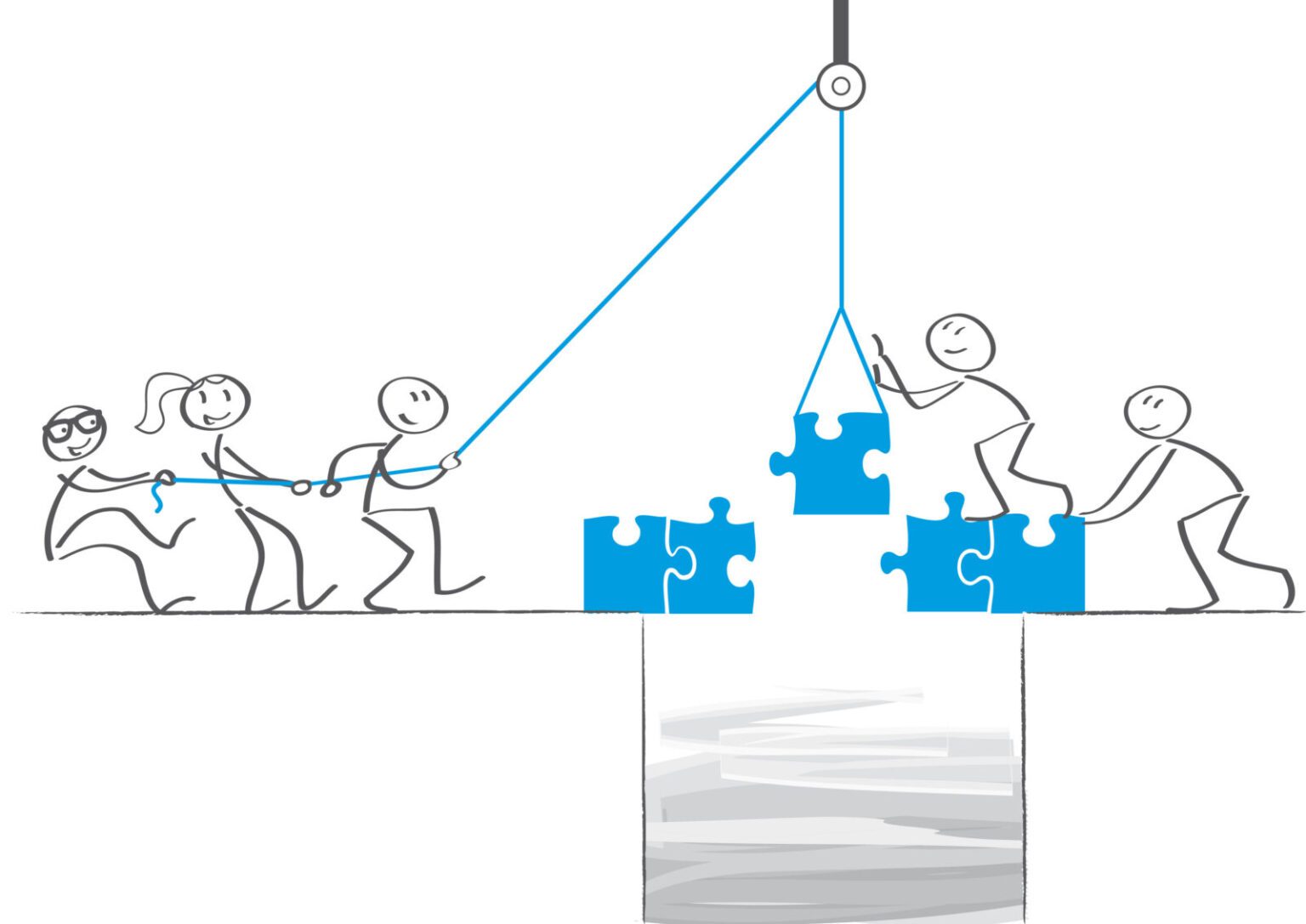
Advocating and interceding for someone is a true act of friendship! There is a story of four people who did just that and enabled a sick person to be healed through their own faith.
“Jesus is in Capernaum!” The news spread like wildfire through the village. People flocked to see the Son of God. His presence drew crowds. Meanwhile, the house where Jesus was staying was packed. There were more and more people, and they kept coming. The people were talking among themselves. It was hot and stuffy, but there was joy and anticipation. Jesus spoke to them and taught them. The devout silence was broken by hammering that grew louder, groaning, voices, and crumbling clay. Carefully a mat was let down through the opening in the roof. Four ropes had been tied to the four ends of the mat. It was set down directly in front of Jesus. Lying on the mat was a paralysed man, who had been lowered by four men.
What illness meant at the time
In the time of Jesus, if sick people did not have money to fall back on, it usually meant that they had to live on alms. Poverty was widespread. They were unable to earn a living. Their physical suffering was often accompanied by social isolation. Anyone suffering from a debilitating disease was confronted with economic ruin and marginalisation.
In the Old Testament, illness was always considered to be the result of social or personal misconduct. It was seen as a sign of the person’s guilt, distance from God, and viewed as divine punishment.
In the New Testament, however, the perspective changed. There an illness was not a consequence of an individual’s sins, but was independent of them. Sometimes it was understood in a positive way because it could show the effectiveness of God.
Determined to overcome obstacles
The paralysed man seemed to have been spared the fate of social isolation. A small group of people obviously looked after him: family, friends, neighbours. They spared no effort. They were determined to find a way to Jesus and finally did so via the roof.
The houses at that time had an external staircase that led to a flat roof. Roofs were often made of wooden beams covered with a layer of twigs, reeds, and hay, and topped with a solid layer of clay. It was therefore quite possible to make an opening in the roof.
So the four men circumvented the crowd blocking the entrance to the house and chose the path across the roof to help their paralysed friend. They were convinced that Jesus would heal him.
Faith that leads to healing
The faith that the four men placed in Jesus did not go unnoticed by Jesus. He was moved by their gesture, persistence, and boldness. They acted on their faith. “When Jesus saw their faith, He said to the paralytic, ‘Son, be of good cheer; your sins are forgiven you’” (Matthew 9: 2).
Their action was a wordless plea and an expression of trust, which first of all resulted in the fact that Jesus forgave the paralysed man his sins. This caused some of the scribes who were present in the crowd to critically question Jesus’ authority to forgive sins. Jesus knew their thoughts. To counteract their resentment and demonstrate His authority, He said, “But that you may know that the Son of man has power on earth to forgive sins.” Then He said to the paralytic, “Arise, take up your bed, and go to your house. And he arose and departed to his house” (Matthew 9: 6–7).
Thanks to his being healed, the man was able to physically and socially return to his community. Through the forgiveness of sins, it was possible for him to be fully accepted and integrated into the wholesome fellowship with God. The healing of the whole person had been accomplished: the body from sickness and the spirit from sin.
Intercession in this world and the beyond
Interceding on behalf of someone close to you, praying for them, hoping, trusting, and believing for them is intercessory faith. This is usually expressed in prayer, a helping hand, or an open ear.
But what about the beyond and the souls of the dead? They too can face great obstacles and need help and assistance in order to obtain redemption and the salvation of Jesus. They also need friends like the four in our Bible story—who demonstrated compassionate and active intercession.
Photo: Trueffelpix – stock.adobe.com