




On the night before His death, Jesus instituted a meal that Christians continue to celebrate today. First shared in a private gathering, the Last Supper brings together the past, the present, and the future in the kingdom of God.
The night it all began
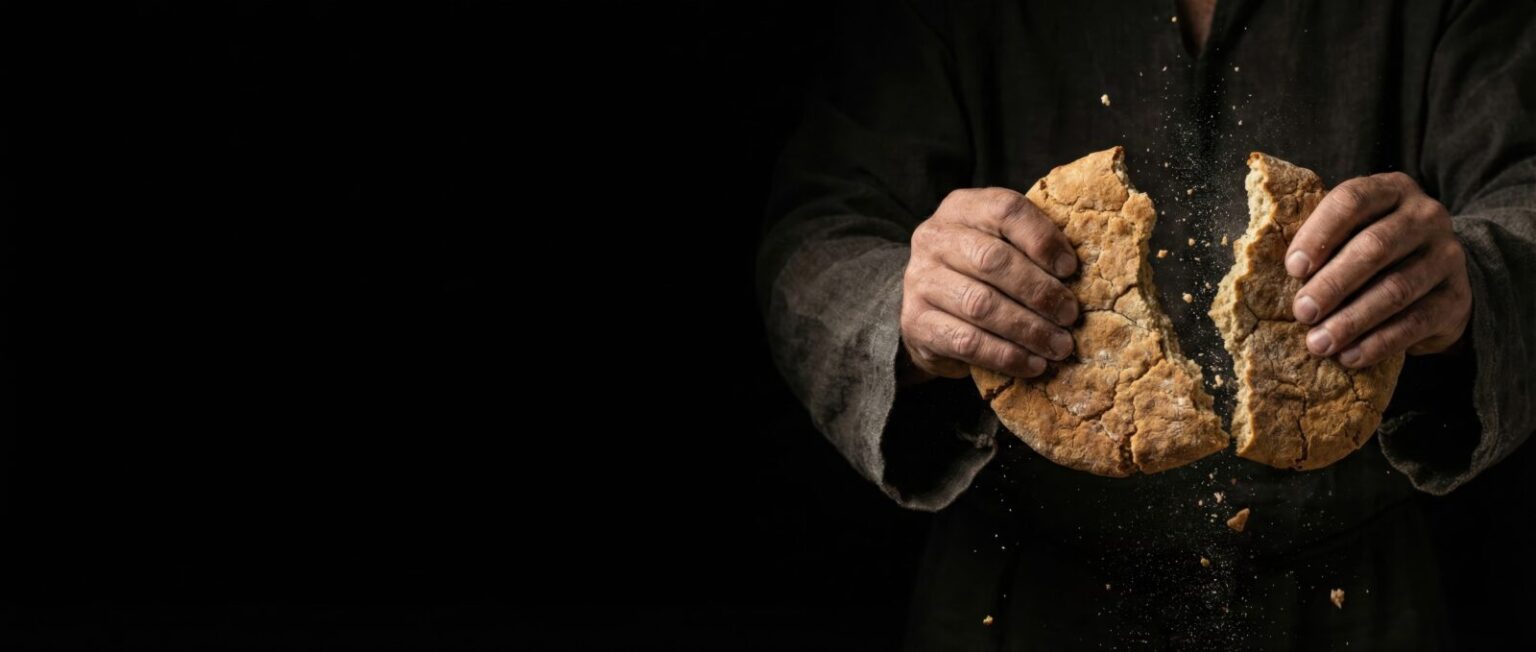
It was spring in Jerusalem. Jesus was having supper with His disciples. The atmosphere was tense. Jesus was deeply aware of things that the others had not yet understood: His arrest was imminent. A sense of betrayal hung in the air. The path to the cross was inevitable. Then something unexpected happened. Jesus took bread, blessed and broke it, and gave it to the disciples, saying, “Take, eat; this is My body” (Matthew 26: 26). Then He took the cup and said, “For this is My blood of the new covenant, which is shed for many for the remission of sins” (Matthew 26: 28).
Thus, on the night before His Passion, Jesus instituted Holy Communion. Apostle Paul provided the earliest written record of its institution, and it later became an established tradition of the early church: “The Lord Jesus on the same night in which He was betrayed took bread” (1 Corinthians 11: 23). At that moment, the disciples probably understood very little of just how profound all this was. Yet the church preserved these words and passed them down to the present day. For in this meal, Jesus brings together the past, the present, and the future: the sacrifice on the cross, the fellowship of believers today, and the hope of the coming kingdom of God.
From the Passover meal to the new covenant
The Last Supper that Jesus shared with His disciples was indeed no ordinary meal. It was the Passover meal: Israel’s profound act of remembrance, commemorating God’s deliverance of the Israelites from slavery in Egypt, when God saved His people through the blood of the Passover lamb (Exodus 12: 1–14). When Jewish families celebrate this meal, they retell the Exodus story (Exodus 12: 26–27).
Against this backdrop, Jesus’ words take on a special significance. When He interpreted the bread and wine as Himself, He initiated a new dimension of God’s deliverance. He shifted the focus of the historical exodus from Egypt to an even greater liberation: the spiritual liberation from sin and death. The New Testament therefore describes Jesus as the true Passover lamb. “For indeed Christ, our Passover, was sacrificed for us” (1 Corinthians 5: 7). John the Baptist had already prepared the way for Him, “Behold! The Lamb of God who takes away the sin of the world!” (John 1: 29). Holy Communion is therefore an integral part of God’s long salvation history with humankind. What began with the Passover in the old covenant found its fulfilment in Christ. Bread and wine became symbols of the new covenant that God made with humankind. At the same time, Christ Himself meets the believers in Holy Communion (CNAC 8.2.2; 8.2.4).
Institution in the shadow of the cross
While Passover commemorates God’s deliverance of the Israelites in the past, the Last Supper serves as a sign of what is to come through Jesus’ suffering and death. The Last Supper, rather than being a peaceful dinner, was a foreshadowing of the suffering that lay ahead. While sitting at the table with His disciples, Jesus foretold His betrayal, “Assuredly, I say to you, one of you will betray Me” (Matthew 26: 21). Fear and confusion spread among them. It was precisely in this very situation that Jesus gave His disciples something enduring: a meal they were to celebrate regularly (Luke 22: 19).
This meal became Jesus’ enduring legacy to His church. In Holy Communion, the church not only commemorates the events of the Passion but acknowledges that Jesus’ death on the cross is the decisive event of salvation. Apostle Paul sums this up in a single sentence: “For as often as you eat this bread and drink this cup, you proclaim the Lord’s death till He comes” (1 Corinthians 11: 26). These words are still pronounced today in the consecration of Holy Communion. Holy Communion therefore combines remembrance and anticipation. It looks backward to the sacrifice of Christ and forward to His return (CNAC 8.2.5; 8.2.6).
The sacrament instituted by Christ
Holy Communion has a unique role in the church. It is the sacrament that Jesus Christ Himself established and which He expressly commanded His disciples to celebrate in remembrance of Him. When the congregation celebrates Holy Communion, it receives not only bread and wine as outward signs. According to the testimony of Scripture, Christ Himself is present. Paul speaks of the “communion of the body of Christ” and the “communion of the blood of Christ” (1 Corinthians 10: 16).
In Holy Communion, the body and blood of Christ are truly present (CNAC 8.2.12). The Catechism also explains the four key dimensions that Holy Communion comprises: it is a meal of remembrance, a meal of profession, a meal of fellowship, and an eschatological meal (CNAC 8.2.8–8.2.11).
The sacrament is closely connected with the unique sacrifice of Jesus Christ. His death on the cross occurred “once for all” (Hebrews 9: 26; 10: 10). This sacrifice has only been brought once and is not repeated in Holy Communion but is made tangible in a sacramental way: Christ is truly present in bread and wine (CNAC 8.2.13). The forgiveness of sins and Holy Communion are also closely related. Jesus Himself speaks of “the blood of the new covenant, which is shed for many for the remission of sins” (Matthew 26: 28; Ephesians 1: 7; CNAC 8.2.14). The forgiveness of sins proclaimed in the divine service enables us to worthily partake of Holy Communion.
Participating in Holy Communion consciously
Because Holy Communion is of such profound significance, the church invites believers to receive this sacrament with reverence. Already at the time of the early church, Apostle Paul urged the believers, “But let a man examine himself” (1 Corinthians 11: 28). Let us use the time before the celebration of Holy Communion for reflection, gratitude, and inner preparation. For then we can encounter Christ and be certain: “Whoever eats My flesh and drinks My blood abides in Me, and I in him” (John 6: 56).
Everyone receives the same body of Christ, which is why the sacrament unites the congregation: “For we, though many, are one bread and one body; for we all partake of that one bread” (1 Corinthians 10: 17). The early Christians devoted themselves to fellowship and the breaking of bread (Acts 2: 42). Holy Communion is therefore not merely a personal experience of faith, but an event celebrated by the whole congregation. Anyone who gathers around the Lord’s table with other believers—whenever and wherever possible—is expressing their commitment to Jesus’ mission. A prerequisite for receiving Holy Communion is Holy Baptism. Christians from other denominations who have been baptised in the proper manner can partake of Holy Communion as guests.
For many Christians, live streams or online services are the only way to participate in divine service. While this is comforting and keeps them spiritually connected to the congregation, the understanding of Holy Communion involves a physical gathering of the congregation, in which believers come to the Lord’s table. It is precisely this assembling, this coming together, that illustrates that true faith is expressed through communal gathering and mutual fellowship (Hebrews 10: 25; CNAC 2.4.7; 8.2.10).
A taste of things to come
At the end of the words of institution, Jesus utters a remarkable sentence, “But I say to you, I will not drink of this fruit of the vine from now on until that day when I drink it new with you in My Father’s kingdom” (Matthew 26: 29). These words open up a perspective that reaches beyond the present. Whenever we celebrate Holy Communion, we not only remember the cross, but also experience the deepening and strengthening of our fellowship as believers. At the same time, it points to a future reality.
The Bible describes this future as a great feast of God with His people. Already the prophet Isaiah spoke of a feast that God has prepared for all nations (Isaiah 25: 6–8). And Revelation refers to it as the “marriage supper of the Lamb” and declares blessed those who are called to it (Revelation 19: 9). Every celebration of Holy Communion therefore also carries within it a sense of longing. It directs our attention to the day when Christ will return and bring about our ultimate reunion with Him (CNAC 8.2.11). Until then, Holy Communion remains a sign of hope—a foretaste of the feast in the kingdom of God, at which Christ Himself will once again sit at the table with His own.
Photo: Olga Ко – stock.adobe.com