



No one receives more in heaven than others simply because they hold a ministry. Eternal fellowship with Christ is the greatest gift a person can receive, says Chief Apostle Jean-Luc Schneider.
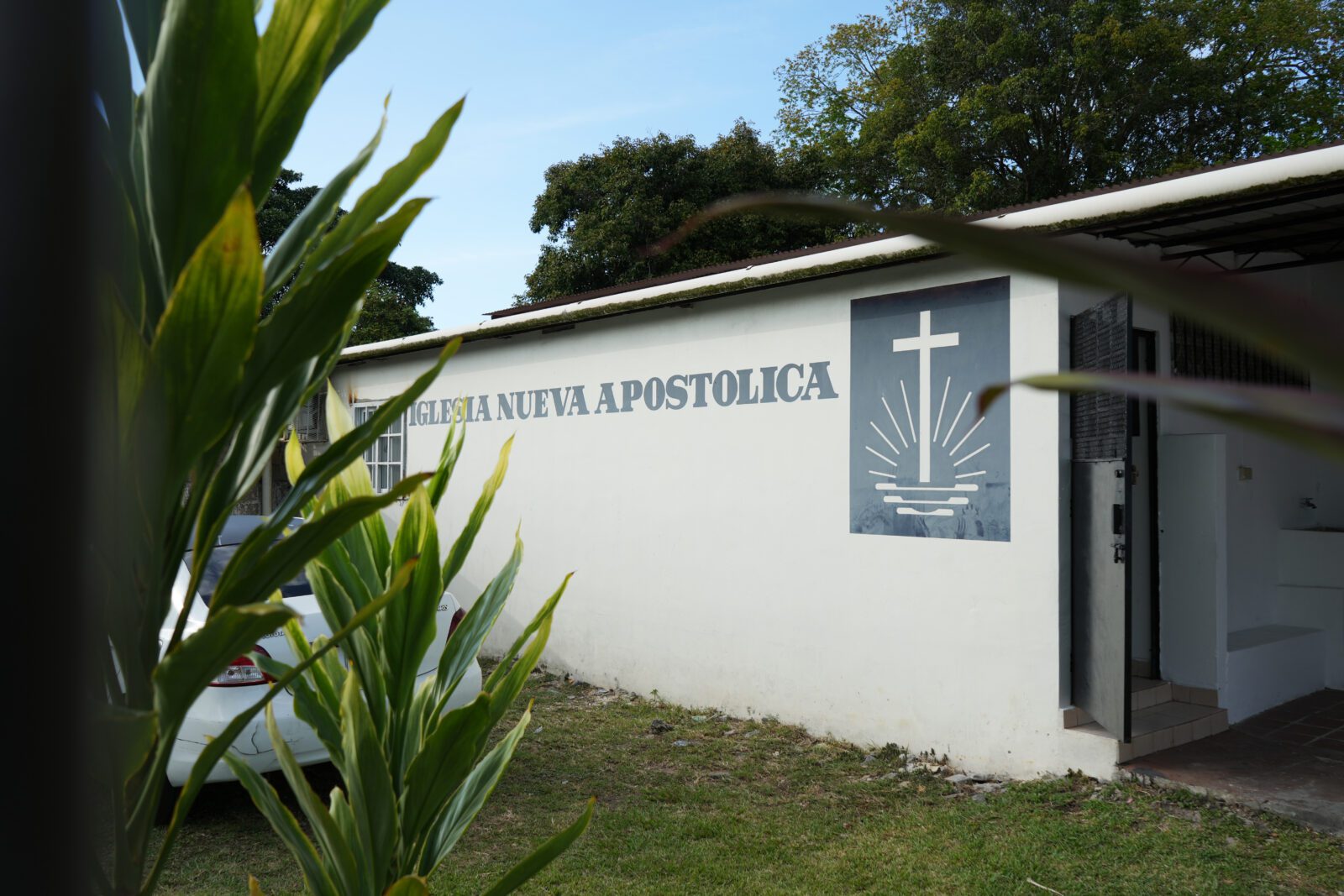
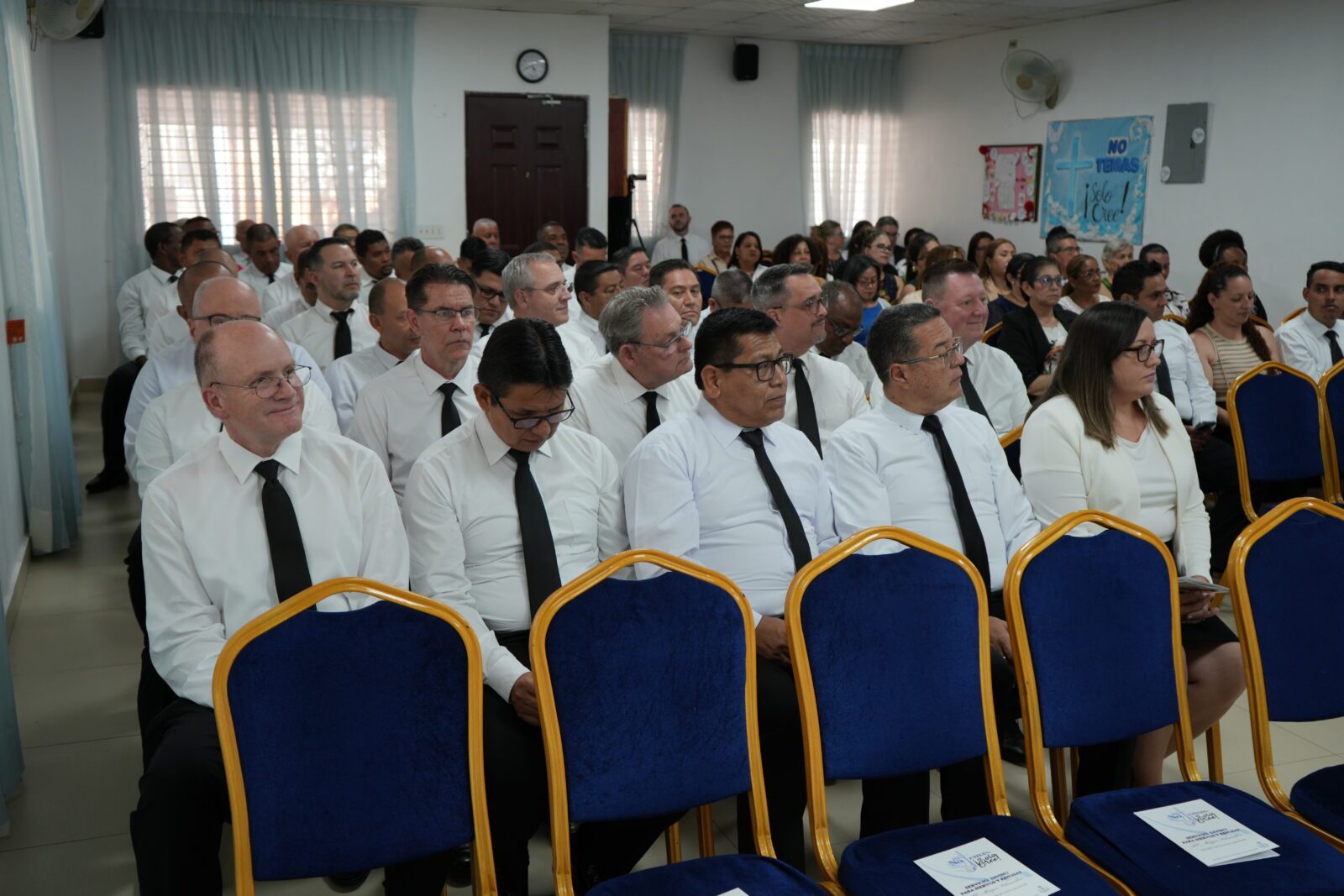
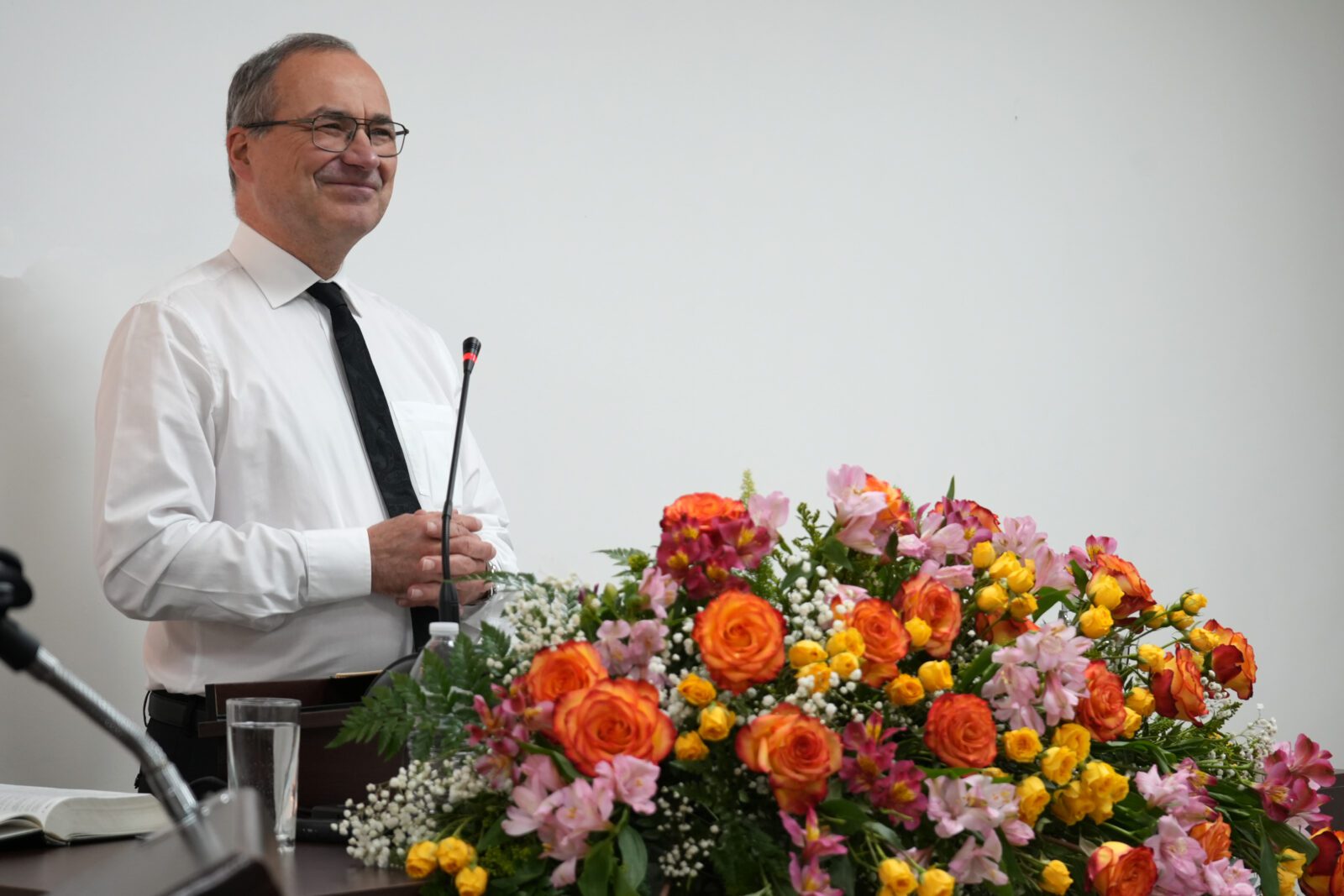
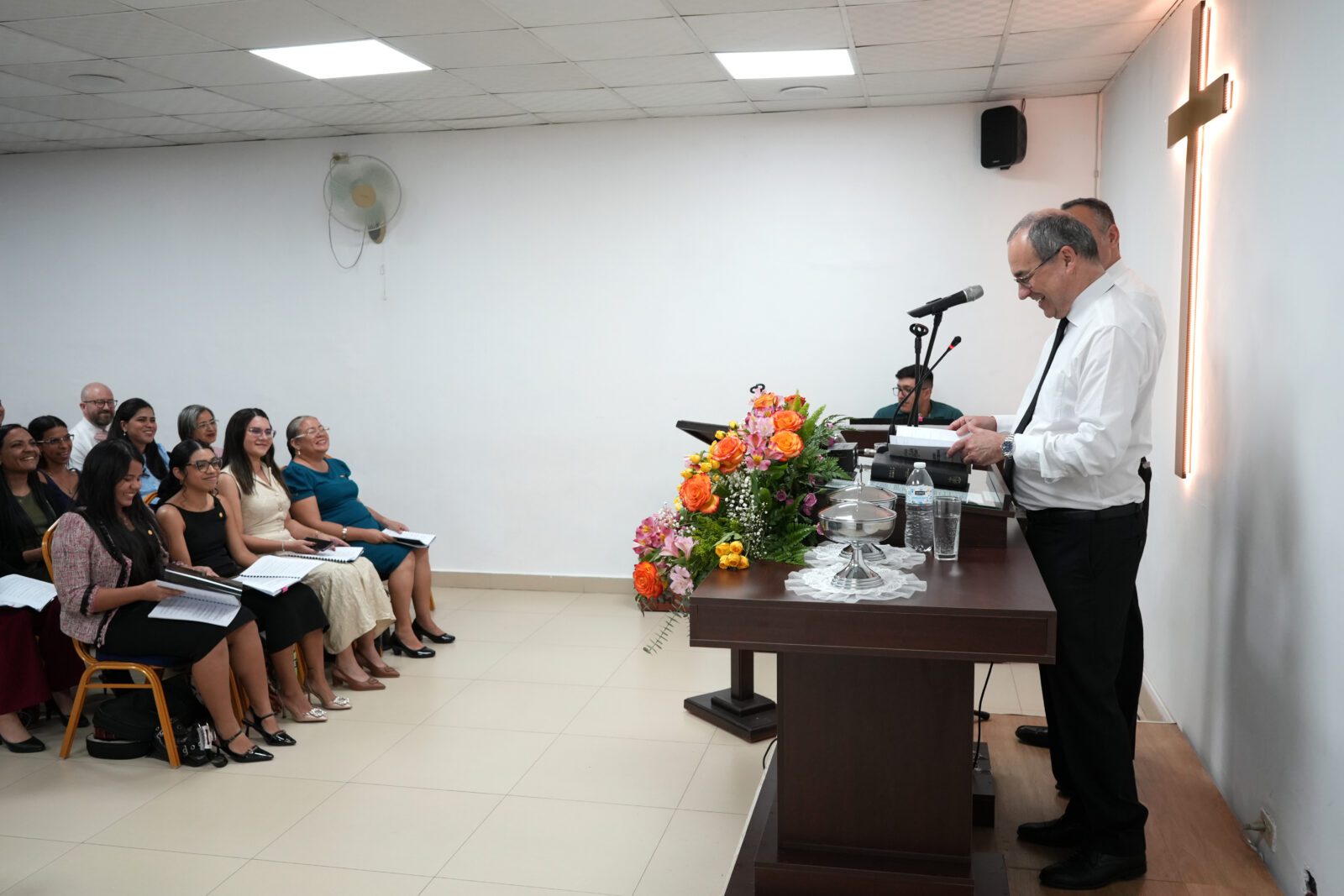
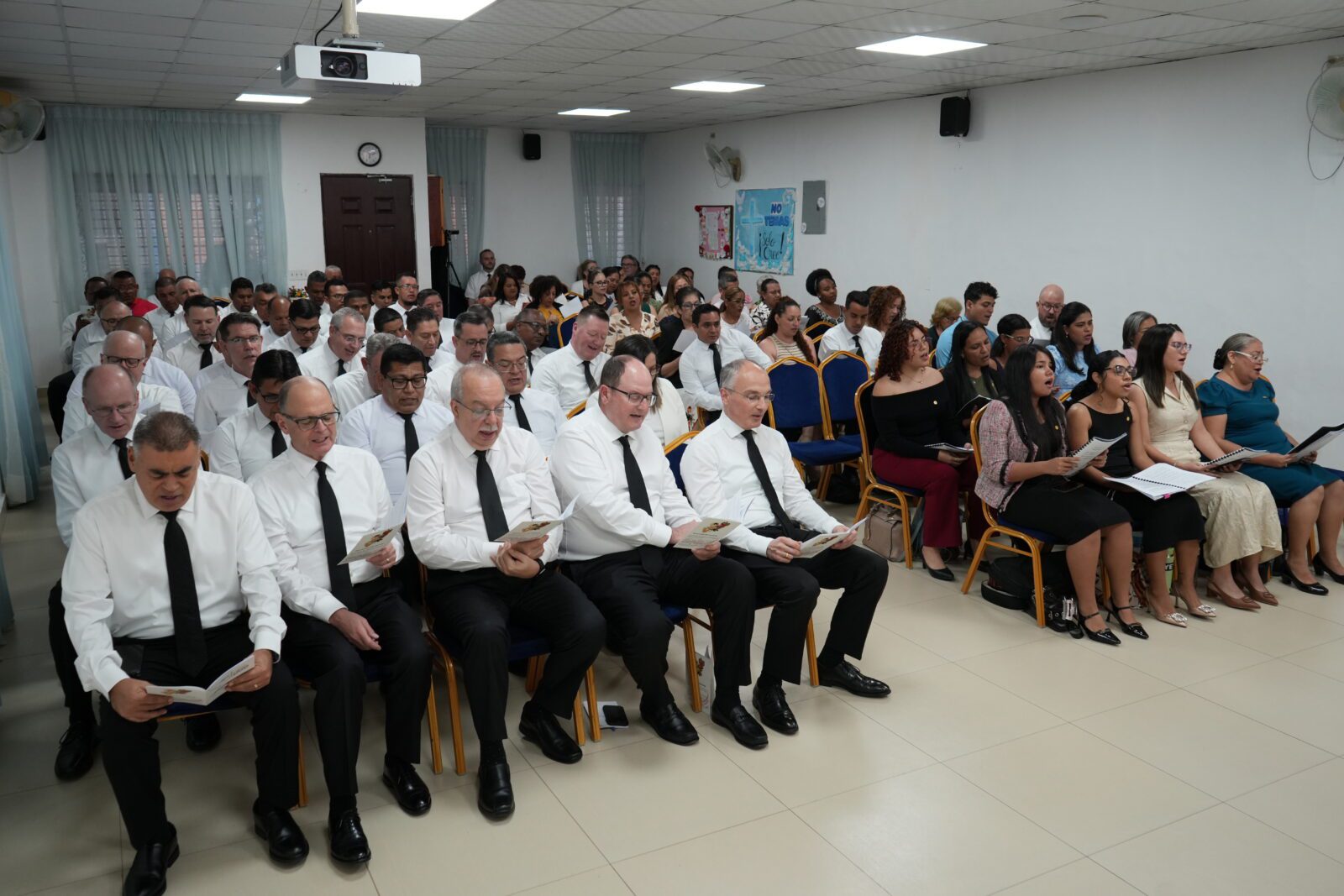
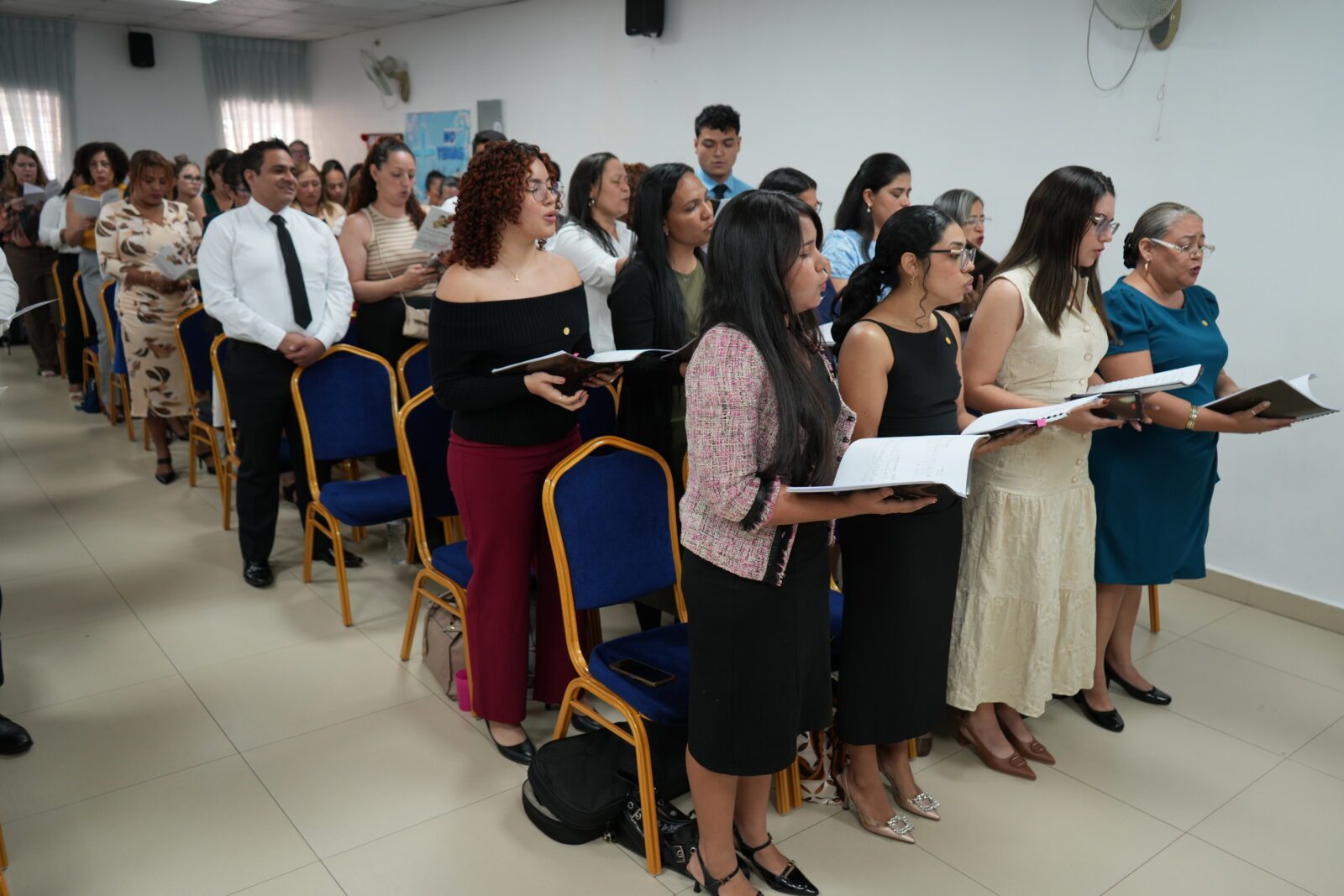
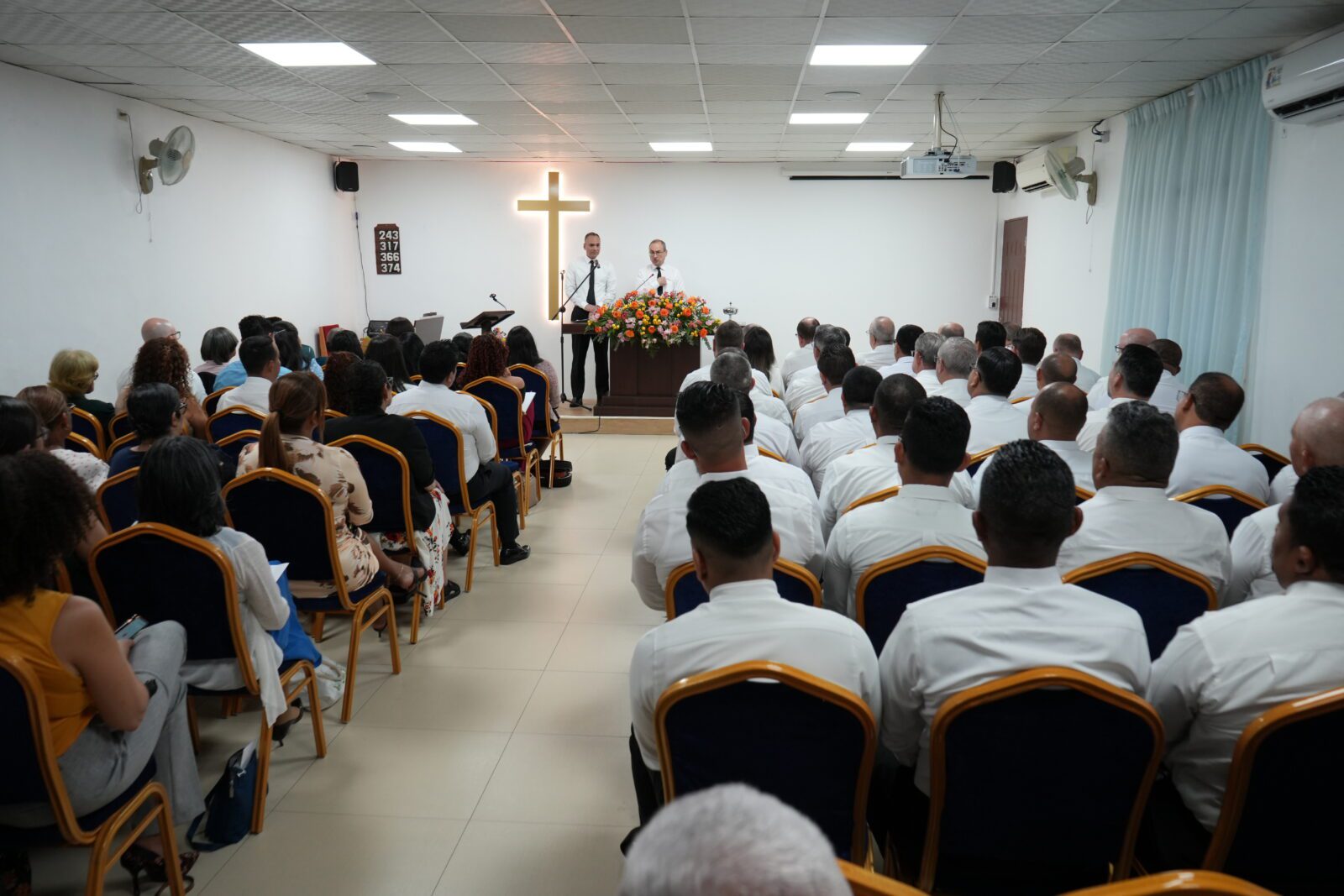
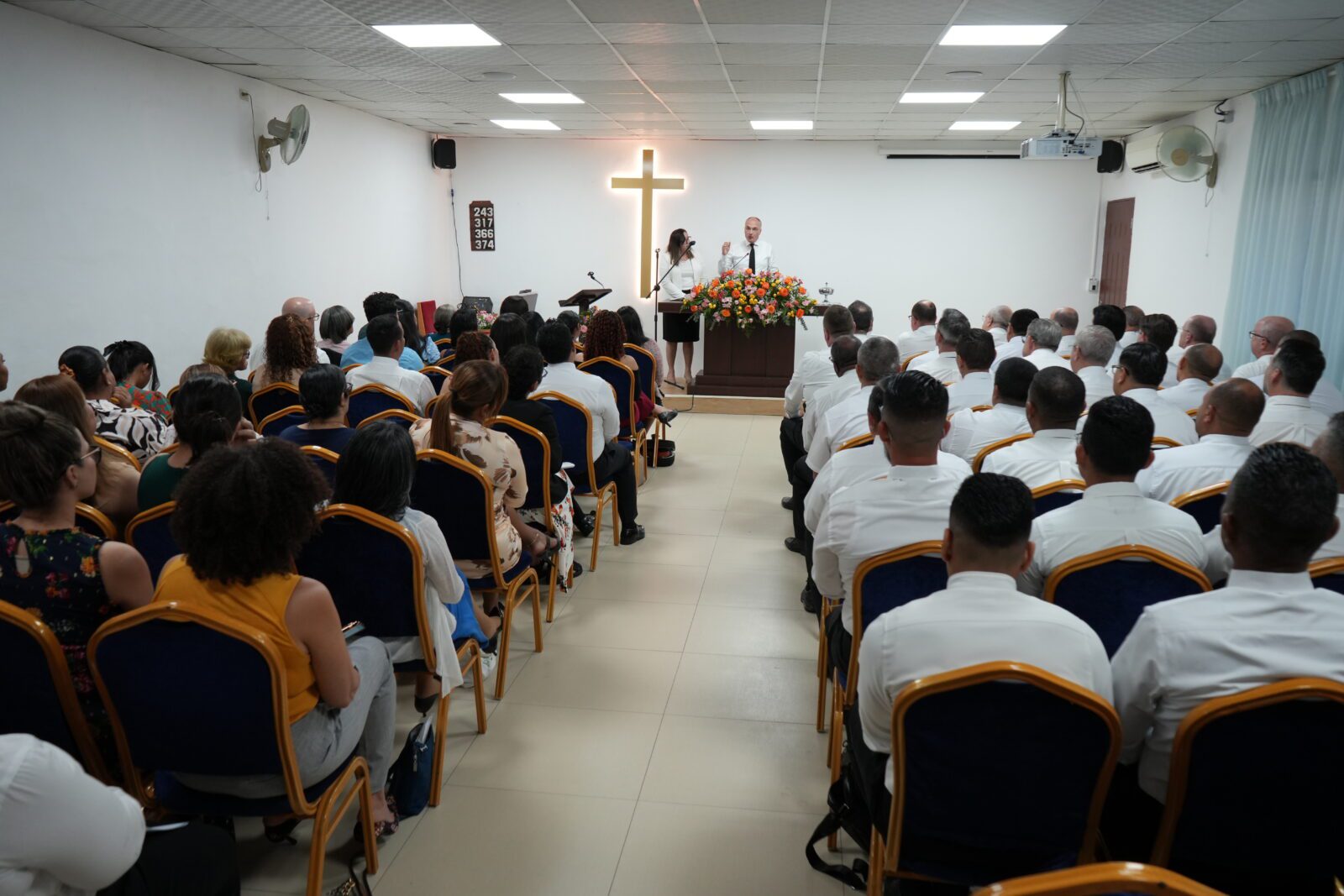
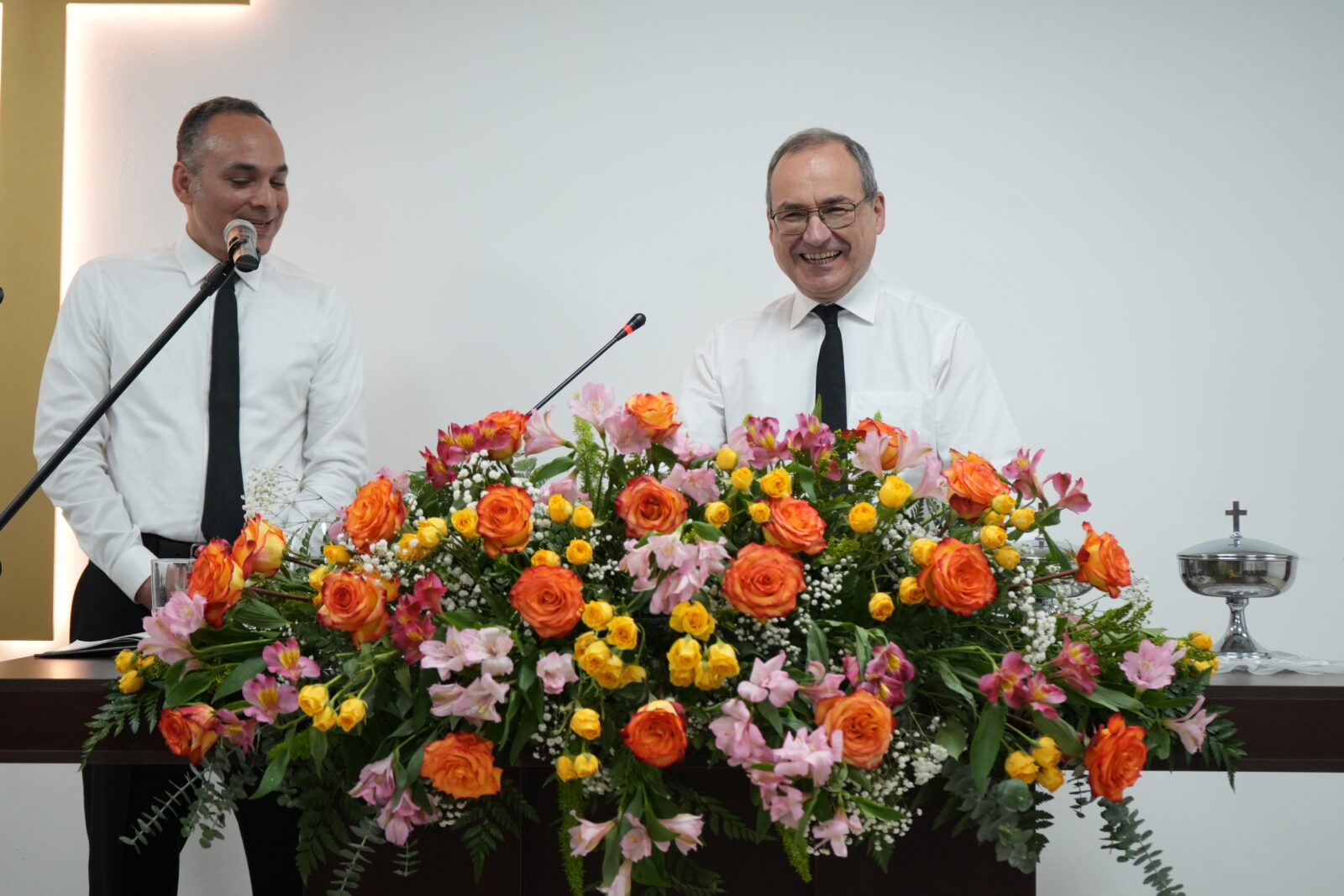
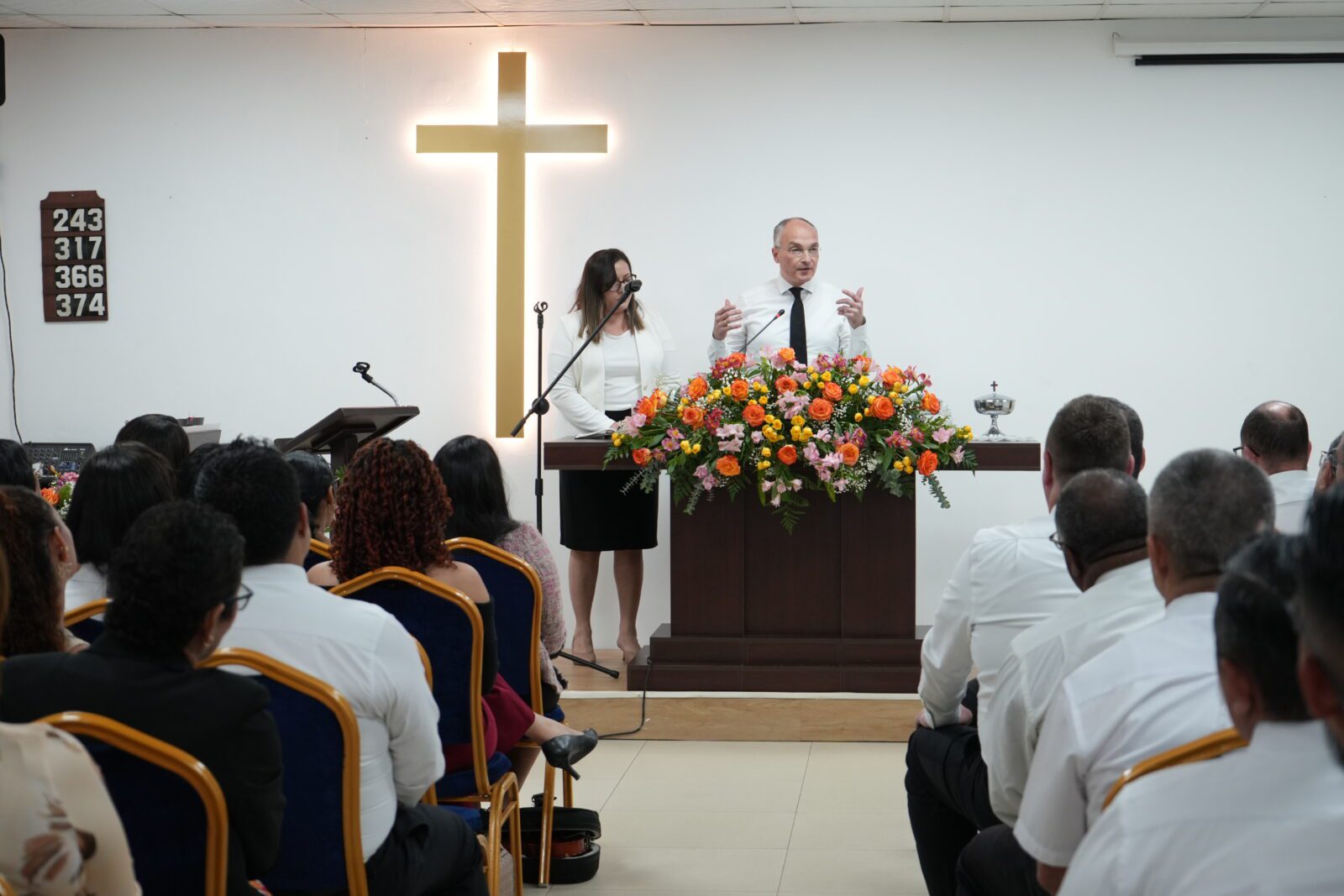
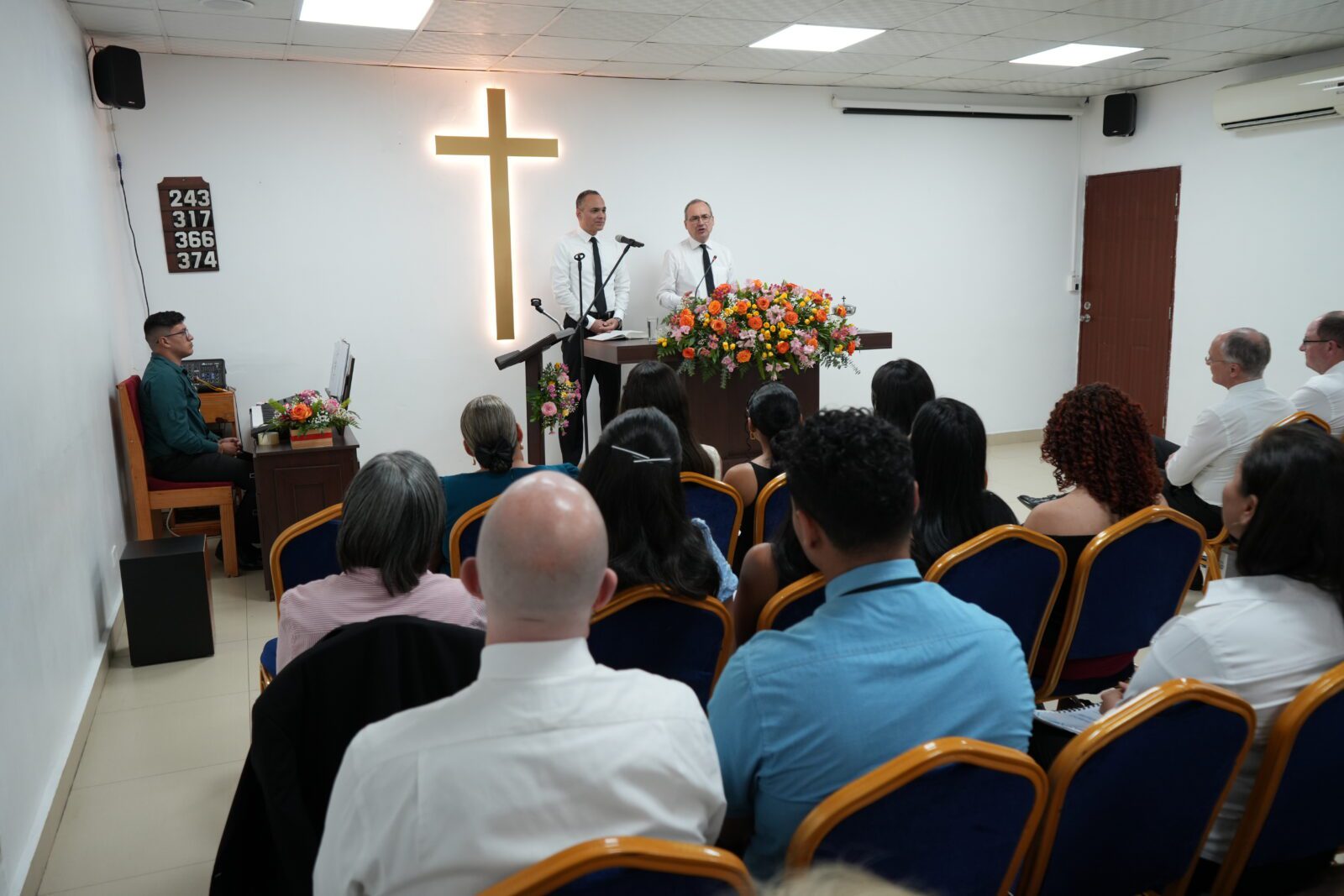
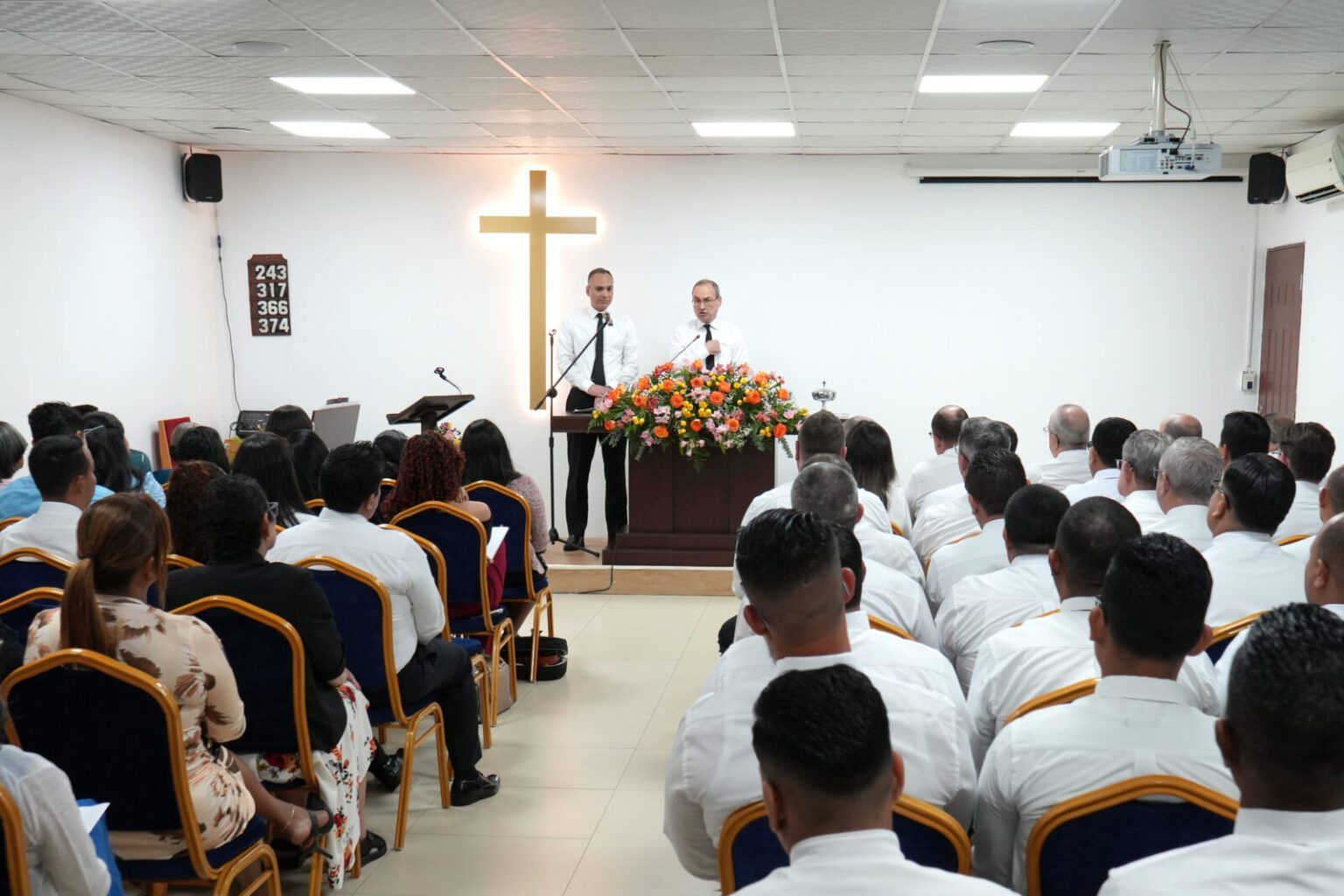
Chief Apostle Jean-Luc Schneider conducted a divine service for ministers on Saturday, 24 January 2026, in our church in Panama City, Panama. He was accompanied by Apostles and other ministers from District Apostle Schnabel’s Spanish-speaking working area. The divine service was based on 1 Peter 5: 1–3. In this Bible passage, Apostle Peter exhorts the leaders of the congregation to shepherd the flock of God willingly, selflessly, and by being examples.
At the beginning of the service, the Chief Apostle expressed his gratitude to those present. He noted that it had become something of a tradition to begin such services with words of thanks. “But it is more than that,” he added. The Apostles are not able to fulfil their mission alone, he said. “We are really grateful and thankful for your help, for your prayers, and for your work.” He went on to say that, at the same time, his mission is to convey God’s thoughts. Christ knows and sees everything—even what remains hidden from us. And He desires to bless His servants and their work.
Serving also means suffering
The Bible text reminds us that Christ’s disciples also share in His suffering. The Chief Apostle went on to describe what this suffering entails: Jesus suffered from the ingratitude of the people, for example, when He had healed people and they did not even thank Him. He was frequently criticised, especially by the Pharisees. And He was likely hurt by the lack of understanding within His own family, who even said, “He is out of His mind.” And Jesus even experienced failure. He wept over Jerusalem because the people had not accepted His message. This made Him sad. Later, His friends either abandoned Him or betrayed Him. Ultimately, He endured physical suffering when He was crucified and died on the cross. In the end, He even felt forsaken by God.
According to Chief Apostle Schneider, such experiences are not unfamiliar to many of God’s servants. They, too, must cope with ingratitude. Their efforts are often taken for granted, while their mistakes are quickly criticised. At times, even their own families may not show understanding. “You know what I’m talking about,” he said.
Suffering—yet there is hope
Failures also belong in this category. Despite considerable efforts, membership does not always grow. Sometimes long-standing companions—brothers and sisters with whom one has worked closely—leave the Church. At times, even one’s own family may stop attending divine services. All of this causes suffering. Such experiences, however, do not mean that God has rejected His servants. Rather, they show that those who follow Christ share in what He Himself experienced. What is decisive here is the promise also mentioned by Peter: those who share in Christ’s sufferings will also share in the glory to be revealed.
At this point in his sermon, Chief Apostle Schneider put our own suffering into perspective. Christians do suffer, he said, but not to the same extent as Christ. None of us have to go to the cross. And yet Christ has promised to share His glory with us. “If you suffer because of Christ, you will share in His glory,” said the Chief Apostle.
Why we serve at all
Beyond suffering, following Christ is also a matter of inner attitude. Ministers are called to adopt the same mindset as Christ, grounded in the conviction of their calling. Jesus knew that He had been sent by the Father. In the same way, the ministers can be certain that Christ has called them to serve Him, the Chief Apostle explained. True service is not offered out of compulsion. “We serve the Lord not because we must, but because we want to,” he emphasised. Anyone who feels pressured should speak openly about it. Serving must always be a matter of free choice.
The Chief Apostle also cautioned against false motivations. We do not serve for the sake of money, honour, or power. Such thoughts may nevertheless arise, for example, when recognition is lacking. In such moments, it is important to remember that service is, above all, an act of love.
There are no extra points to be earned in heaven
Chief Apostle Schneider went on to address another common misconception. Everyone receives the same in heaven. No one receives more simply because they held a ministry. “You cannot receive more than eternal life,” he summarised. Eternal fellowship with Christ is the greatest gift a person can receive.
He said that some interpret the parable of the talents as suggesting different rewards. In reality, however, it teaches that God gives far more than we could ever achieve on our own. That is why a Chief Apostle is in no way more “deserving” than a sister or brother in the congregation. God entrusts each of us with a task, and at the same time grants us the strength to fulfil it. Therefore, the commitment and effort involved are ultimately comparable.
Serving, not intimidating
Finally, the Chief Apostle turned to the practical exercise of ministry. Although Jesus possessed great authority, He never forced anyone to believe. “We don’t force our members,” explained Chief Apostle Schneider. Threats or pressure are not the way of Christ.
The commission consists of proclaiming God’s will—that which people need to know for their salvation. Personal experiences or advice may be helpful, but they do not carry the same authority as the gospel. As shepherds of God’s flock, ministers are called to ensure that everyone receives what is necessary for their salvation—regardless of whether they meet with approval or criticism.
Being a role model: not perfect, but honest
Finally, the Chief Apostle turned his attention to the ministers’ function as examples. Nobody expects perfection. What matters is honesty and sincerity. It is precisely in difficult situations that ministers can demonstrate, in a tangible way, what it means to trust in God. “Let us be an example in love and forgiveness,” he urged. Forgiveness, humility, and love are what truly count. In the end, God will not ask how many congregations were established or how many people sealed. What matters is a different question: whether we have done what God expected of us. Those who have done the will of God will enter His kingdom.