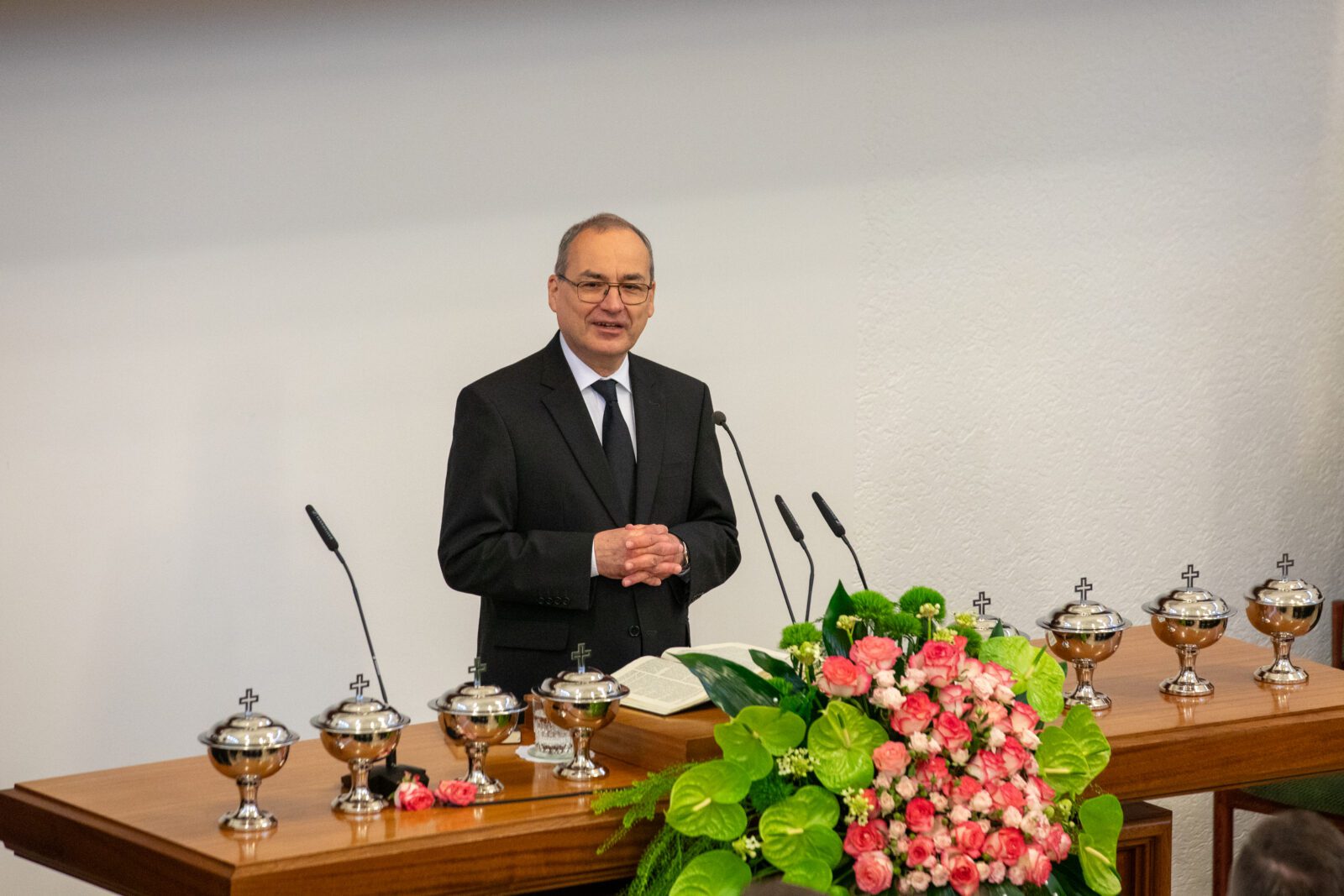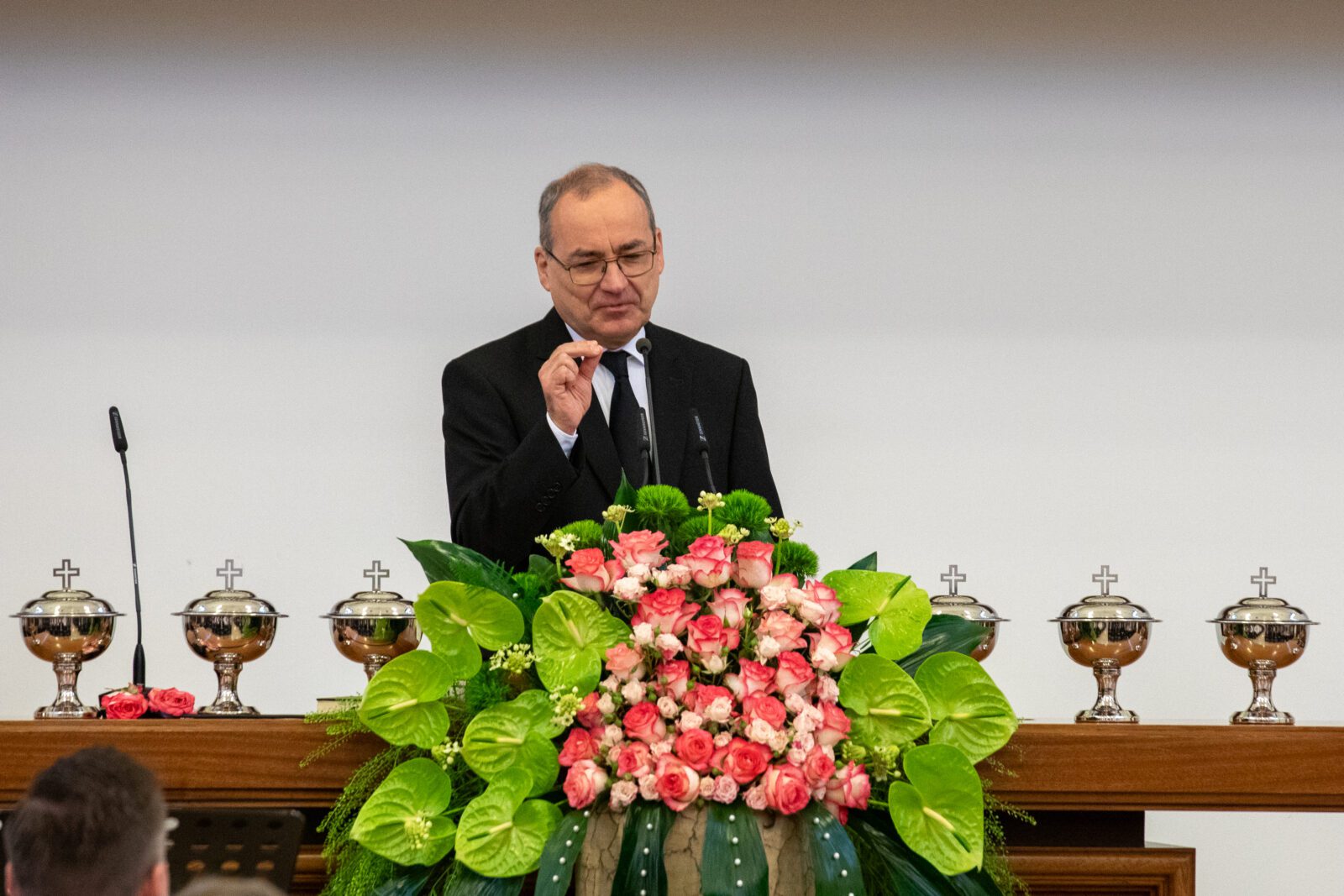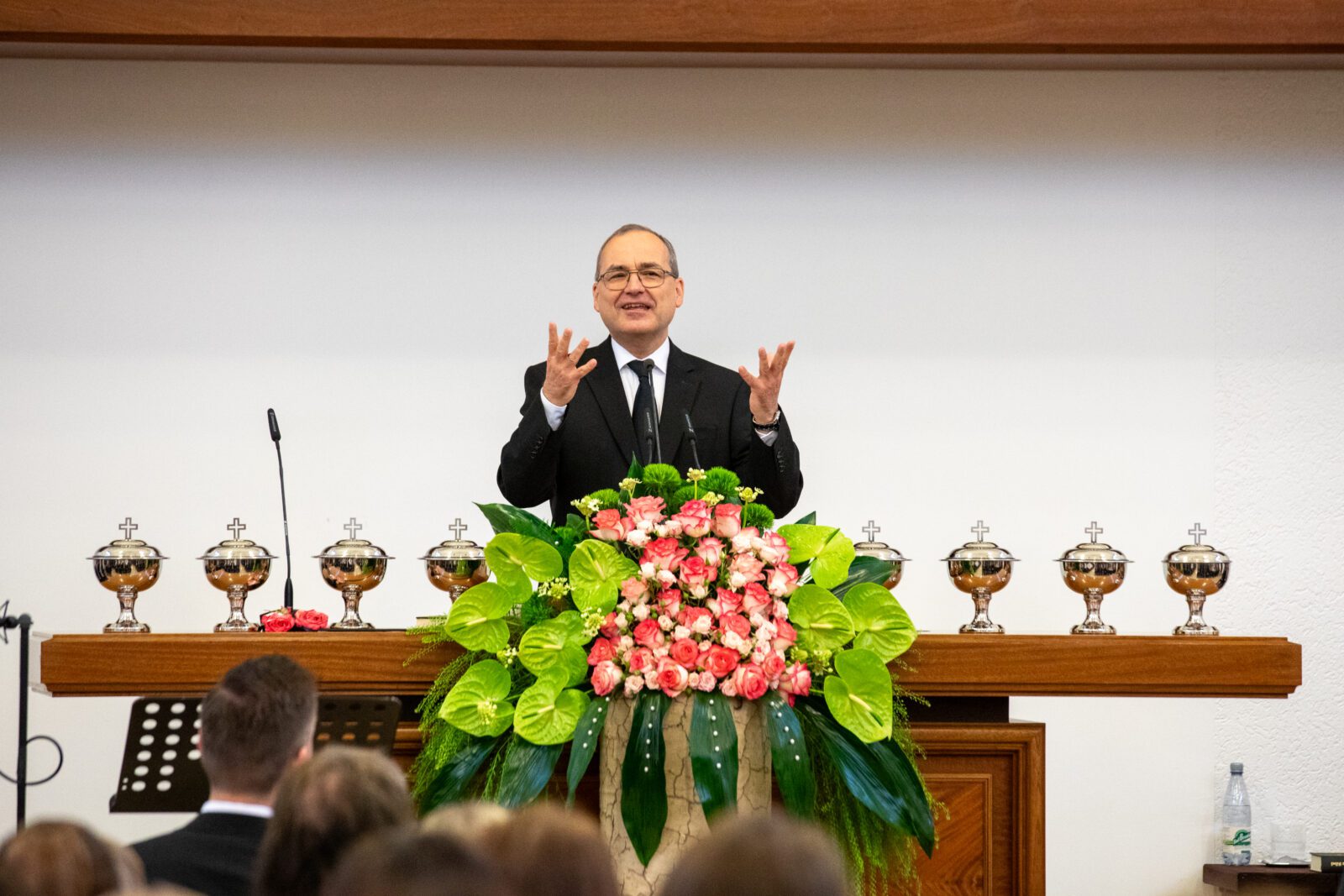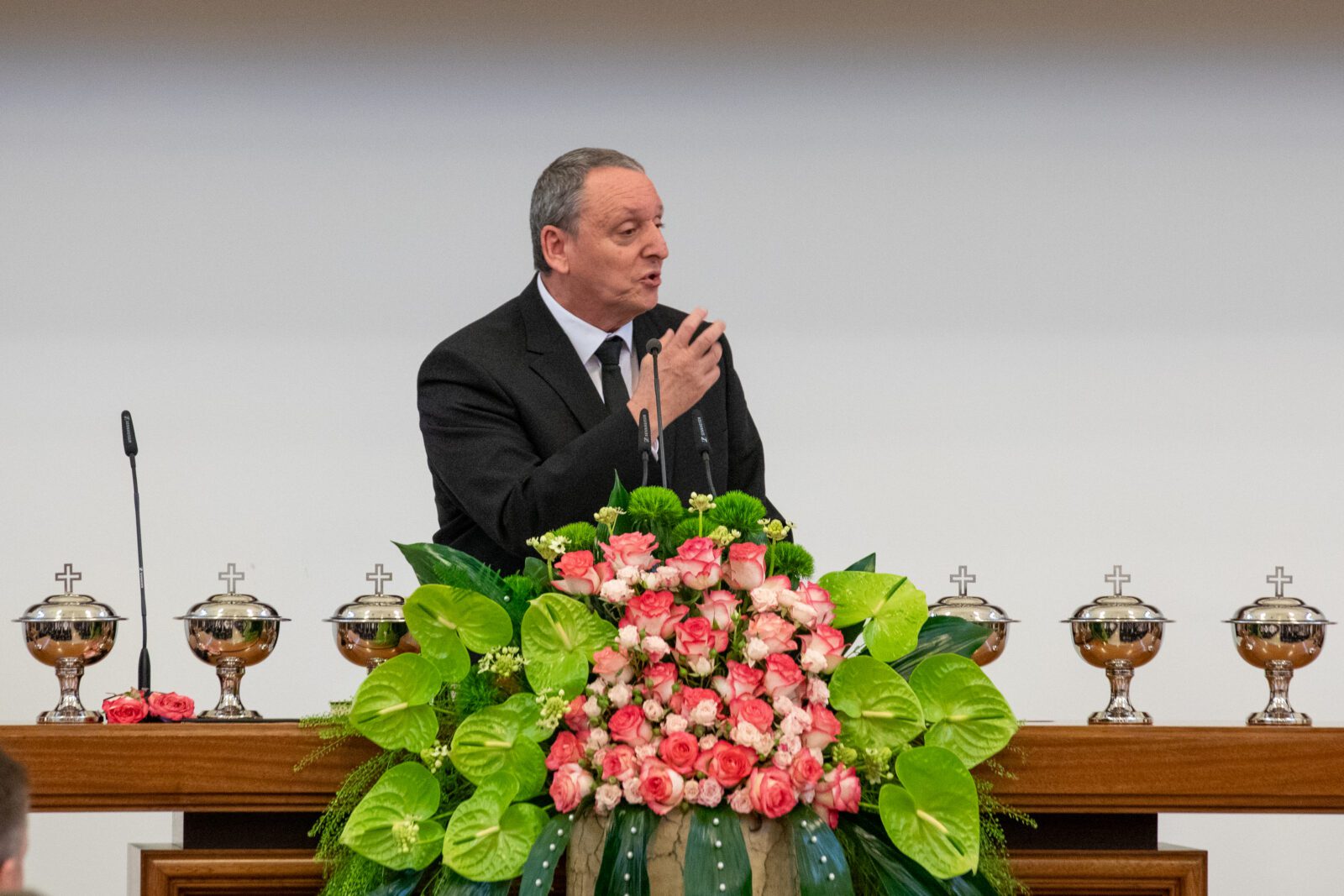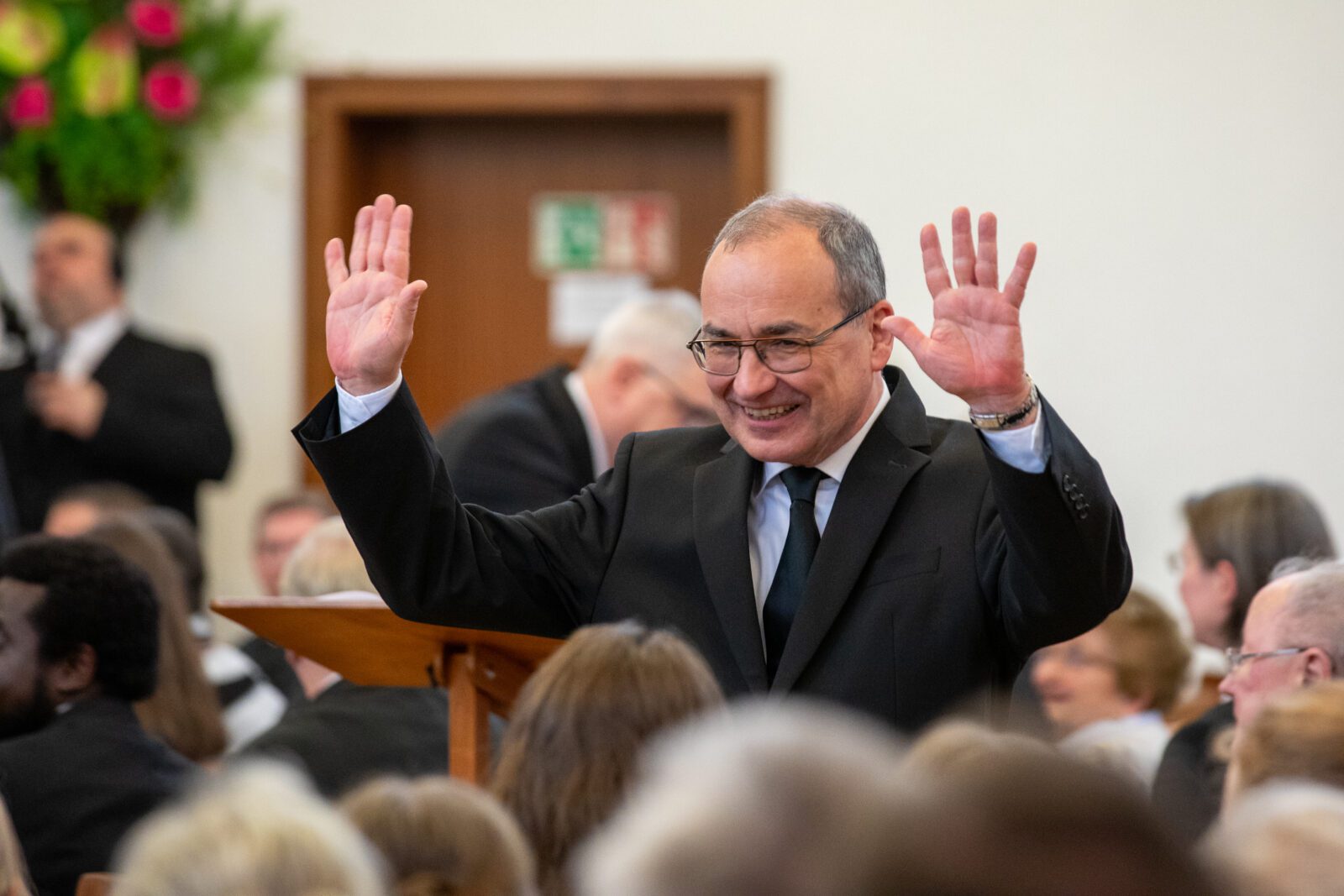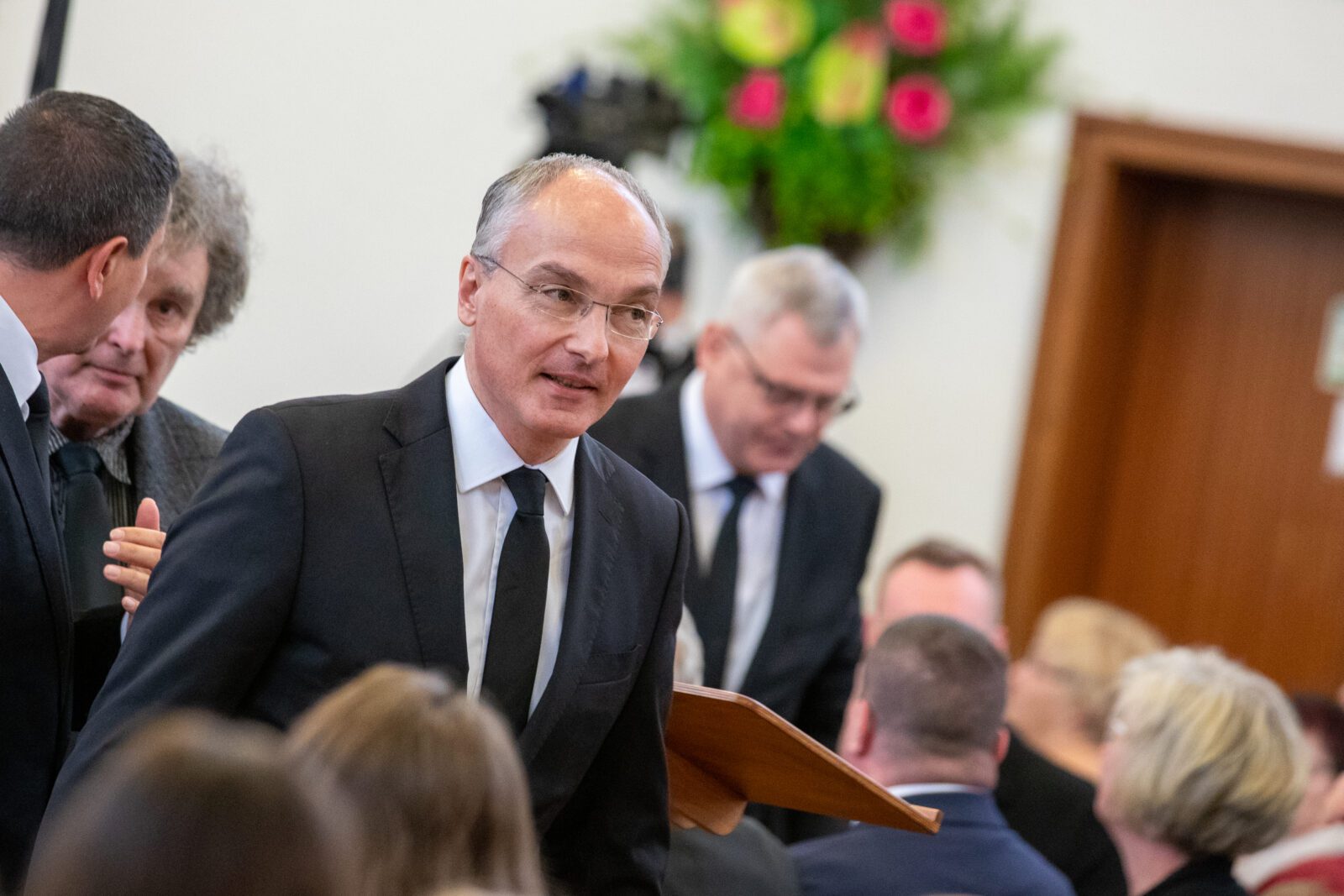




“Listen, my friends, don’t show favouritism.” This is the message the Bible seems to be addressing to us today. At its core, the message is about love. How can we achieve this? The Chief Apostle offers some guidance.
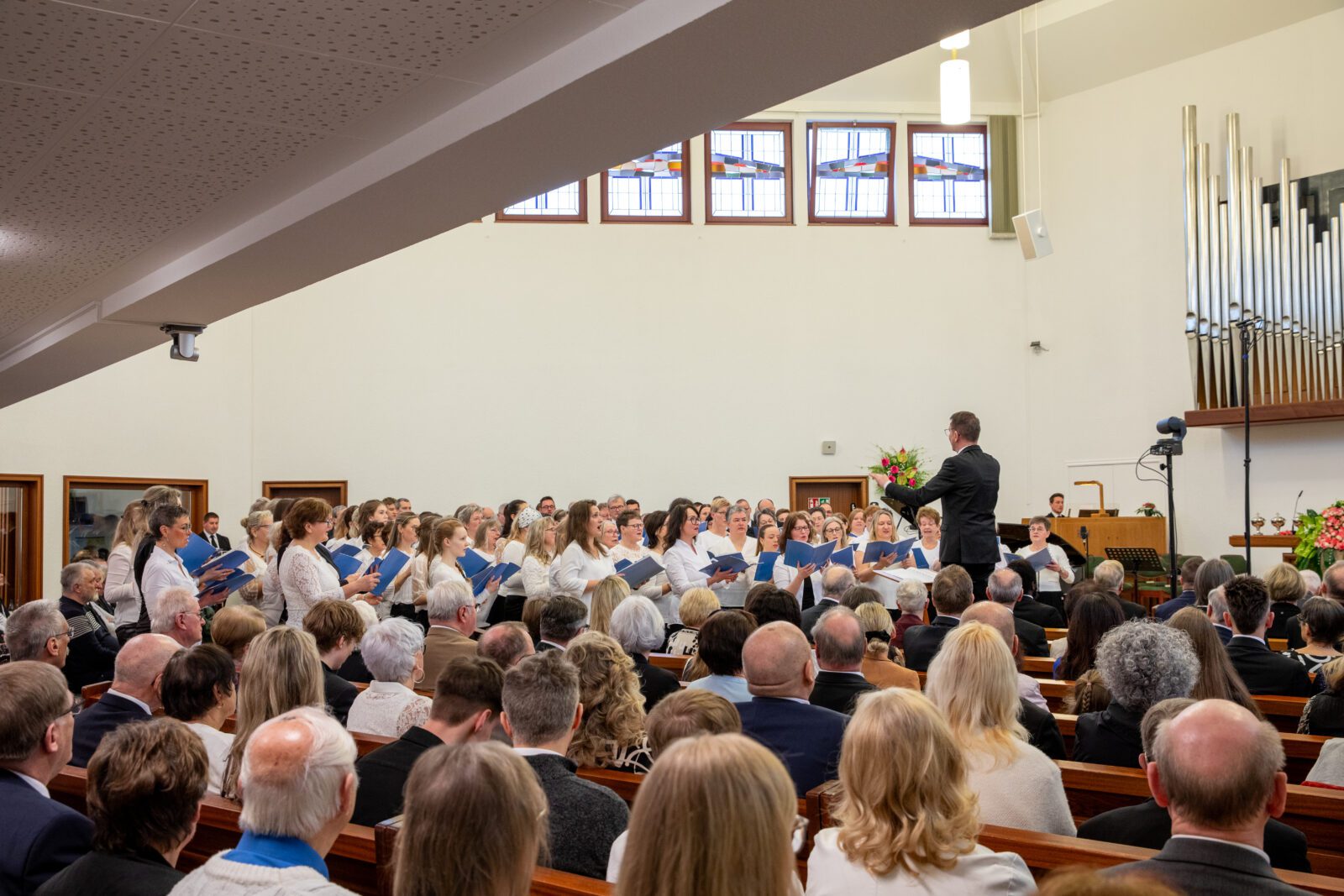
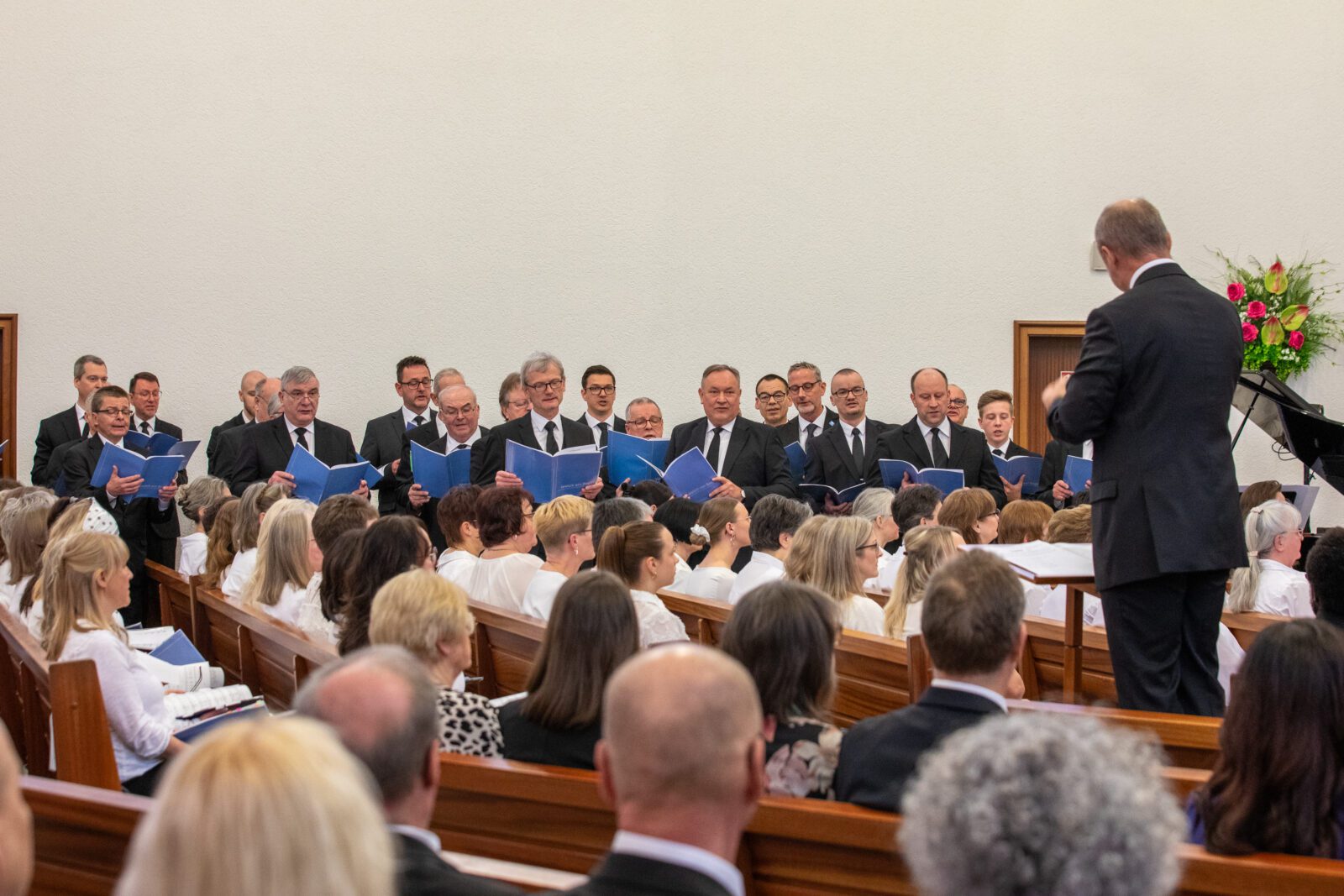
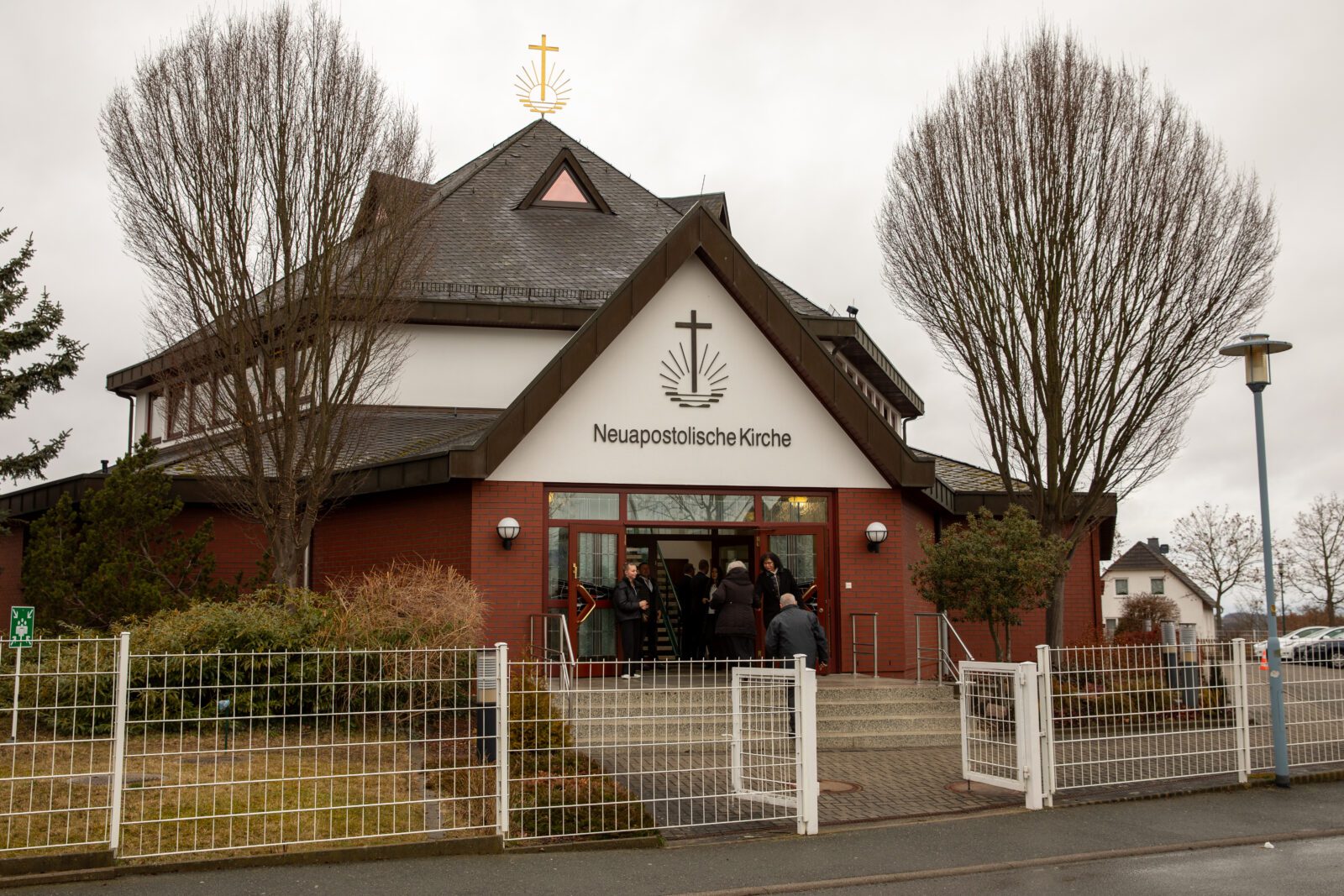
The background to this is James 2: 8: “If you really fulfil the royal law according to the Scripture, ‘You shall love your neighbour as yourself,’ you do well.” This was the theme of a divine service in Plauen, Germany, on 22 February 2026.
And by the end of the service, it had become clear: God wants us to love our neighbour—and also ourselves—because He loves us, and in the same way that God loves us.
The triad of love
“In the church at the time, people were kind and friendly to the rich,” explained Chief Apostle Jean-Luc Schneider, putting the Bible passage into context. “And the poor were neglected a little.” James counters this with the commandment to love one’s neighbour, which already appears in the Old Testament.
Jesus had taken this up in His Sermon on the Mount and subsequently expanded upon it. On the one hand, with some practical advice: “Do unto others as you would have them do unto you.” And, on a completely different note: “Love one another as I have loved you.”
How God loves us
God has proved His love, the Chief Apostle emphasised:
- “God created us!” We are not the result of chance. “He wanted us to exist.”
- “God cares for us. He gives us everything we need to live.”
- “God wants us to be with Him forever. This burning desire for fellowship with us is so strong that He sent His Son to earth and sacrificed Him for us.”
- “God has created a way that allows us to enter into this fellowship. No matter where we stand today, no matter how we feel today, no matter our past, no matter our present, there is a way forward for us.”
- “God respects our freedom. He will never force us.”
How to love oneself
Loving our neighbour as God loves us, and loving our neighbour as we love ourselves also means: loving ourselves as God loves us, the Chief Apostle explained.
- Let us not measure our worth by our success or failure, and certainly not by what others think. Rather, let us measure our worth by God’s love for us.
- Let us treat our body and our mind with care and consideration. Let us make good use of our strengths and gifts and not take any unnecessary risks.
- Wish for the best. The best is eternal fellowship with God. That is the pinnacle of self-love. Let us treat ourselves to the best. That is, pay what needs to be paid and sacrifice the old Adam.
- Choose the safe path. Follow Jesus Christ. Accept the help and grace that God offers us.
- And let us preserve our freedom. We want eternal life. “Don’t let anyone stop you. Let them say, do, post, and behave as they like. We are free.”
How to love others
And what does ‘Love your neighbour’ mean in this sense? The answer:
- “Let us see others—whatever they may be like—just as Christ sees them: a creature of God, a soul whom God loves and wishes to save.”
- “Do unto others as you would have them do unto you.” Love for our neighbour compels us to think things through. Our decisions have consequences not only for ourselves, but also for those around us—in very practical and concrete terms in normal daily life.”
- “We wish others the salvation that we ourselves have. Yeah, sure, he does not deserve it, she does not deserve it—but neither do we.
- “We want to help these souls recognise God, to find God, and to experience His love. We don’t need to preach and go on and on about it. It is our behaviour in daily life that achieves this.”
- “And there, too, we want to preserve our freedom. Whether things are going well or badly for us, let us contribute to the salvation of our neighbour.”
Photos: Jens Lange