




What kind of subjects are addressed in a divine service for ministers? Well, here it was about 250 kilos of silver—but differently than one might think. The sermon was not a presentation about positive financial results but took a close look at faithfulness. For anyone wishing to hear it: it’s encouraging.
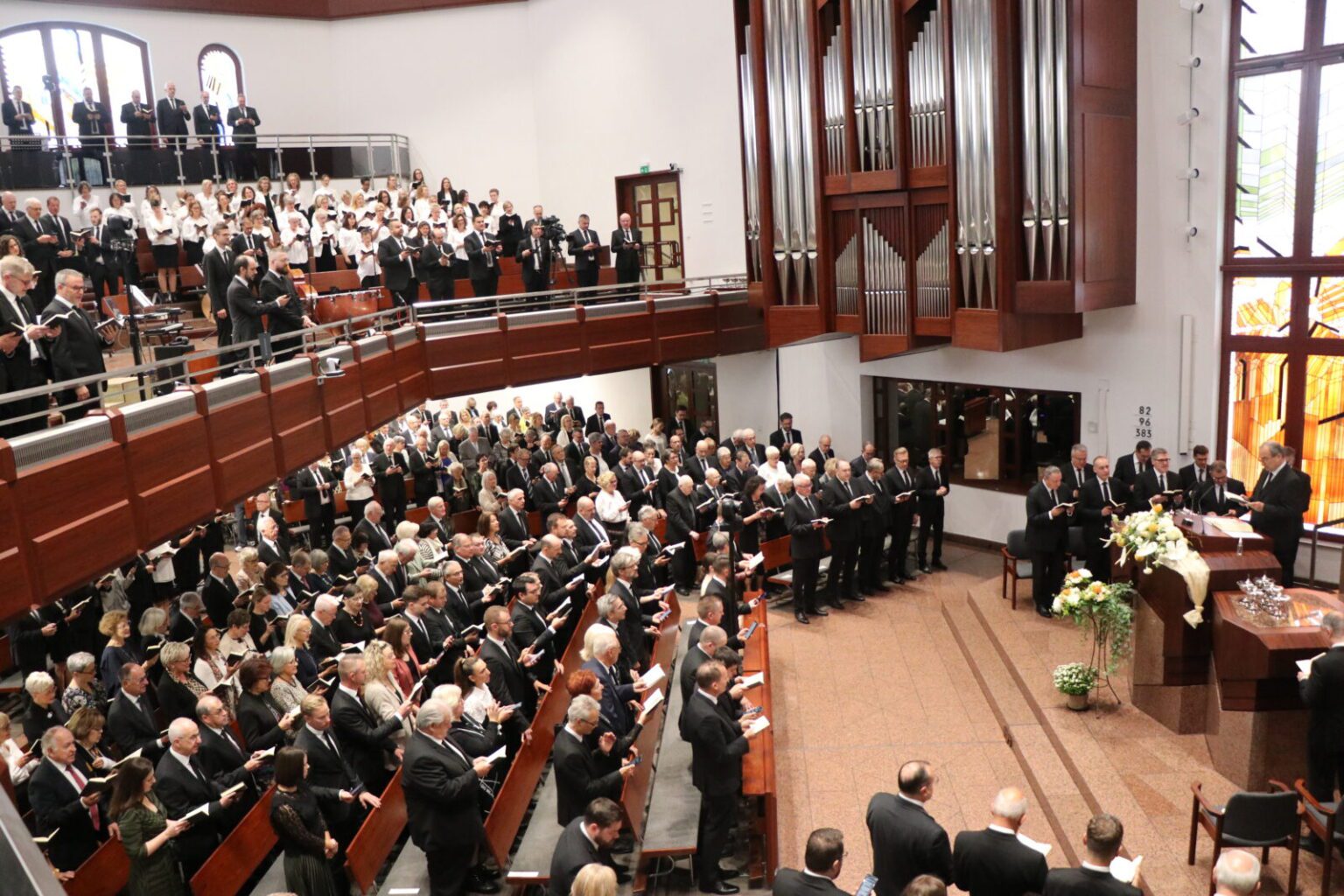
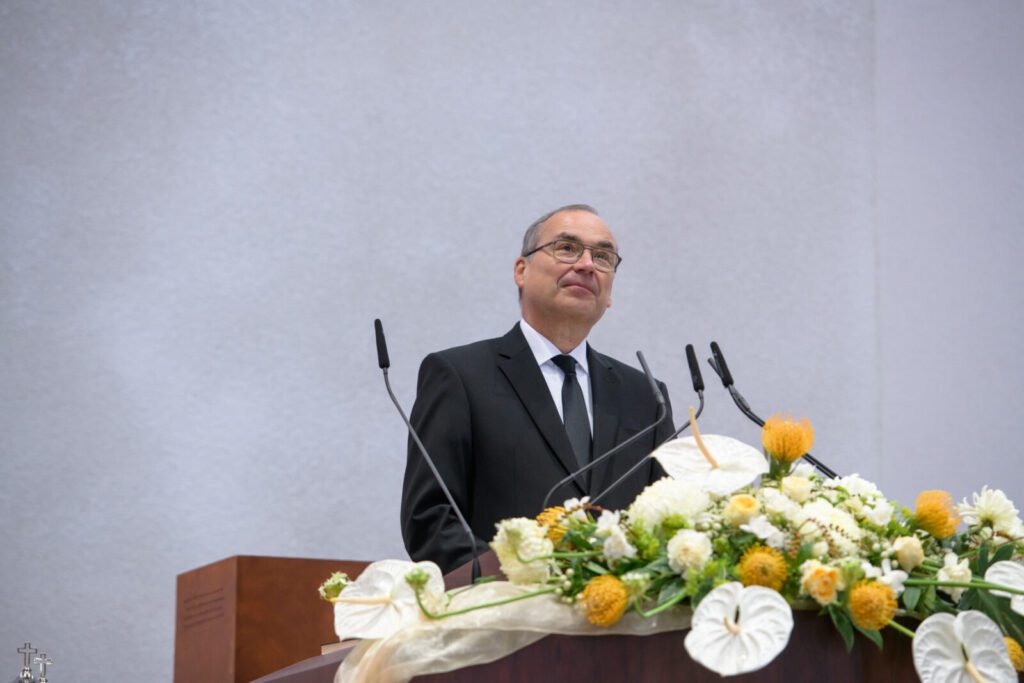
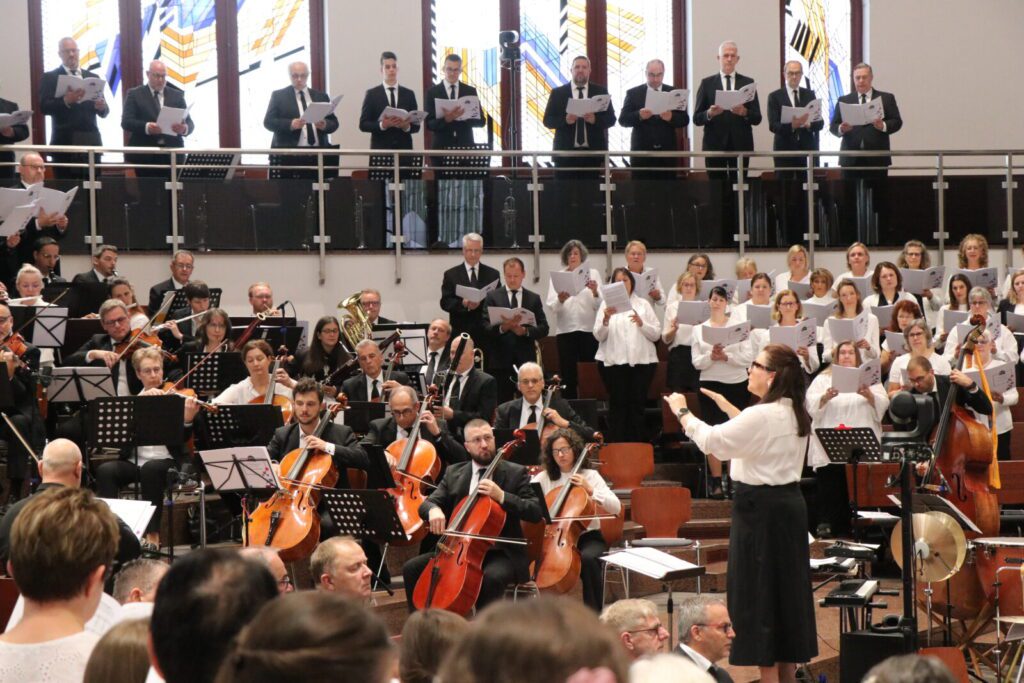
On 12 October 2025, a divine service for ministers in Karlsruhe, Germany, was broadcast throughout Europe. Chief Apostle Jean-Luc Schneider based his sermon on Matthew 25: 21: “His lord said to him, ‘Well done, good and faithful servant; you were faithful over a few things, I will make you ruler over many things. Enter into the joy of your lord.’” After expressing his gratitude, the Chief Apostle preached about serving and faithfulness: far removed from profits and earnings, close to the promise of Christ.

Fishers of men, shepherds, and servants
The Chief Apostle used images from the Jesus’ public ministry to classify the serving of ministers today: fishers of men, labourers working to bring in the harvest, ploughmen, shepherds, stewards, and the servant who is entrusted with something. “These are all images that the Lord Jesus used to describe an aspect of ministry.” All the images used by Jesus Christ have one basic principle in common: “He makes things very clear: I am the Lord, I am the Master; you are the labourers, the servants, who have a special task to fulfil.” The Chief Apostle said that although the servants are involved in imparting salvation Jesus is the author of salvation. “We cannot bring about salvation. He is the one who will perfect our salvation.”
Whether fishers of men, stewards, or labourers working in the fields—the image of the harvest suggests a visible development, visible growth, and visible maturity. The net is full, the money has multiplied, and the fruit has ripened. But reality teaches us something different, the Chief Apostle said.
Less visible, not less valuable
“For years I was a rector, district leader, District Apostle, and now I have been Chief Apostle for some time. And what are the tangible results?” Every year there has been a decline in church attendance, he said. “This is an affliction that has been with me for years,” the Chief Apostle confessed. Despite all the imperfections, “you make an effort, question yourself, look for other ways, do all sorts of things.” And when you look at the declining attendance, it appears, “You are actually in the wrong place.” These thoughts are understandable, but one needs to take a closer look, and so the Chief Apostle first asked the question, “What do we believe?”
Those who believe in the act of ordination into a spiritual ministry also believe in the call of God. “And He knows exactly where my weaknesses and my imperfection lie, but He called me. So it cannot be completely wrong after all.” The realisation that God does not depend on human abilities is an additional relief. “He can do great things with very imperfect people. His plan of salvation does not depend on our weaknesses or our strengths.”
Chief Apostle Helper Helge Mutschler picked up on this point when he was called to assist and asked the question “What exactly does ‘little’ mean?” In the parable, the servant receives five talents: the equivalent of 250 kilograms of silver. “We always think: we are so few, everything is in decline. But when we look at it properly, we are looking at 250 kilograms of silver. This is a treasure of inestimable value. Every single soul that seems so little is so precious.”
Whether there is an upswing or a downturn in the Christian faith, the Chief Apostle went on to emphasise, “We cannot ascertain the state of perfection by it.”
What perfection means
But what does perfection mean? Chief Apostle Schneider cited two striking examples with Jesus Christ and Apostle Paul. “At the end of His life, Jesus could say, ‘It is finished.’” What did His end look like? He hung on the cross all alone. Humanly speaking, there was not a iota of perfection. Or Paul: “He was constantly dealing with hardship. He was criticised, arrested, and ultimately killed.” The situation in the churches at the time was not particularly good either: “There were internal divisions in the churches, there were more and more false teachers who clashed. You can read that very clearly in the letters.” And yet, in retrospect, it is clear: “What Jesus Christ did was fantastic, a huge success. Paul laid the foundation for the Christian faith.”
The same is true today. The fulfilment of God’s plan of salvation can only be grasped by faith and cannot be deduced from external circumstances. Especially when there is turmoil, when your heart bleeds because everything is going wrong, because things are not going the way you want them to, you should remember the words of Jesus: “I will come at an hour you do not expect it.”
Loyalty instead of success
The parable itself steers away from performance-based indicators: “The Lord does not reward performance, success, or increase. He rewards loyalty! What the Lord rewards is our discipleship.” This faithfulness then also influences the motivation for our ministration: “We preach the will of God, not to shine. We provide pastoral care in order to help, not to control others. And if we are entrusted with a leadership function, we lead in the spirit of Jesus Christ and do not rule over others. We simply want to be reliable servants whom the Lord can trust.” And to those who serve in this way the words of Jesus apply: “I will make you ruler over many things.” This promise makes it clear that true greatness in serving Christ does not lie in the result, but in faithfulness and exhibiting the character and qualities of Christ: “I want to become like Christ. And the more we become like Christ, the more we are motivated to serve, to preach the gospel, to provide pastoral care, and to administer the sacraments.”
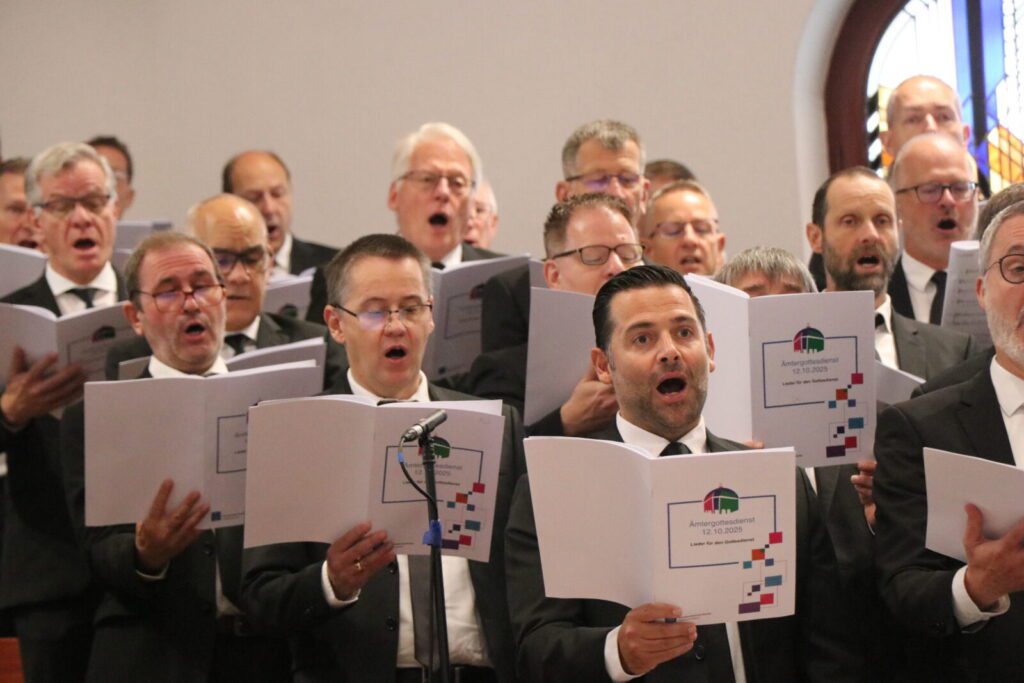
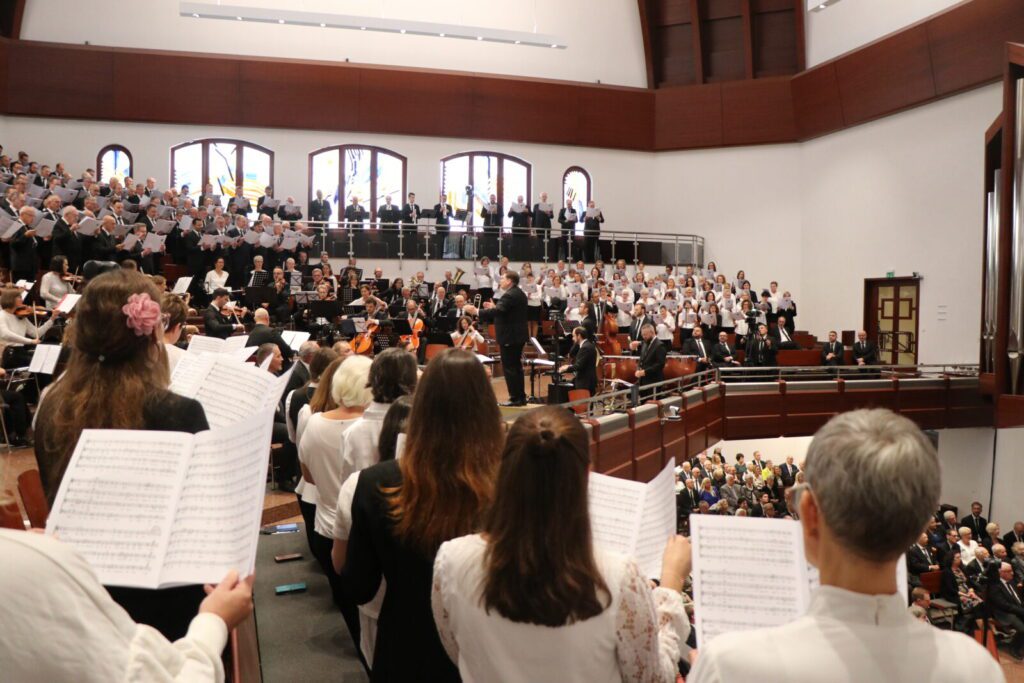
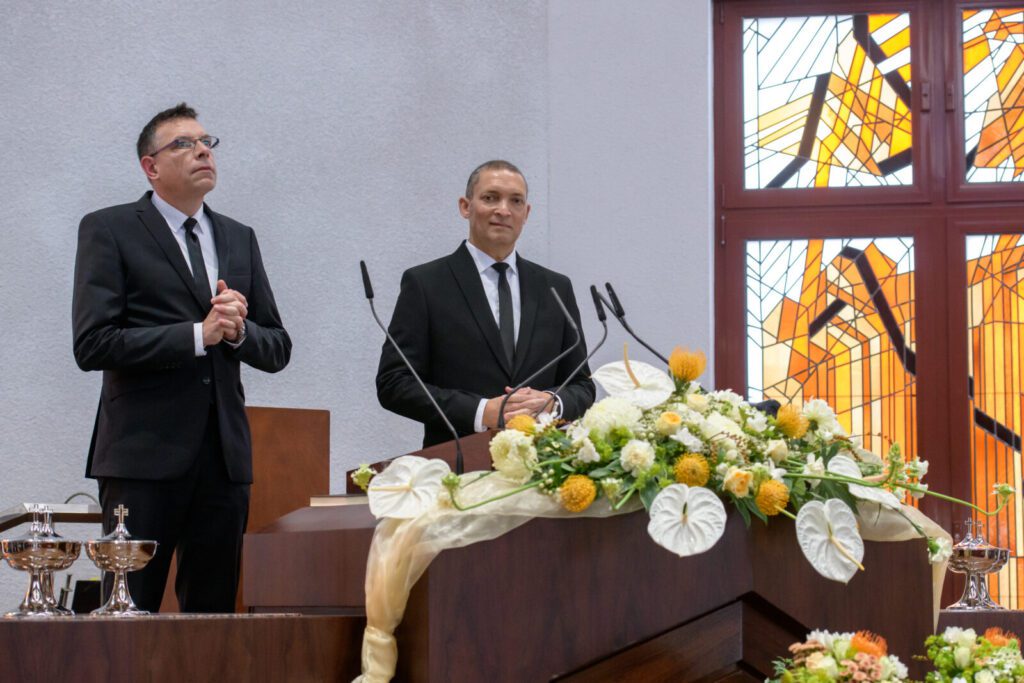
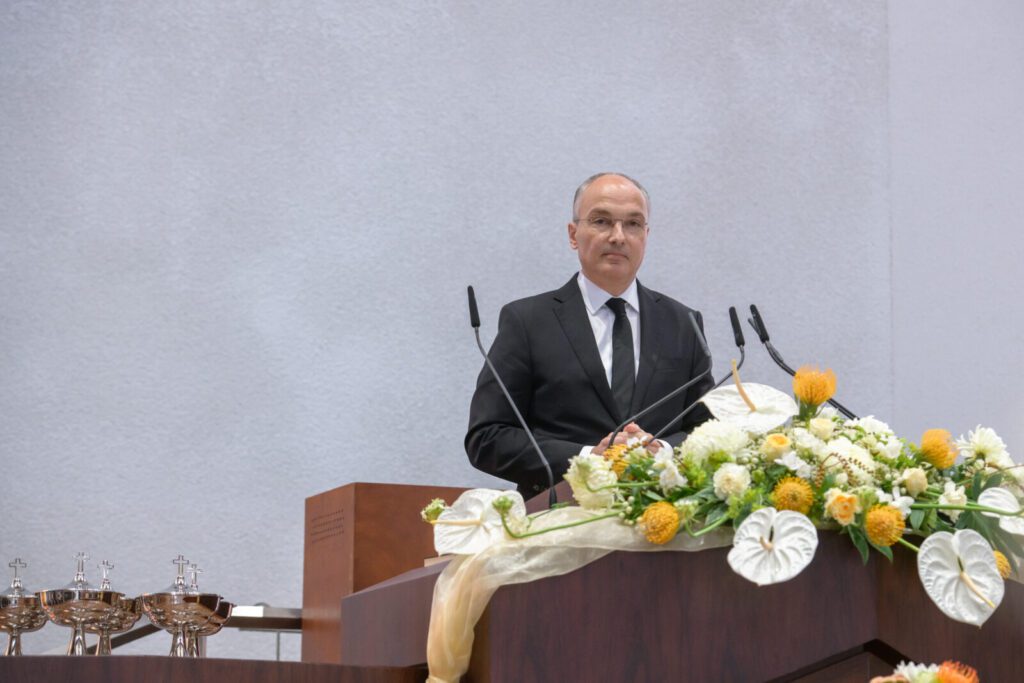

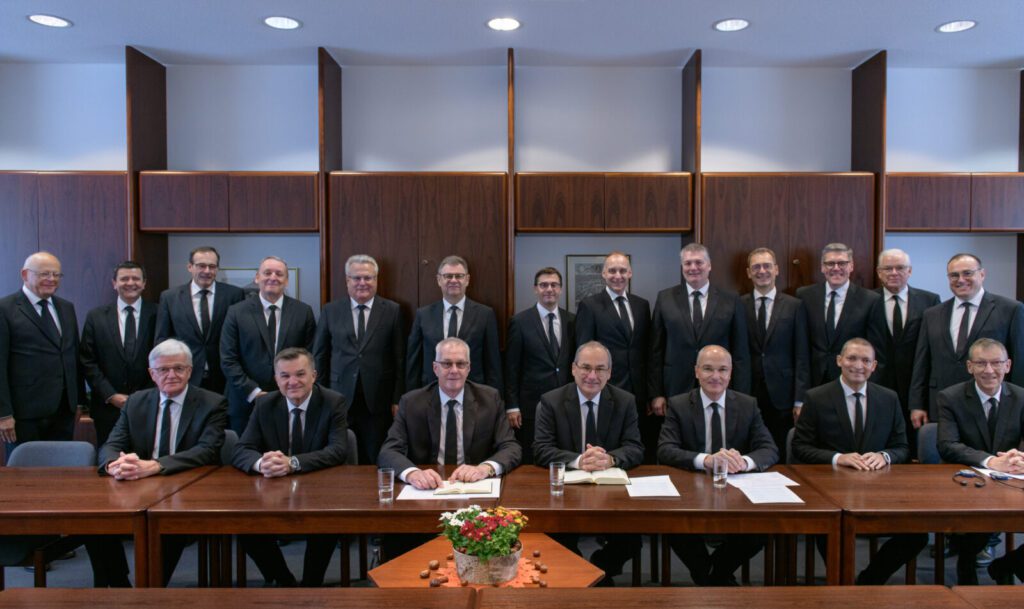
Photo: Neuapostolische Kirche Süddeutschland