

March 23, 2026




“It’s time to do good!” This year’s motto is especially important for our children. Experts explain how this works in terms of faith. This time we will look at how children learn to distinguish right from wrong?
In a normal day with children, there are constantly situations where adults say,
“Don’t do that”, “Do this”, “Not like that”. Sometimes we explain, sometimes we scold, and sometimes we wonder how our children will learn to distinguish right from wrong.
From an early age, children begin to develop a sense of right and wrong, and this ability continues to develop over time. A child’s sense of right and wrong can easily be observed when it interacts and plays with others. For example, if parents notice that their child is taking another child’s toy, they can teach them that it is wrong to take something without permission. In this way, they lay the foundation for moral development.
For us as Christians it is not only a matter of obeying legal norms, but also of conforming to God’s commandments and Jesus’ example with respect to our conduct. Raising children in Jesus’ way is an ongoing process that requires patience, love, and commitment. By integrating biblical teachings and values into their upbringing, parents can help their children develop a deep understanding of right and wrong based on a solid foundation of faith.
Biblical teachings and stories: Parents can regularly read Bible stories with their children and talk about them. There are many that contain examples of right and wrong.
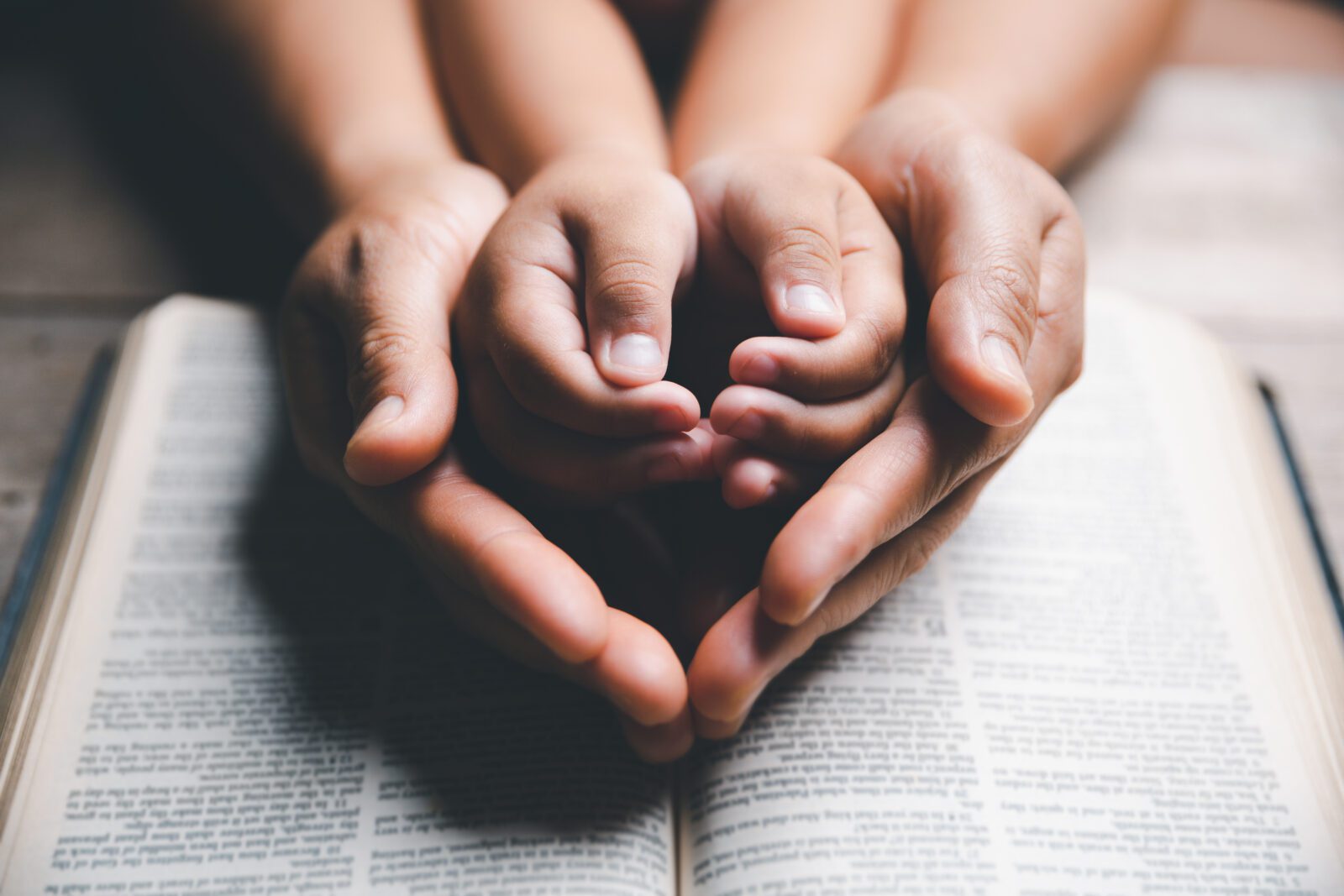
Prayers: Parents can help their children to model their lives on Jesus’ example by encouraging them to pray regularly and build a personal relationship with God. In prayer, children can ask for wisdom and guidance when faced with choices between right and wrong.
Being a role model: Children learn best by observation and imitation. That is why it is important for parents to set a good example in leading a moral life and acting in accordance with Jesus’ teachings. In this way, parents can encourage their children to develop moral integrity and responsibility.
Fellowship: In church, children can come into contact with brothers and sisters and companions who encourage and challenge them to live in accordance with Jesus’ teachings.
Talking to one another: Parents should encourage their children to ask questions and share their thoughts and feelings. Through these conversations, parents can teach their children how to make moral decisions and consider the consequences of their own actions.
Photo: mantinov – stock.adobe.com

Maraike Finnern is a teacher and school counsellor at a primary school in Hamburg, Germany. She heads the Working Group Children and Teaching for the Regional Church of Northern and Eastern Germany.