




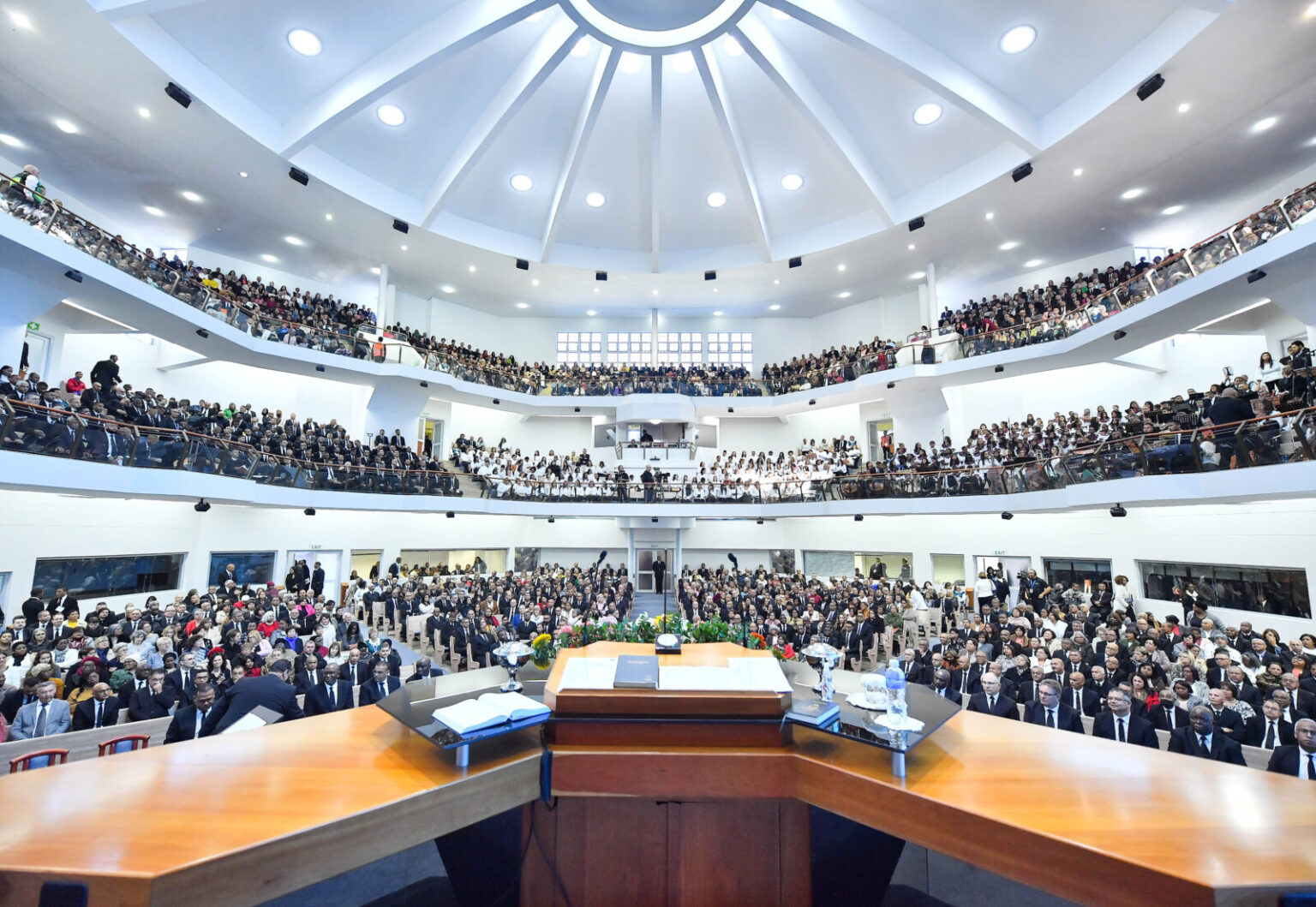
Is Tafelsig, the congregation hosting the 2026 Pentecost service, the largest New Apostolic church in the world? The answer is not entirely straightforward, as it depends on how one counts.
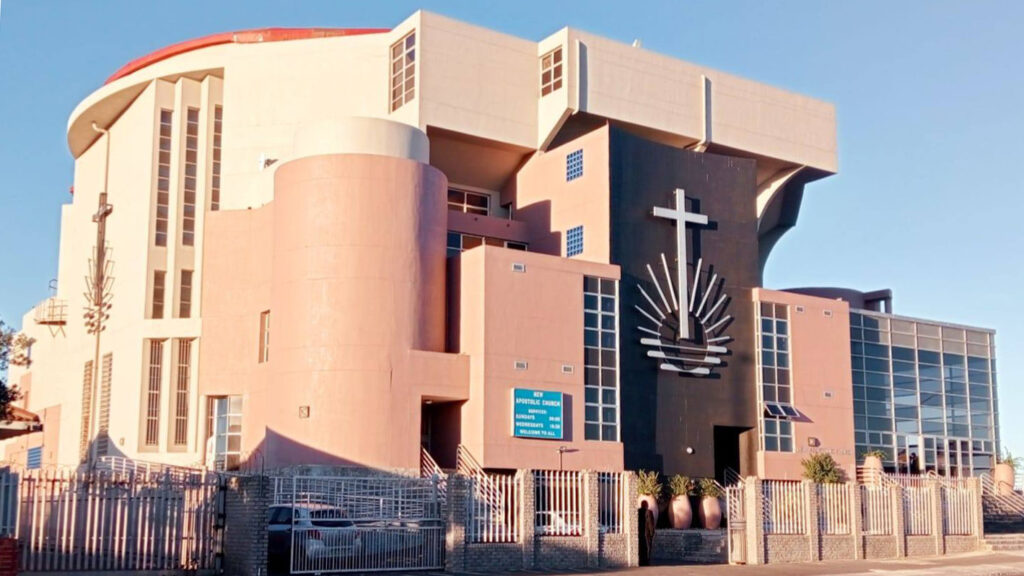
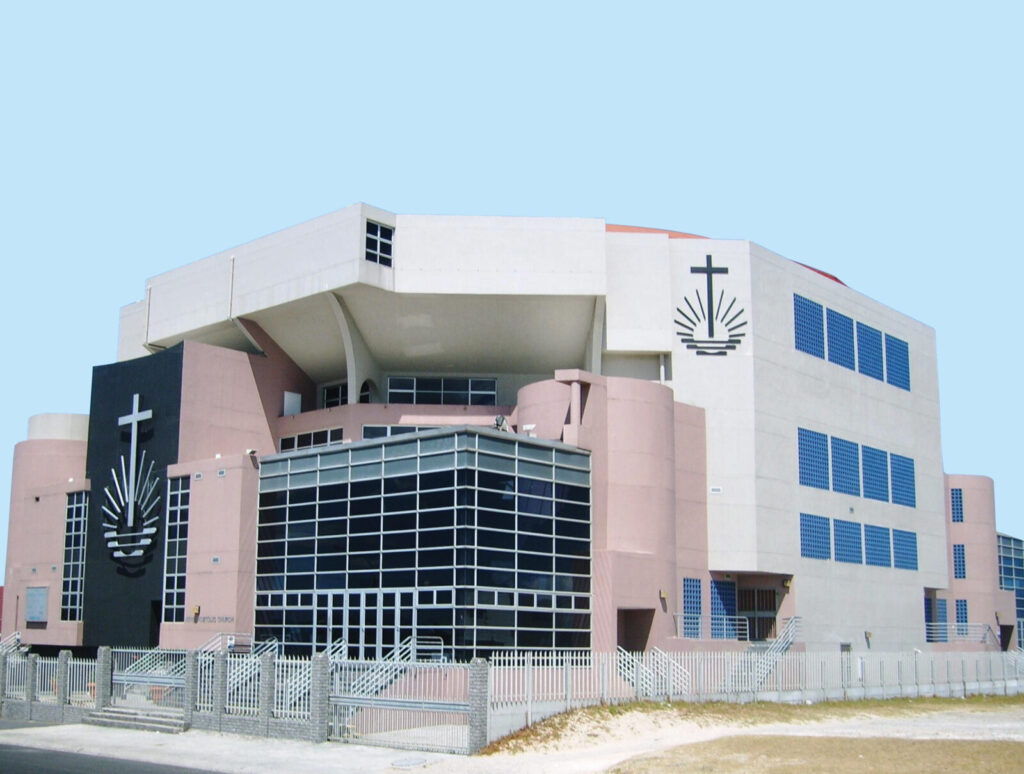
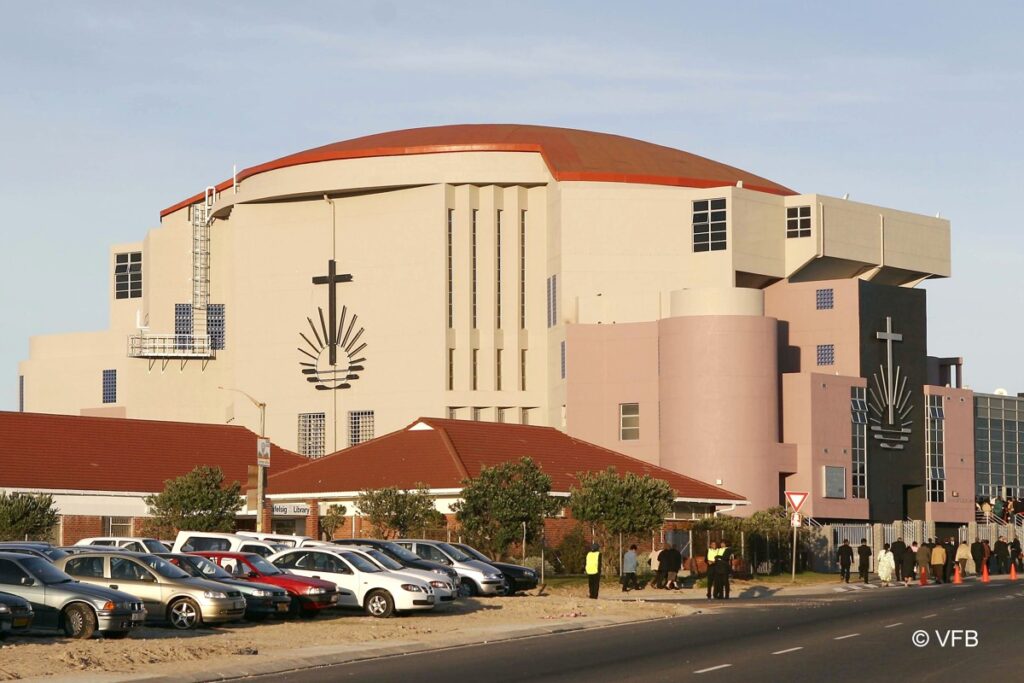
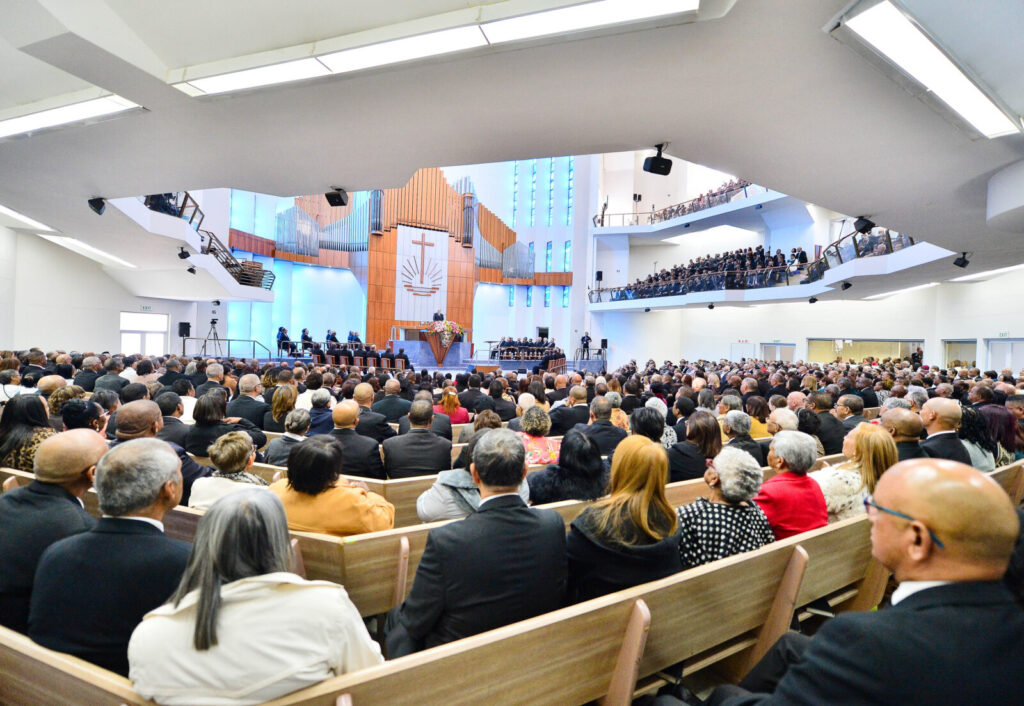
The church building of the Tafelsig congregation in Cape Town, South Africa, is impossible to miss. Anyone passing by can clearly identify it as a place of worship—as a New Apostolic church. And not just because of the sheer size of the structure. The Church’s emblem adorns all sides of the building. And not just that. A huge emblem is cast into the domed roof of the Tafelsig church and is visible from the sky. But how did this imposing structure come into being in the
From chapel to landmark church
In 1980, the first families moved from various suburbs such as Athlone, Bonteheuwel, and Elsies River into the Tafelsig neighbourhood—located in the southern part of Cape Town. As there were no church buildings yet, divine services, Sunday School, and choir practices were conducted in the members’ homes. But even these congregations were soon overflowing and new ones kept springing up.
Following negotiations, the Church was granted permission to conduct services in school classrooms. Later, the Church bought two houses in the Tafelsig neighbourhood which were converted to chapels to meet the congregations’ requirements. In 1996, the then Apostle Noel Barnes and Bishop John Kriel dedicated these two chapels, which together accommodated a total of 500 members.
But even these buildings soon became too cramped. Fortunately, with help from municipal authorities the way was opened for the Church to purchase the land for the construction of a new large church. Apostle Cecil van der Merwe officiated at the turning-of-the-sod ceremony on 18 January 1998. Eighteen months later, on 20 June 1999, District Apostle Noel Barnes dedicated the new church.
He based the dedication service on 2 Corinthians 5: 1: “For we know that if our earthly house, this tent, is destroyed, we have a building from God, a house not made with hands, eternal in the heavens.”
Thinking big, building upward
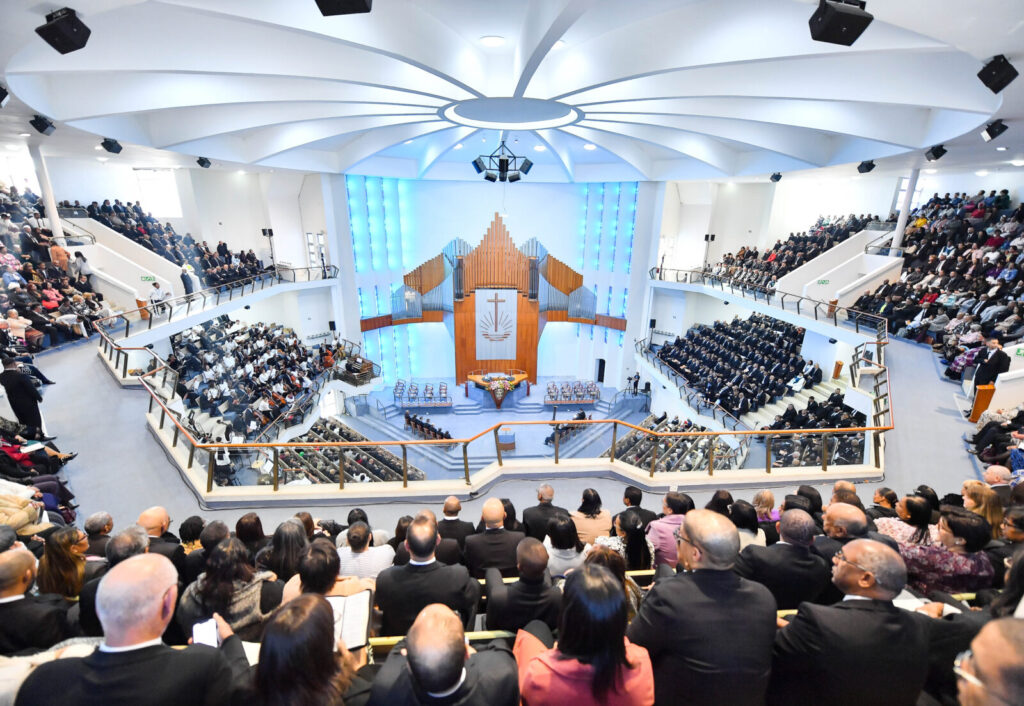
Owing to the limited ground-space available, and the many seats required to house the members, the architect came up with an innovative design: building upward instead of outward. The building is constructed on columns to provide for parking underneath.
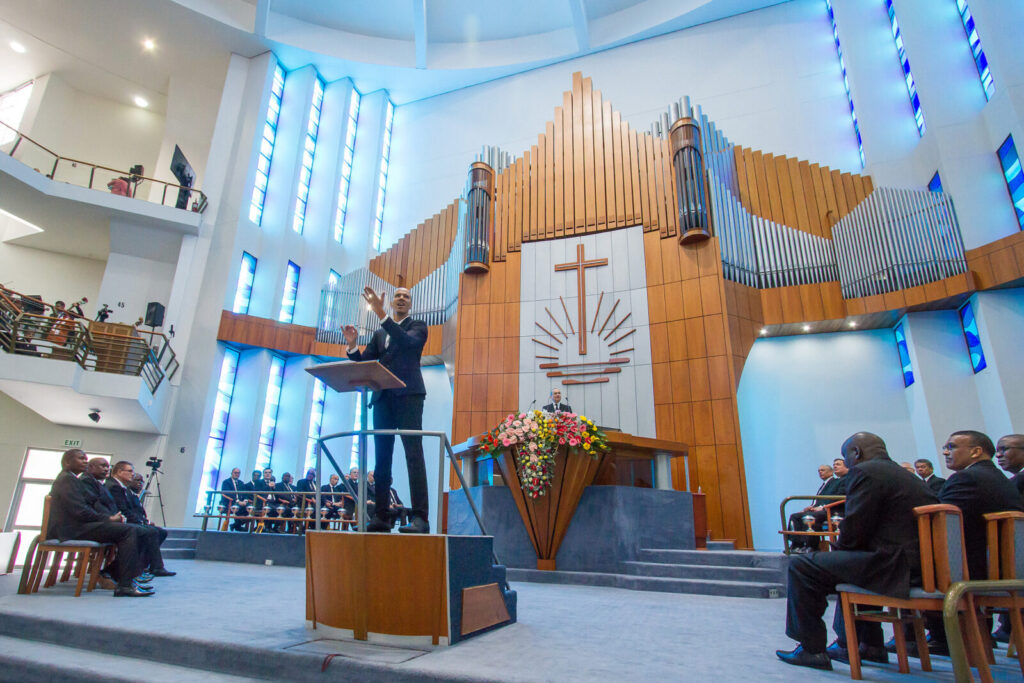
Another feature is the double gallery and mezzanine floor. Glass balustrades and the roof construction provide clear visibility of the altar from any position inside the church. The altar platform has been designed on two levels so that choirs or orchestras can be accommodated easily for performances in the church. Tafelsig has a three-manual electric organ, to which a pipe section has been added—consisting of seven registers. The pipes are integrated into the design of the altar area. The organ console itself is positioned in a recessed balcony along one of the galleries. The mezzanine floor has sanitary facilities as well as Sunday School rooms that offer additional seating and a conference centre equipped with television and video facilities.
In recent years, the church’s seating capacity has often been cited as 4,000. However, this includes every available space, from pull-out seats in the pews to the additional seating on the mezzanine floor. Under current safety regulations, the Tafelsig church now has an official seating capacity of 2,500. At least one church in Zambia is larger in this regard. But that is another story for another Pentecost.
An experienced host
The Tafelsig congregation has already hosted three Pentecost celebrations: in 2006 and 2010 with Chief Apostle Wilhelm Leber, and most recently in 2023 with Chief Apostle Jean-Luc Schneider. The congregation is therefore well versed in welcoming guests and is fully prepared for the upcoming Pentecost celebration on 24 May 2026 with Chief Apostle Schneider. Tafelsig is ready for Pentecost and extends a warm welcome to both the Chief Apostle and the future Chief Apostle, Helge Mutschler.
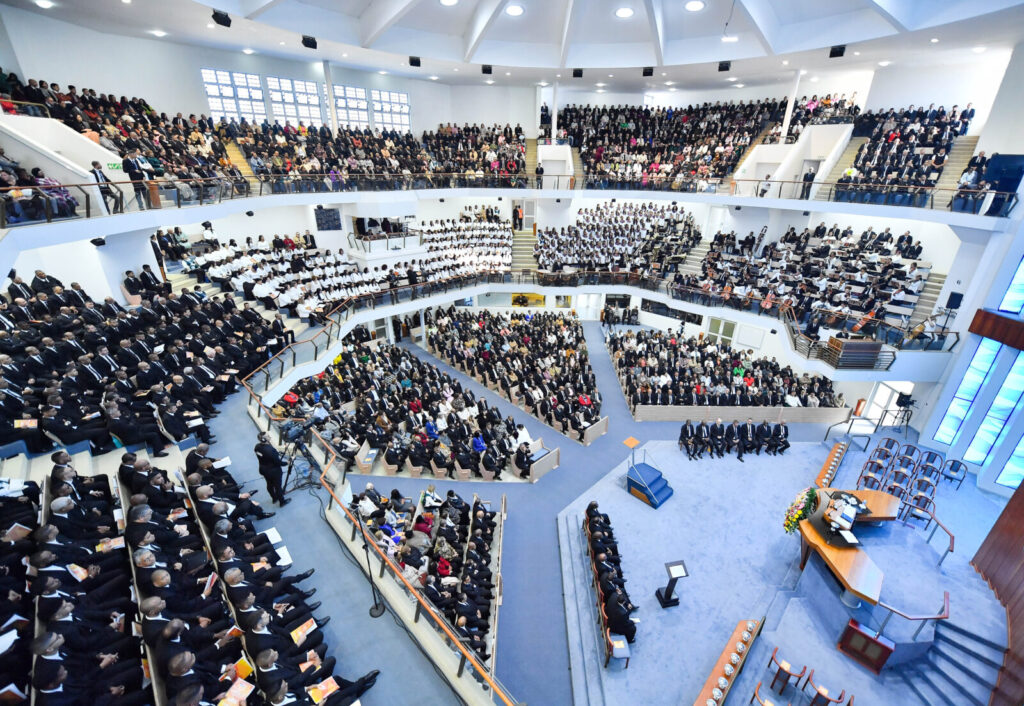
Foto: NAC Southern Africa