




Doubt or trust, accusation or prayer: the choice is yours. Those who choose Jesus Christ do not have to wait for Him until tomorrow; Jesus walks with them today already.
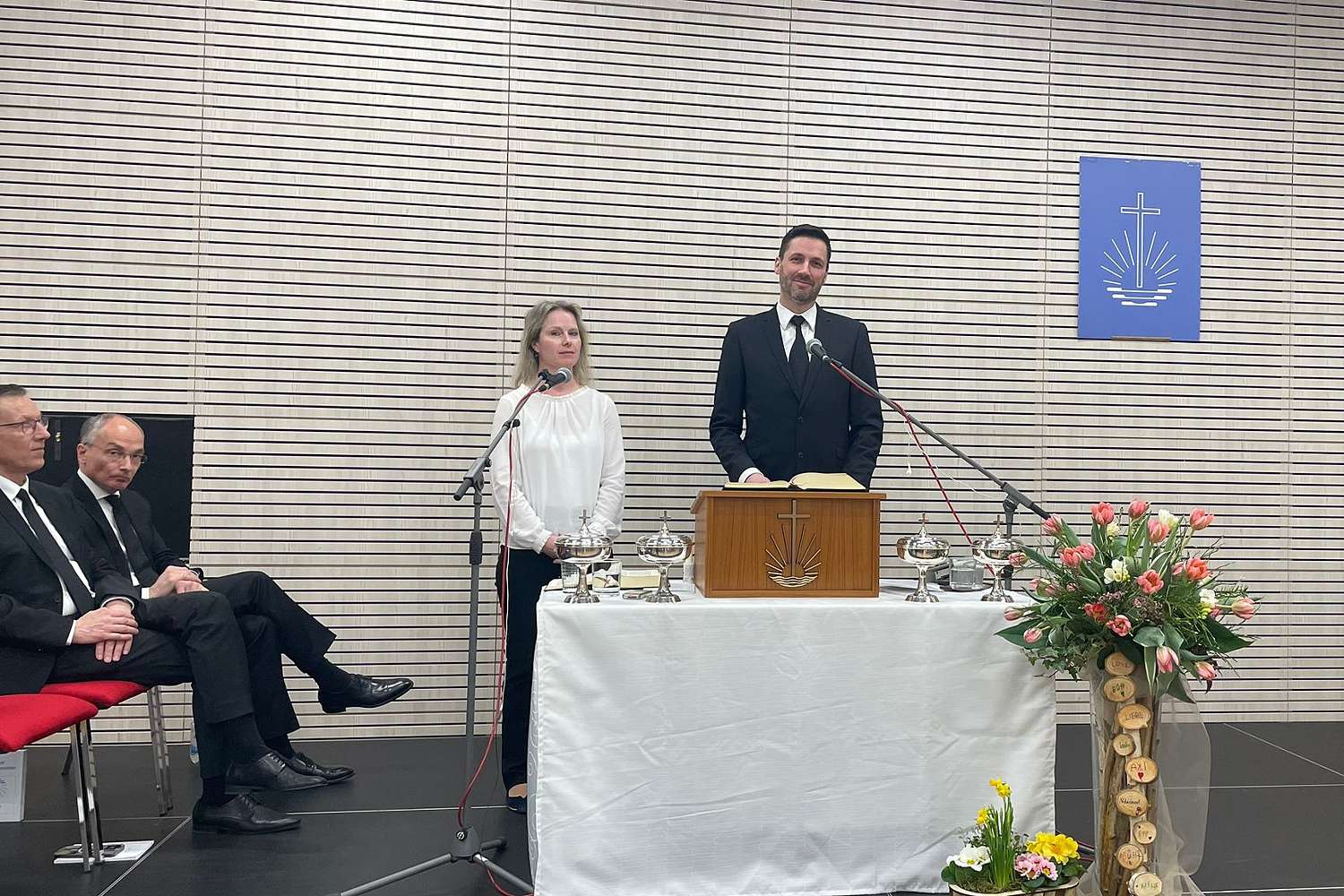
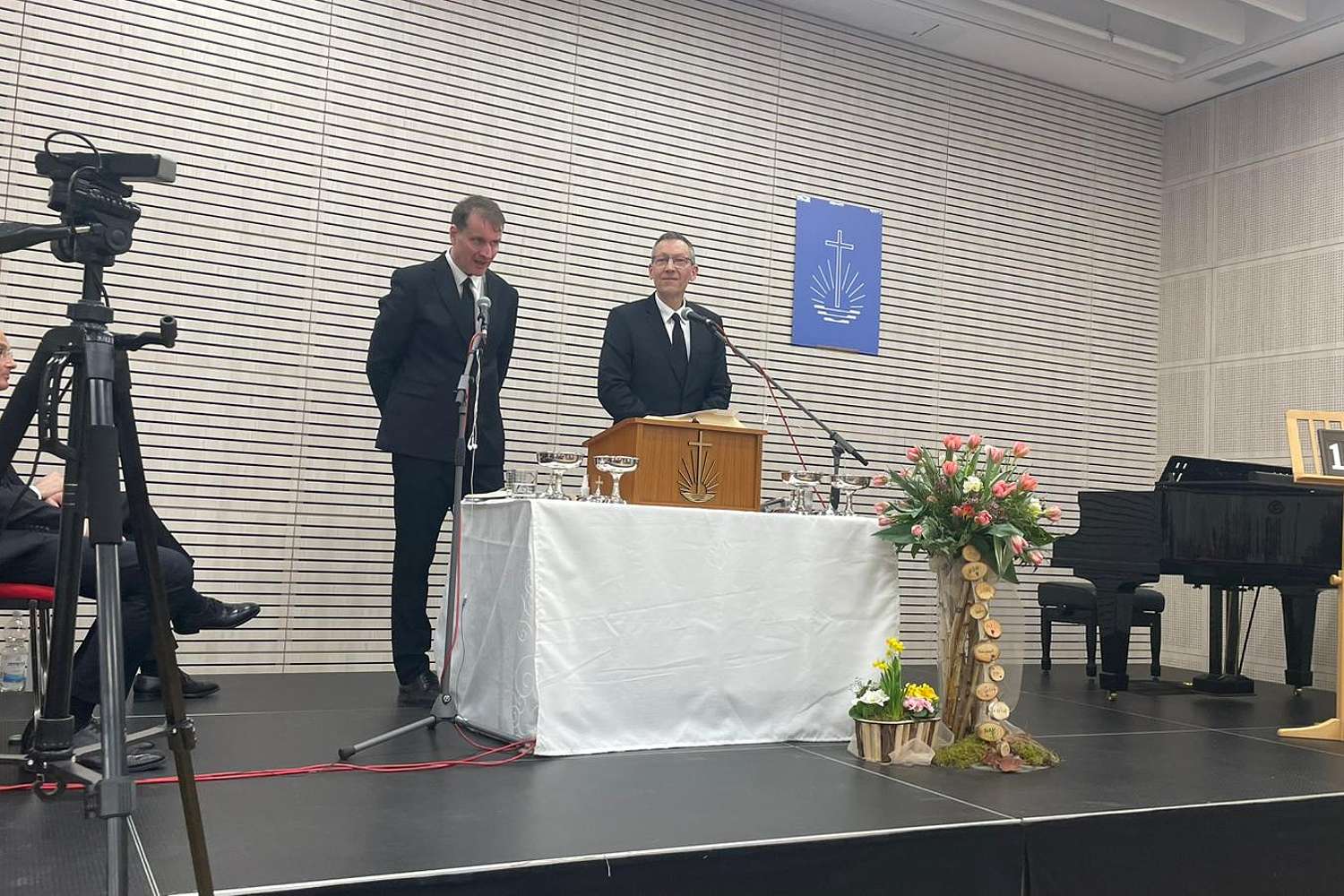
In preparation for Good Friday, Helge Mutschler, who was then Chief Apostle Helper, conducted a divine service on Sunday, 15 March 2026, in Humpolec, Czech Republic. His sermon was based on Luke 23: 42–43: “Then he said to Jesus, ‘Lord, remember me when You come into Your kingdom.’ And Jesus said to him, ‘Assuredly, I say to you, today you will be with Me in Paradise.’”
“Our Bible text directs our attention to the place called Golgotha”—meaning Place of the Skull—“a dreadful, noisy, brutal, and terrifying place.” It was here that Jesus was nailed to the cross with rusty nails, with a criminal on either side of Him. “When we humans are on the cross, we are forced to make a decision,” explained the Chief Apostle Helper. “There are only two ways to respond to Jesus Christ.” Either to the left or to the right—there is no neutral middle ground.
The disappointment of Gestas
According to an ancient account, one of the criminals crucified alongside Jesus was named Gestas. He belonged to the political party of the Zealots and had a very specific idea of the Messiah: one who would establish a divine kingdom on earth and finally free the people from the yoke and the oppression by the Romans. But he was disappointed, the Chief Apostle Helper said. The supposed Messiah hung on the cross with him, covered in blood, unable to save Himself nor save him.
When we look at the state of the world today, similar thoughts may arise: “God, where are You? God, you must intervene!” For this reason, we have no right to condemn Gestas. “He is still very close to us.” At times, all hope seems lost, doubt begins to grow, and despair takes hold.
The example of Dismas
The other criminal, known as Dismas, behaved differently. He did three things:
- He looked at himself: “He did not blame God. Nor did he point a finger at others.” Without feeling sorry for himself, he simply admitted that he was a sinner.
- He looked at Jesus: He recognised the sinlessness of Jesus and His heavenly kingdom. “This man is a King who stands above the cross.”
- He prayed: He turned to Jesus and asked Him, “Lord, remember me when You come into Your kingdom.”
“Dismas can serve as a role model. You may look at yourself,” encouraged Chief Apostle Helper Mutschler—without shifting blame. “You can open yourself to Jesus Christ. You can trust Him.” For Jesus is not a king who punishes, but one full of love, forgiveness, and mercy. No one needs to be afraid of Him, because He is the friend of sinners and those who have failed. “You can turn to this King and pray to Him,” simply and without many words: “Lord Jesus, remember me.”
Love until the very end
On the cross, Jesus had only the barest physical energy left. “But He did not keep this last bit of life for Himself; rather, He used it for others.” He cared for His mother, for the disciple John, for Dismas, and the soldiers, and the people: “Father, forgive them.”
Not sometime in the future, but today
Jesus’ reply to Dismas was: “Today you will be with Me in paradise.” The word “today” emphasises the immediate presence and help of Jesus Christ. For He does not put things off until the future but accompanies and strengthens us right now. “It may be that the problem you are facing right now will not go away, but Jesus Christ is with you, right by your side, today.”
Jesus did not take Dismas directly into heaven—into God’s presence—but into “Paradise”. “A place in the beyond for those who have died in faith and trust in our Lord Jesus Christ,” the Chief Apostle Helper explained, referring to the Catechism. A “place of security”.
The word “Paradise” also refers back to the origins, to Adam and Eve. There it is described as a “place of relationship, fellowship, trust, and love between God and humanity”. Yet, what is to come will be far greater than this place of refuge.
“Jesus Christ will come,” emphasised the Chief Apostle Helper. “And in that place—in heaven, where we will one day be—there will be only one thing: relationship, trust, closeness, and love. “It is going to be wonderful, and we will meet Dismas there.”

Poto: NAC v České republice