




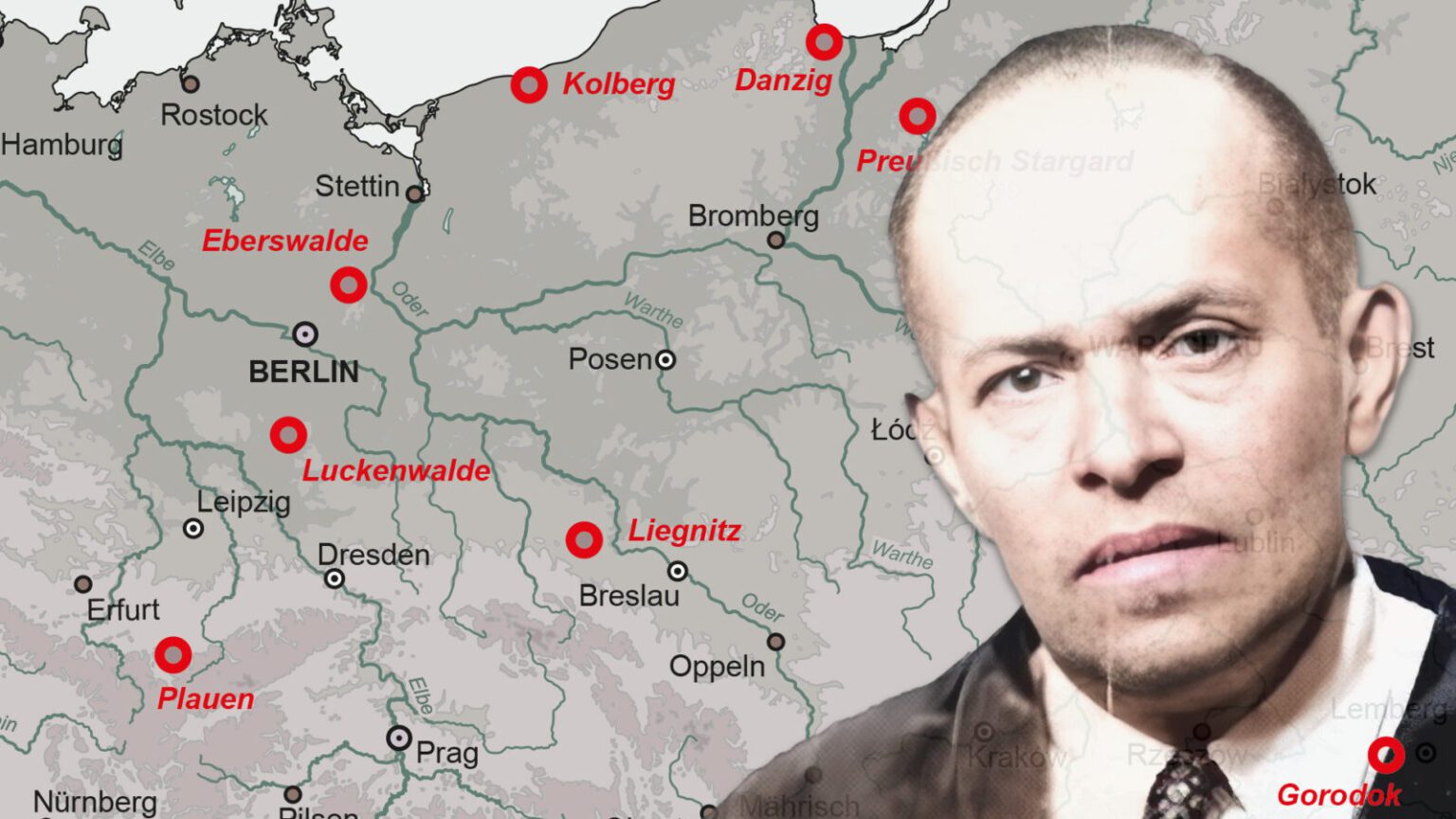
Simon Leinmann was Jewish and became New Apostolic. He suffered the Holocaust and survived. Karl-Peter Krauss, who has a doctorate in history, answered some questions about Leinmann’s fate in an interview.
Who was Simon Leinmann and what motivated you to take on this subject?
Simon Leinmann (1904–1990) was a kind, well-adjusted, and hard-working man. He lived in a happy marriage and was actively involved in his congregation. Years ago I came across some letters he had written to Assistant Chief Apostle Schlaphoff. They hinted at a terrible fate. From that moment on, I could not stop thinking about Leinmann’s story. I wanted to know if he had survived the Shoa.
Tell us about Leinmann.
Simon Leinmann was born around 100 kilometres west of today’s Polish-Ukrainian border. After the separation of his parents and the early death of his mother, he came to Frankfurt an der Oder at the age of 18. In 1926 he moved to Berlin, where he came into contact with the New Apostolic congregation in Neukölln. Simon Leinmann eventually joined the New Apostolic Church.
Why did he decide to do so?
Simon Leinmann himself did not comment on this. There are many indications that he found in Berlin what he had been missing: a home and a church that welcomed him without reservations. His letters show that he was convinced of his new faith. Joining the New Apostolic Church brought him no advantages otherwise, socially.
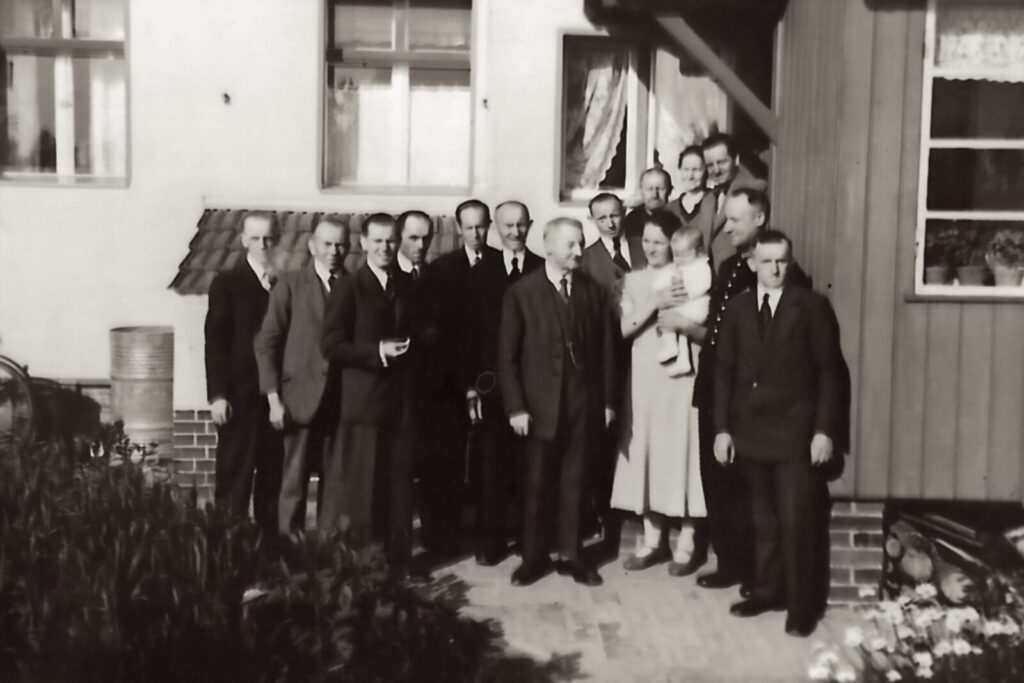
How did his family deal with the fact that he, a Jew, converted to Christianity?
This led to personal rifts, even separation from his family of origin. His father disinherited him because of his conversion and demanded that he give up his surname. His sister Paula harboured only contempt for him and spat on the ground in his presence.
Some also hoped that conversion would protect them from persecution …
Christians of Jewish origin were considered Jews by the National Socialists and, like Jews, were marginalised and persecuted, even murdered.
How did his story continue?
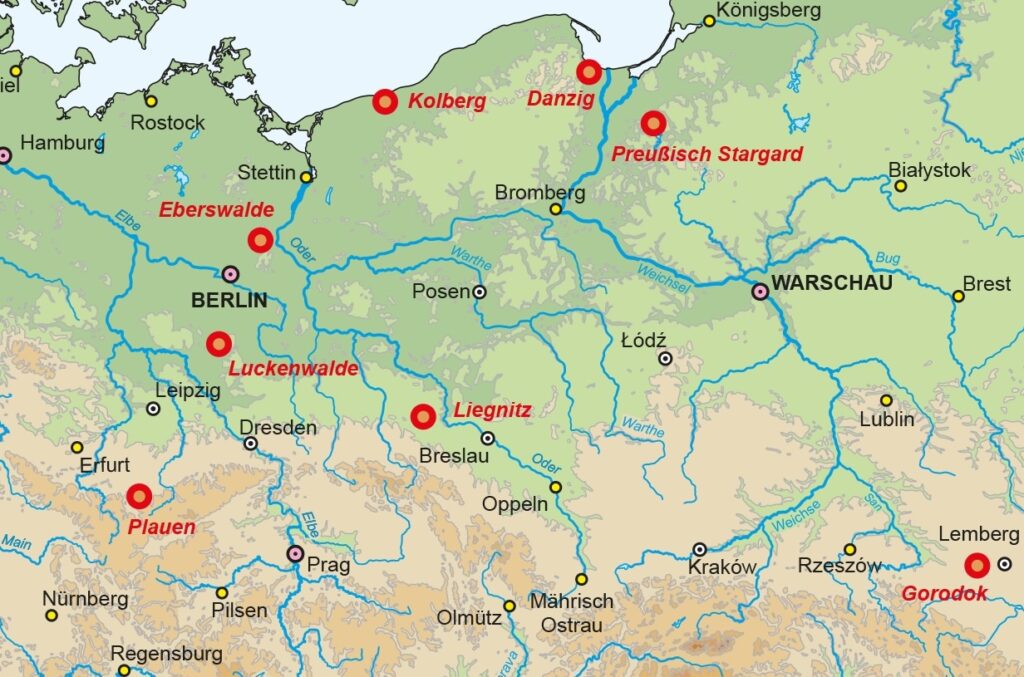
In October 1938, around 17,000 Jews of Polish nationality were expelled from the German Reich. After his arrest, Leinmann was taken to a detention centre. In an unobserved moment, he was able to make a phone call and—with a “voice trembling with fear” —called his District Elder Hermann Luscher. The latter rushed to the barracks with his daughter, Marie Dähns. All efforts were in vain. It did not help that Luscher used his walking stick to attack uniformed soldiers who were beating up Jews. Simon Leinmann was sent to a camp in Dratzigmühle in Poland and was later transferred to Poznan. As a New Apostolic Christian, he was completely isolated among the Jews in the camp. In the summer of 1939, he was able to make a short trip to Berlin. On his way back, he was caught up in the war, which had begun on 1 September 1939. His valuables and clothes were stolen. According to him, this included a donated ship ticket for a passage from Gdansk (Poland) to England—to freedom. He was abused as a human barricade, shot in the leg, and knocked unconscious. His desperate wife was forced to divorce him.
Did the churches try to protect their members of Jewish origin?
The churches did not offer broad and open resistance to the persecution of the Jews by the National Socialist party. Nevertheless, there were signs of Christian charity, as well as the resistance to oppression and actively saving Jewish lives. Individuals spoke out against the criminal policy towards Jews. Only the so-called Quakers (Religious Society of Friends) called on their members in 1933 to help all persecuted people.
And what was the situation in the New Apostolic Church?
New Apostolic Christians of Jewish origin also experienced suffering, terror, and extermination. How did the New Apostolic Church respond to this persecution? New Apostolic Christians of Jewish origin also experienced rescue resistance and other forms of support from their Church. What remains, however, is the pain, sadness and deepest regret of not having done more for these brothers and sisters in faith and for fellow Jewish citizens.
How did Leinmann experience his time in the camps?
His letters from the camps in Poland bear witness to his endless pain and suffering and his desperate search for a way out. After the outbreak of war, he languished in concentration and forced labour camps for six years. Simon Leinmann survived the Shoah severely physically injured and mentally traumatised. He stayed in touch with his New Apostolic friends still decades after the war. Hermann Luscher’s daughter, Marie Dähns, obtained financial compensation for him. Leinmann had been living in the USA since 1948.
Why was it so important to you to research Leinmann’s story?
It was my aim to reconstruct the life of this man and fellow believer in order to restore some of his dignity and identity and rescue him from oblivion.

Karl-Peter Krauss (born 1955), who has a PhD in history, is chairman of the working group History of the New Apostolic Church. He studied in Tübingen and completed his doctorate on a historical-geographical topic. His books on Church history have been widely recognised , even by critics. Until his retirement in 2021, he was rector in a congregation in Southern Germany.