



A king was announced who would bring justice. Expectations were high, yet this king brought something different: justice as a gift, salvation by grace, and hope for God’s kingdom.
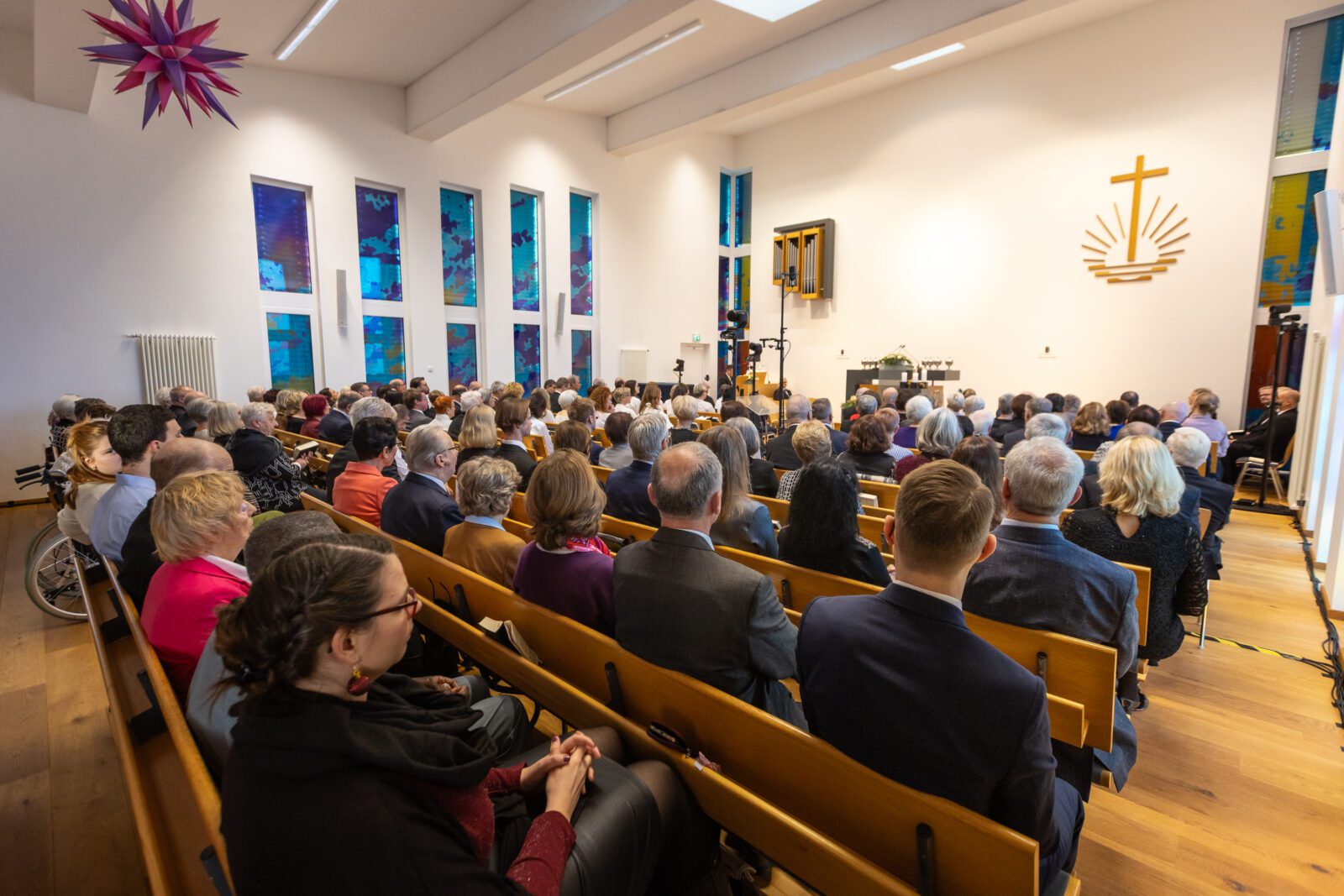
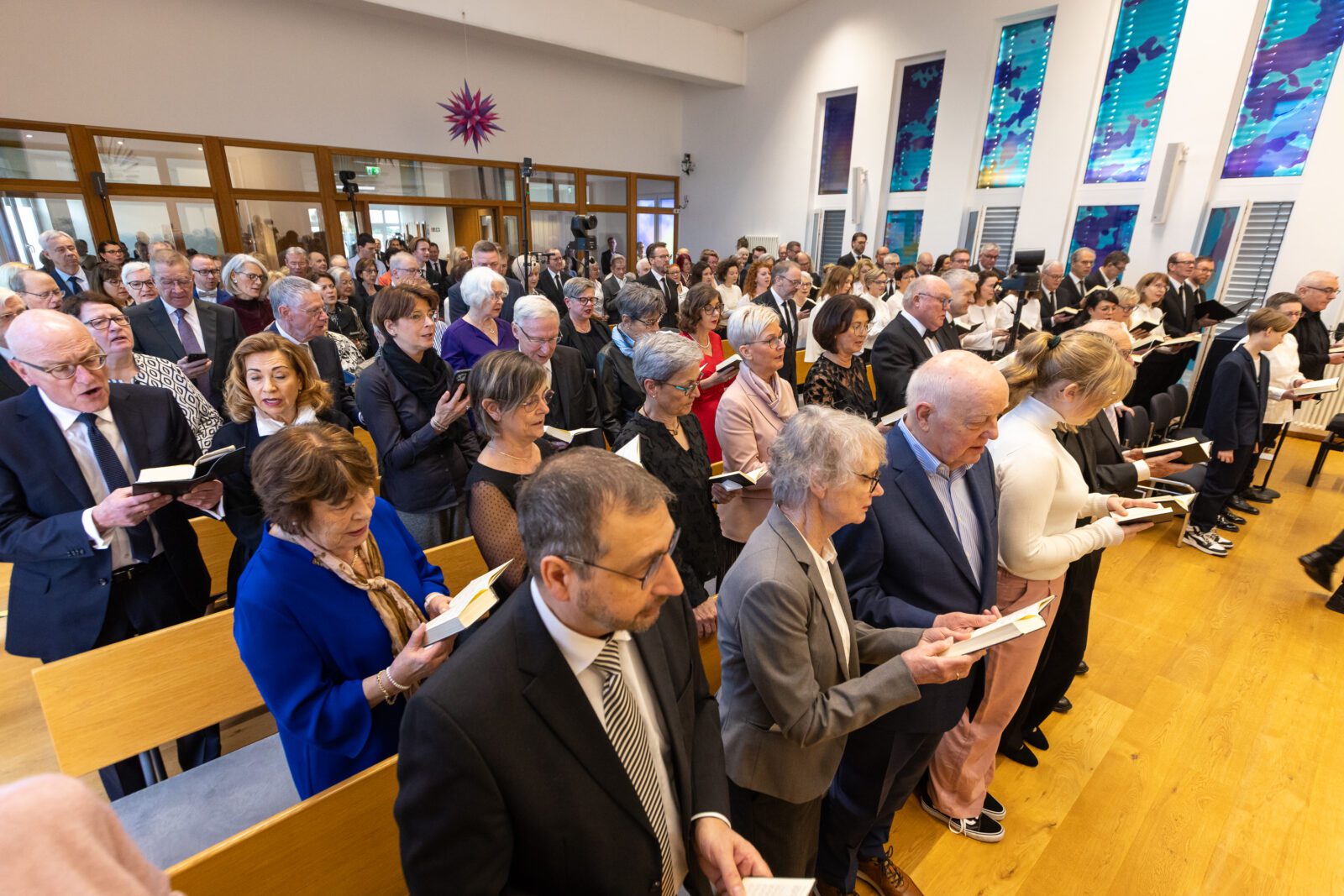
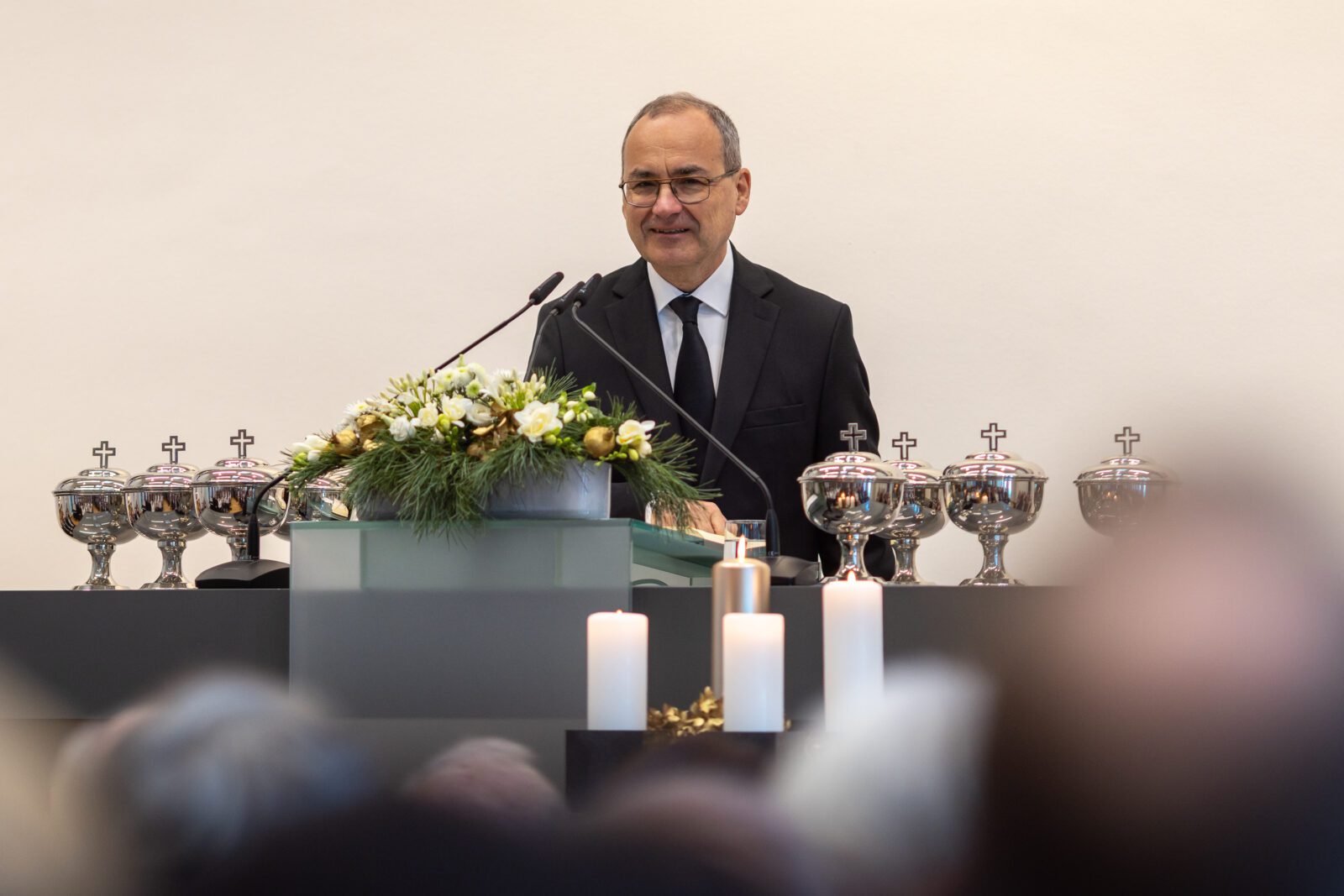
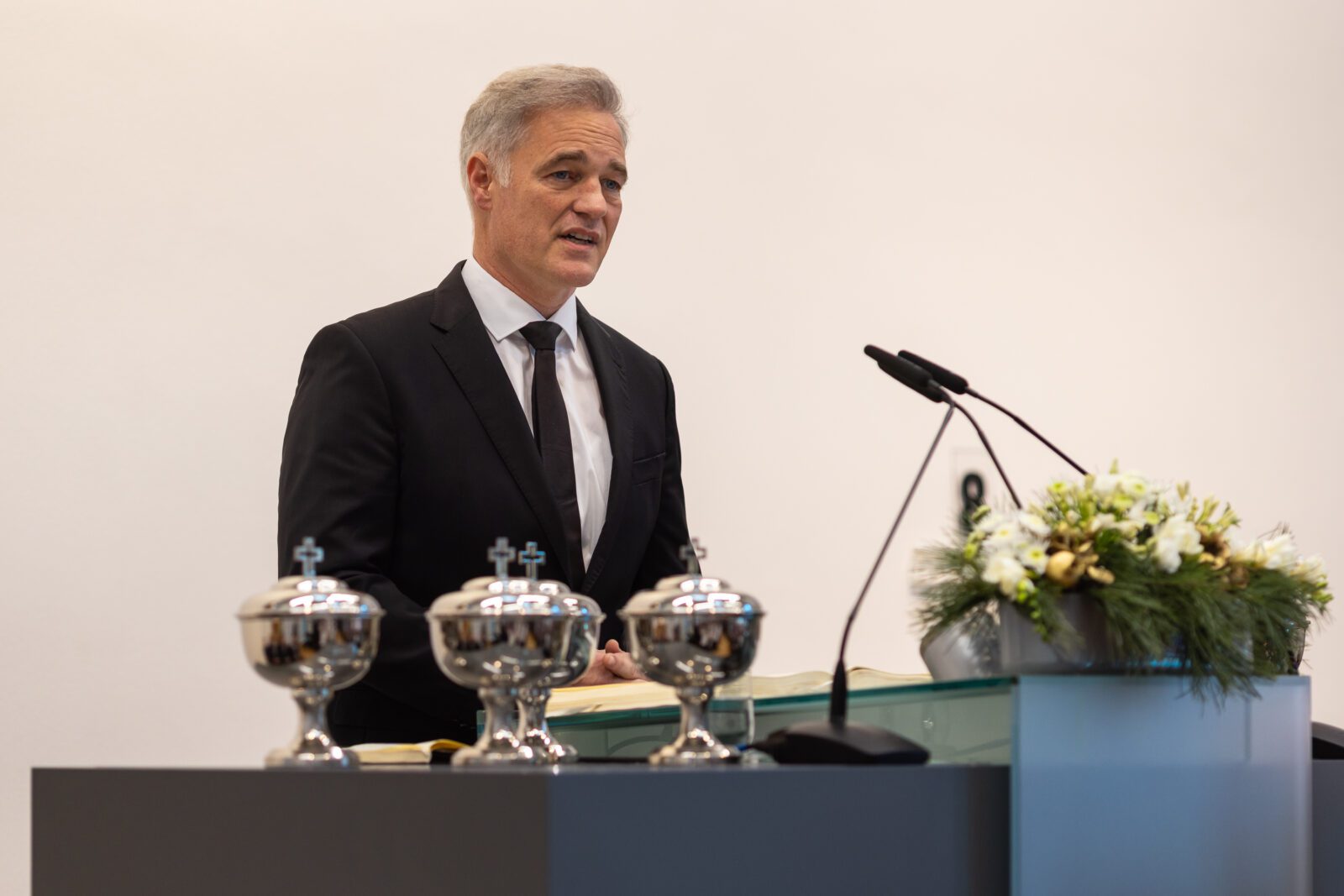
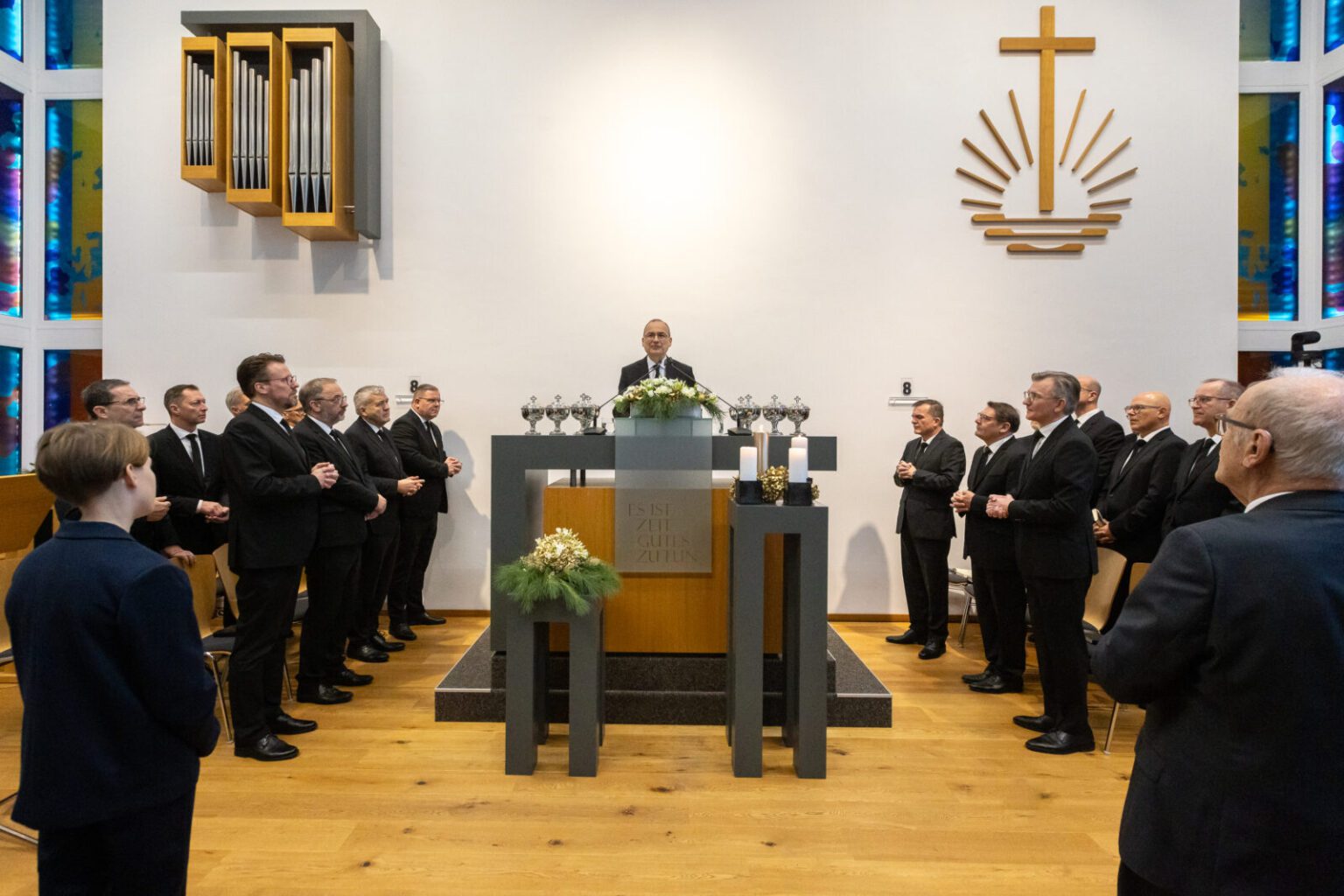
The announcement of the Messiah was the focus of a divine service on 21 December 2025 in Bensheim, Germany. Chief Apostle Jean-Luc Schneider based his sermon on the prophecy in Jeremiah 23: 5–6: “Behold, the days are coming,” says the Lord, “that I will raise to David a Branch of righteousness; a King shall reign and prosper, and execute judgement and righteousness in the earth. In His days Judah will be saved, and Israel will dwell safely; now this is His name by which He will be called: the Lord Our Righteousness.”
Jesus’ different kind of justice
The people of Israel were told that there would be a king who would execute judgement and righteousness in the land. They were full of expectation. They hoped for a king who would intervene in government, establish justice in daily life, punish sinners, and clearly distinguish between those who were good and those who were not.
“And then Jesus came—and they were disappointed,” explained the Chief Apostle. “He did not do what they expected Him to do.” Jesus had not come to punish. The thorns—the injustices—would not be removed. “Jesus wanted something different: He wanted to show that His righteousness was different,” the Chief Apostle said.
The path to God’s kingdom
Christians understand this. Yet when God does not intervene, we often struggle with the injustice we see in the world, in our families, in the congregation, and in our workplaces. Jesus had a different perspective and a different mission. “I want to bring justice. I want to save you, but I will do this My kingdom.” This is where Jesus wants to lead us, into the kingdom of God.
Peace and justice reign there. There, everything is as God intends it to be. There is help and deliverance, and God grant eternal life there. But only those who are righteous and who completely conform to the will of God can enter the kingdom of God. Jesus is the Righteous One, the Perfect One, exactly as God intended Him to be. “That is why the man Jesus Christ was able to enter the kingdom of God,” the Chief Apostle continued. “But we will not achieve this on our own.”
What God demands, Christ gives
Then he explained that Jesus grants us the righteousness that God requires. Through His sacrifice and death, He established this righteousness and opened the way to God. He forgives sins and cleanses us. He gives us the church, the Apostles, and the sacraments. Through His constant patience and love He offers help and salvation. He gives us His word and the strength to become righteous and follow Him.
At times, the thought arises, “We do so much for the Lord.” But everyone—the Chief Apostle, the brothers and sisters—“is simply doing what they owe to the Lord for the salvation He has granted us.” It is not our own merit. “We are all doing this out of gratitude,” he said.
God does not demand the same from everyone. “God’s righteousness does not mean that everyone must accomplish the same thing,” the Chief Apostle explained. Rather, it means that “He gives everyone the strength to bear the burden He has placed upon them”.
Faith: trust despite everything
For Jesus to help and save us, we must believe. “Faith simply means absolute trust.”
- In His word: Let us trust in His word, accept it, and assimilate it. “This is the solution for us—here and now, today, in our current situation.”
- In His love. Let us trust in His love, even when we do not understand God. “He loves us, and we will remain faithful to Him no matter what happens.”
- In His promise. Let us trust in His promise, even if it does not seem likely to be fulfilled. “I trust Him. He will come soon,” the Chief Apostle said.
Secure in God
God grants what is necessary for us to become righteous. Jesus was righteous, yet His life was not easy. “God simply ensured that Jesus could walk His path, fulfil His mission, and enter His kingdom.”
Those who welcome and accept the Saviour in faith can be certain that God is with them, the Chief Apostle said. No one can snatch a believer out of God’s hand. Our own salvation does not depend on the actions of others or on the circumstances and conditions of life, but on God’s saving work and on our own will.
“Whoever has this wish, this longing, this desire in their heart: I want to become like Jesus Christ; I want to enter into His righteousness,” the Chief Apostle appealed, “can be certain that God will help them. God will save them. That is our assurance.”

Photo: Marcel Felde