




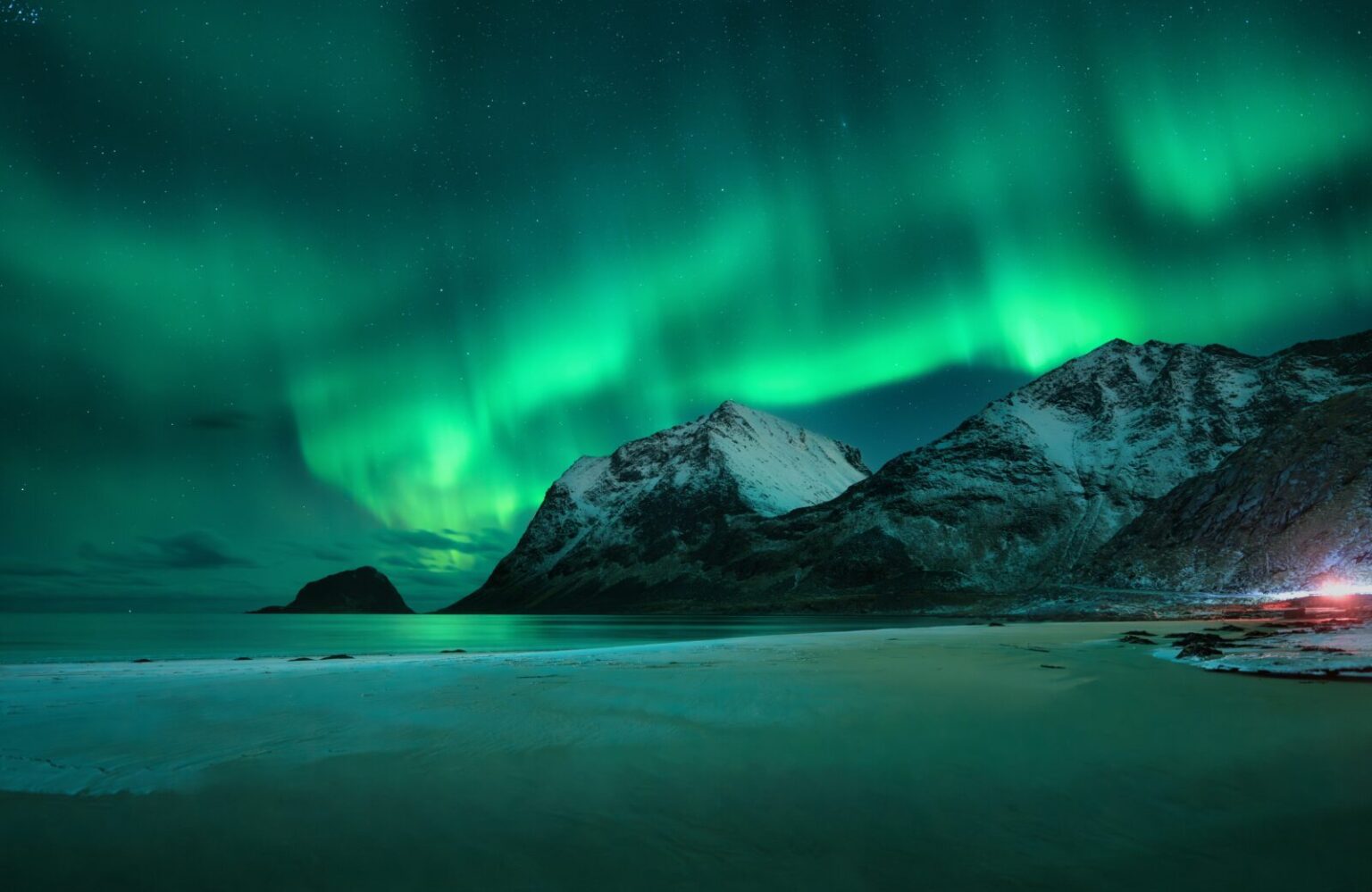
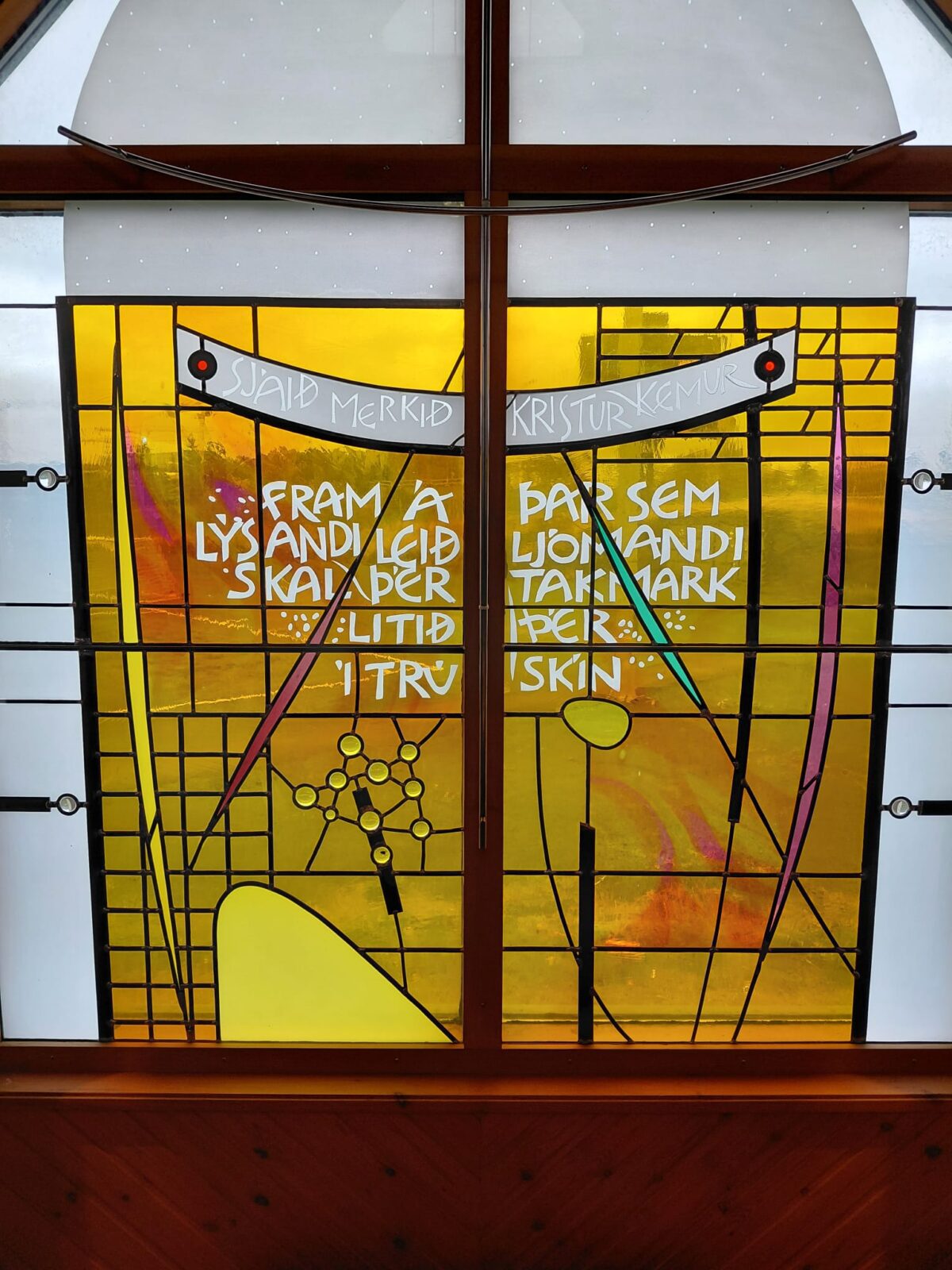
Between glacier blue and lava black: Iceland blends natural wonders and beliefs. And in Reykjavík, a simple profession of faith illuminates a small chapel: Sjáið merkið – Kristur kemur.
Iceland, the land of fire and ice: black lava fields next to blue ice, steaming geysers, northern lights like painted psalms in the sky. Between sagas and the wind off the sea, time seems to slow down, as if the earth breathes audibly under your footsteps. A country whose parliament has been in session since 930—one of the oldest in the world—and whose language harbours words from the Viking Age. Hot springs are part of everyday life for the 390,000 or so inhabitants of the island, while glaciers crackle and rumble and volcanoes redraw the map. And yes, with a smile, Icelanders like to remind visitors that the true discoverer of America was Leifur Eiríksson—long before Columbus. Fjords, moss cushions, vast silence, and in between places where the legends are louder than the present.
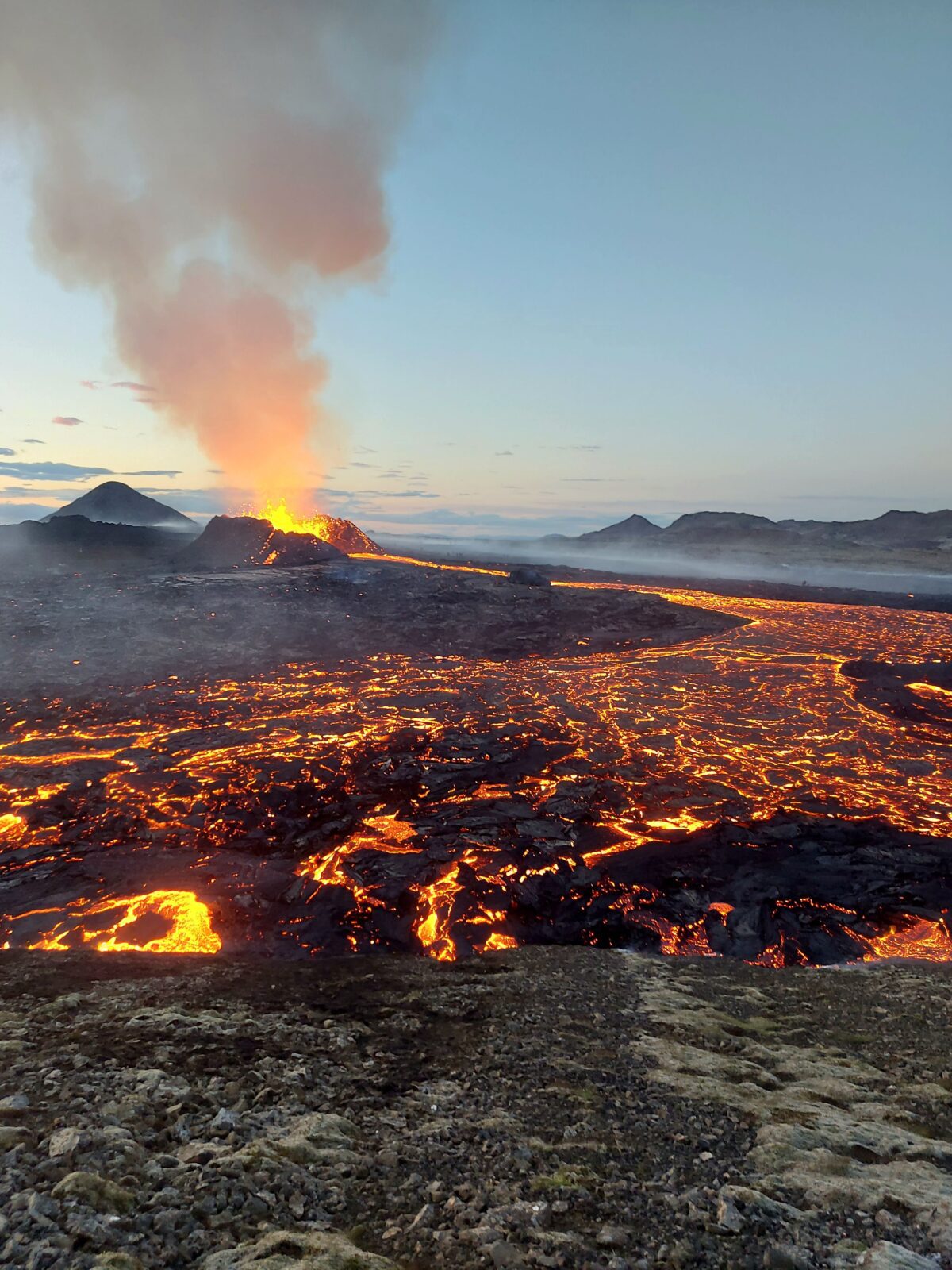
Iceland – wirestock / Envato Elements
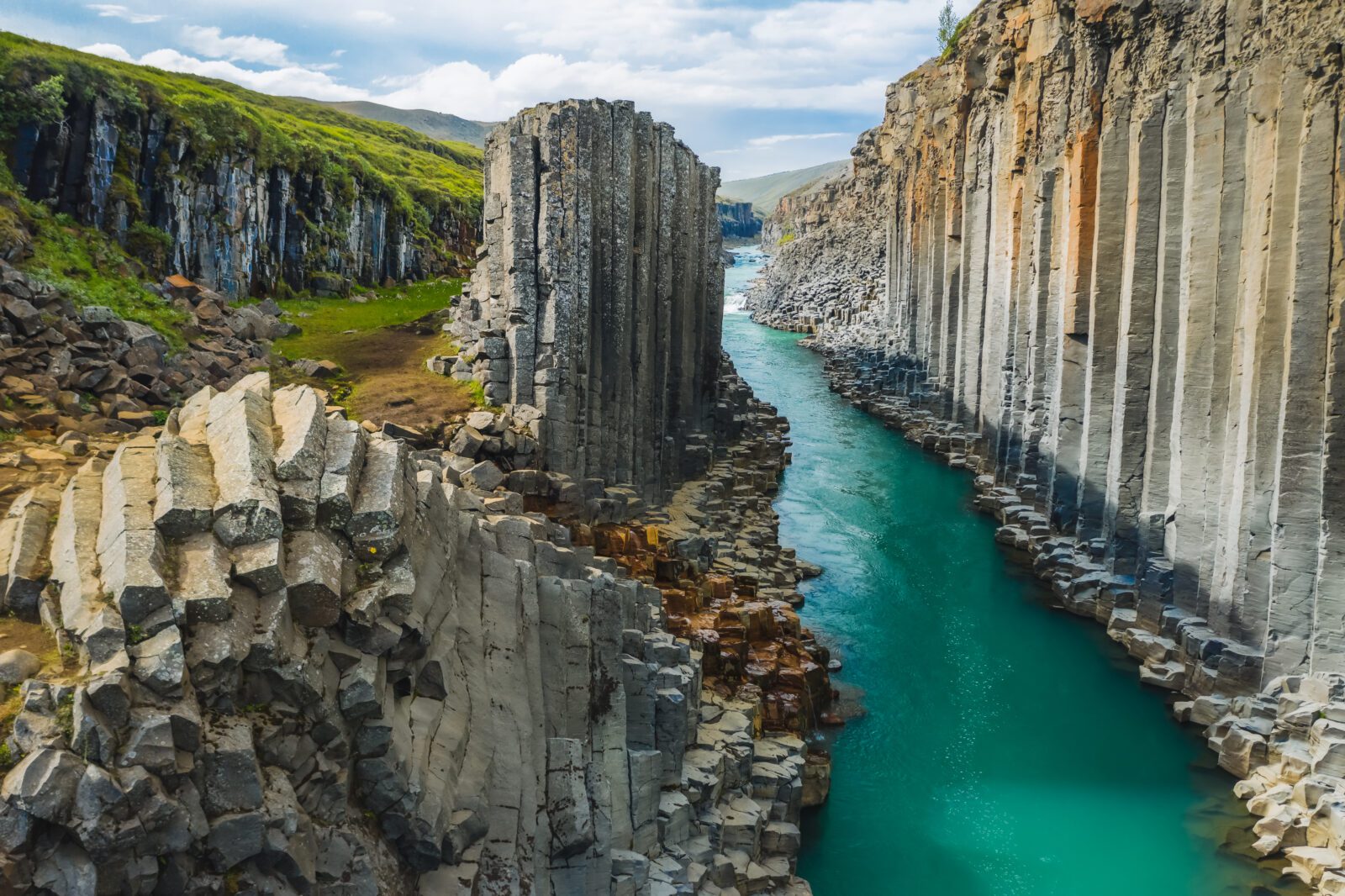
Studlagil, Iceland – Igor_Tichonow / Envato Elements
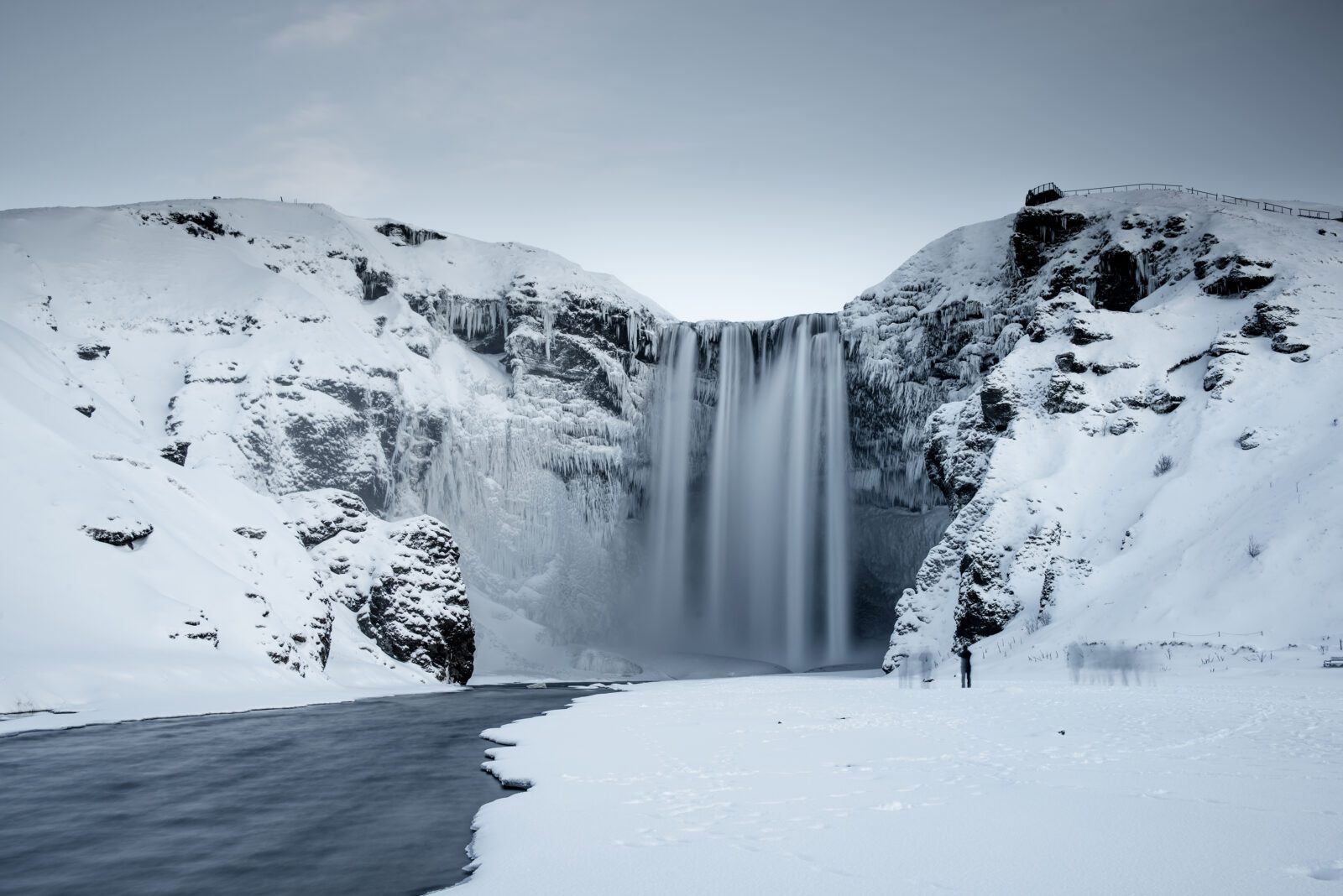
Godafoss, Iceland – surangaw / Envato Elements
Alþingi, Ásatrú, and a small window of hope
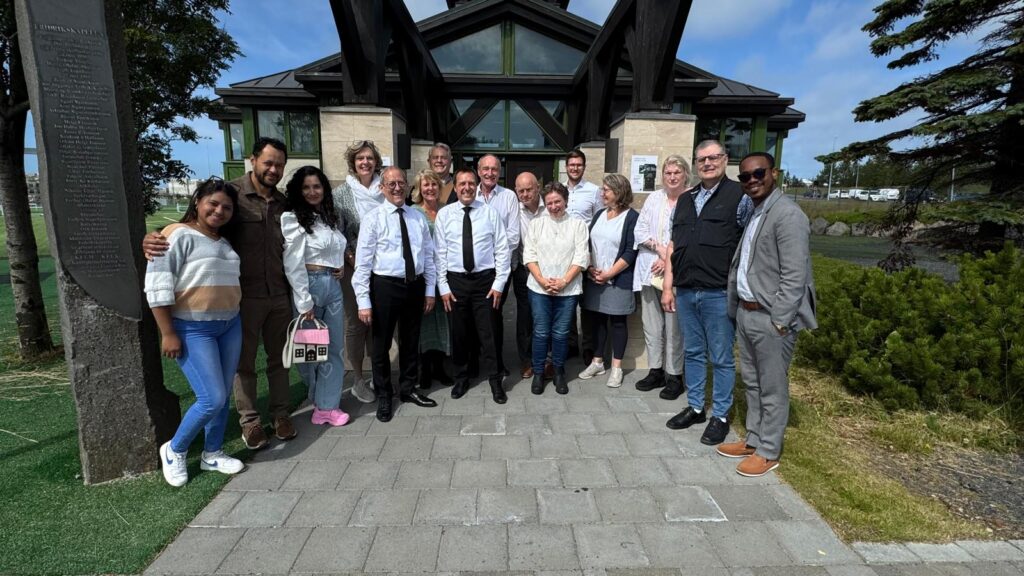
The legends and cults of the Old Norse religion (Ásatrú) characterised Iceland until the end of the first millennium with gods such as Odin and Thor and ceremonial sacrifices (blót). In order to secure internal peace and external ties, the Alþingi—Iceland’s parliament (founded in 930, one of the oldest in the world)—decided to adopt Christianity in the year 1,000. At the same time, many pagan customs continued to play a major role, especially in the private sphere. The country has been predominantly Lutheran since the Reformation. Hallgrímskirkja, one of the most famous Protestant Lutheran churches, dominates the centre of Reykjavík. Just a few minutes’ walk away is Friðrikskapella, a small chapel shared by various denominations. This is the place where the members of the Nýja Postula Kirkjan Ísland (New Apostolic Church Iceland) come together for their divine services. The New Apostolic Church has been active in Iceland since the 1970s; today, the small congregation officially has 14 members. Behind the altar of the chapel, a stained-glass window reflects the sun and illuminates an inscription Sjáið merkið – Kristur kemur (“See the sign: Christ is coming”) and the invitation to walk in faith along the shining path to the radiant goal.
What the window promises comes to life in everyday life. Two members of the congregation tell their stories.
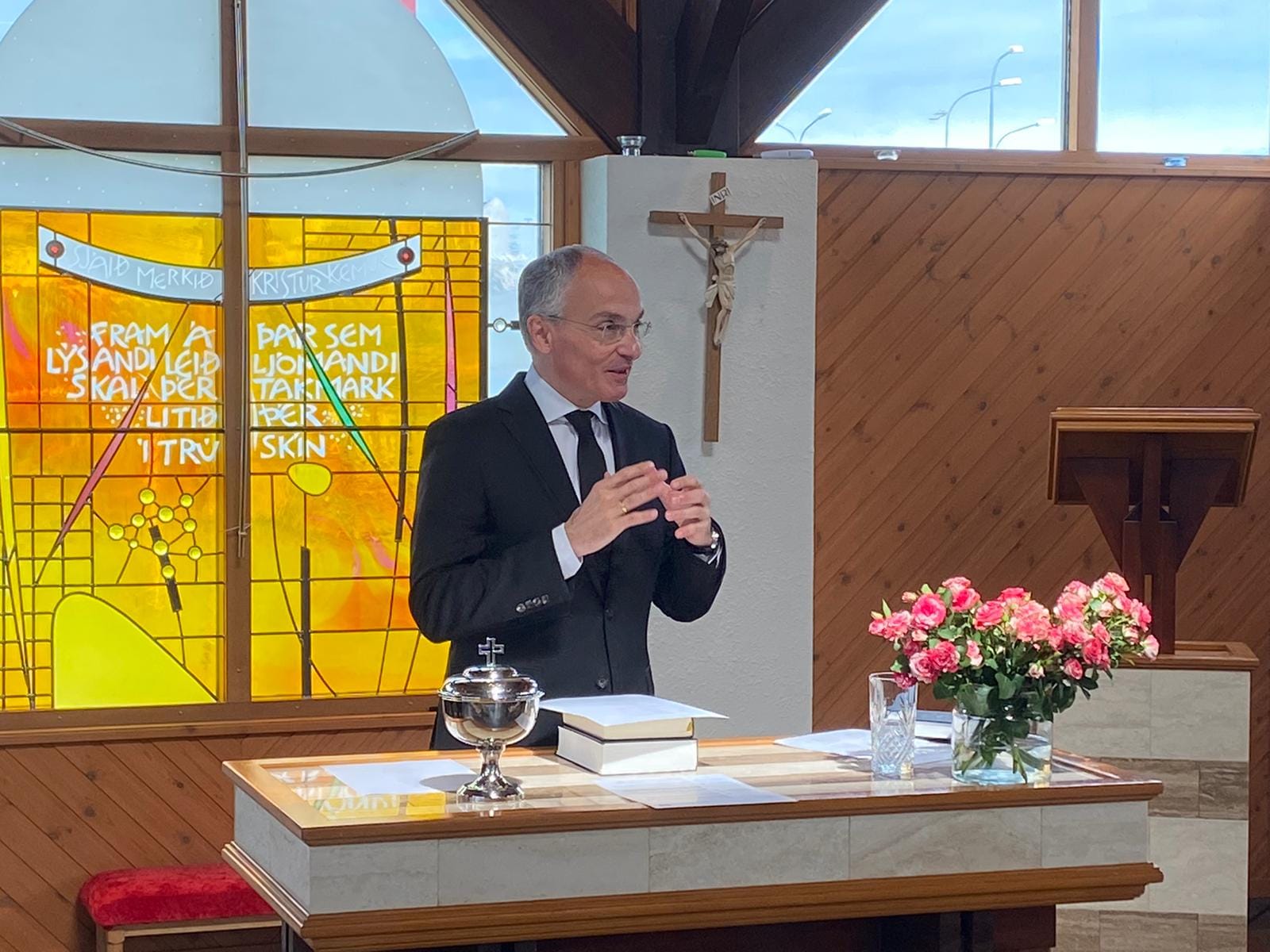
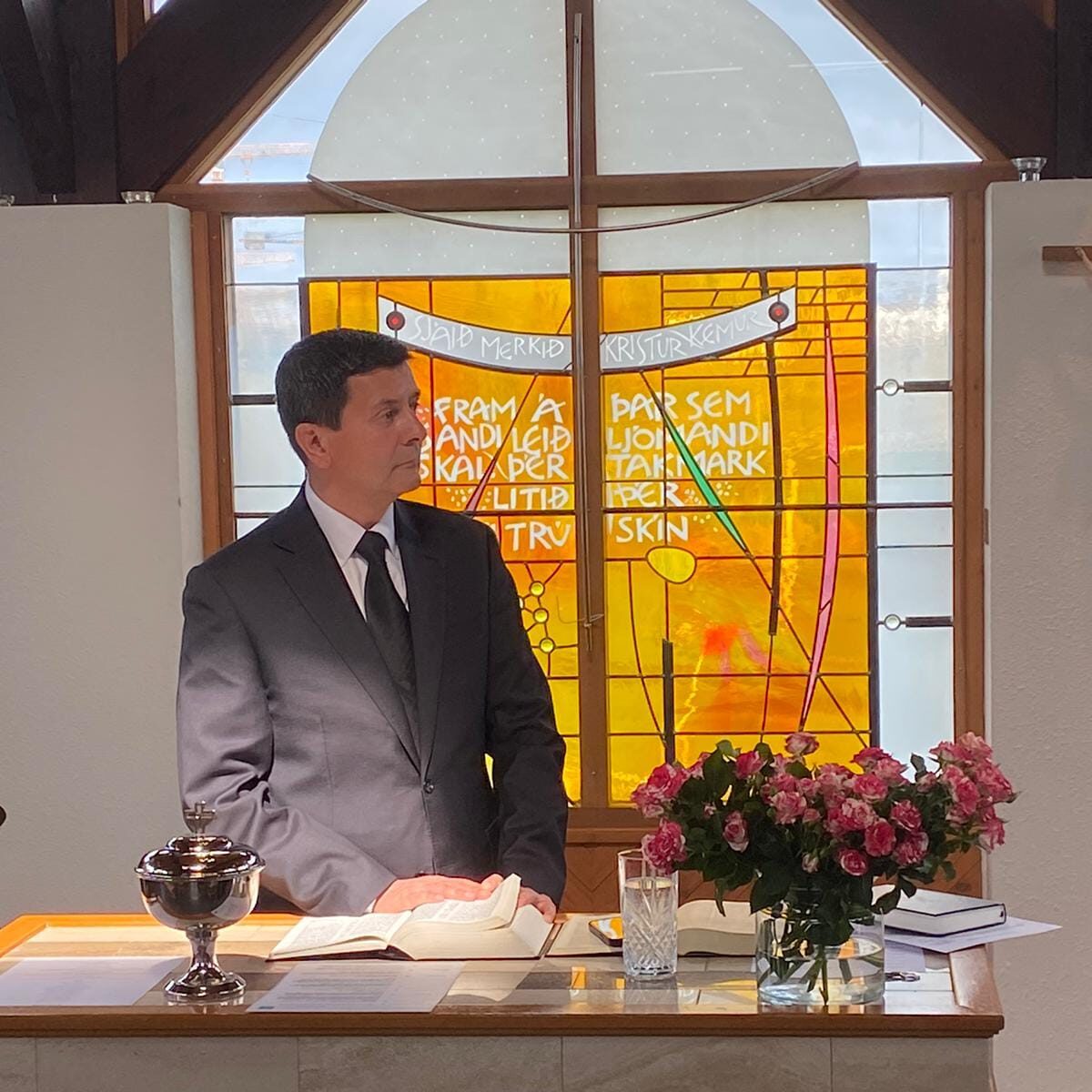
Two voices, one way
Moritz Müller, a law student, talks about a rhythm of faith that is quieter but more focused. There is a divine service about every two months, he says, “the last one on 12 October, the one before that on 24 August”, with Priests flying in from Germany, sometimes with a few musicians in tow. In between, daily prayer sustains him; video services “just aren’t the same”, he says.
“I have the feeling that before I went to Iceland, I kind of went through a preparatory process for my stay here, that is, the time without much church. I don’t feel like I am losing touch.” An early key moment continues to have an impact today: one month before his confirmation, he had no idea what it was all for. Then there was a divine service “and I walked out with tears in my eyes, because everything just fell into place”.
In Freiburg, Germany he says, it was above all the fellowship outside of the divine services that raised the bar. The generous offer of two divine services a week was also something he had taken for granted. It had become so normal. Here in Iceland, he says, he attends divine services with greater awareness: “I put on a suit every time. I wouldn’t come in jeans and a sweater now, because it’s something special.”
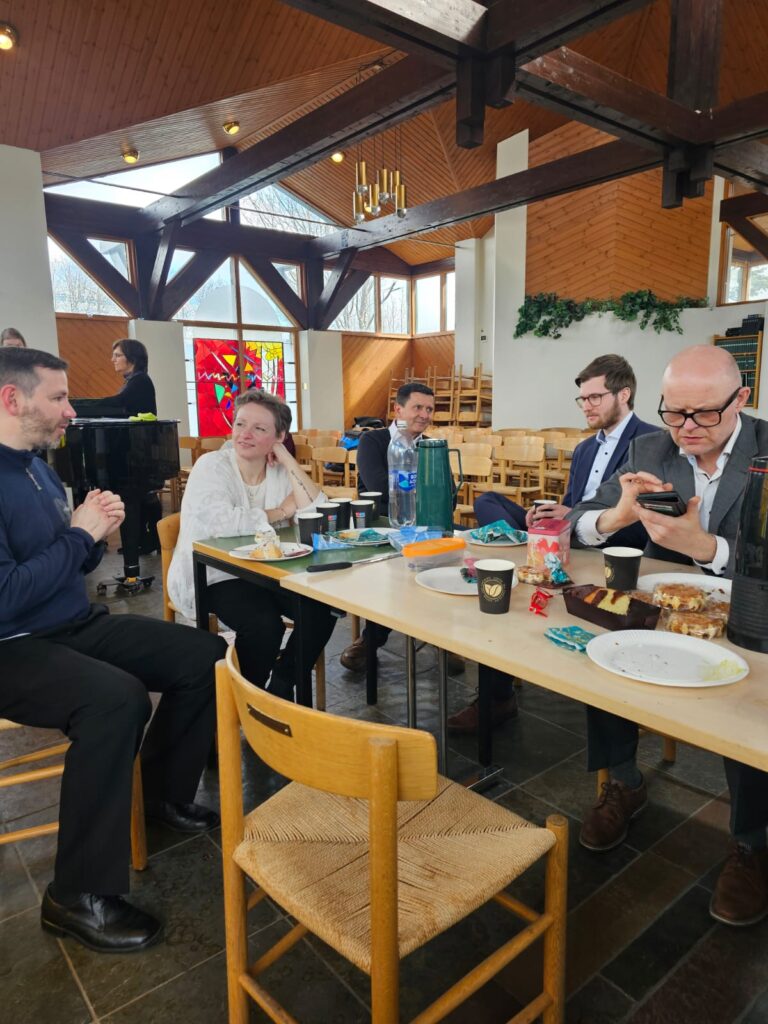
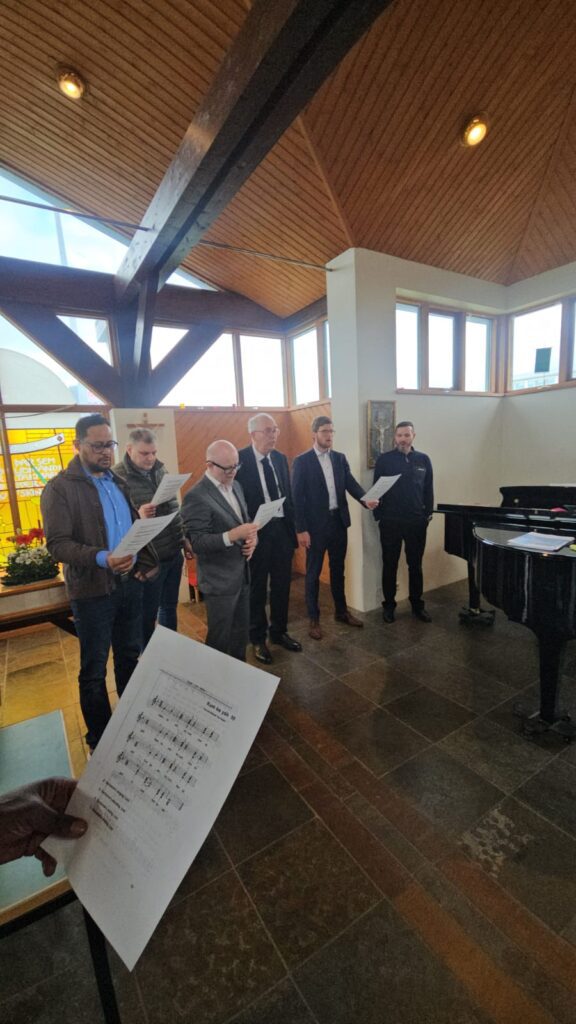
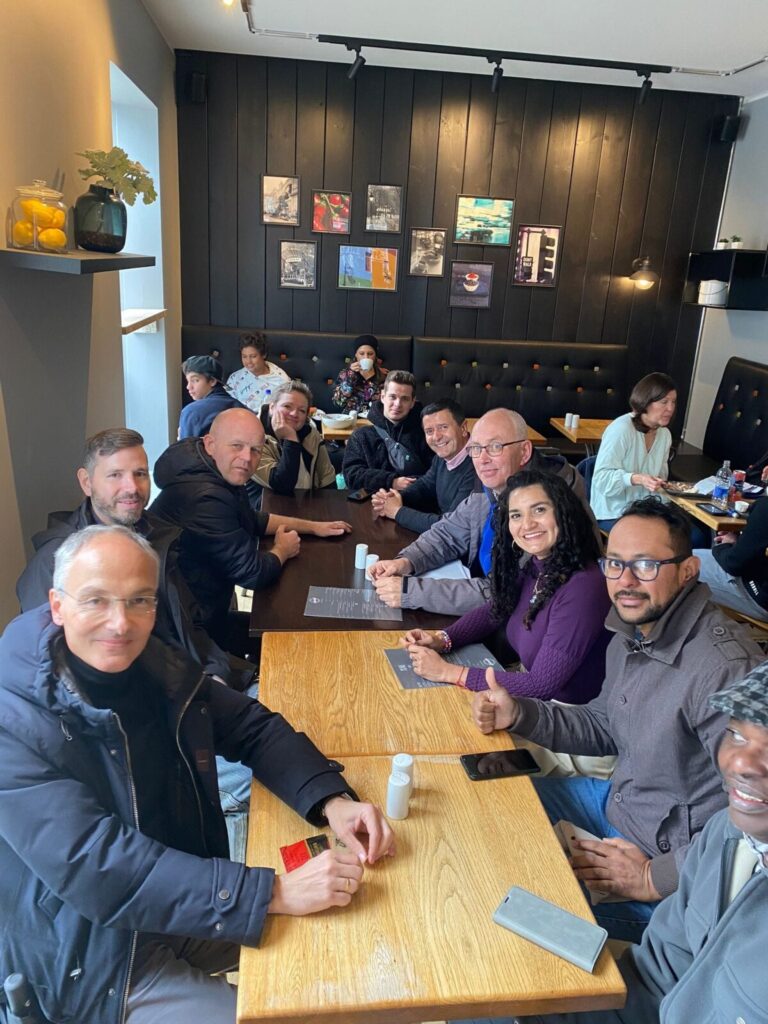
Many things are then bundled into a whole church weekend: Saturday walks or a coffee, Sunday choir practice before the service, after which the small congregation stays together for at least an hour. “For our number of members, this is quite a powerful congregation.”
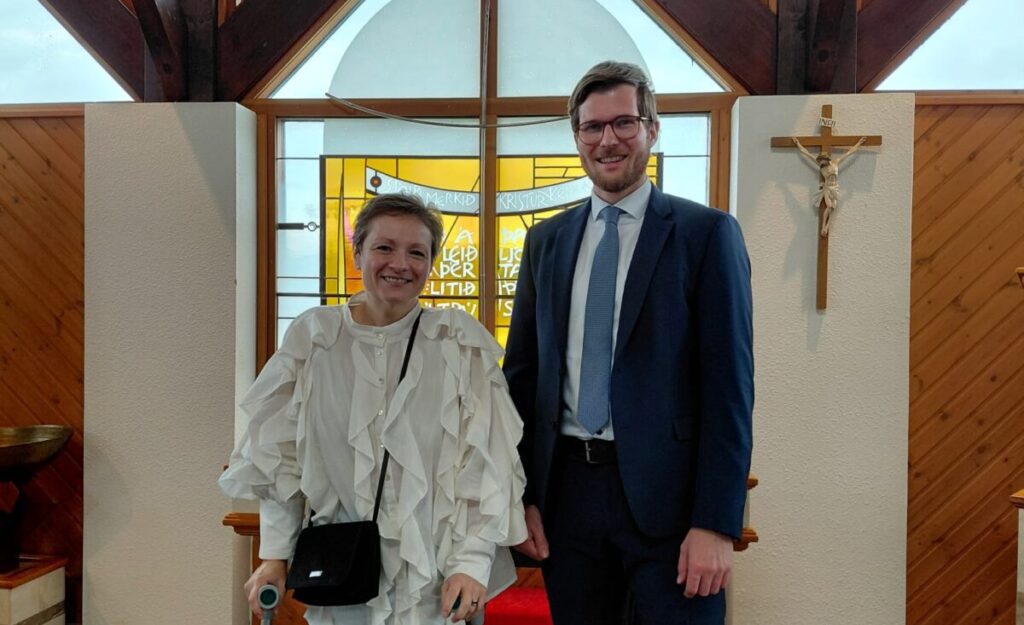
Monique Vala Körner Ólafsson has been living in Iceland for almost three decades. She moved to the island at the end of 1998—for love. The Church used to rent a flat with an adjoining room, and groups from Germany often came. “There was even an Icelandic choir once,” she says. After the financial crisis in Iceland, the UK took over the pastoral care for a while, “today it’s back in German hands”. She experiences her faith particularly in everyday life, in her work in the outpatient sector. She also struggles with anxiety time and again, “but I know that I can trust God in everything I do”. Some of the most precious moments for her are the visits from the Apostle, “Not everyone has that,” she says. The word she associates with the Church is Trúföst: faithfulness. A Bible verse that inspires her is Isaiah 43: 1. “I don’t think you need to say anything about that, do you?”
When she thinks of the worldwide congregation, she sums it up simply, “Even if you are few in number, God will not forget you.”
This is certainly not how a shortage or a deficit sound, but gratitude.
Cover photo: den-belitsky / Envato Elements
remaining photos: Nýja Postula Kirkjan Ísland