



Everything old is no longer valid! God’s message breaks with tradition and challenges us. Those who dare can recognise the radical newness of the gospel.
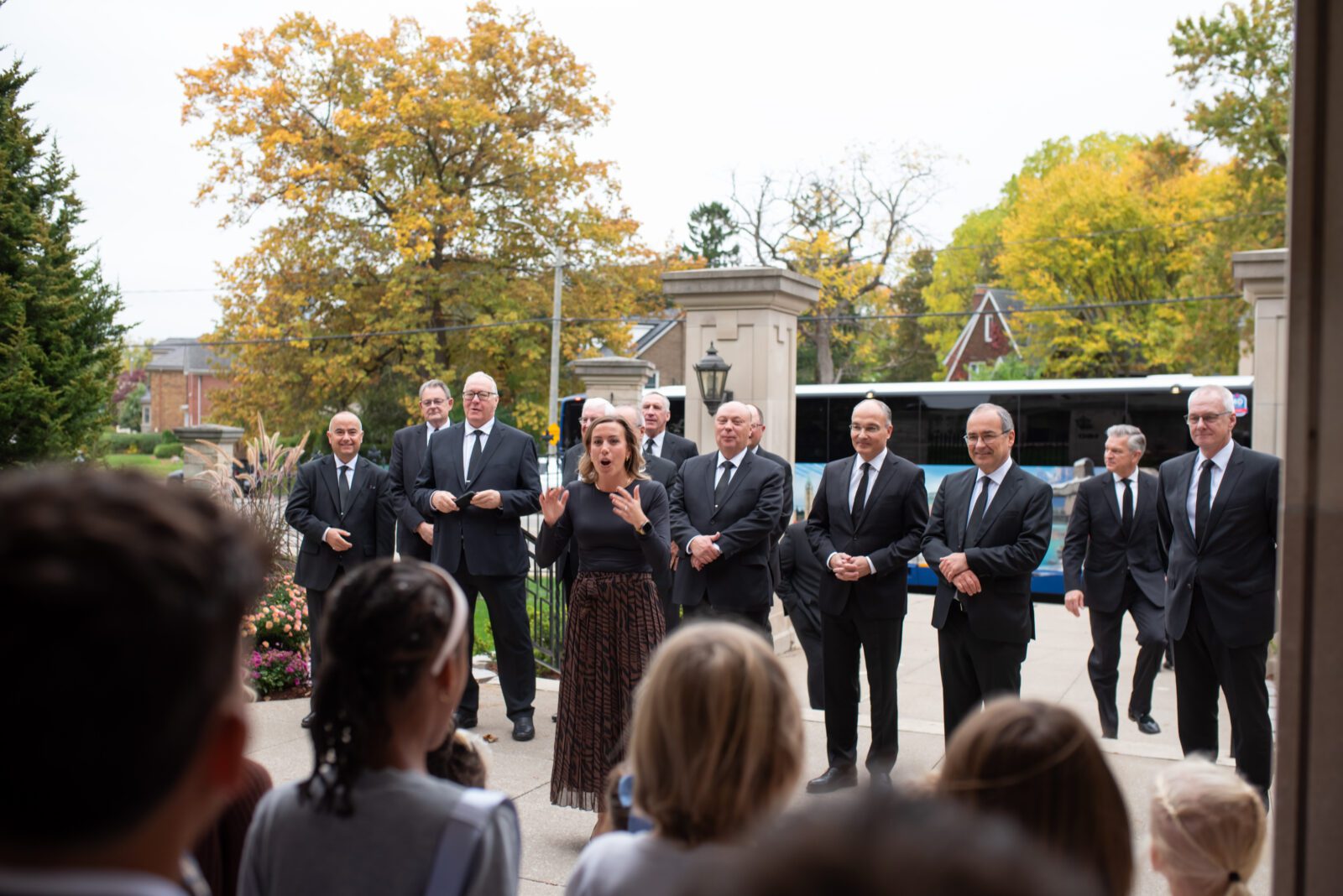
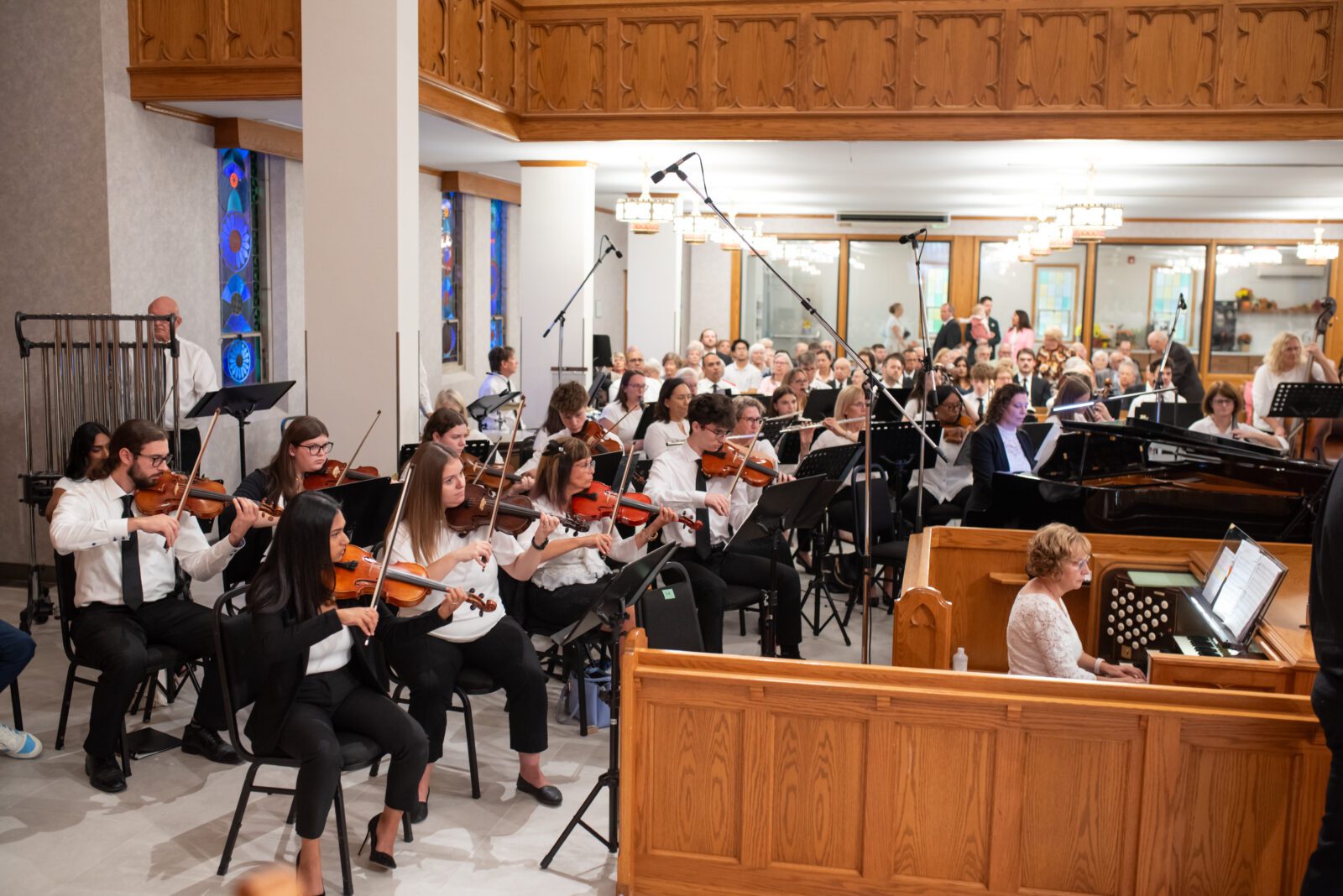
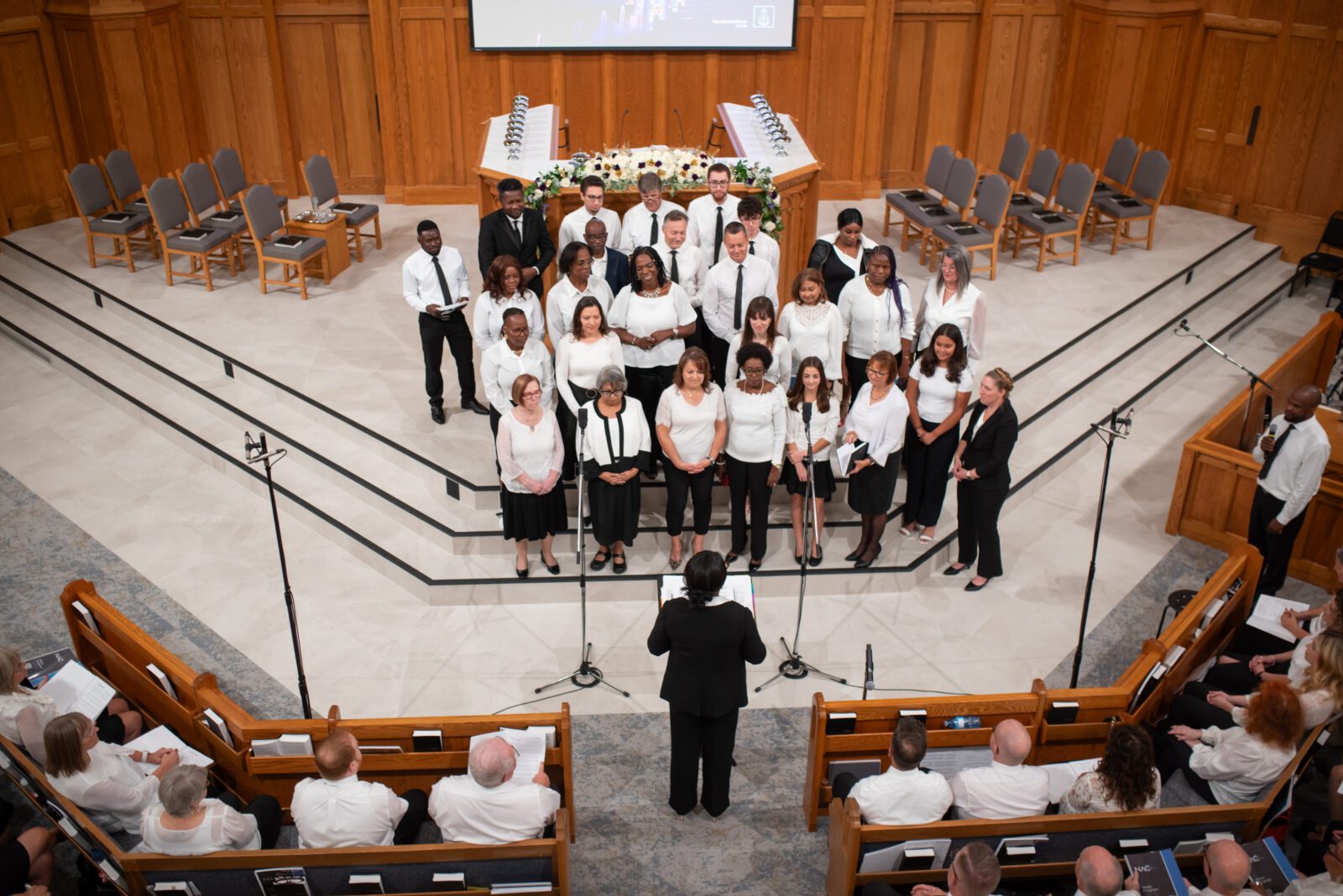
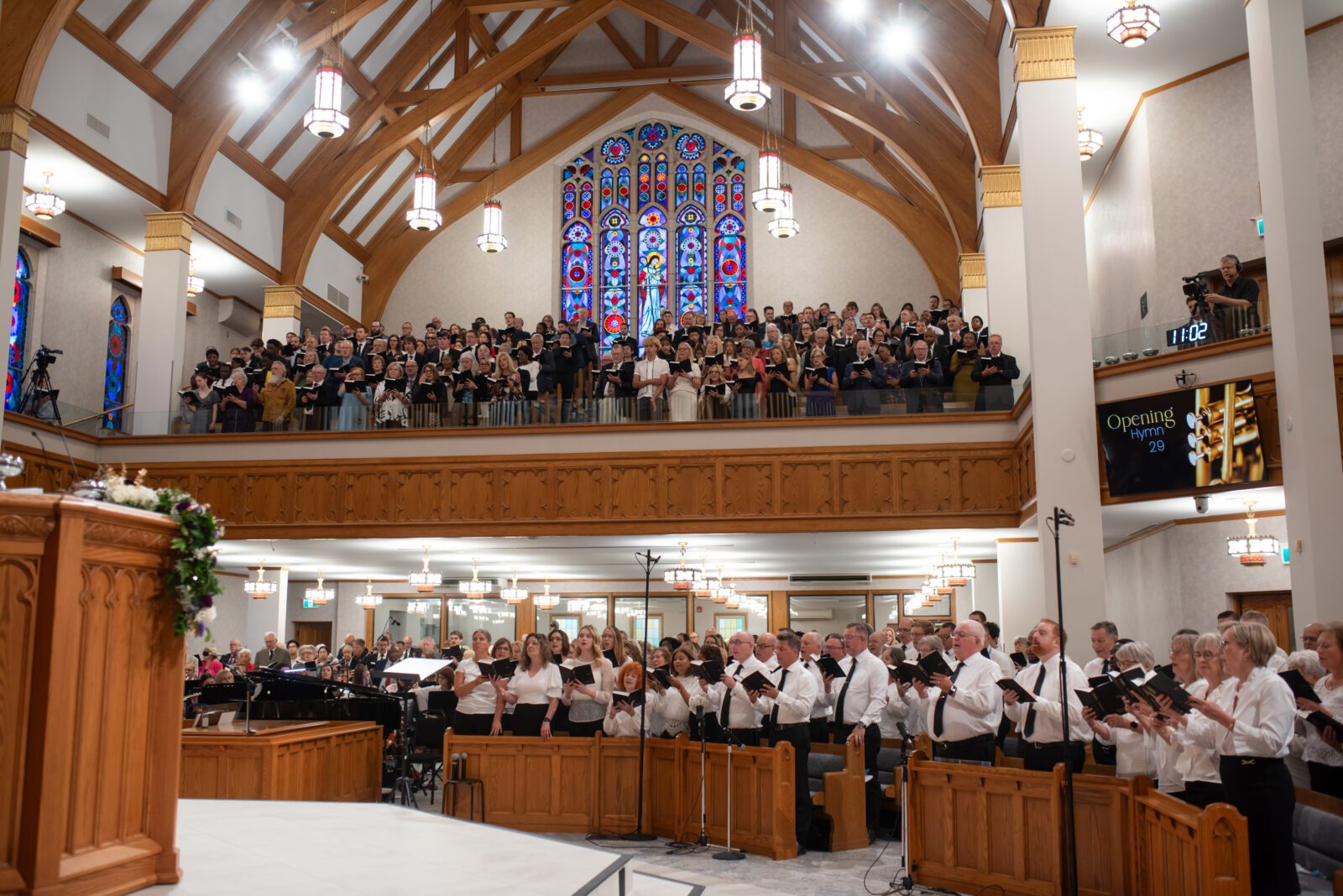
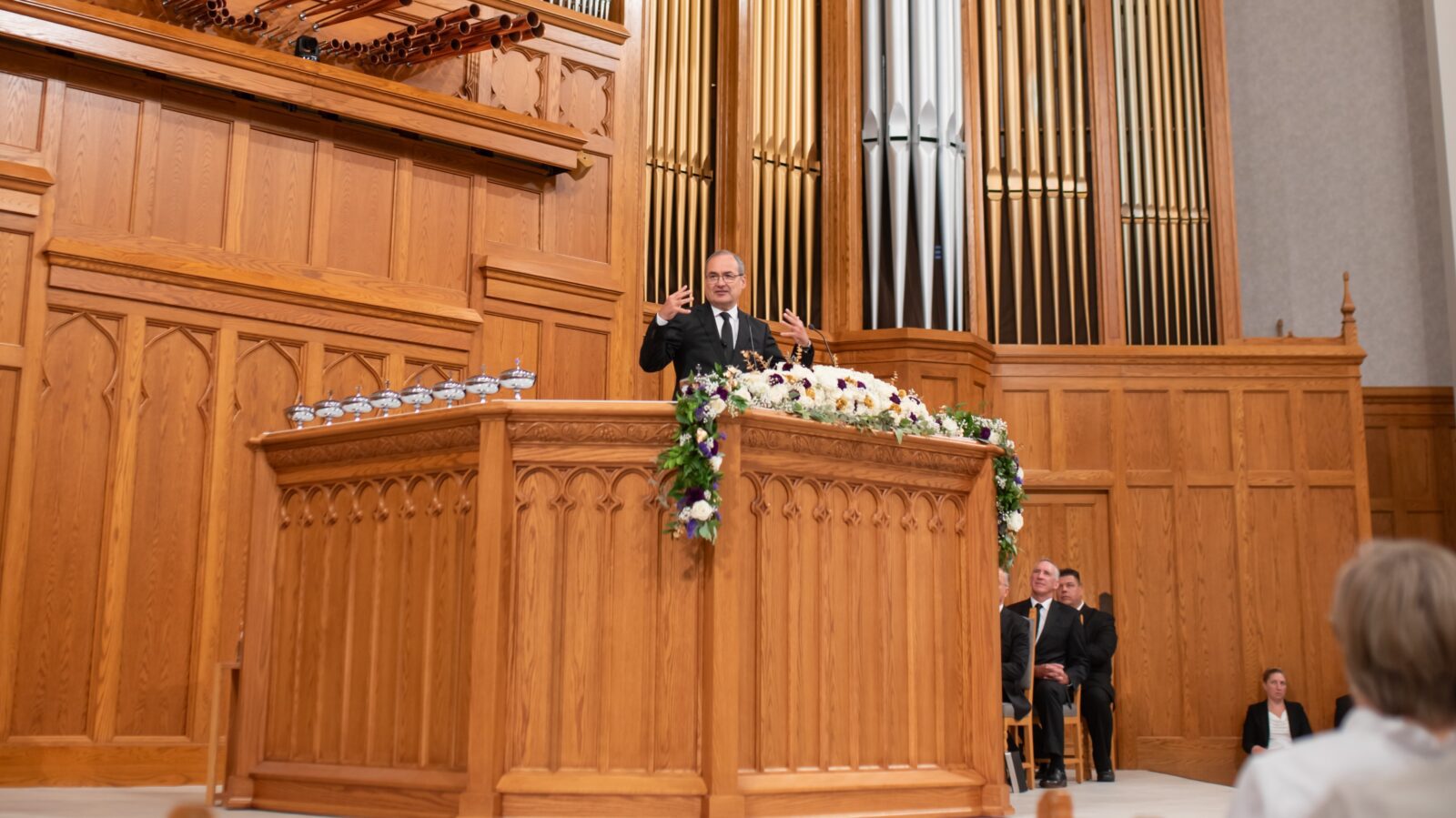
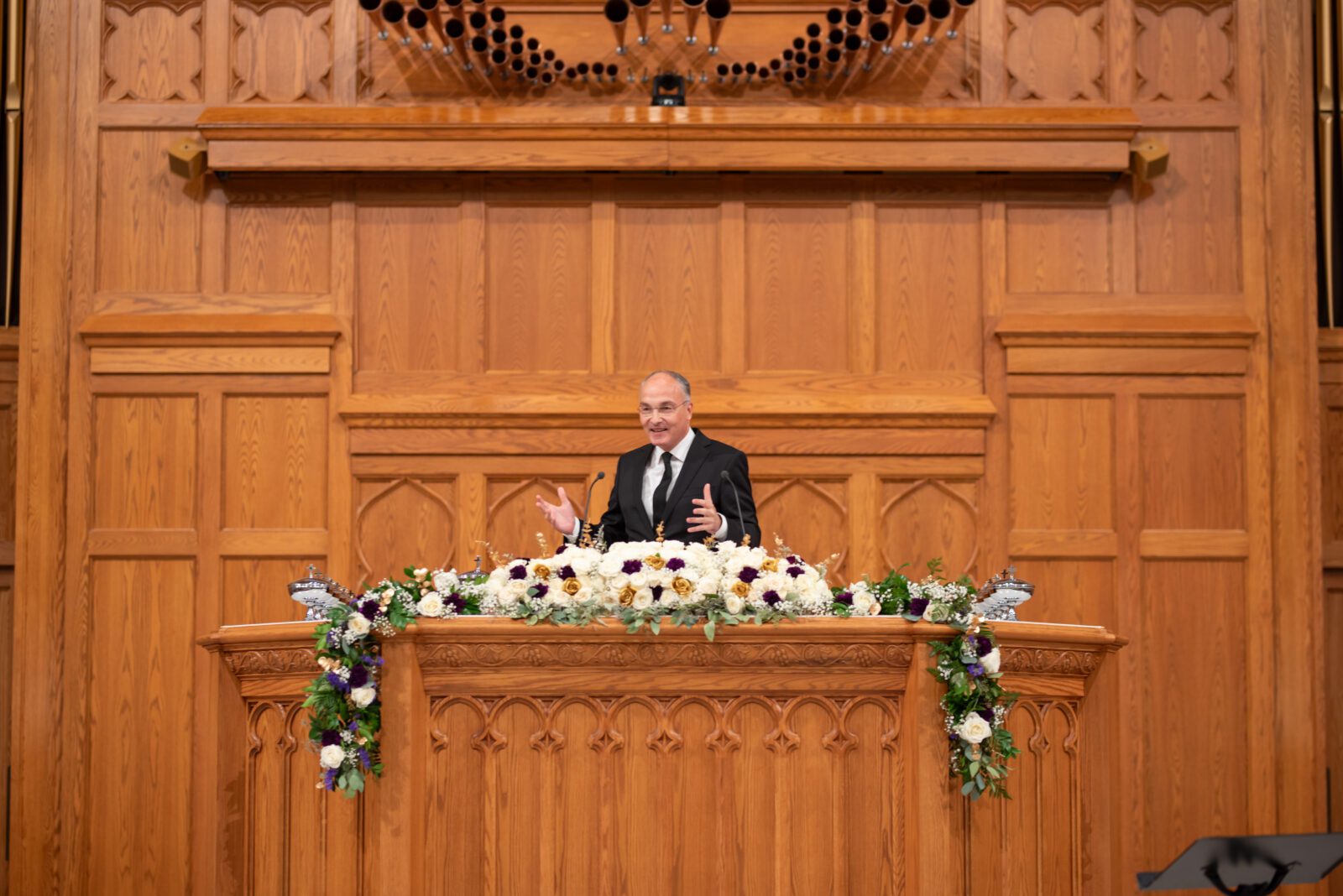
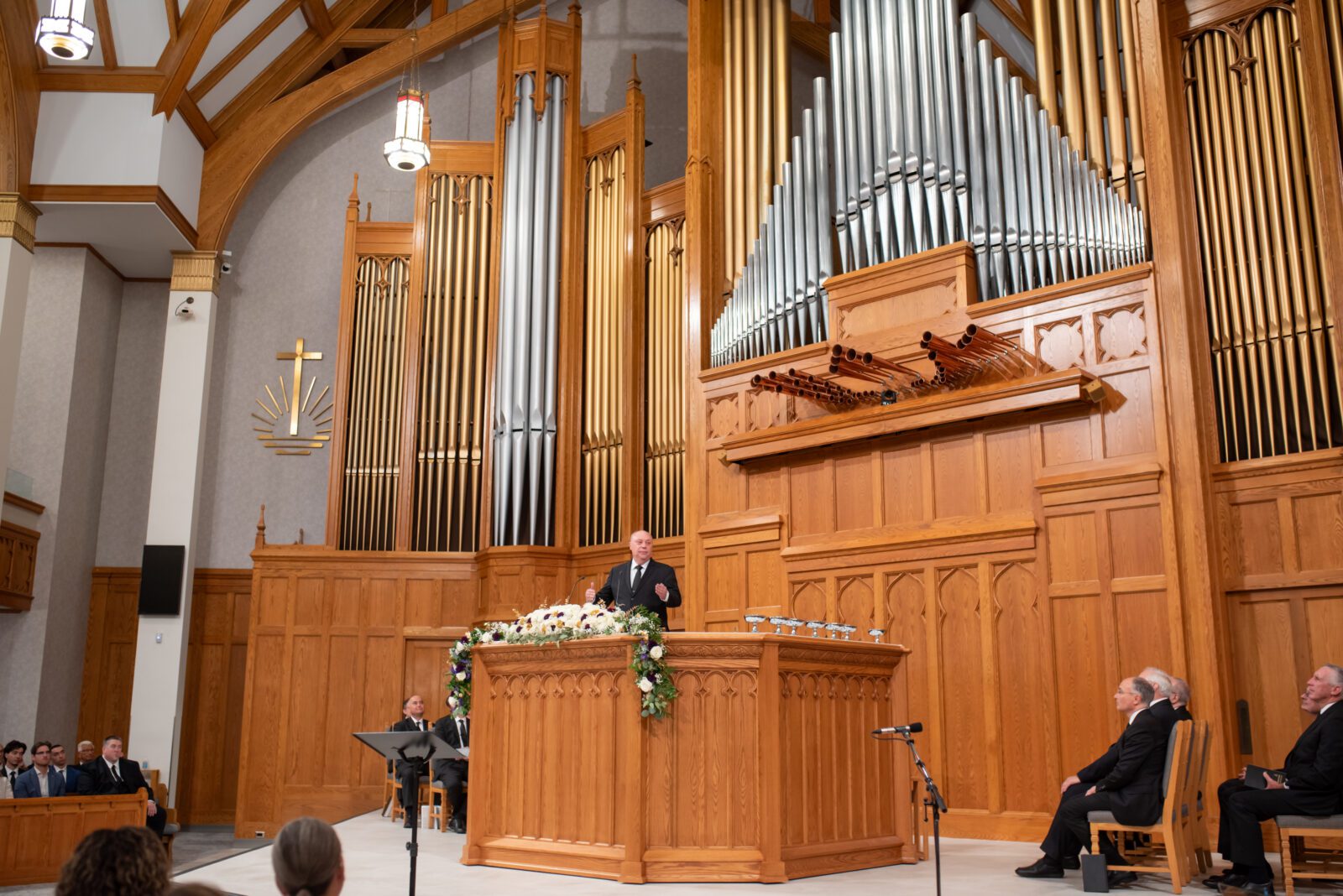
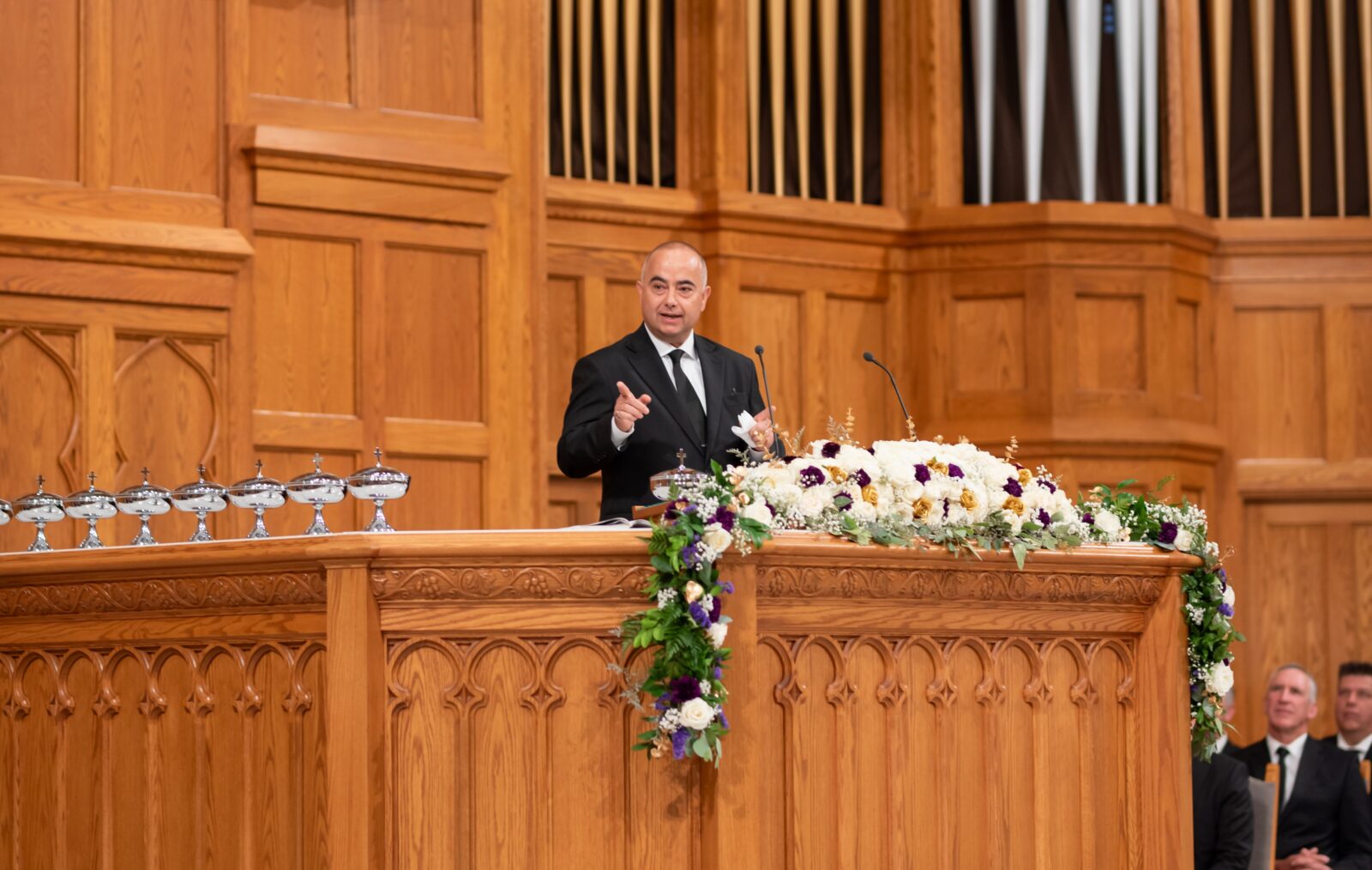
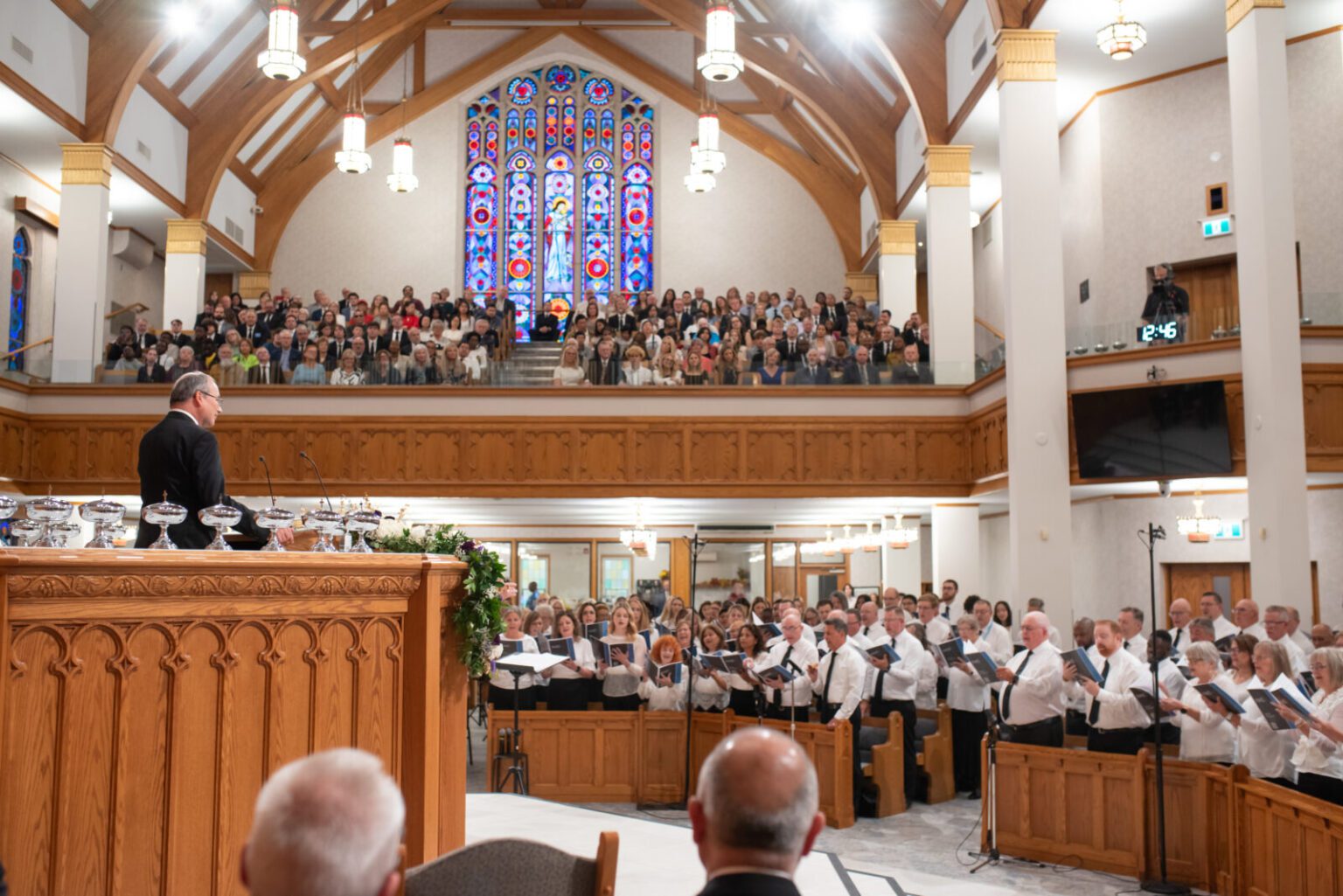
More than a thousand believers filled the church on Margaret Avenue in Kitchener, Ontario (Canada) when Chief Apostle Jean-Luc Schneider conducted a divine service there on 19 October 2025. He was accompanied by District Apostles and Apostles from several countries. The occasion was the retirement of District Apostle Mark Woll and District Apostle Helper Frank Dzur, and the appointment of Arnaud Martig as the new District Apostle.
Right from the start, however, the Chief Apostle made it clear what this gathering was really about: not about retiring ministers or ceremonies, but about the individual believer’s personal relationship with God. Addressing the congregation, he emphasised that “this service is about you, your salvation, your relationship with God”, and continued, “God will speak to you and me. He will tell us what we need to remain faithful and to be prepared for the return of Christ.”
“What I bring is totally new!”
Chief Apostle Schneider based his sermon on Mark 2: 22 and explained that this was Jesus’ response to criticism in a discussion He had with some Jews. They accused Him and His disciples of disregarding traditions. Jesus explained to them that He had come to bring a totally new message, citing the example from the Bible text that new wine must be put into new wineskins. The Lord thus made it clear that His message does not fit into old moulds, so to speak, but opens up a radically new way. For the listeners at the time, this was hardly comprehensible—a spiritual revolution that shook up existing ideas.
The novelty was particularly evident in a totally new understanding of God. The thinking, the tradition, in Israel was: “God is our king.” God was regarded as a strict king who imposed His rule and laws and punished offences. Jesus, however, revealed a God of grace, a loving Father who forgives and loves sinners. That was totally new to them and changed everything, the Chief Apostle explained. Similarly, Jesus also redefined justice: it was not the outward adherence to the commandments that mattered, but a person’s disposition and motivation. He explained to them that even if they kept all the rules and traditions, they would not be able to earn salvation. He told them that they could only be saved by grace.
A blessing that turns the world upside down
Jesus also turned the concept of blessing on its head. While many in earlier times associated blessing with wealth, peace, and health, Jesus said, “Blessed are the poor, blessed are those who suffer, blessed are those who are persecuted.” Chief Apostle Schneider emphasised that true blessing means eternal life and not earthly prosperity. Jesus turned the focus away from material ideas and towards heavenly values. Only those who deny themselves and follow Christ can become new creation, that is, a person who has been renewed through faith.
According to the Church leader, the newness of the gospel was demanding for many Christians, then as now. Already Paul admonished, “Please, do not return under the yoke of the past. Remain in the gospel.” Even today, there is a danger of falling back into old patterns and reducing faith to earthly rewards. Faith demands consistency and inner transformation, not conformity to the convenience or expectations of society.
At the end of his sermon, Chief Apostle Schneider summarised his thoughts as follows: being a Christian means allowing oneself to be continually renewed. “The more Christlike we become, the easier it will be for us to be one in Christ despite our differences.” This unity, the Chief Apostle said, is both the goal and a mission: people of different origins, cultures, and backgrounds should allow themselves to be united in Christ. Only those who are willing to allow themselves to be transformed can become part of this new people of God.
New clothes, new life
Chief Apostle Helge Mutschler was called to serve the congregation and said that this was a great day for the work of God in Canada. However, the divine service was not just to mark an anniversary, he said, but it was a sign of living faith: “It is wonderful to stand here, to feel this impressive atmosphere, and to look into your eyes.” The Chief Apostle Helper reminded the congregation that the world, then as now, was full of egoism, injustice, and indifference towards the weak and the poor. This makes God’s actions all the more astonishing: “He came from heaven … and humbled Himself to the point of death, even the death of the cross.” In doing so, Christ revealed a completely new world: the world of love, justice, and of being close to the weak and the poor.
Based on Colossians 3: 12, the Chief Apostle Helper encouraged the believers to make this divine love visible. “Put on tender mercies, kindness, humility, meekness, longsuffering,” he said, quoting Apostle Paul. These spiritual “garments” are the characteristics of a new creation in Christ. Furthermore, believers should not only leave the church fulfilled but transformed. The new path, the Chief Apostle Helper said, is simple but decisive: an attitude of love and devotion to God and your neighbour.
Photo: NAC Canada