




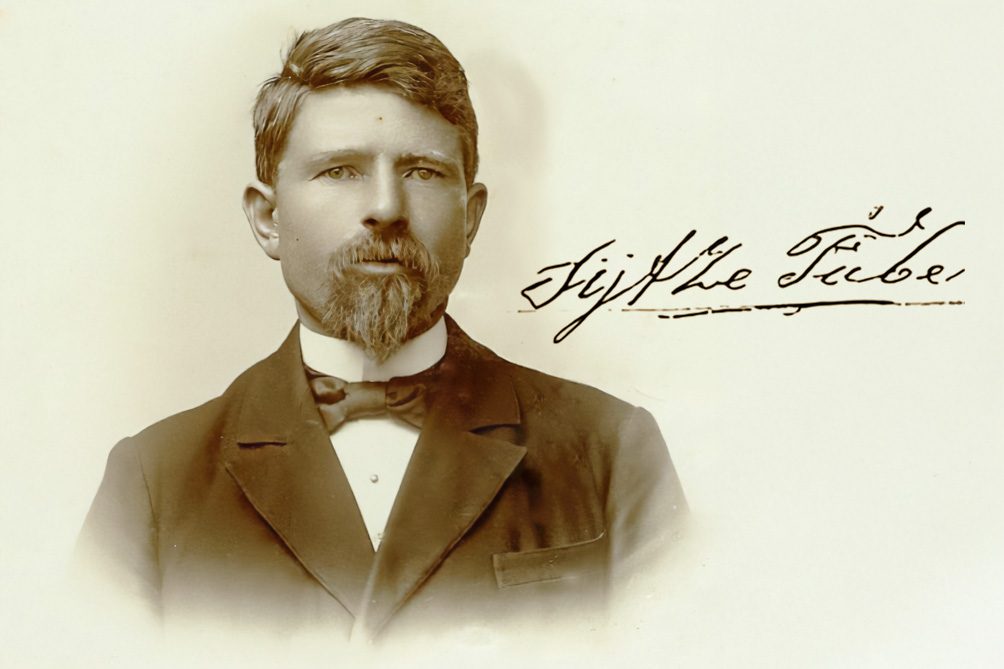
A hundred and twenty-five years ago, a man was ordained as an Apostle for South America—and nobody really remembered him. But then an Argentinian-Dutch co-operation set out on a search.
Very little is known about Sietze Faber—also spelt Sytze or Sixto—and his work in South America. The last contact with him was in 1913, after which all traces of him disappeared.
In the 1960s, Apostle Karl Weinmann was the first to make a serious attempt to unravel the mystery surrounding Apostle Faber. However, the sources and documents were more than sparse. Some of the historical material had been lost, and the results of the investigation were rather modest.
Detective work
The retired Apostle Vicente Teti from Argentina joined forces with the archives of the New Apostolic Church Netherlands in the hopes of finding something. The research took several years and included genealogical research, visits to registry offices in several villages and towns in Argentina, as well as interviews with historians and Faber’s great-grandchildren.
Apostle Teti reported: “We realised that Sietze Faber was even more of a mystery to the great-grandchildren than it was to us.” He also said, “Most of the comments about the grandparents agreed that they were very guarded about their history.” Nevertheless, the Apostle managed to shed light on the matter.
Who was Sieste Faber?
He was born on 24 September 1861 in Friesland in the Netherlands. His parents belonged to the Reformed faith. He earned his livelihood as a farm labourer and married his wife Antja Leen in May 1884. Together they had six children. Eventually, the family emigrated to the United States in 1889 and then to Argentina in 1894.
Faber settled as a farmer in the province of Cordoba. Other Dutch immigrants lived nearby. Four years later, he discovered the apostolic faith through them, was sealed a short time later, and received the Apostle ministry for Argentina in 1900.
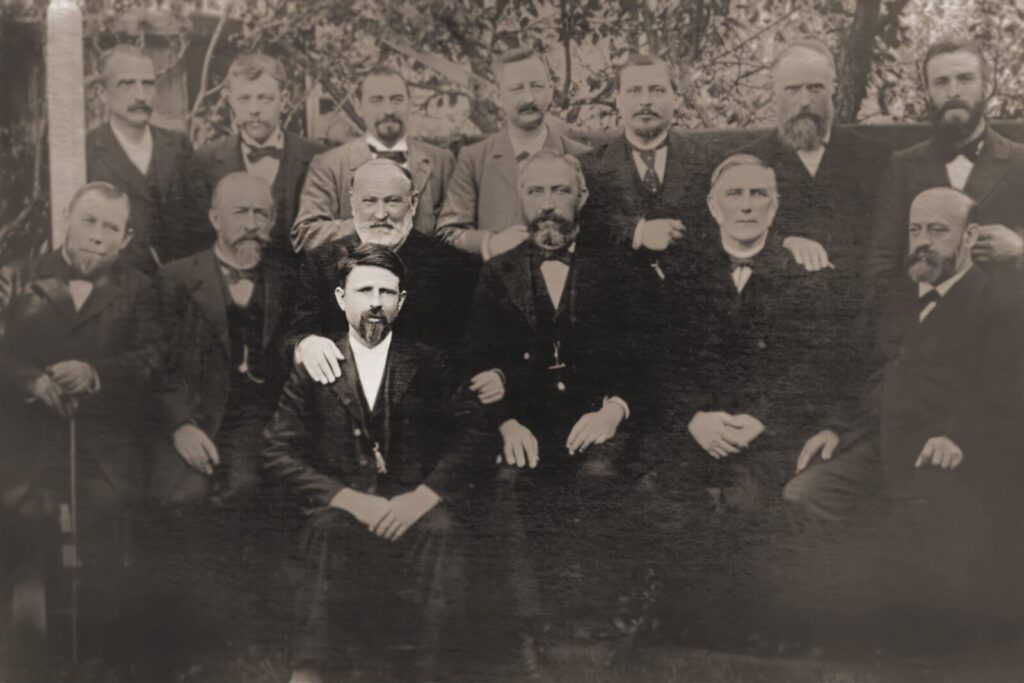
An Apostle for Argentina
The Dutchman was ordained an Apostle by Chief Apostle Friedrich Krebs in Amsterdam in the Netherlands on 16 September 1900. “The newly appointed Apostle Faber for Argentina was a man full of faith. He could not boast of much knowledge, but the test that Peter once passed, Faber also passed,” church journals reported in September and October 1900.
In a speech after his ordination, Faber himself explained, “I am not a preacher, nor do I know the Bible, but I will bear witness to the love of the Saviour. I have seen and experienced the deeds of God and was saved through His work.”
Success despite difficulties
The sources tell us the following about his work as an Apostle: “In Argentina, Apostle Faber’s mission was crowned with blessing and success. Members were sealed and accepted into the new living temple of God, and a small congregation was founded.” He travelled across the country on horseback, by carriage, train, or ship to conduct divine services, provide spiritual support, and perform baptisms and sealings.
But in 1907 we can read: “He had to contend with many difficulties.” On the one hand, this was due to the sparsely populated region and the fact that cities were far away. On the other hand, as a farmer he was not spared droughts and had to sell his livestock to cover his debts. The Apostle lived in extreme poverty. Apostle Jacob Kofman, under whom Faber worked, nevertheless stated, “The work of God thrived well under these circumstances.”
Apostle Faber was active into old age. His granddaughter remembers him as an old man with a white beard. He dressed up every afternoon: white shirt, tie, black suit. With a small booklet in hand, he would set off to make pastoral visits. He also held divine services in a shed by his house, the front of which was adorned with an iron cross, and carried out baptisms until shortly before his death. He died in Chazón on 28 January 1929 at the age of 67.
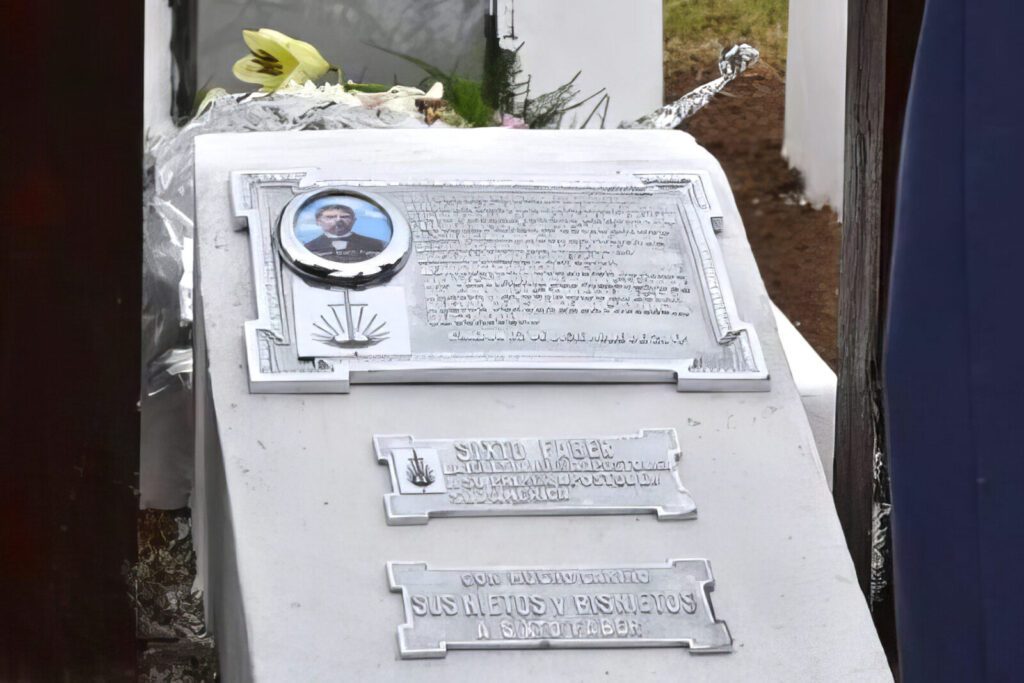
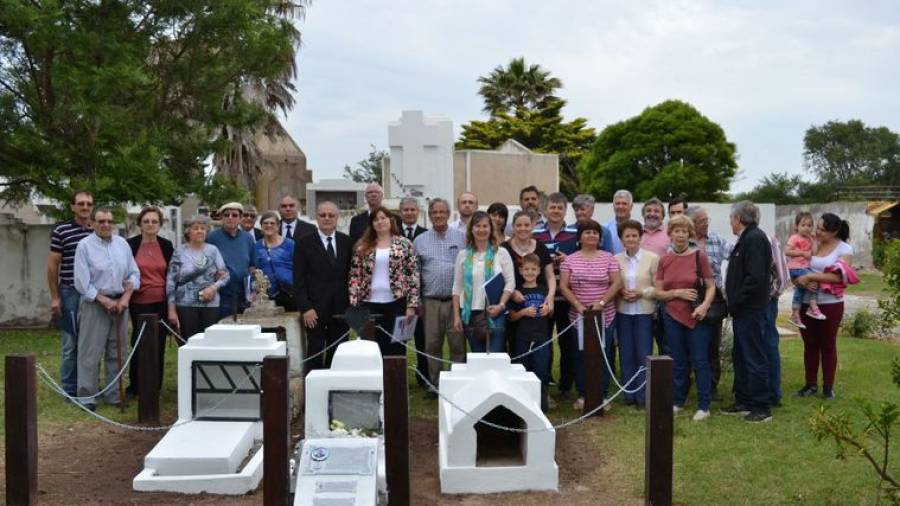
What came of the search
Following the discovery of the Faber family’s grave in Chazón, now Chajan, the Apostle’s tomb was officially declared a protected monument in a small ceremony on 2 December 2017.
In addition, a teacher from the neighbouring town of Pascanas gave his students an assignment to write a paper about one of the regional immigrants. Some of the students chose the story of Apostle Faber …