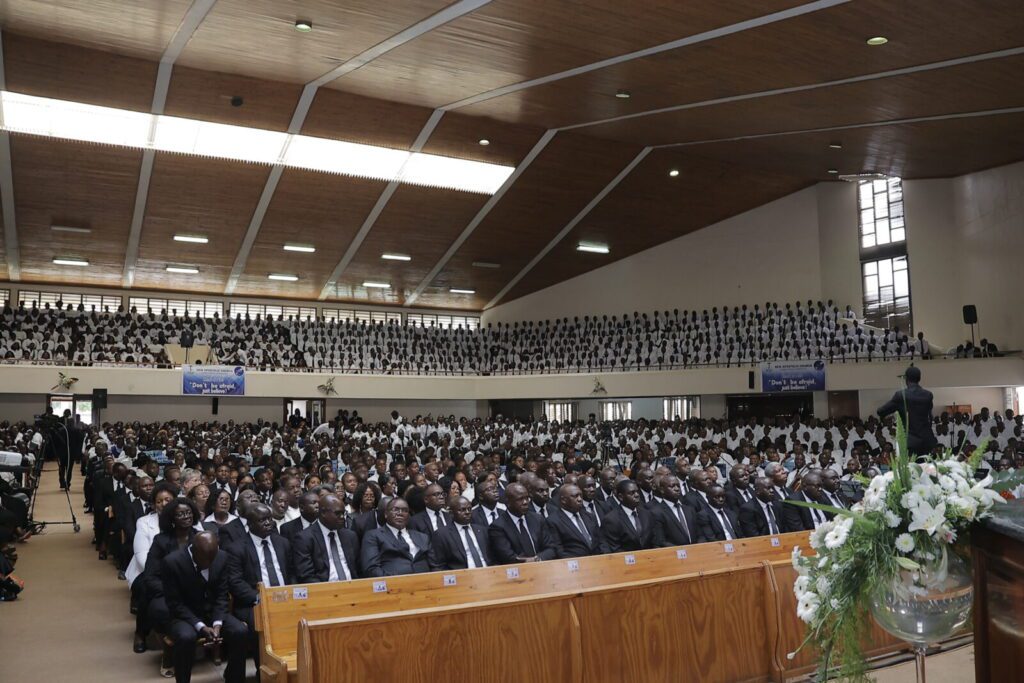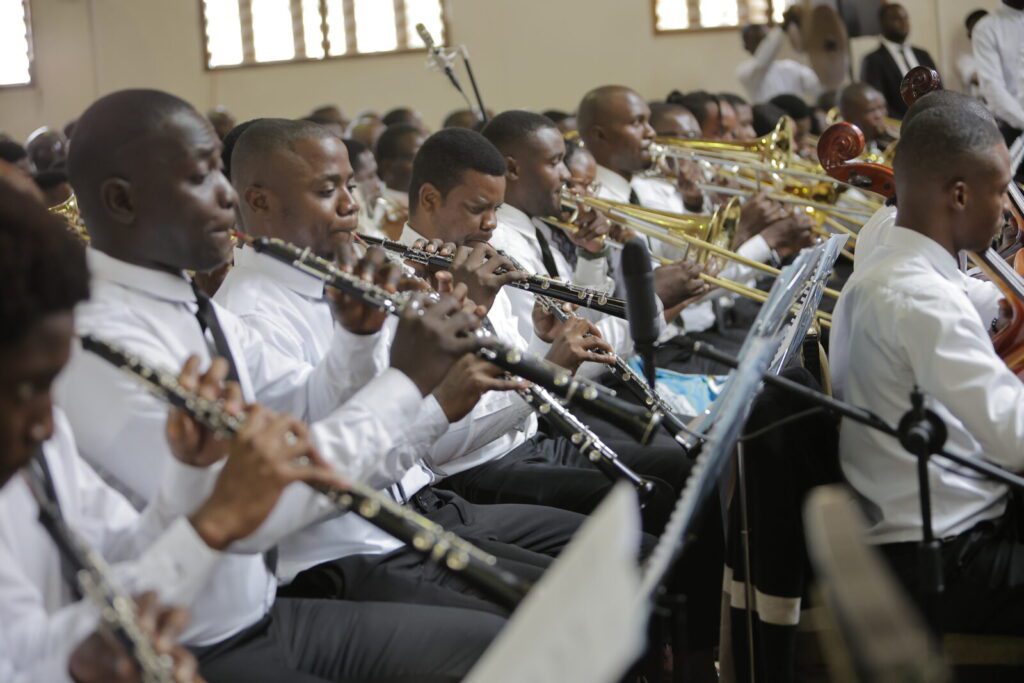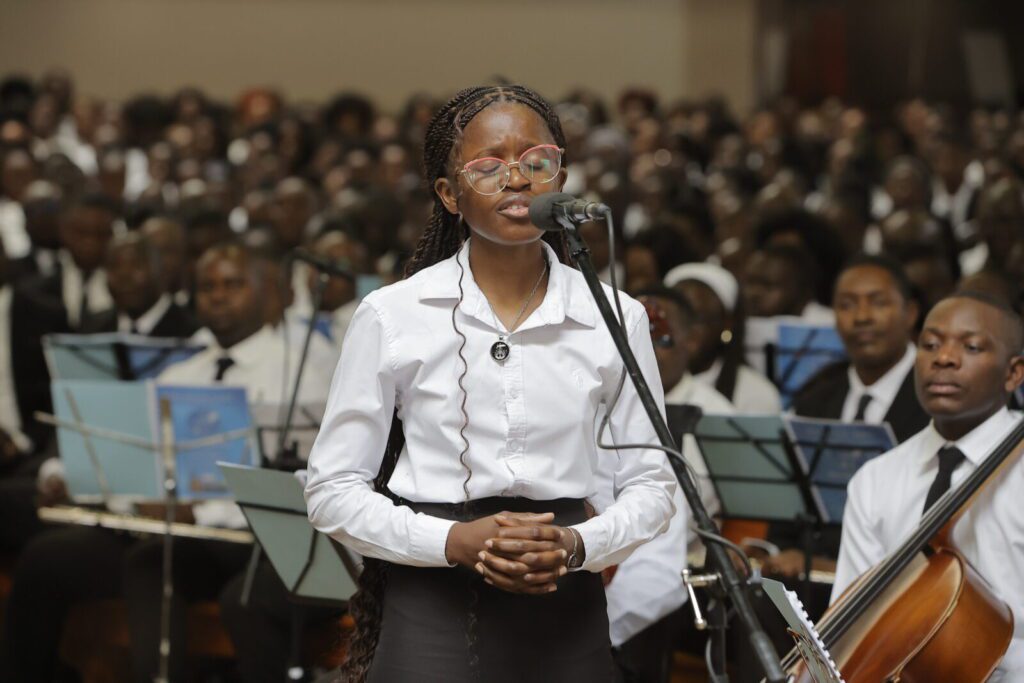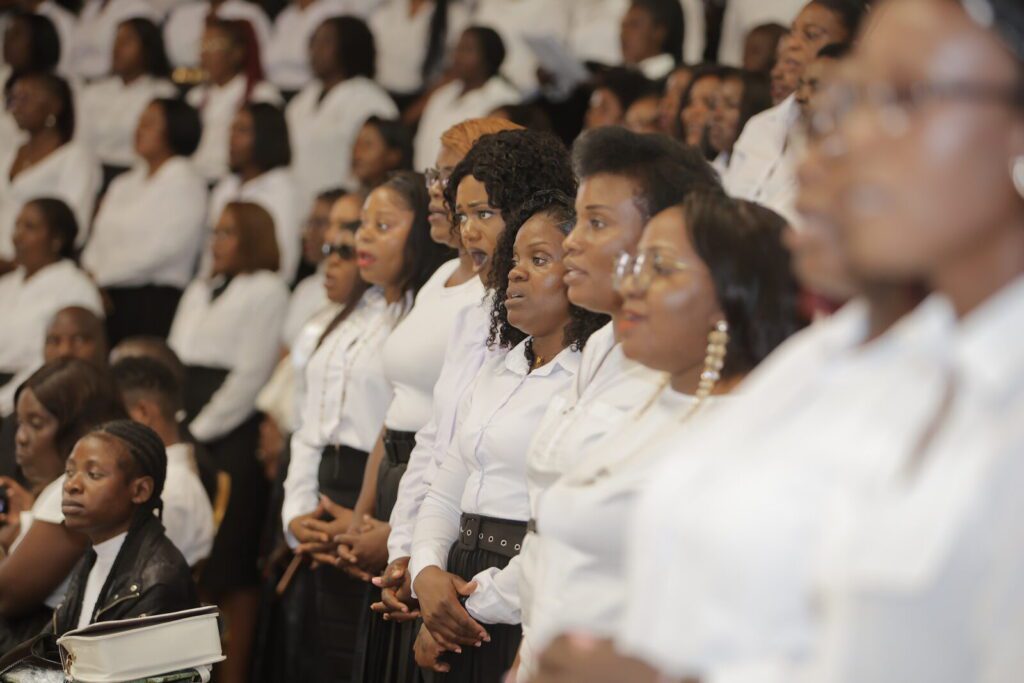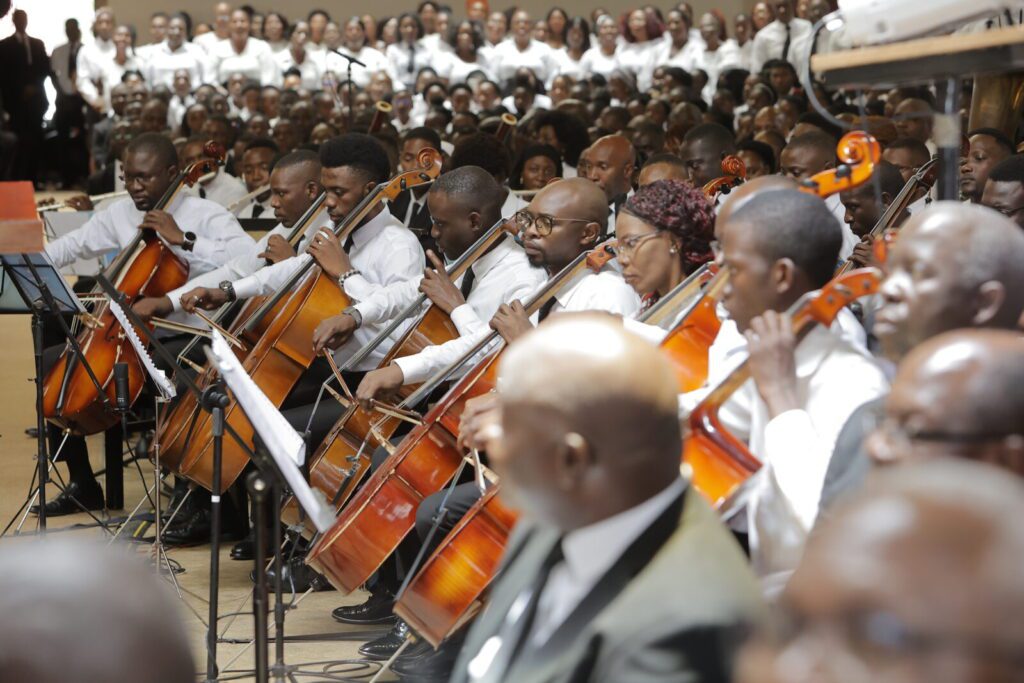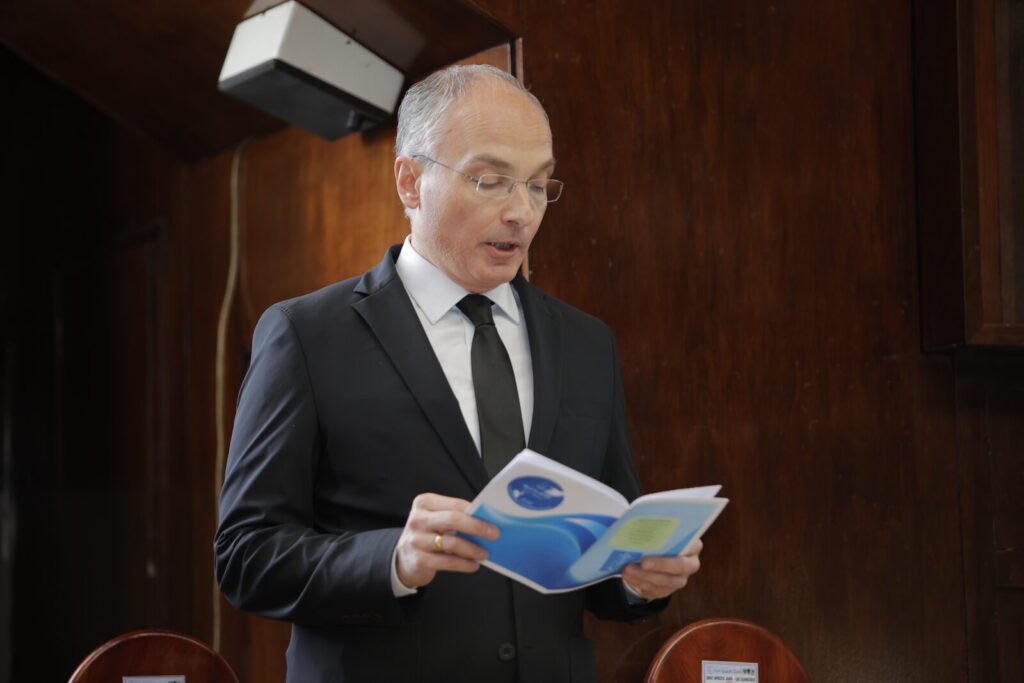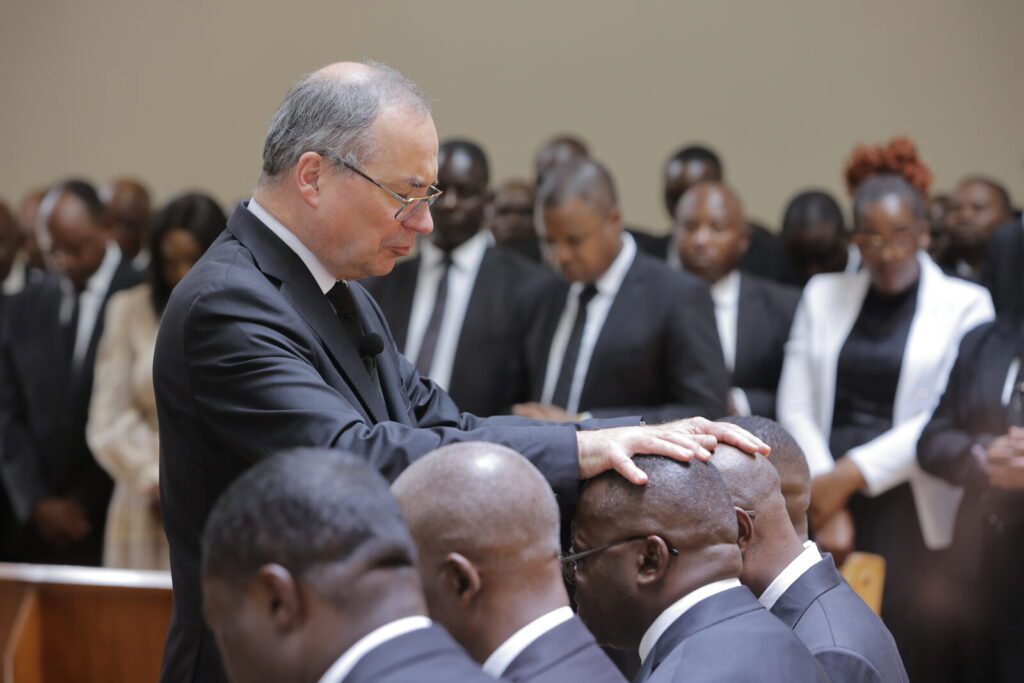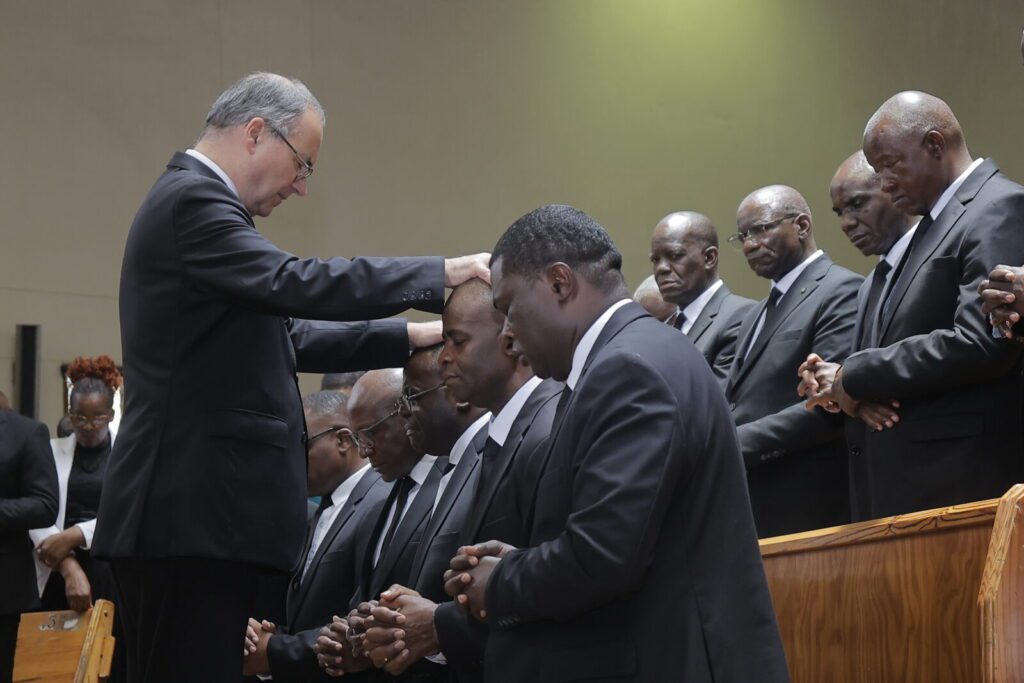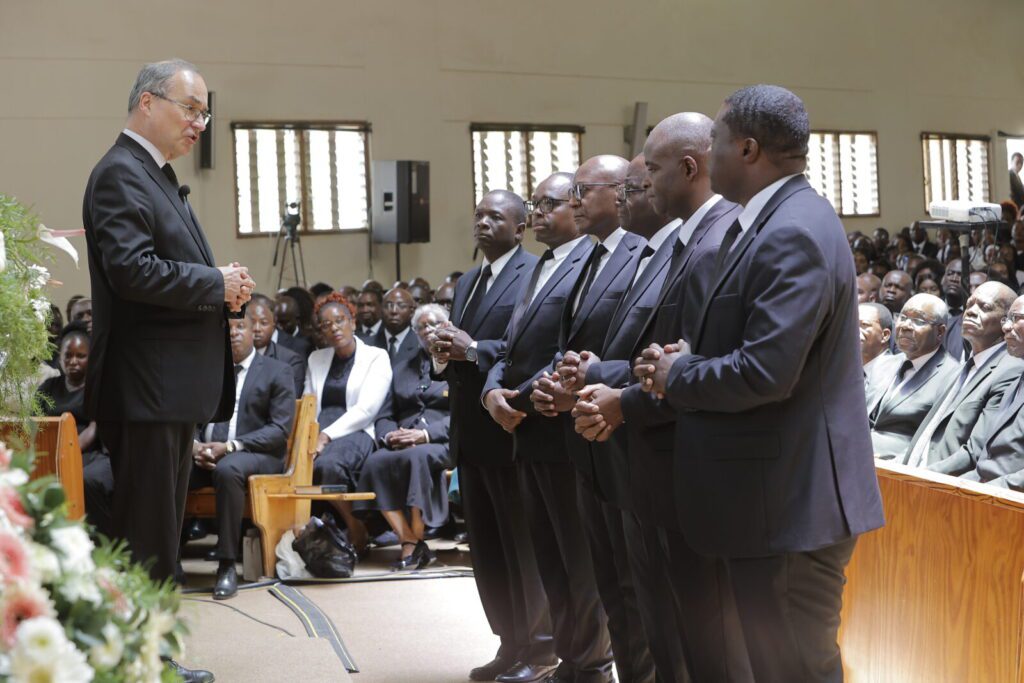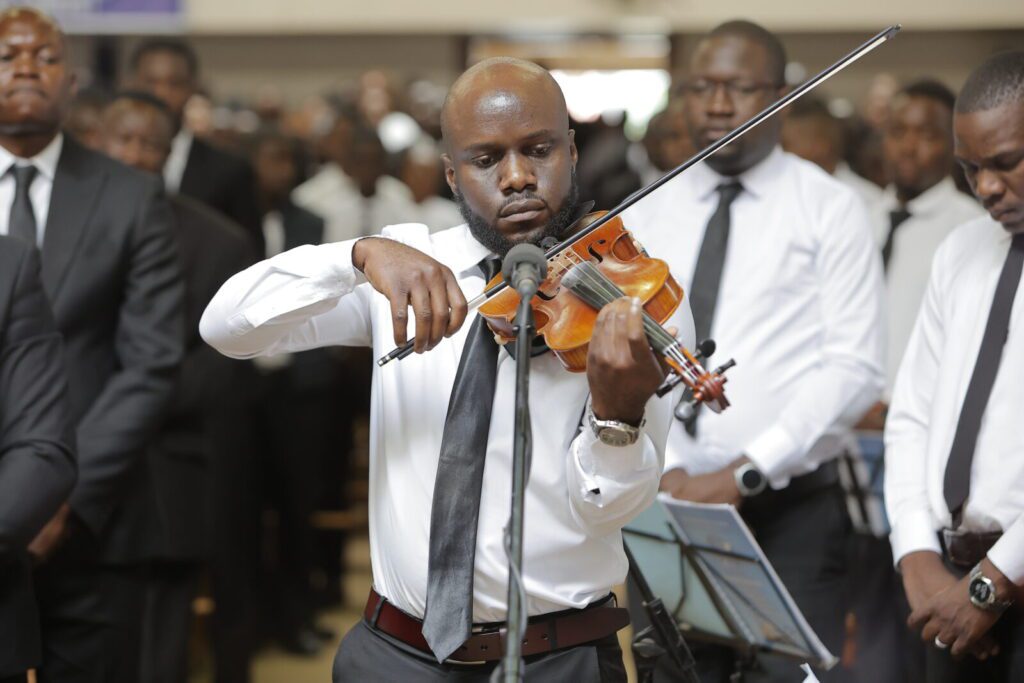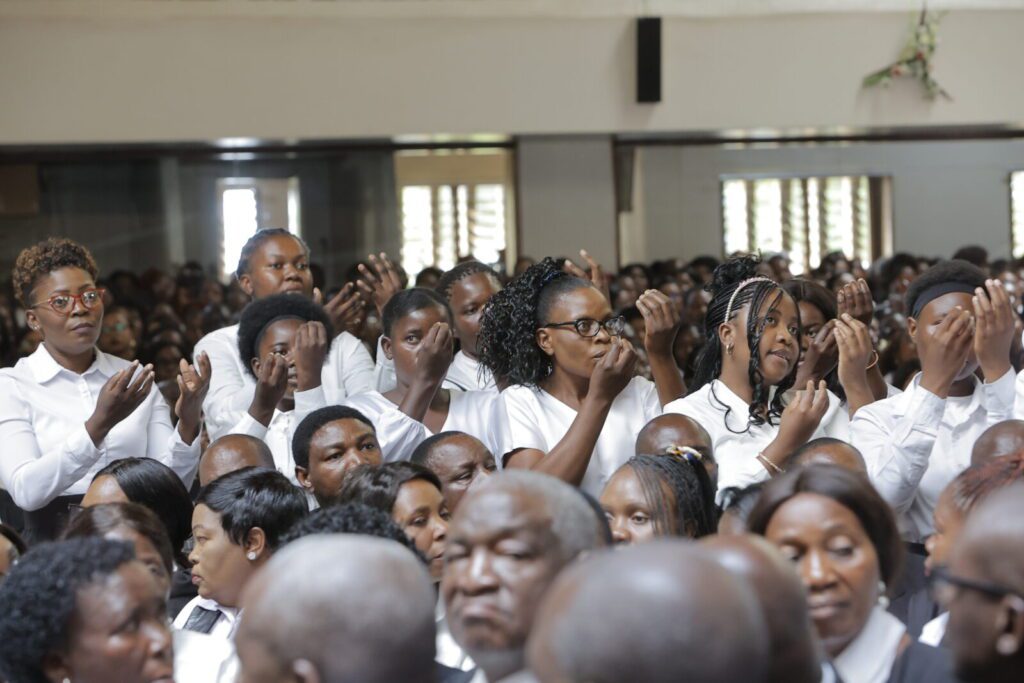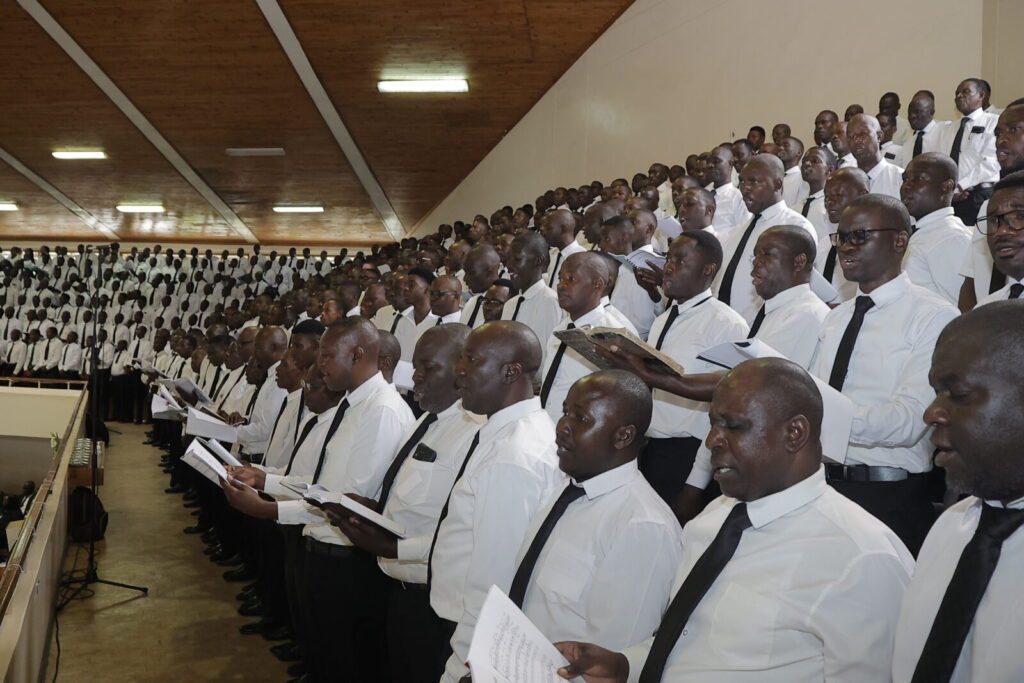




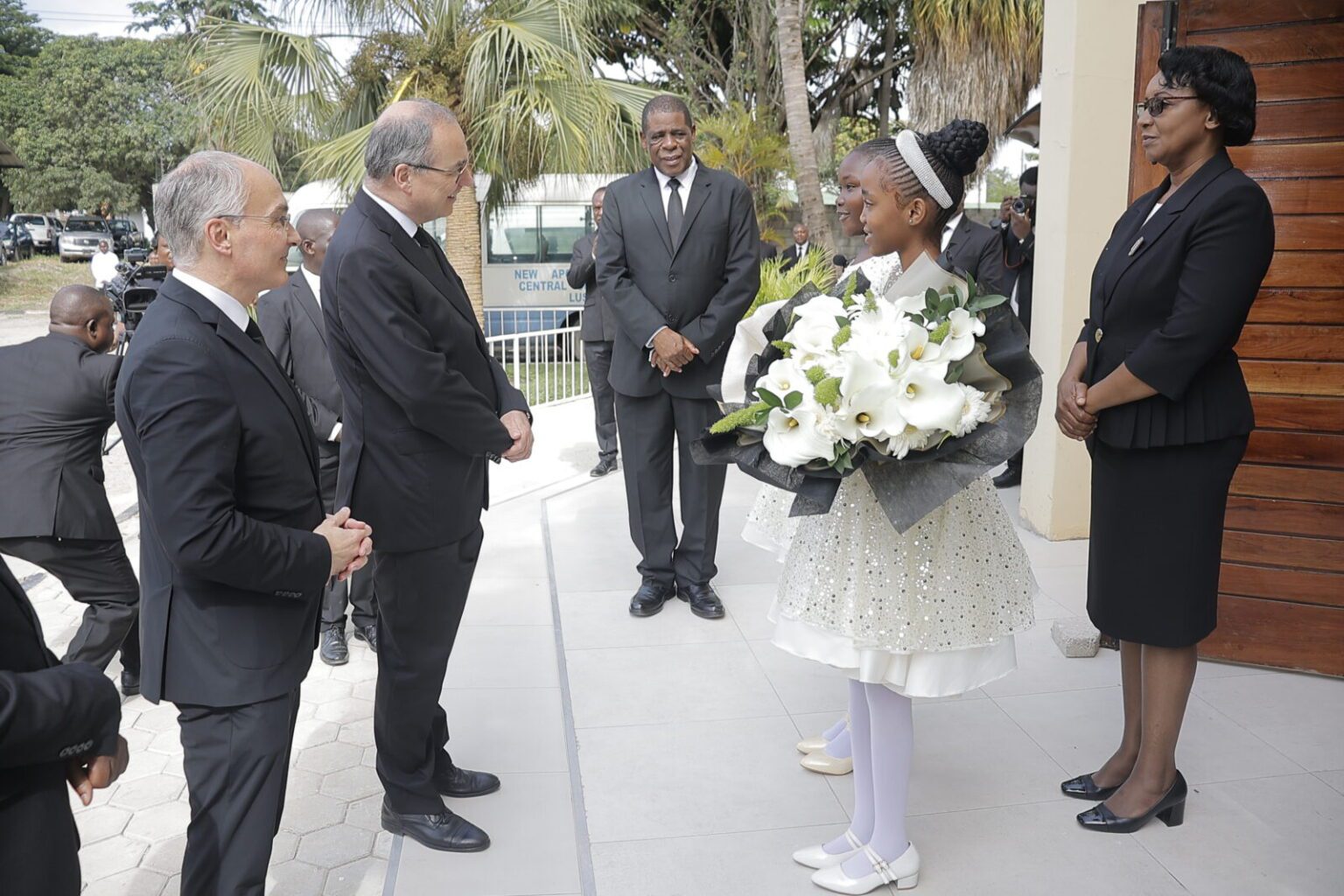
In Lusaka, Chief Apostle Schneider addressed several sensitive issues affecting every Christian and the Church, asking where genuine mission might be giving way to ego, rules, reputation, or regional distinction?
“Therefore let him who thinks he stands take heed lest he fall” (1 Corinthians 10: 12). This was the Bible text Chief Apostle Jean-Luc Schneider used as the basis for his sermon on 8 February 2025 in Lusaka, Zambia.
In this passage, Paul reminds the church in Corinth of the Israelites in the desert: though they had been delivered from slavery in Egypt, they ultimately missed their goal because they made wrong decisions. “Sometimes they worshipped idols, sometimes they did not trust God and even rebelled against God,” explained the Chief Apostle.
He drew a parallel with today: “Our salvation does not depend on the circumstances we go through. Our salvation depends on our will and our decisions.” Just because we have been baptised and reborn out of water and the Spirit does not mean that we are automatically saved: “All of us, me included, can fall.”
What falling means for Christians
His sermon was very concrete. He pointed out five dangers that can slowly erode faith.
Neglecting eternal life: “We are so busy with the things of our earthly life that we completely forget that we have a soul and that we must take care of it.”
Worshipping idols—not on altars, but in our own heart: “My ego, it’s about me, me, me. That’s the most powerful idol in our time. It’s all about me, my interests, my glory, my power, my reputation.”
Tempting God: “If you really love me, give me this, give me that.”
Being blind to our weaknesses: “I attend every service. I give my offerings. I serve the Lord: I deserve salvation. In the end, we forget that we are dependent on grace.”
Outwardly devout, inwardly fruitless: “Remember the fig tree and the example of Jesus: the tree had many leaves, but no fruit. It looked beautiful, but it bore no fruit.”
However, Chief Apostle Schneider ensured that these warnings would not leave the listeners in uncertainty. Instead, he reminded them that God helps us to overcome temptations. Therefore, “Don’t be afraid. Just believe!” Faith means: “Trust in His word, trust in His promise, trust in His love. The truth is what God says.” It is important that we are vigilant here and resist the first impulse to simply pass God’s warnings on to our neighbour. “The word of preaching is not for your neighbour, it’s for us.”
In order not to fall, we need the proper motivation: not duty, not ambition, not fear. Love is what carries us. “Any other motivation is not solid enough, we will fail. We need the fellowship of God’s children. We cannot do it alone.”
Warning to the Church
Then the sermon became an assessment of the Church itself: “But what’s valid for the believer is also valid for the Church as an institution.” Apostles and the Church might think they are standing firm, yet there is a danger of them falling when the mission is compromised or allowed to slip.
The Chief Apostle recalled the Mission of the New Apostolic Church, as described in the Catechism: “Reaching out to all people in order to teach them the gospel of Jesus Christ and to baptise them with water and the Holy Spirit. Providing soul care and cultivating a warm fellowship in which everyone shall experience the love of God and the joy of serving Him and others.” The mission of the Apostles is to proclaim the gospel, to dispense the sacraments, and to prepare the bride of Christ. God’s warning also applies to them: “There are some risks. Be careful not to fall and not to fail in your mission.” Chief Apostle Schneider then listed a few stumbling blocks:
Focussing on earthly things: This happens when the Church becomes too preoccupied with worldly matters. The different activities within the Church should never become more important than the mission itself: preparing for the return of Christ.
Idolatry:The institution becomes an idol as soon as it becomes more important than Jesus Christ. This could happen if numbers and membership, money, or reputation were used as benchmarks. However: “You cannot measure the maturity of the bride of Christ with figures. What matters is spiritual maturity. That is why we proclaim the will of God, regardless of whether it pleases people or not.” We are not in competition with other denominations. This is not about membership, not about ranking, but about faithfulness to the mission: proclaiming the unadulterated gospel.
Presumptuousness through rules: In order to function as a global church, some rules are required. “We should never put these rules on the same level as God’s rules.” There is a danger that rules we make will be equated with the will of God. And so the Chief Apostle emphasised: “Again, the Church needs rules to function, but they are not relevant for salvation.”
Ignoring our own weaknesses:As fallible human beings who shape the Church, we make mistakes time and again around the world. It is important that these are addressed openly and dealt with decisively to resolve the issues at hand. Those who conceal mistakes to protect their own reputation or that of the Church place reputation above the will of God—the very shift against which the Chief Apostle expressly warned. He then set a clear standard: “We have the courage to address such situations. The law of God is more important to us than our reputation.”
Division into small fiefdoms: Diversity is good and desirable, but differences must never become a source of division. The Chief Apostle described an attitude he frequently encounters when regional peculiarities are overemphasised. The issue itself is often not dramatic at all; it is the mindset behind it that is problematic. If the urge to distinguish oneself and emphasise differences becomes stronger than the desire to cultivate what we have in common, then unity in Christ is in danger.
That is why it is so important to remain one. In all trials and temptations, Jesus encourages us, “I know you are being tempted, but don’t be afraid. Just believe!”