




How can the congregations in Senegal be strengthened? Apostle Tounkang Mané had an unusual idea.
He wanted to organise the congregations in the country in such a way that they could also carry out income-generating activities. Then they would earn money and be able to contribute to the upkeep of the congregations and the Church in their country. They would be less dependent on financial support.
From proposal to action
The Apostle had cards distributed in each congregation on which the brothers and sisters could choose activities they would like to do. The result: four-fifths of the congregations suggested agricultural projects. It was therefore an obvious choice to focus on this, especially as many members of the congregation, including Apostle Mané, already have experience in this area.
In spring 2024, District Apostle Rainer Storck, who was responsible at the time, approved the project. Donations from a German youth initiative secured enough funding for the project to be launched. In Apostle Mané’s working area, several congregations were selected in which the project was to be launched on a trial basis.
Difficult conditions
Members from the congregations fenced in gardens, drilled wells, acquired agricultural equipment such as motor hoes and a seed planting machine and finally sowed peanuts, okra, sorrel, and eggplant. With fields prepared and peanuts sown, all that was needed then was for the rains to begin. The rainy season in Senegal usually lasts from June to November. The humidity then rises to up to 95 per cent, with 30 to 33 degrees in the shade during the day. It’s hardly any cooler at night.
Yet, the harvest in Sédhiou City was not particularly plentiful. There, brothers and sisters grew peanuts in the church yard, but the soil turned out to be depleted and not very fertile. The church is therefore looking for a piece of land that is more suitable for agricultural use.
First harvest
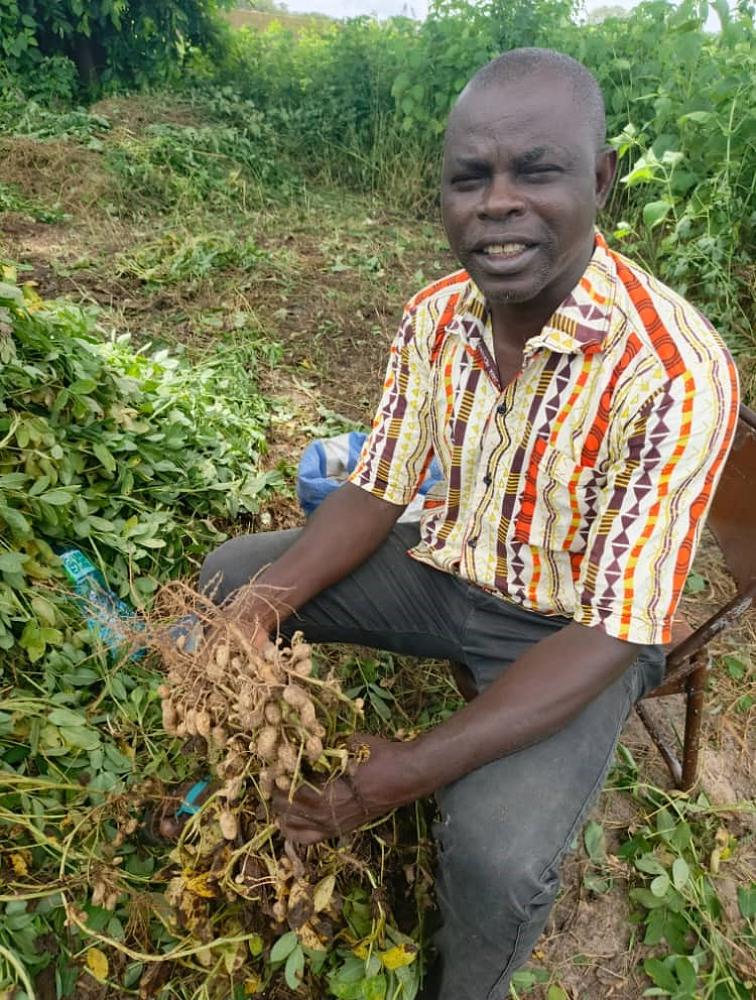
There was a better harvest in the neighbouring congregation of Linkéto. There, the first peanuts were ripe just 77 days after sowing. The short cultivation period proved to be a real blessing because days after the harvest a violent storm hit the region, destroying everything in the fields.
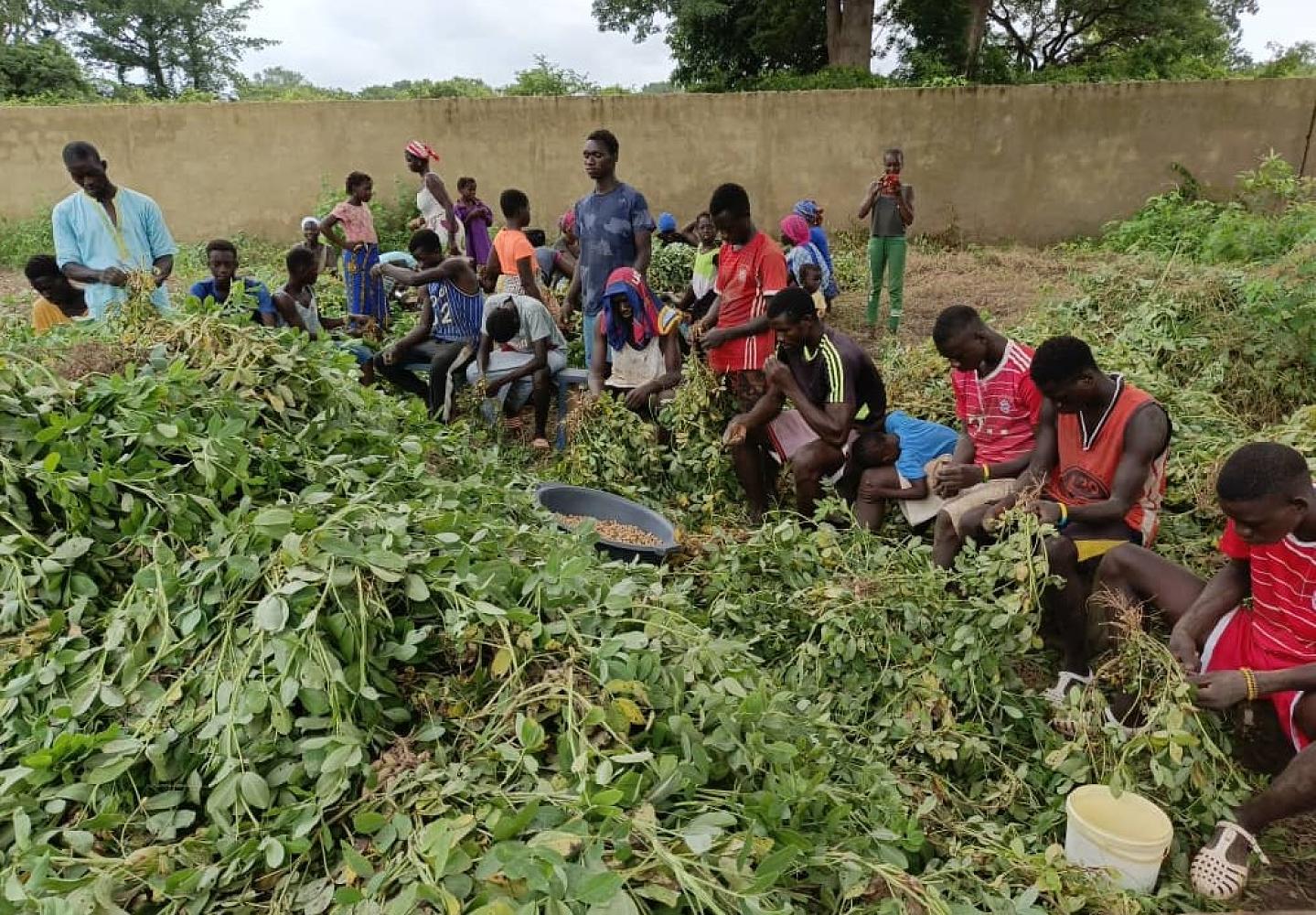
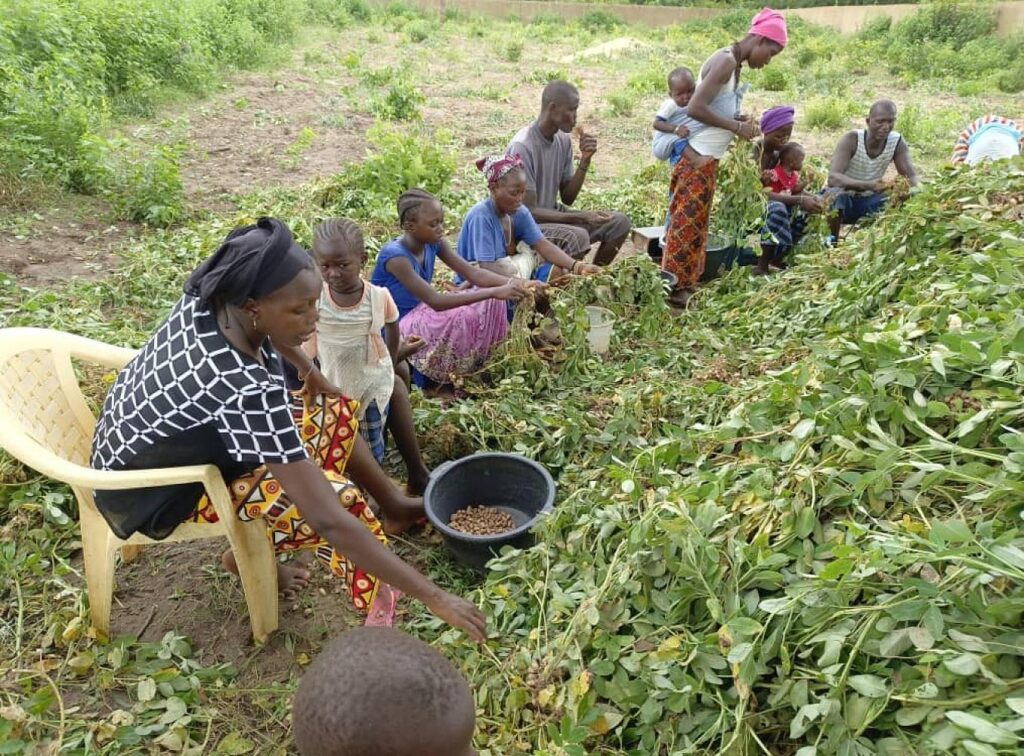
In Linkéto, 60 kilograms of peanut seeds produced a harvest of 500 kilograms. Adults, teenagers, and children came together to dig up the plants, separate the peanuts from the vines, and fill them into bags. They really competed with each other, each wanting to do their bit to ensure a quick and thorough job.
The proceeds from the sale are divided into three parts: 20 per cent of the sum will be invested in the continued operation and expansion, 50 per cent will go into the community’s coffers, and the rest will be donated to the Church.
Good prospects
However, before the money starts flowing, there is always some convincing to do. “We are pleased that we have succeeded in raising the awareness of many believers that they themselves want to contribute to the financing of their communities and congregations,” says Apostle Mané. Nevertheless, there are always difficulties with the correct implementation of the project, mainly because some brothers and sisters are not yet convinced of the idea and because the machines and equipment used are largely outdated, he said. He was involved in almost all of the work up to the harvest and also supported the project financially.
Sedhiou City and Linkéto are not the only congregations involved in the support programme. Church members also grow fruit and vegetables on church land in Tanaff, Francounda, Sinthian Alassane, and Darou. However, the harvests are still pending there. And that is not the end of the story, says Apostle Mané. “We are still in the experimentation and trial-and-error phase and would like to give all urban and rural congregations that want to take part a chance to do so.”
Photos: ENA Sénégal