



First they praised Him to the skies—and then they condemned Him. And today? What about our own attitude towards Jesus? The Chief Apostle calls for self-examination.
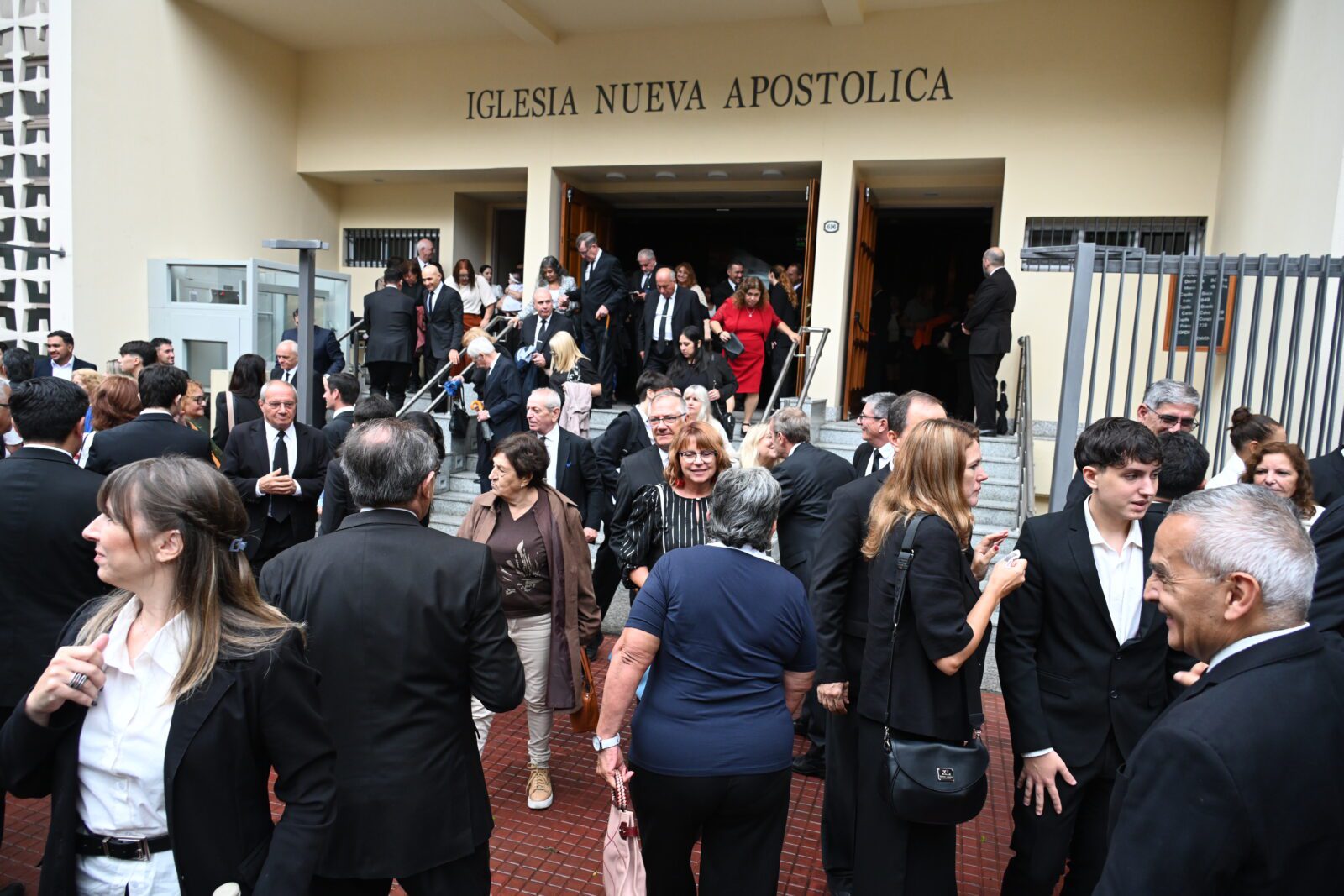
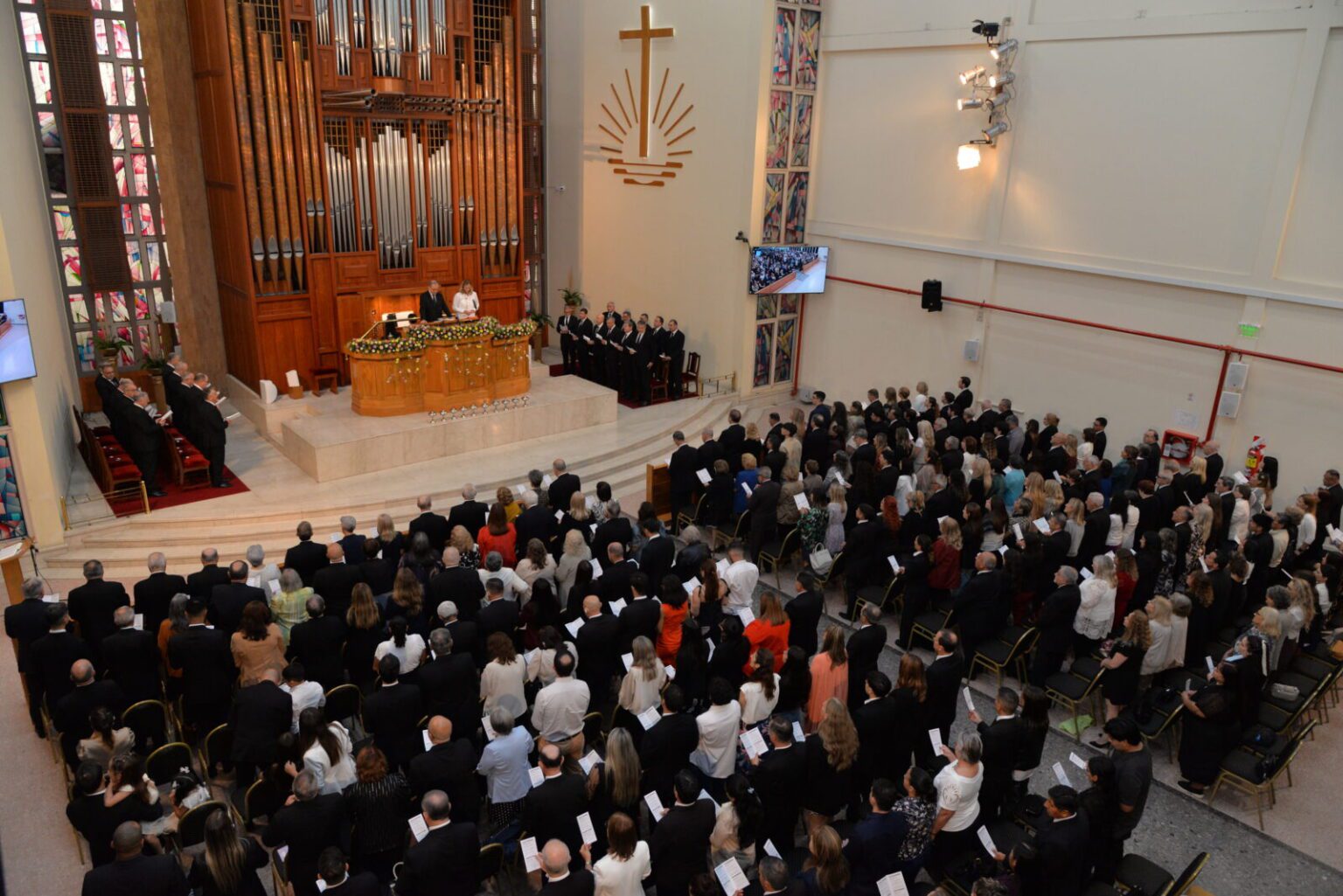
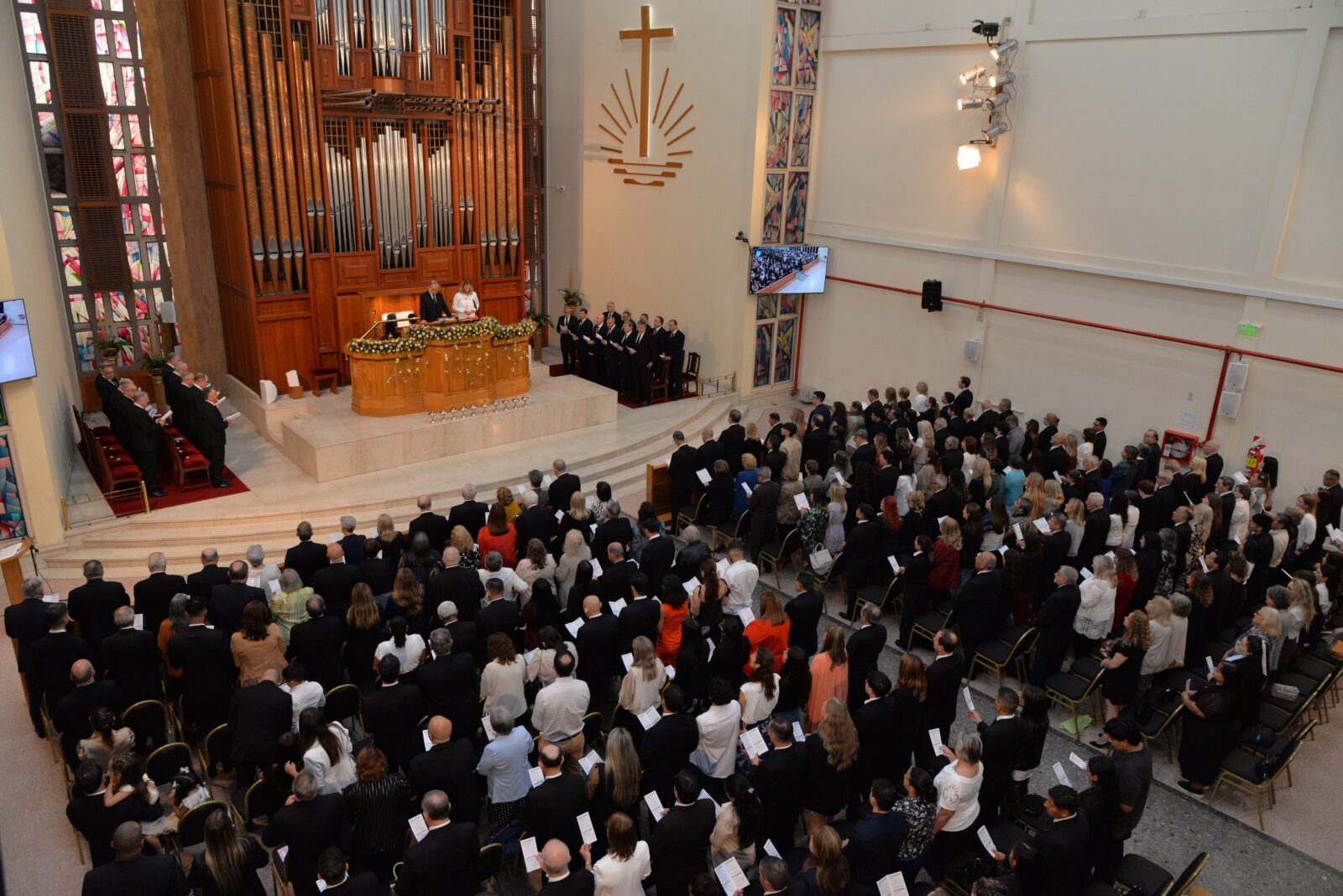
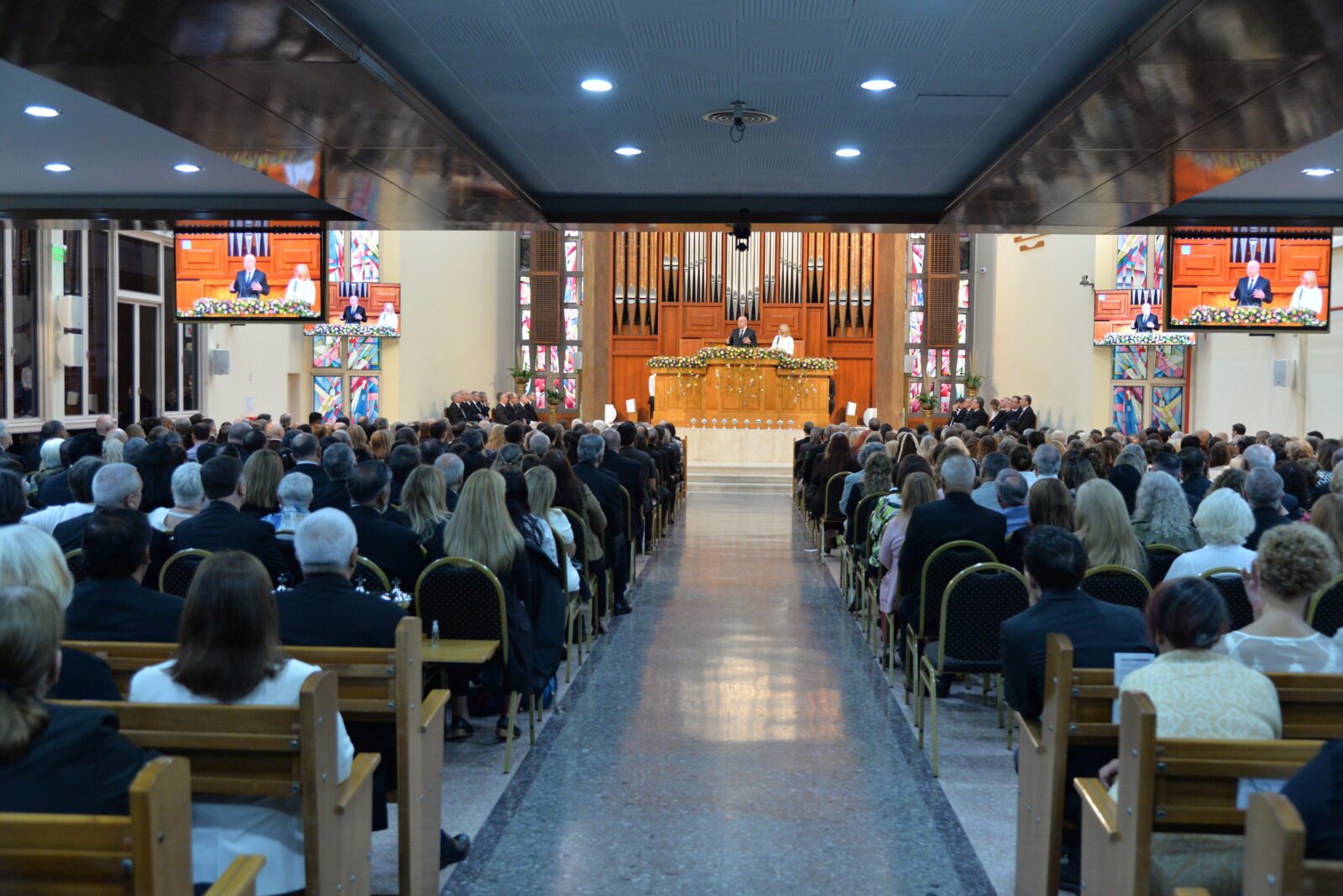
“We must realise how quickly the crowd changed their minds. “Jesus entered the city, and they cheered Him,” Chief Apostle Jean-Luc Schneider said as he began the divine service on Palm Sunday, 29 March 2026, in Buenos Aires in Argentina. “A few days later, they had completely changed their position,” he said, referring to the Bible text from Matthew 15: 8: “These people draw near to Me with their mouth, and honour Me with their lips, but their heart is far from Me.”
From hosanna to the cross
“What happened?” the Chief Apostle asked. There are various explanations for this change of heart among the people.
They had false expectations. “They were impressed by the miracles Jesus did.” In fact, they were convinced that Jesus would free them from the yoke of the Romans. They believed that He would restore the kingdom of Israel. But they were disappointed. Instead, Jesus told them to pay taxes to the Roman emperor.
They rejected His teaching. “They were shocked by His teaching.” Instead of merely observing the Mosaic Law, He called them to believe in Him and His teaching—which was something entirely new for them.
They were confused. “They were surprised and disappointed by His behaviour.” They saw in Him the future king, the powerful fighter —yet He entered Jerusalem on a donkey. He revealed Himself as weak. “They wanted Him to fight the Romans, and He was not even able to defend Himself.” He was arrested, convicted, and executed— and there was no reaction.
They were easily swayed. “They simply allowed themselves to be driven by their emotions.” First there was a large, cheering crowd. And only a few days later, the calls for His crucifixion grew louder. “They had no personal connection with Jesus.”
Many allowed themselves to be influenced. “They just followed the crowd,” the Chief Apostle said. Many were influenced by the religious leaders. Others went along with it simply because they were afraid.
Is our faith in danger?
“We should examine the state of our hearts,” the Chief Apostle urged. After all: “We all said yes to Jesus: when we were baptised, when we were sealed, and when we were confirmed.” Even if we attend the divine services, sing in the choir, pray, and praise the Lord, there is still a danger of becoming weak in our hearts and drifting away slowly. That is why a solid connection to the Lord is so important. Our relationship with Christ can be damaged by the following.
Unrealistic expectations. “We are here to receive and obtain eternal life.” Yet there is a danger of us being disappointed because God “does not do what we expect of Him”. But “the Lord’s priority is to grant us the help we need to remain faithful. And our priority is to remain faithful, no matter what happens.”
Rejection of the doctrine. “Jesus wants us to carry our cross in daily life.” That means that every day we should show that we want to follow Christ. Salvation comes solely through grace, not through our own merit. “The last will receive the same salvation as the first.” And we must love our neighbour in order to prove that we love God.
The apparent weakness of Christ. People are sometimes surprised and even annoyed by the weakness of Jesus Christ. “Because, as He told Paul, ‘My power is made perfect in weakness.’” We would like the power of Jesus to be more visible and for Him to enforce His will. However, He respects people’s freedom of choice.
Superficiality. A life of faith can give rise to beautiful emotions. “But it is also dangerous if we are driven only by our emotions,” the Chief Apostle said. Because emotions tend to fade over time. Eternal life cannot be obtained with emotions. To obtain eternal life, “we need to love Jesus and deepen our relationship with Him”.
External factors. “We do not follow the majority or the crowd.” They are not right simply because they are more numerous than we are. “We follow the truth, and that truth is the teaching of Jesus Christ.” It is nice to follow the example of our parents or examples in the congregation, but “build your own relationship with Jesus”. We do not need to be afraid of others, the Chief Apostle said, “Where there is true love, there is no place for fear.”
“We said yes to Jesus and are happy to follow Him,” the Chief Apostle summarised, and appealed to the congregation: “From time to time, let us check if our relationship is still true and whether our hearts are still close to Jesus Christ.”
Jesus, the bridge-builder
Jesus knew what lay ahead of Him, and yet He went to Jerusalem and stayed there from Palm Sunday to Good Friday. “He made the connection; He was the bridge-builder,” explained Chief Apostle Helper Helge Mutschler, and continued, “Let us take this as an example and role model, and say today, despite our limited and weak possibilities, ‘My Lord Jesus Christ, please help me. Please come close to me, and be a bridge builder to my soul.”

Photo: INA Sud América

MAURICIO BOLLETTA
MAURICIO BOLLETTA
MAURICIO BOLLETTA


MAURICIO BOLLETTA
MAURICIO BOLLETTA
MAURICIO BOLLETTA