




A hymn, a prayer, familiar words: the celebration of Holy Communion follows an established order. Yet there is more to it than meets the eye.
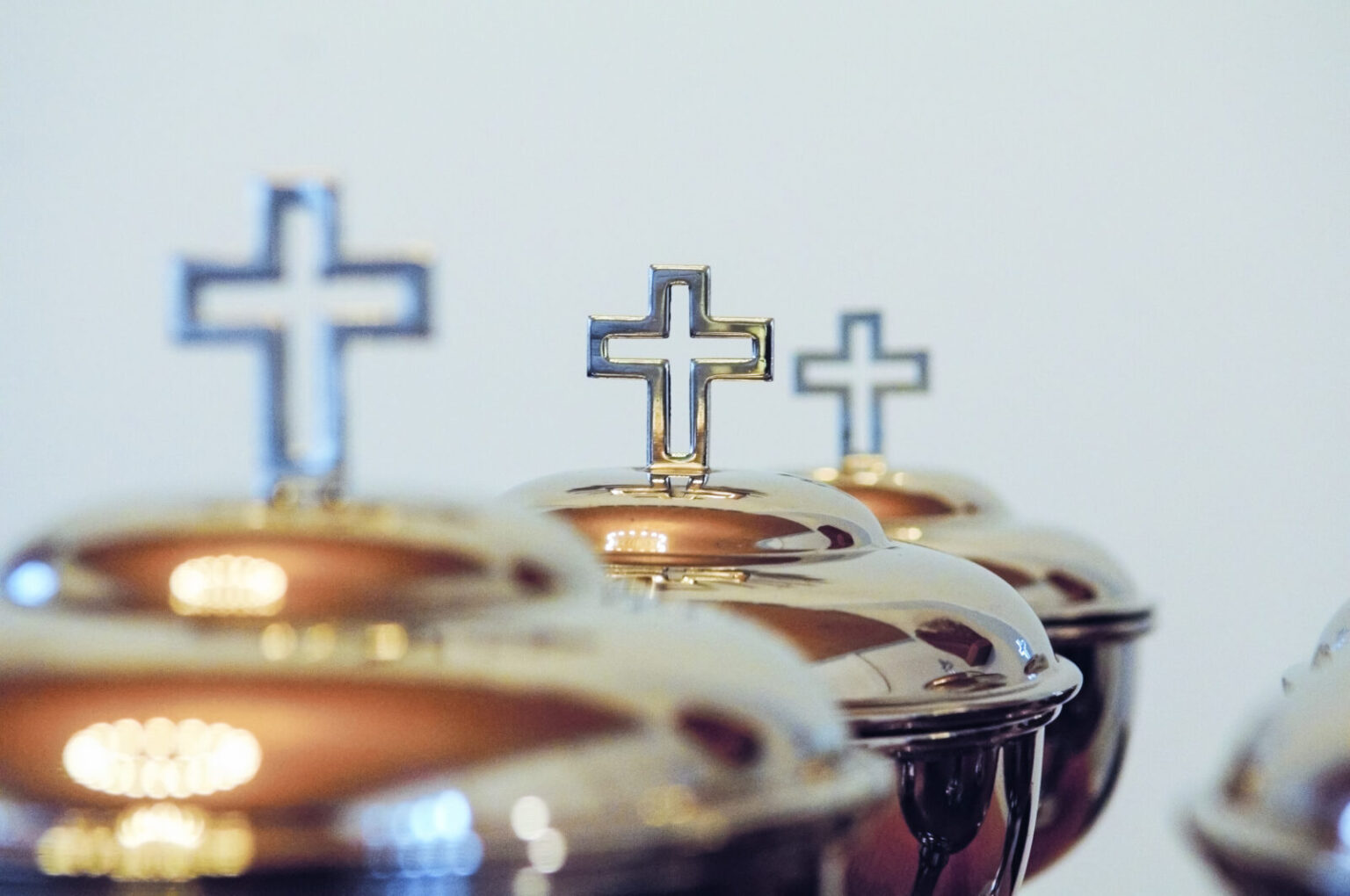
“Now the table of the Lord is prepared.” The chalices have been opened and the wafers are ready. The sentence marks what is about to take place: at the altar, Jesus Christ celebrates with His congregation. This is the very heart of the New Apostolic divine service.
The way the congregation prepares for, and receives, the sacrament unfolds step by step. Two articles in the member magazine community—in issues 3/2026 and 4/2026—explain the event in detail. They are based on a treatise found in Special Edition 02/2025 of the Divine Service Guide.
Turning around—the beginning of the journey
Before the chalices are opened, the members of the congregation turn their gaze inward. Each one asks: “Where have I incurred guilt? What do I regret? With whom should I reconcile?” This is known as repentance. It calls for honest self-examination, the admission of one’s own guilt, and the will to change. It also entails a readiness to forgive others. A hymn of repentance—or a moment of silence—provides space for this reflection.
Yet repentance extends far beyond a single moment during a divine service. “It is an essential component of the Christian life of faith as a whole,” the doctrinal treatise emphasises: “as a recognition of one’s own inadequacy and one’s complete dependence on the grace of God.”
Then the congregation rises for the Lord’s Prayer. At this point, the prayer that Jesus taught unites two petitions: “Forgive us our debts”—a prayer of repentance—and: “Give us this day our daily bread,” a prayer for the meal.
More than a snapshot
This is followed by the proclamation of the absolution. The officiant says: “In the name of our Lord Jesus Christ, the Son of the living God, your sins are forgiven.” The distribution of roles here is crucial: It is God who forgives sins. The Apostle and those commissioned by him merely proclaim this forgiveness. This assurance is intended to give the penitent person the certainty: “God’s grace applies to you.”
Hearing the absolution does not automatically result in forgiveness. Without true repentance and a willingness to forgive, these words cannot unfold to their full effect. Above all, however, the principle holds true: God can forgive sins independently of ministry and the church.
In the subsequent Eucharistic prayer, petition becomes thanksgiving. The focus here is on the sacrifice of Jesus Christ, which makes forgiveness and the sacraments possible. This is also the place for the direct invocation of the Holy Spirit, namely that He may strengthen the congregation to receive the Lord’s Supper worthily and for their salvation.
The power of words
“We will now celebrate Holy Communion.” With this announcement, the main part of the Communion celebration begins. The chalices are uncovered and the table is prepared. This is followed by the consecration of the bread and wine as they are set apart for Holy Communion.
The consecration formula for the Lord’s Supper has a broad scope: it begins in the name of the triune God, calls to mind the unique, eternally valid sacrifice of Jesus, and incorporates the words with which He instituted the Lord’s Supper. It concludes with a reference to the future: “till He comes”.
According to the New Apostolic understanding, the bread and wine retain their substance in the process. However, the substance of the body and blood of Christ is joined to them in the consecration. The term “real presence” means that Jesus Christ is truly present with His body and blood.
Prerequisites for the sacrament are bread and wine, the words of institution, and the authority derived from the apostolate. This means that a slip of the tongue on the part of the Priest will not invalidate the sacrament. Nor will the personal weaknesses of the officiant prevent it from taking effect. Christ is the Lord of the sacrament. It is the Holy Spirit who brings about His presence.
Two words get personal
The priestly ministers are the first to receive Holy Communion. They too rely on the gift that they will subsequently dispense. Thereafter the congregation is invited. The host is Jesus Christ himself.
“The body and blood of Jesus given for you.” The recipient shares in the body and blood of Christ. Holy Communion creates a bond: between Christ and His Apostles, between Christ and the believers, and among the members of the congregation. Fellowship comes into being around the table of the Lord.
The celebration concludes with the covering of the chalices—as does the presence of the body and blood of Christ in the wafers. Yet the scope of this event extends further, since every celebration of Holy Communion is a reference to the return of Jesus Christ—and thus to the hope of perfect fellowship with Him.