



Distress has many faces. Whether it takes the form of external pressure or inner turmoil, God is our refuge, as the Chief Apostle promises in this divine service.
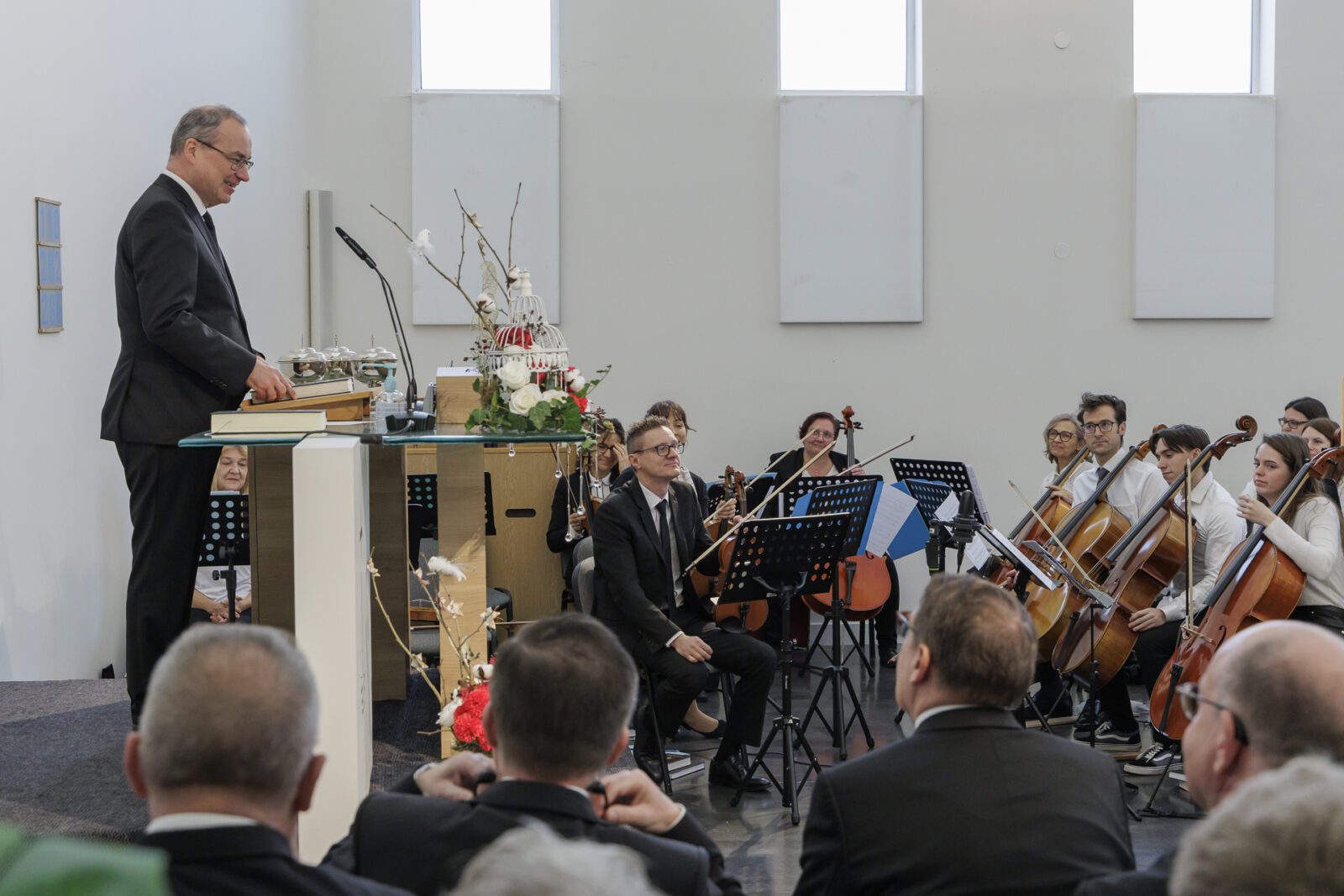
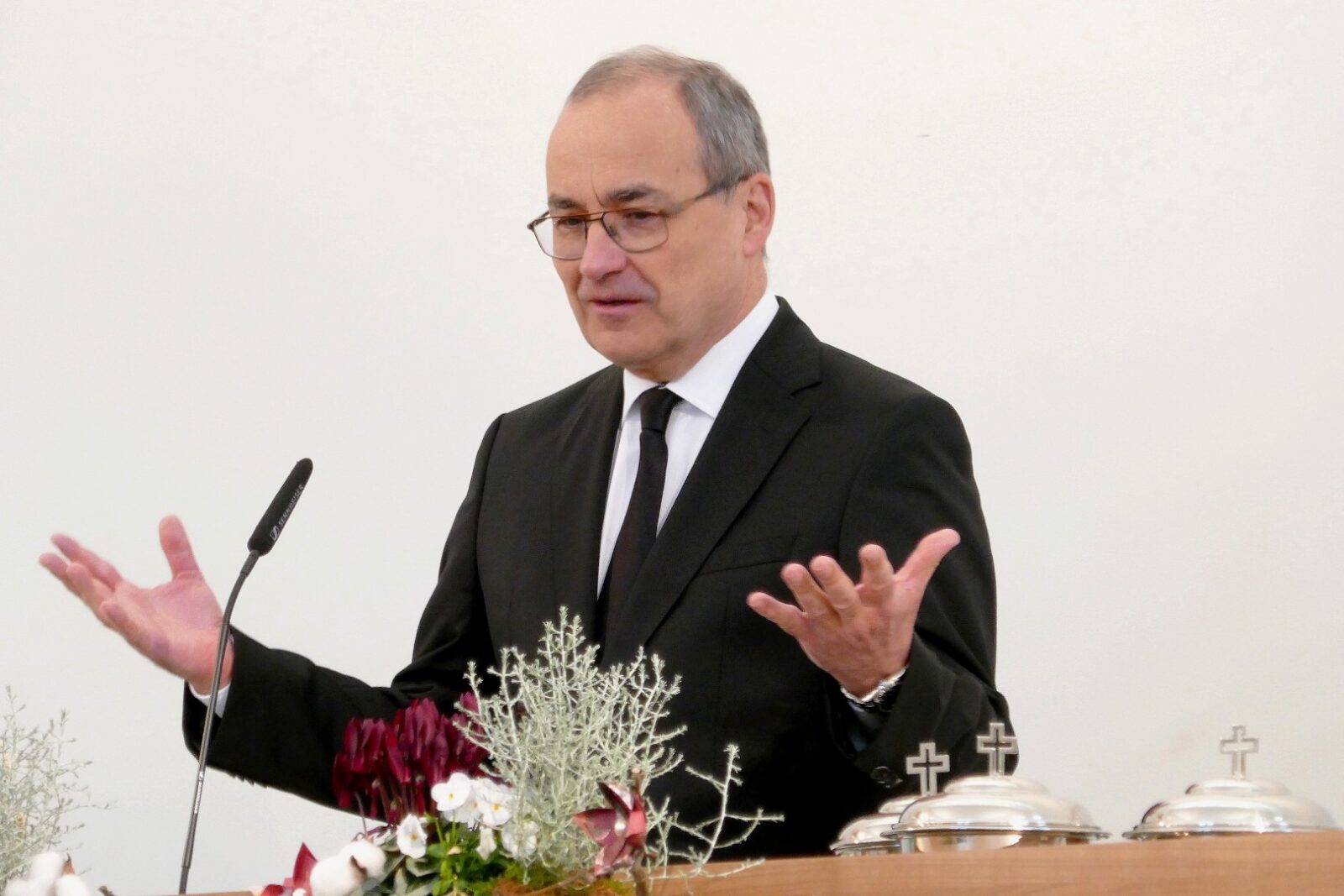
“Be merciful to me, O God, be merciful to me!” This is how Chief Apostle Jean-Luc Schneider started the divine service in Toulouse, France, on Sunday, 18 January 2026. The words are from Psalm 57: 1–2, the Bible text he used for his sermon: “For my soul trusts in You; and in the shadow of Your wings I will make my refuge, until these calamities have passed by. I will cry out to God Most High, to God who performs all things for me.”
This psalm recounts an episode in David’s life. He was a “poor little shepherd” to whom something extraordinary happened: he was “chosen to be king”, the Chief Apostle said. He was a loyal servant to King Saul. Eventually he was forced to flee and seek refuge so as not to be killed by Saul. He took refuge in a cave and asked God for help. “Just like David did, we too turn to God in times of distress.”
Between distress and trials
There are many circumstances that cause distress. External constraints, for example, can threaten our existence and affect our health, income, or the happiness within our family.
There is also emotional distress. Many people are disappointed because their dreams, hopes, wishes, and plans have not come true. Others have experienced failure. Many suffer on account of ingratitude. They did their best but received no thanks, no recognition, or respect. And then there are those who “feel downright despised, ignored, rejected, and morally distressed”, the Chief Apostle said.
Everyone is familiar with spiritual distress. “We know that we have been chosen by God to enter His kingdom, to inherit the glory of God, and to be joint heirs with Christ,” the Chief Apostle explained. But there is someone who disagrees, our enemy, the spirit from below, Satan. He fights us where he can, causes us affliction and suffering. He leads us into situations of temptation, causes us to doubt, makes us stumble, and entices us to sin. “Most of the time, he is inside us, in our hearts.”
No entitlement, only mercy
In such situations of distress, people come to God and ask Him for His help. “Have mercy on me.” We are aware, the Chief Apostle said, that this help is not a right, that we are not entitled to it. God does what He wants. “We can only come to Him and humbly ask Him to have mercy.” We have no right to it; it is grace.
We seek refuge with God because we know that we will be safe with Him. “We know that we can trust Him. He wants the best for us.” He accepts everyone as they are, He does not judge, criticise, or reject. He opens His arms and says, “Come, I love you. You are welcome.”
“We know that God can and desires to help us.” He alone truly knows “absolutely everything about our lives, our existence, and our needs”. He watches over every one of His creatures, and nothing is impossible for Him. “We believe and know from experience that His help is the best possible; there is nothing better.” Even if this is not necessarily a miracle, let us not underestimate the power of His word. “His word is a true creative force,” the Chief Apostle explained.
Seeking refuge: trust, obedience, and surrender
Seeking refuge in God means:
- Not just attending divine services and “praying nicely”. God’s help is first and foremost His word. The condition for receiving God’s almighty help is doing what He tells us, the Chief Apostle said.
- Distress is no excuse, no reason for not doing the will of God. Because the final solution to our problems can only be found in proximity to God.
- “Grasping grace and also getting back up.” By getting back up we can continue our spiritual journey and keep fighting.
- “Letting ourselves fall into the Father’s hands and telling Him, ‘Listen, do what You want. I trust You.’” This is not resignation, the Chief Apostle said. “Surrendering to God requires a lot of practice, training, willpower and, above all, absolute trust in God.”
- “Becoming like Christ.” God wants to help, and His help consists of transforming us so that we can come to Him in His kingdom. And that is the ultimate solution: deliverance from evil for all eternity.
- Remaining in the congregational fellowship or returning to it—despite disappointments and negative experiences in the church. “Why do we only see the negative things? Consider the positive things as well,” the Chief Apostle said. God wants us to return to the fellowship because it is there where He wants to do us good. His will is that we are one in Christ.
The church as a place of refuge
In order for this church this “community to be a refuge, we must all contribute to it”, emphasised the Chief Apostle. This means that we must learn to be sensitive to the needs and distress of others and accept them as they are: “Unconditionally, as Christ accepts us. Without judging or condemning.” Let us rather forgive and no longer talk about the transgressions. The size of the congregation plays no role. What matters is the disposition of the members, their hearts.
“Giving is better than receiving.” Everyone is invited to contribute to the congregation and help others. “The most important thing is to support them in their faith.” Let us encourage them, pray for them, and help them to follow Christ to the end.
“Dear brothers and sisters, that is also my wish,” the Chief Apostle concluded and appealed: “Let us make sure that each of our congregations is a true refuge where all who are in distress can find refuge in God.”
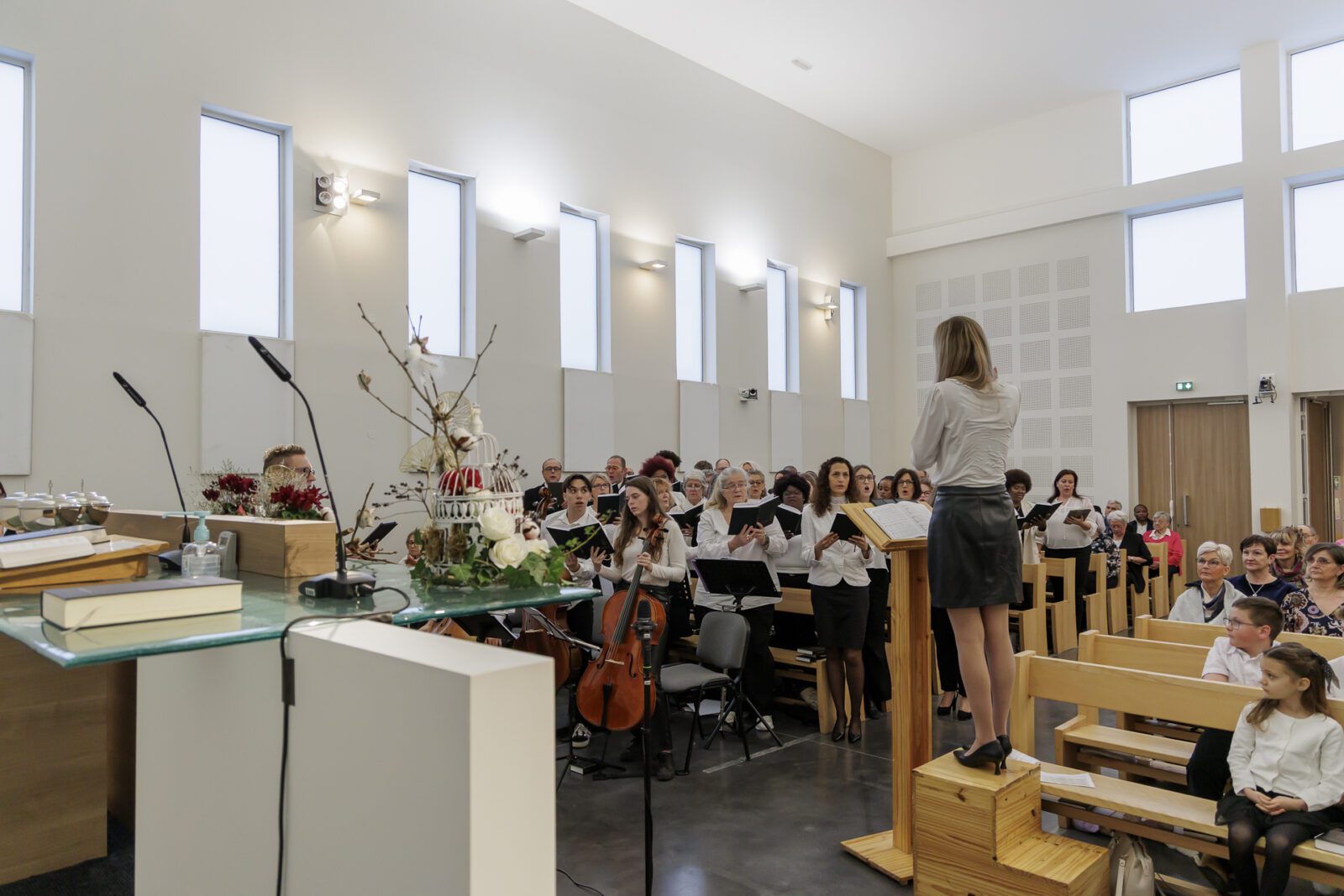
Photo: ENA France