




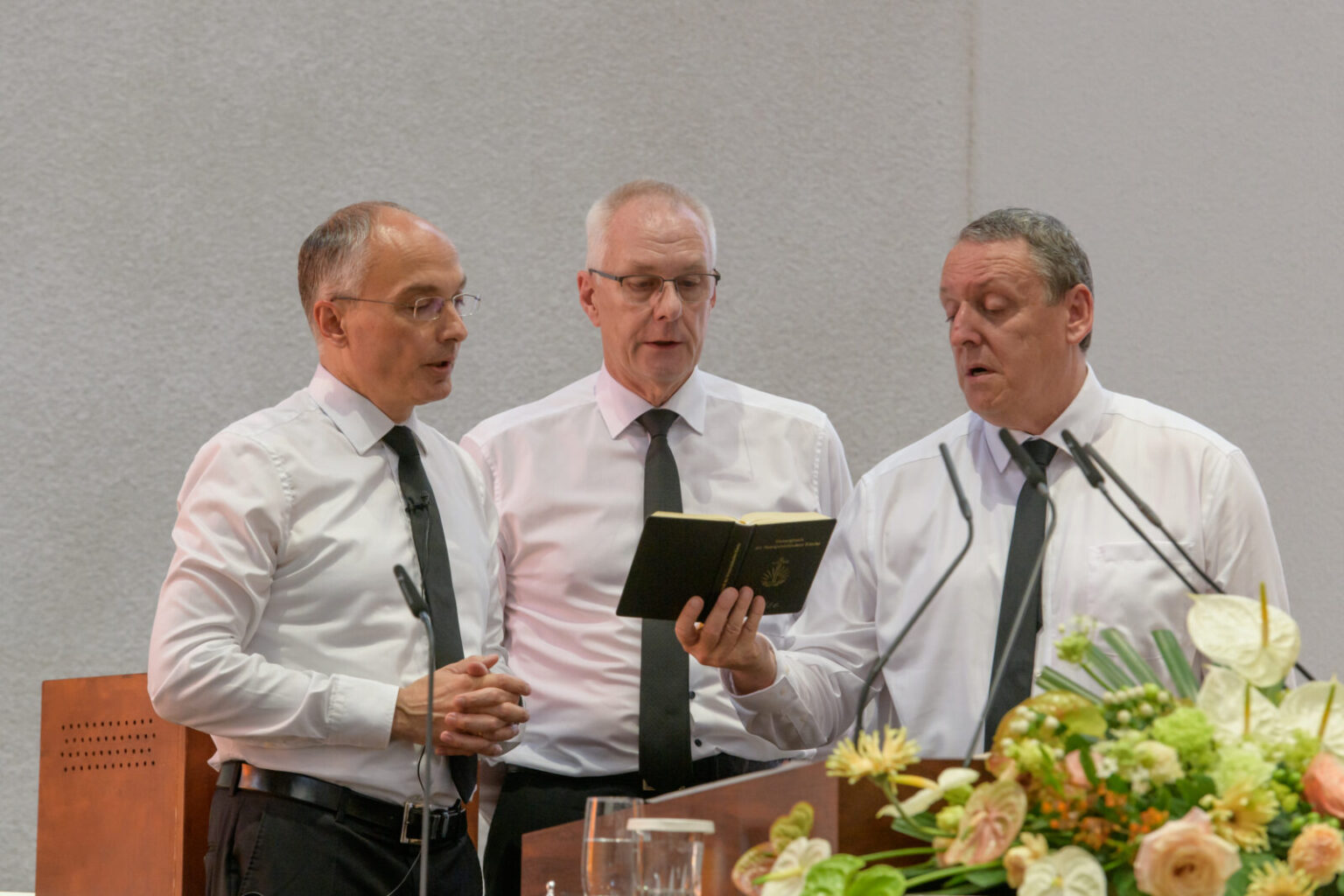
How can we reach heaven? Or, to put it another way: how can one achieve perfect harmony. The brother of the prodigal son shows how not to go about it. In a divine service, the Chief Apostle shows how it’s done.
“I want to go back to my father.” With this thought in mind, the prodigal son set off to return home after he had reached rock bottom. This is the story told in Jesus’ parable in Luke 15. The prodigal son was welcomed home by his father more warmly than he could ever have imagined.
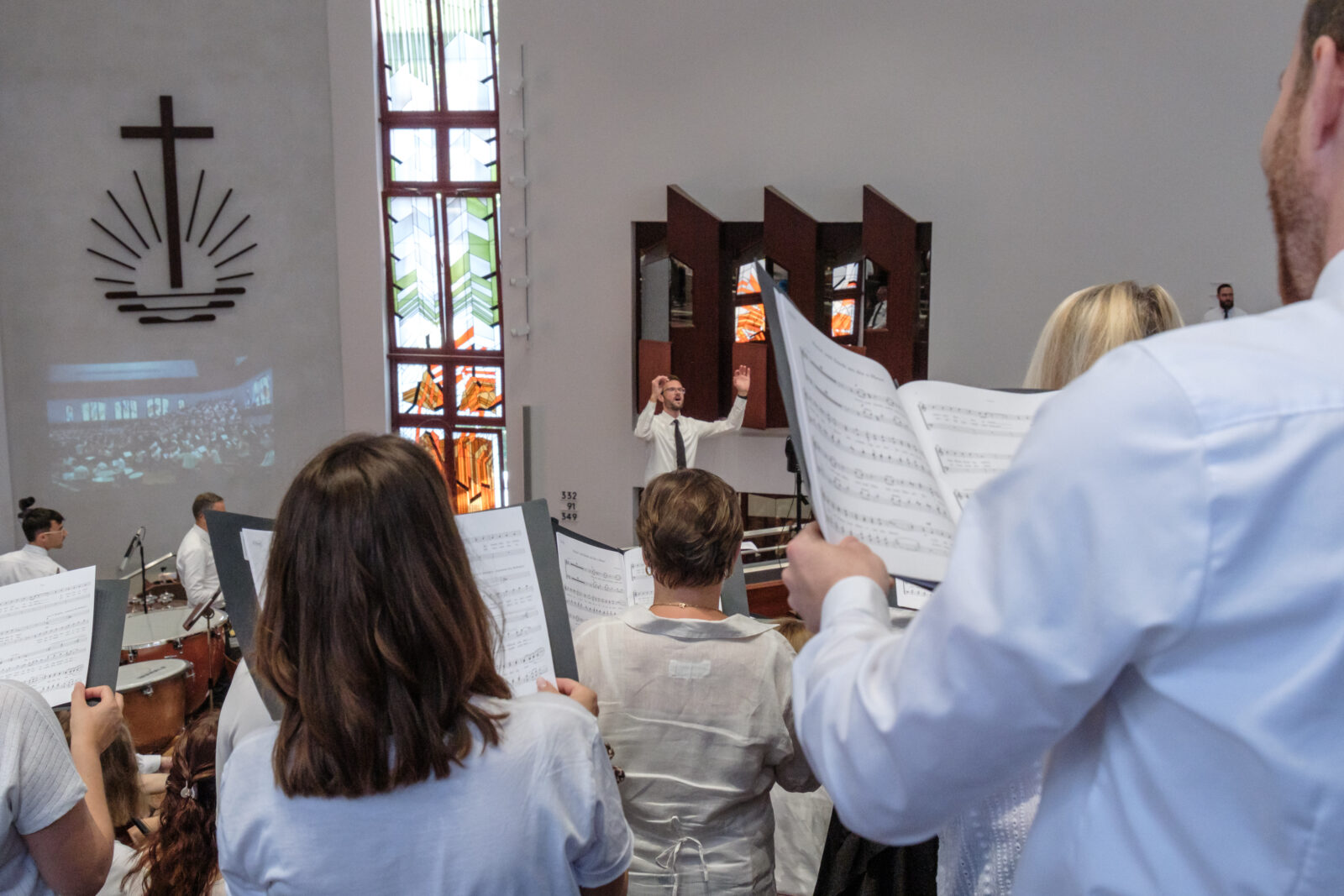
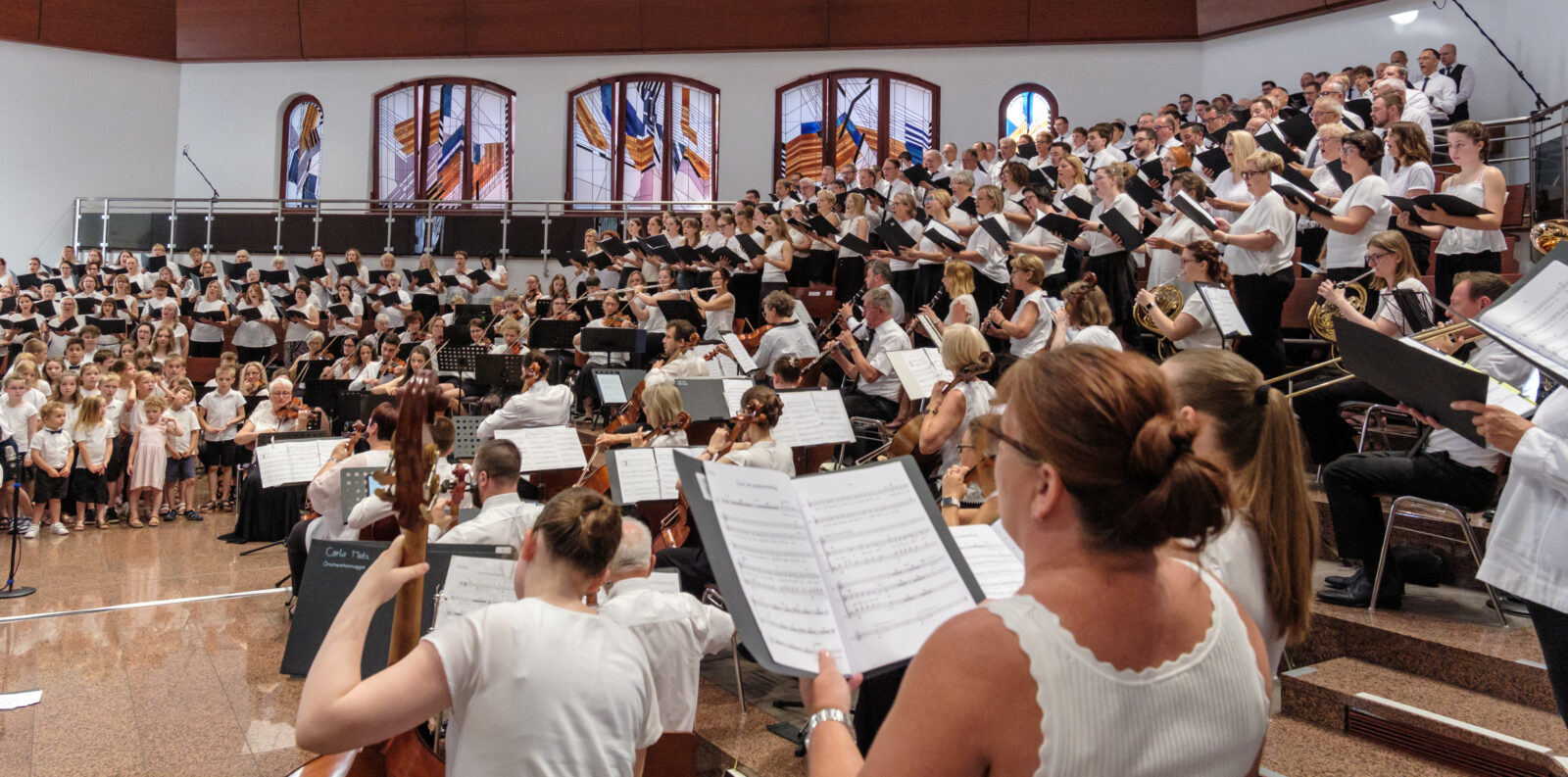
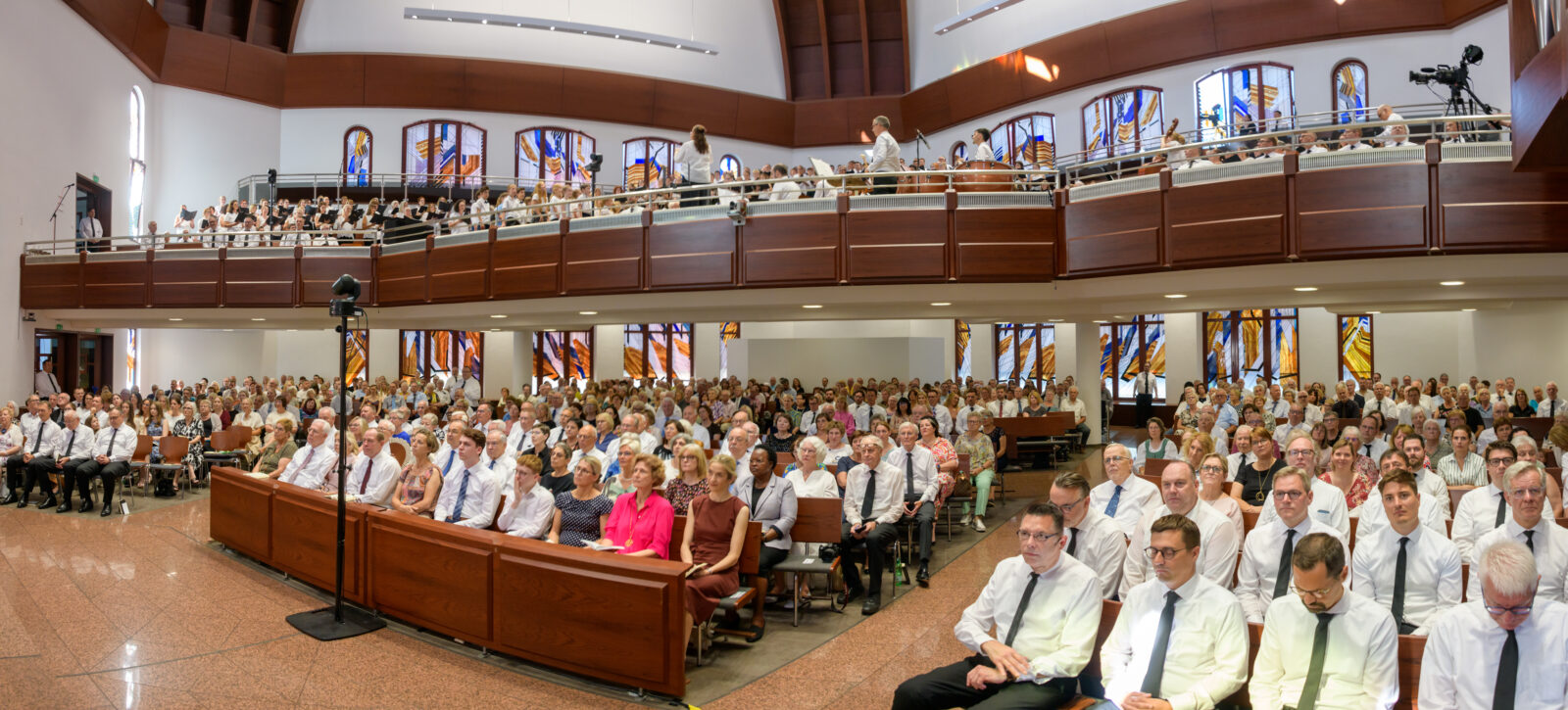
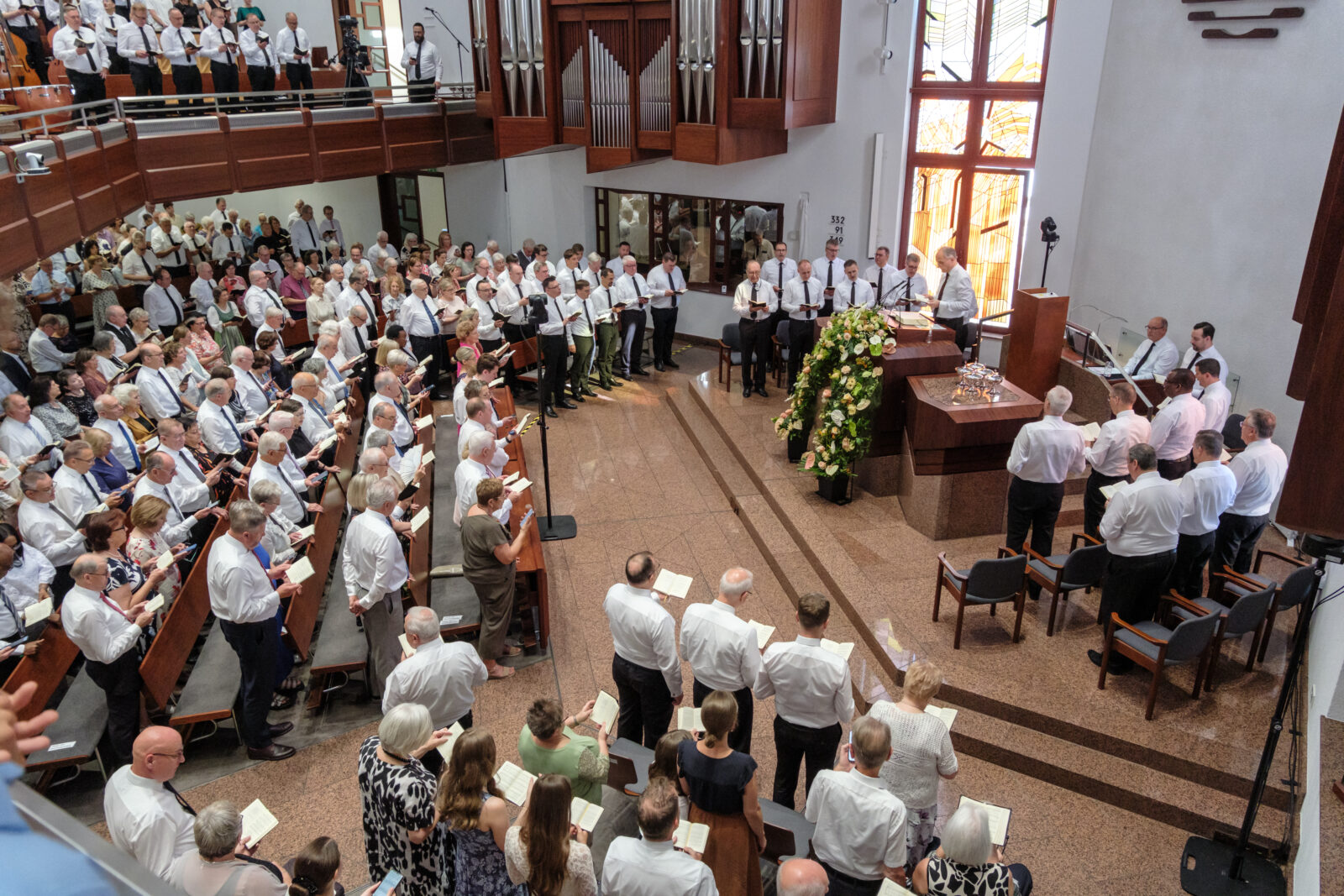
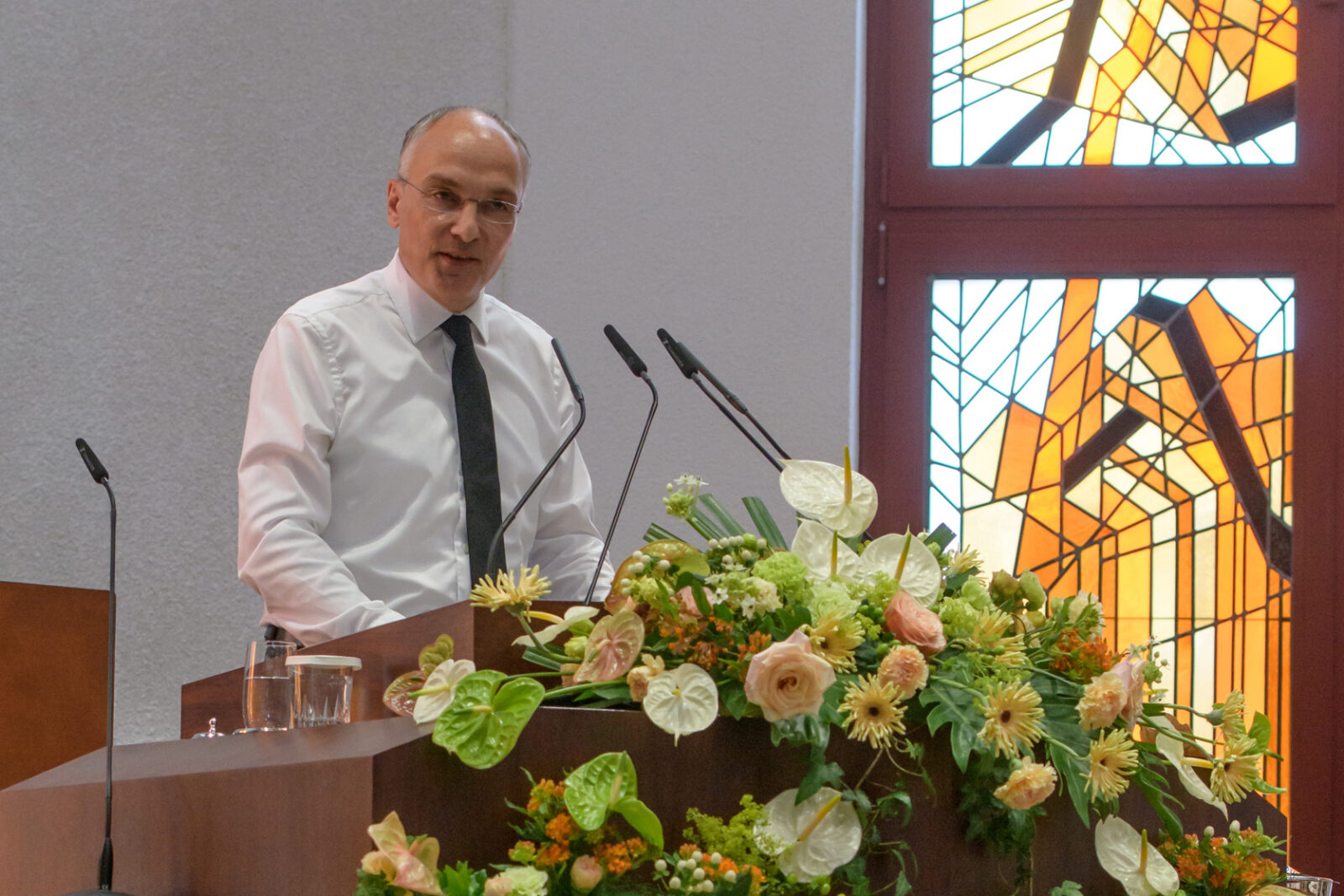
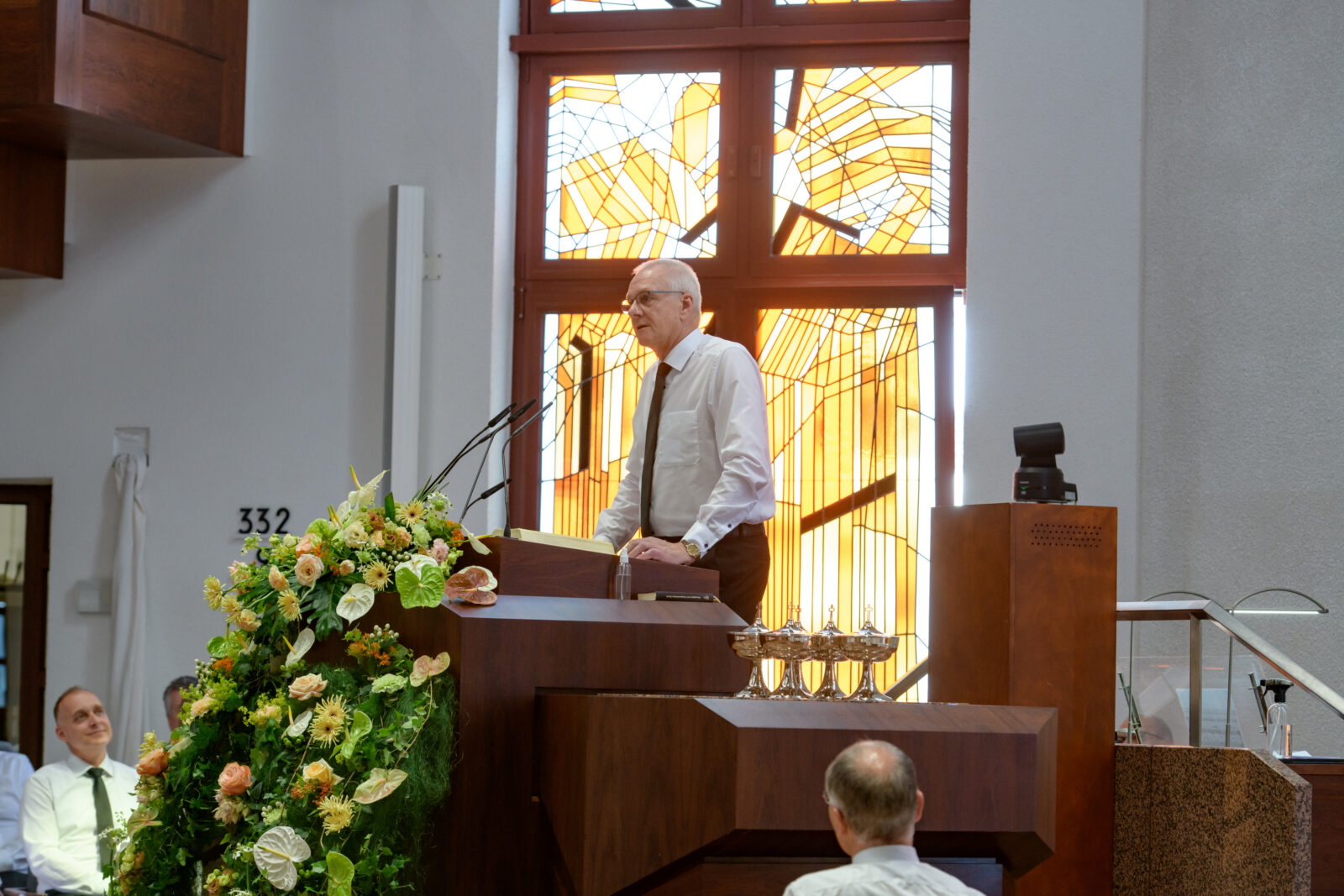
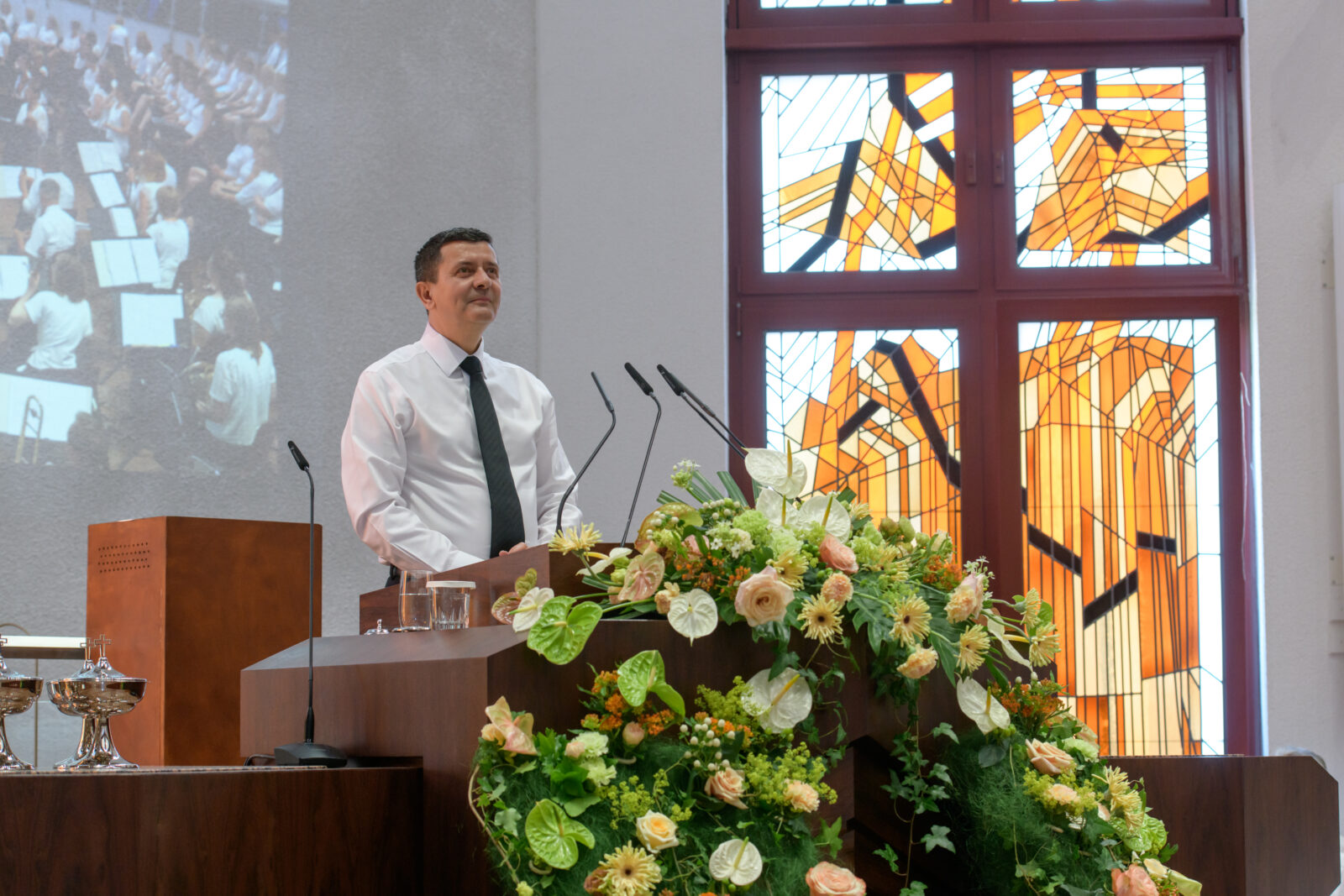
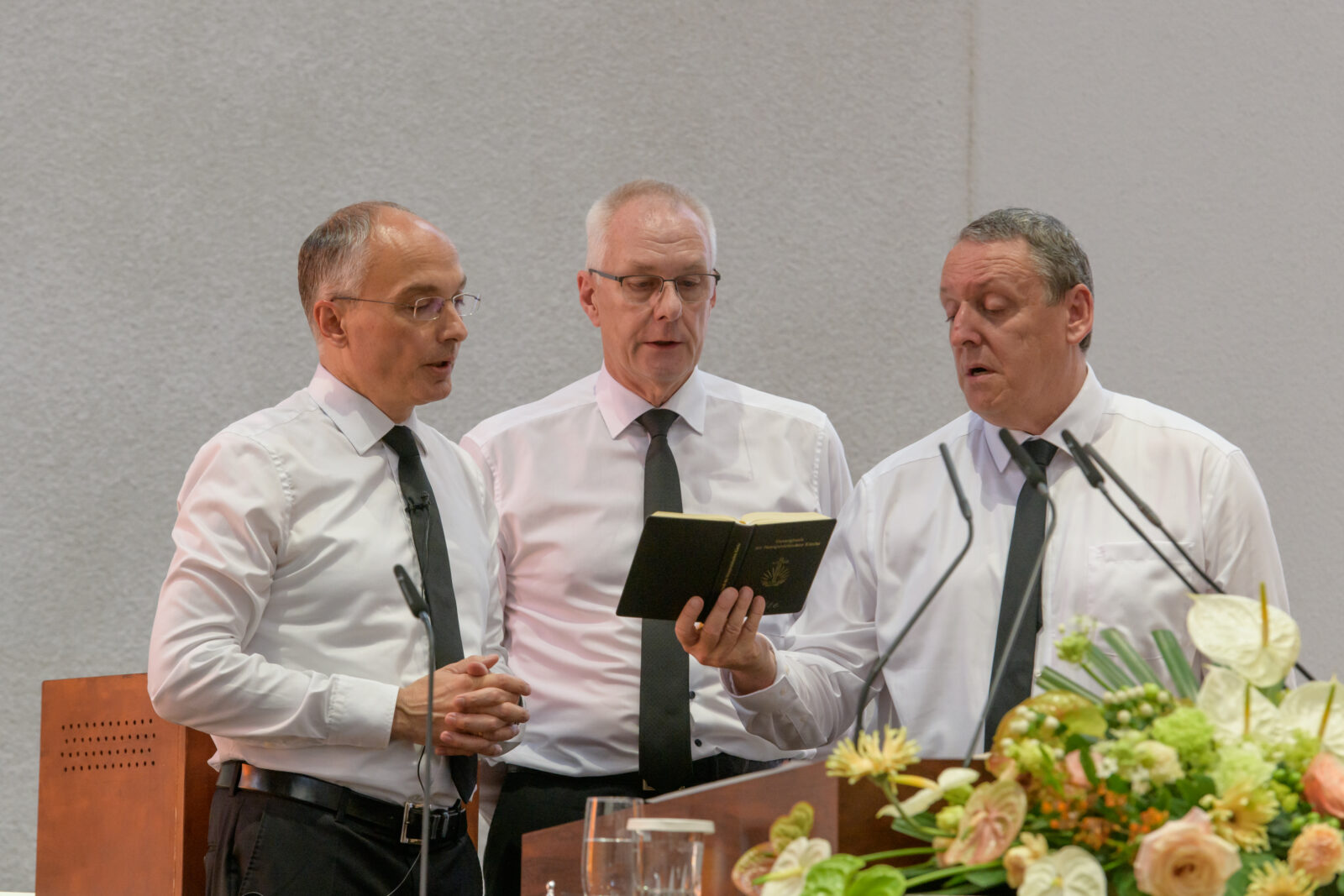
So far, so familiar. But Chief Apostle Helge Mutschler focused on the behaviour of the elder son during a divine service he conducted in Karlsruhe, Germany, on 21 June 2026. The young man heard and saw the joyful celebration his father had prepared, yet he stayed outside feeling hurt and resentful.
Shutting oneself out
This is a warning to every believer: “This feast is an image of heaven: fellowship between Father and Son, fellowship among all those present, unity in diversity. Perfect fellowship in love,” the Chief Apostle explained before asking the decisive question, “How can one enter this feast? How can one enter heaven?”
Certainly not with an attitude like the elder brother: “I have always kept all the commandments, while the other one squandered everything,” he complained about his younger brother, the prodigal son. “I am a man of honour, and he is not. You have never given me anything, but he receives everything.” The Chief Apostle summarised this mindset with two expressions: vain conceit and selfish ambition. Such attitudes undermine relationships and destroy unity.
Showing dignity and consideration
“Let nothing be done through selfish ambition or conceit,” Apostle Paul wrote in Philippians 2: 3–4 to a divided congregation, urging them, “but in lowliness of mind let each esteem others better than himself. Let each of you look out not only for his own interests, but also for the interests of others.”
A scandal: at the time, the Greek word translated as humility referred to the servile attitude of slaves. But Paul, the Chief Apostle explained, turned this value system upside down by pairing it with the word for “esteem”. “Even the smallest, most insignificant, perhaps the weakest person: ‘Honour him as if he were a king.’”
Nor does this mean neglecting one’s own needs, he explained. “We should not only focus on ourselves. Rather, we must also look out for the needs of others.” That seems quite doable, doesn’t it?
The fear of missing out
“The longer you think about it, the more obvious it becomes: it is impossible to keep this commandment through our own efforts.” The crucial question, then, is: “Why do we act this way? Why do selfish ambition, vain conceit, and self-preoccupation take hold of us?”
The answer, the Chief Apostle explained, is surprisingly simple: “Fear. The fear of not being seen; the fear of missing out—a deep sense of neediness.” The antidote to fear is described in 1 John 4: 18: “Perfect love casts out fear.”
Not by our own efforts
“And this love is not our own. It is the love of Jesus Christ. Only His love can dispel this fear,” the Chief Apostle emphasised. “And that brings us to the very heart of the matter: the point is not to try harder to become humble. The point is to keep our eyes fixed on Jesus Christ.”
In the verses that follow—in what is known as the Christ Hymn—Paul describes Jesus’ journey from divine glory to a simple life as a human being, culminating in His death on the cross. “When we look to Christ—especially to His humility—something happens within us,” explained the Chief Apostle.
The path through the open door
“The fear that drives us begins to fade. The need for recognition loses its grip.” Why? “Christ sees me, Christ loves me, Christ gives me all I need.”
In closing, Chief Apostle Mutschler returned to the image of the feast: “The gate of heaven stands open. The decisive question, however, is: Will I remain outside, trapped by selfish ambition and pride? Or will I enter, carried by the humility of Christ? We have a standing invitation. The way is open.”
Photos: Volker Balling, CC. Spindler