




Maundy Thursday recalls the Last Supper. Good Friday marks the crucifixion. Easter Sunday proclaims the resurrection. Each day stands as a defining moment in the Passion narrative. But what about Holy Saturday?
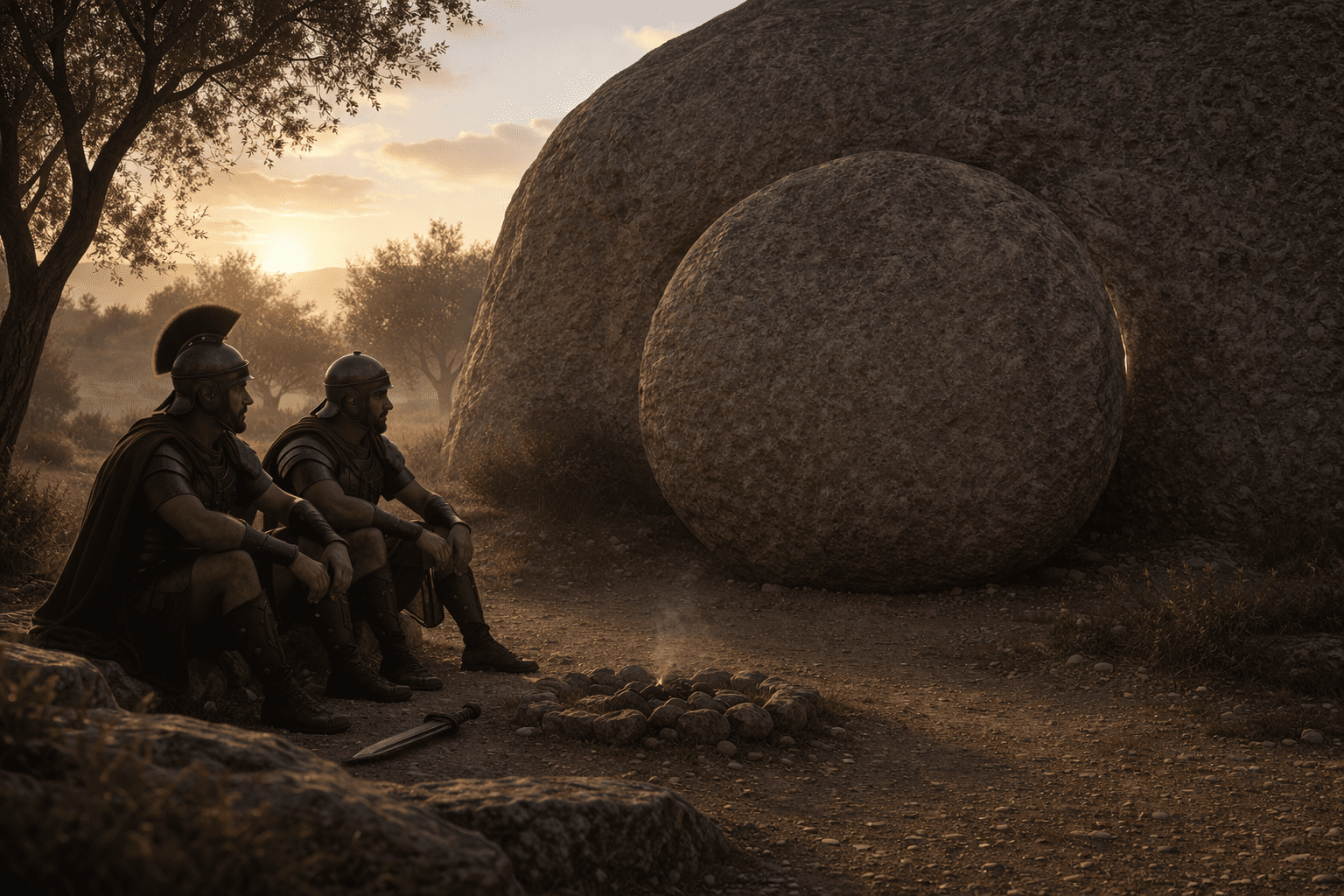
Joseph of Arimathea and Nicodemus laid Jesus to rest on Friday, just before the Sabbath began. Everything was done in haste, as time was running out. Afterwards, from a human perspective, it seemed that all was over: the body lay in the tomb, a stone sealed it, and the silence of the Sabbath settled in. In fact, the tomb itself was sealed, guarded, and secured. Everything was meant to be final. Yet it is precisely here that Holy Saturday takes on its profound sense of anticipation: human beings may be able to secure death, but they cannot prevent God from acting.
God’s apparent absence
For the disciples, this day must have been unbearable. They had experienced Jesus personally and directly—His presence, His words, His power—and now it all seemed lost, as if it had been completely obliterated. The New Testament recounts many miracles performed by Him: calming the storm on the lake, feeding the multitudes, healing the sick, and raising the dead. Yet in those moments, the many signs of His divine power appeared to have been erased.
Fear, withdrawal and helplessness now defined their reality. On the Sabbath in particular—the day that proclaims God’s greatness as both Creator and Liberator—they did not experience His manifest presence, but rather His apparent absence. Holy Saturday is therefore not only a day of outward silence, but also one of profound spiritual desolation: a day when faith seems to have lost its very foundation and yet could not cease its search for God.
God’s actions cannot be prevented
Yet, Holy Saturday is not simply a void or a pause. The New Apostolic Catechism explicitly addresses this in the Second Article of Faith. Between His burial and resurrection, Christ entered the realm of the dead. This aspect of the Easter story may seem alien or even inconceivable to many Christians today—yet it is a reality: there is no place beyond the reach of God’s power. Not even the realm of the dead is outside His grasp.
The Catechism links this truth to 1 Peter 3 and 1 Peter 4, emphasising that the saving activity of Christ also encompasses the dead. One of Jesus’ own statements underscores this power: “The hour is coming, and now is, when the dead will hear the voice of the Son of God; and those who hear will live” (John 5: 25).
In this light, Holy Saturday becomes more than a pause between the crucifixion and the resurrection: it is the day on which Christ brings the gospel of life to those who died before Him. Jesus Christ holds the key of Hades and the realm of the dead. His entry into this realm is not a sign of powerlessness, but the triumph of the Victor of Golgotha.
Psalm 139 captures in a single image what Holy Saturday foreshadows: “If I make my bed in hell, behold, You are there.” Even the realm of death is not forsaken by God. Where human beings see only an end, God’s presence reaches deeper still.
Holy Saturday today
Holy Saturday also speaks to our present day, representing the modern hell on earth that people experience such as suffering, deep loss, fear, a sense of helplessness, and the apparent silence or absence of God. Holy Saturday does not dispel this darkness. It allows the silence to linger. Instead of Easter Sunday’s joy, there is room for the desperate, often silent, cry for God’s revelation.
It is precisely in this that His comfort lies: those who do not feel God’s nearness are nevertheless not deprived of it. Those who can do nothing but wait, lament, or remain silent are not outside of God’s reach. Holy Saturday does not signify a standstill, but God’s active saving work— even though we cannot yet see it.
And yes: Easter is coming. What remains hidden on Holy Saturday becomes visible at Easter: the turning point from death and the beginning of God’s new creation.
Photo: AI-generated