




A greeting from outer space, a verse from the Bible, and an image from Holy Communion: in very different ways, they all tell us something about what the peace of Christ means.
Any Star Trek fans here? Then your fingers may already be twitching. “Live long and prosper” is Spock’s iconic greeting. The first officer of the USS Enterprise raised his hand, with the thumb extended and a V-shaped gap between the middle and ring fingers.
Leonard Nimoy, the actor who played Spock, based the gesture on a childhood memory. He had seen it in Jewish worship with his parents. Performed with both hands, the gesture accompanies the Birkat Kohanim, the priestly blessing. The words spoken are the Aaronic blessing from Numbers 6: 24–26: “The Lord bless you and keep you.” And the blessing ends with the word “Shalom”.
Peace in all our relationships
“Shalom” means peace, but it goes much further than merely an absence of conflict. The word conveys tranquillity, wholeness, harmony, well-being, and completeness. In the Old Testament, across nearly 240 verses, it describes the right relationship with God, with our neighbours, and with creation. It can refer to everything from inner peace to social order.
“Shalom” may well have been the word of choice when the risen Jesus appeared in the midst of His frightened disciples. “Peace be with you!” What these words truly mean is shown by Apostle Paul in Ephesians 2: 14: Christ himself “is our peace”. And in Colossians 3: 15 he urges: “And let the peace of God rule in your hearts, to which also you were called in one body; and be thankful.”
Who has the final say?
The peace of Christ is the reconciliation between God and humanity established by Jesus, as well as the fellowship among people that builds upon it. As God incarnate, He restores the fellowship between God and humankind, brings people together in His name, and—through His example—provides support and guidance.
This peace is to rule in our hearts. In this context, the heart—lev or levav in Hebrew, kardia in Greek—means the whole inner life of a person: our thoughts and feelings, our will and understanding. Peace is meant to permeate our entire being.
The word “rule” here translates the Greek verb brabeuō. The term comes from the world of sport and refers to the role of the referee. Taken literally, the image is this: our inner life remains an arena of conflict, where feelings and thoughts, fears and desires struggle with one another. But the referee has the final say.
However, this is not limited to the individual’s inner world: the “one body” is Paul’s image for the community believers. And he knows only too well that even there, conflicts were inevitable. The peace of Christ is also to act as a referee in human relations. Ephesians 2: 14–15, which begins with “for He Himself is our peace”, continues, “who has made both one, and has broken down the middle wall of separation, having abolished in His flesh the enmity”.
Believers are “called” to this peace. This is not something that individuals can achieve in their own strength. The peace of Christ is a gift from God to His congregation and the church—as part of their shared calling.
Thankful and drawn towards the centre
And finally: “thankful”. The Greek adjective eucháristos does not describe a passing emotional response, but a fundamental attitude. The related noun eucharistía was soon adopted by the early Christians as a name for the Lord’s Supper. And so a picture of Christ’s peace emerges.
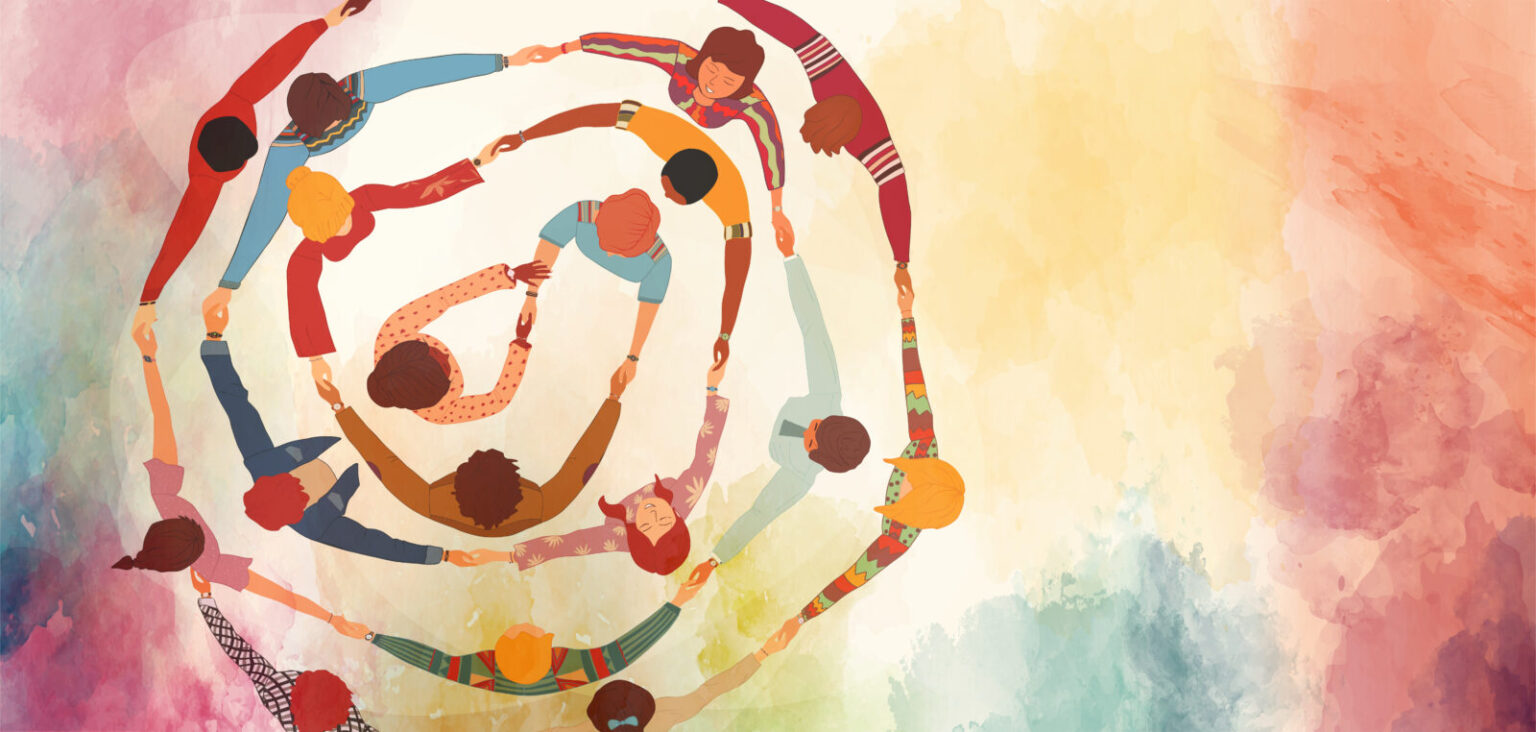
If Christ were visibly present during the celebration of Holy Communion, all the believers would move towards Him as their centre. And the closer people would come to Him, the closer they would come to one another. Distance, rejection, conflict—all that would simply disappear. For it would break the circle that the peace of Christ creates around them.
For now, however, this remains an ideal. Perfect shalom will only be found in the new creation, where there will be “no more death, nor sorrow, nor crying” (Revelation 21: 4).
And then we will be able to greet one another with: “Live eternally and prosper!” 🖖
Photo: melita – stock.adobe.com