




Imagine coming to a beautifully set banquet table and every seat seems to be taken. You look around, hesitate for a moment, and wonder, “Is there still room for me here?”
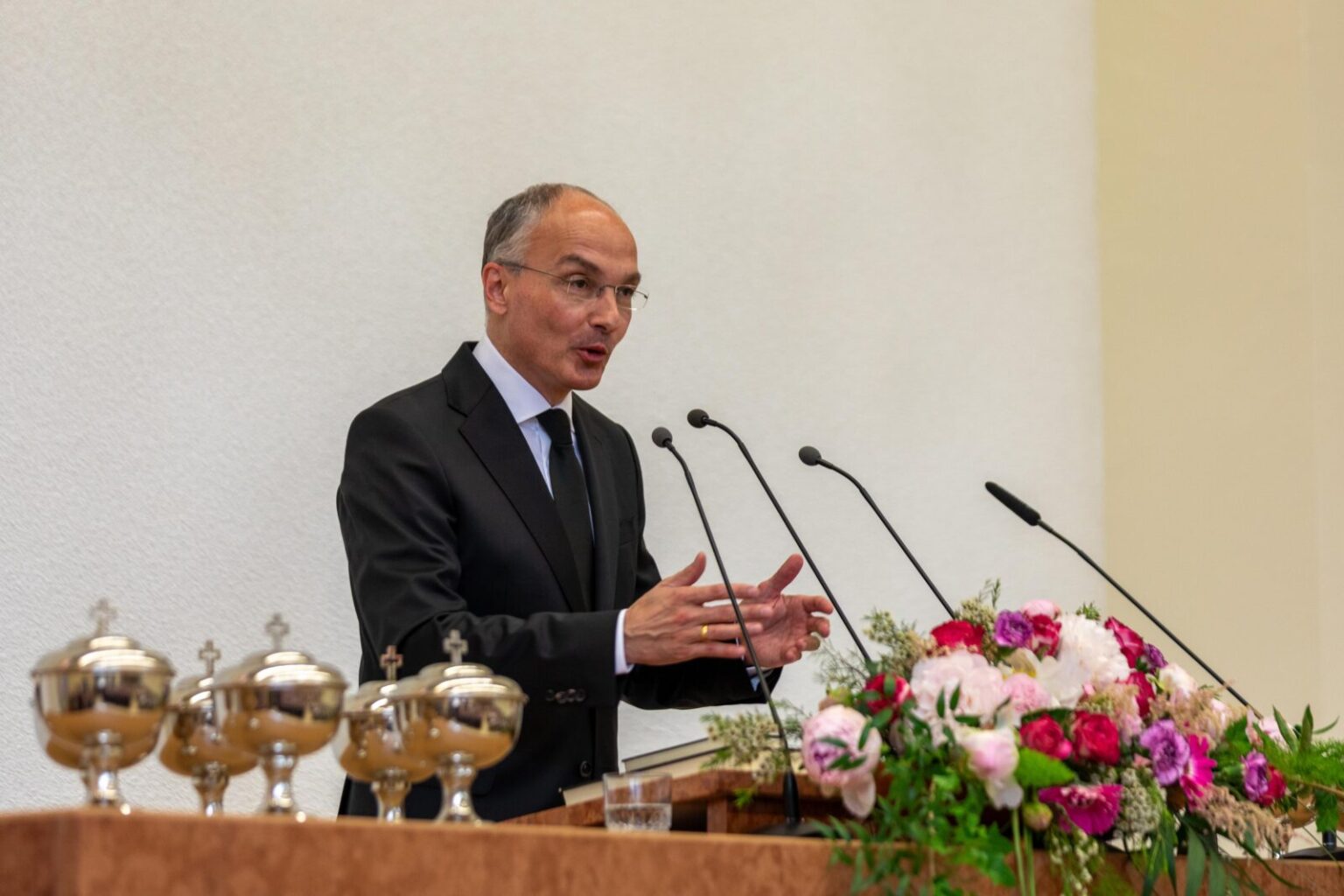
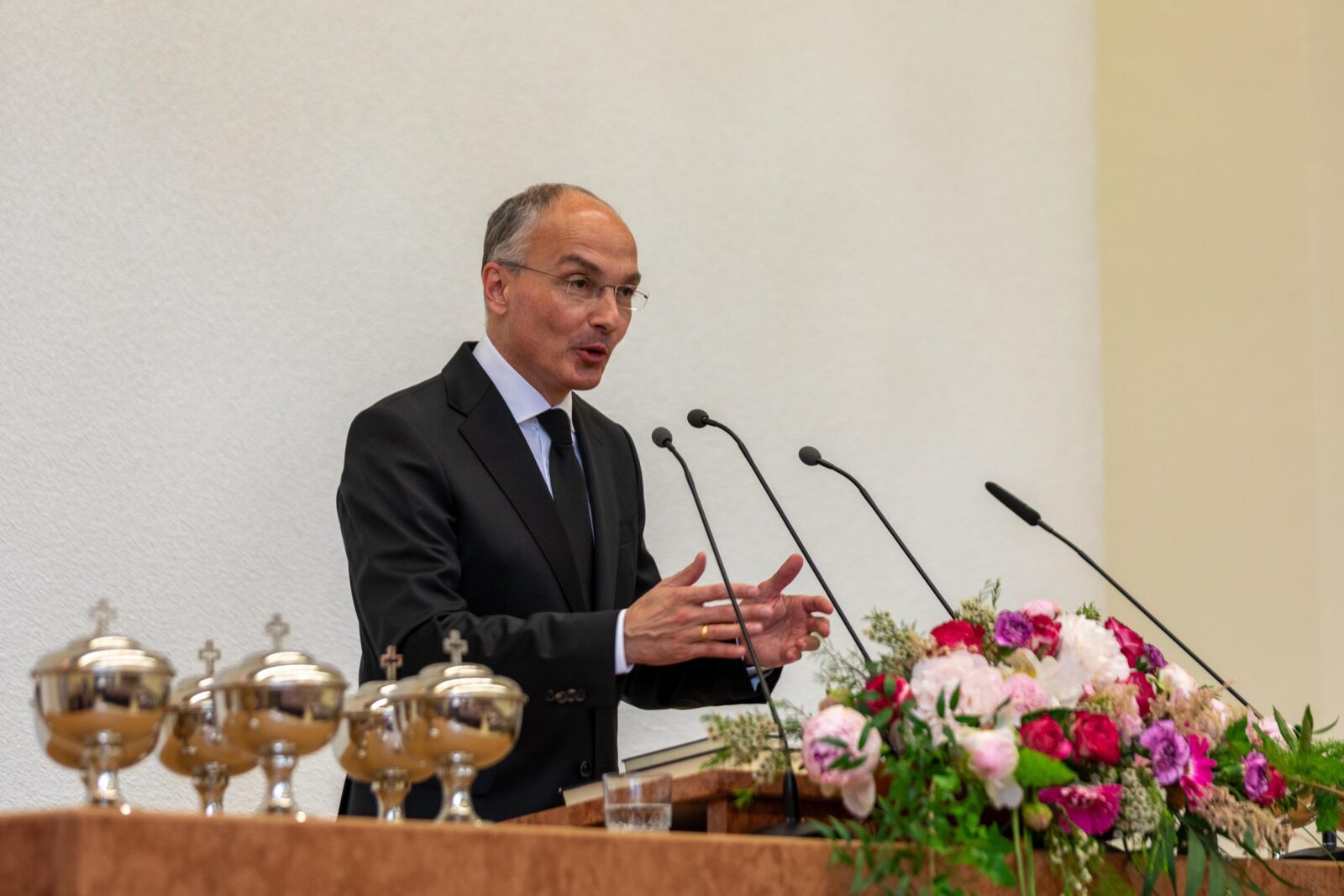
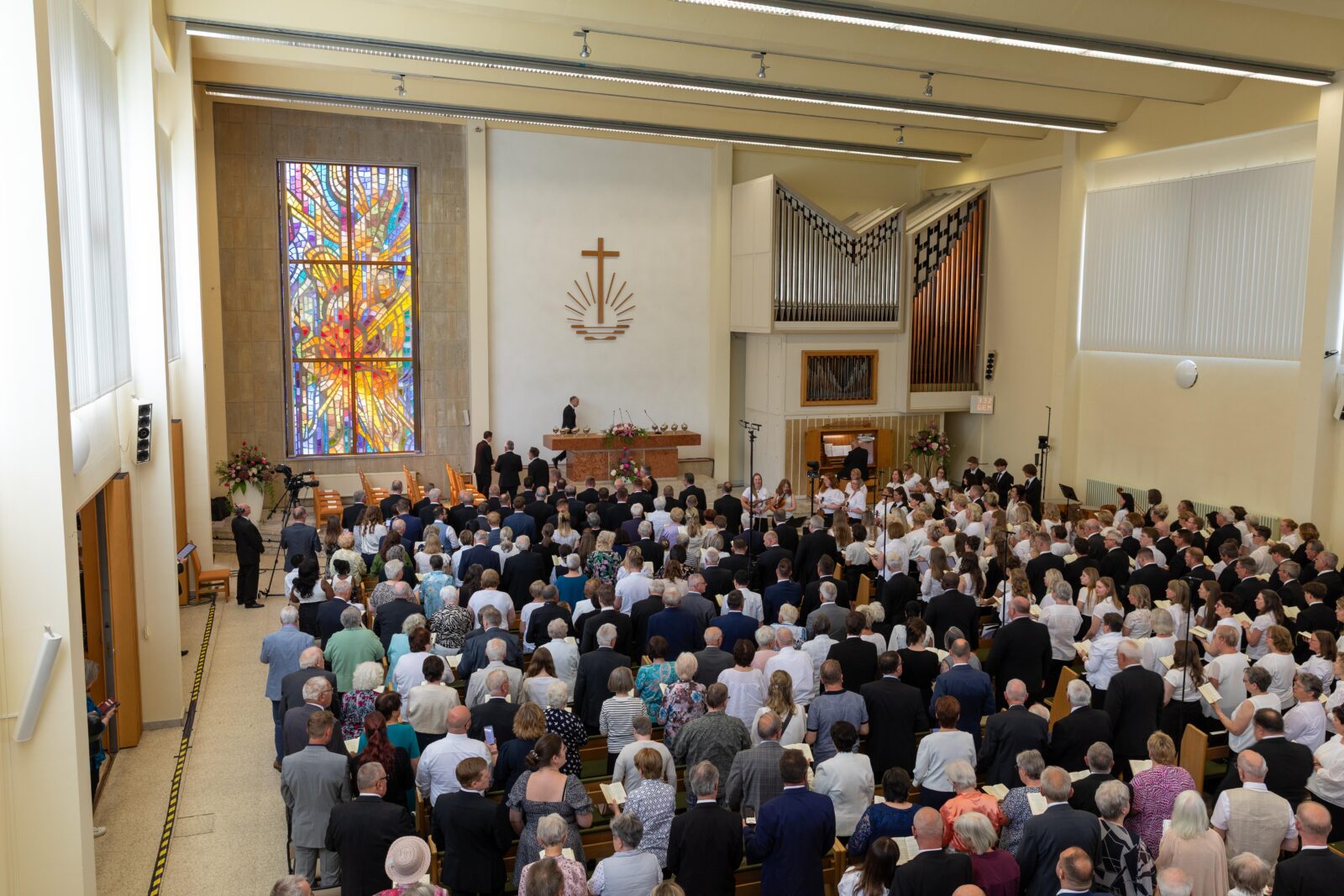
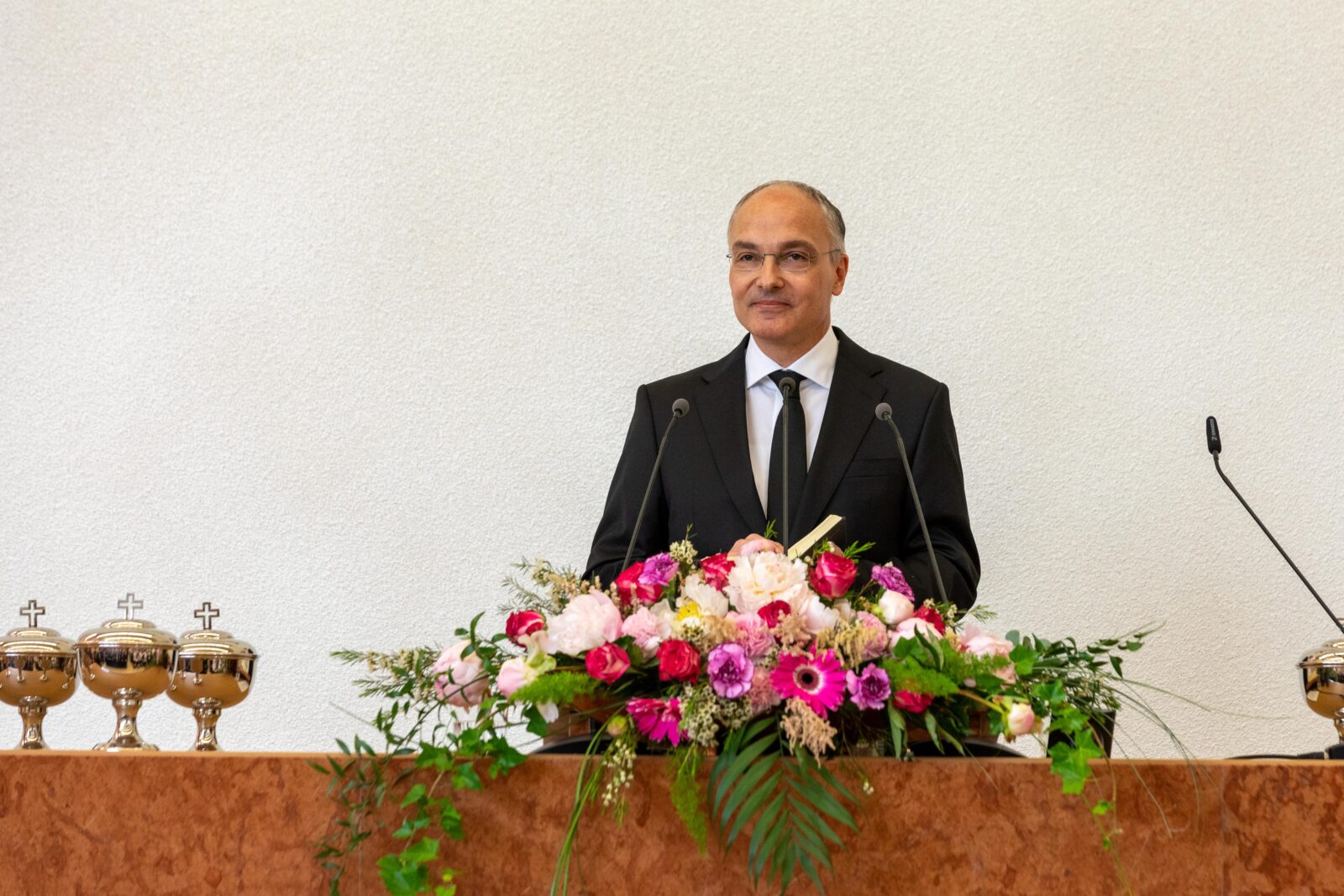
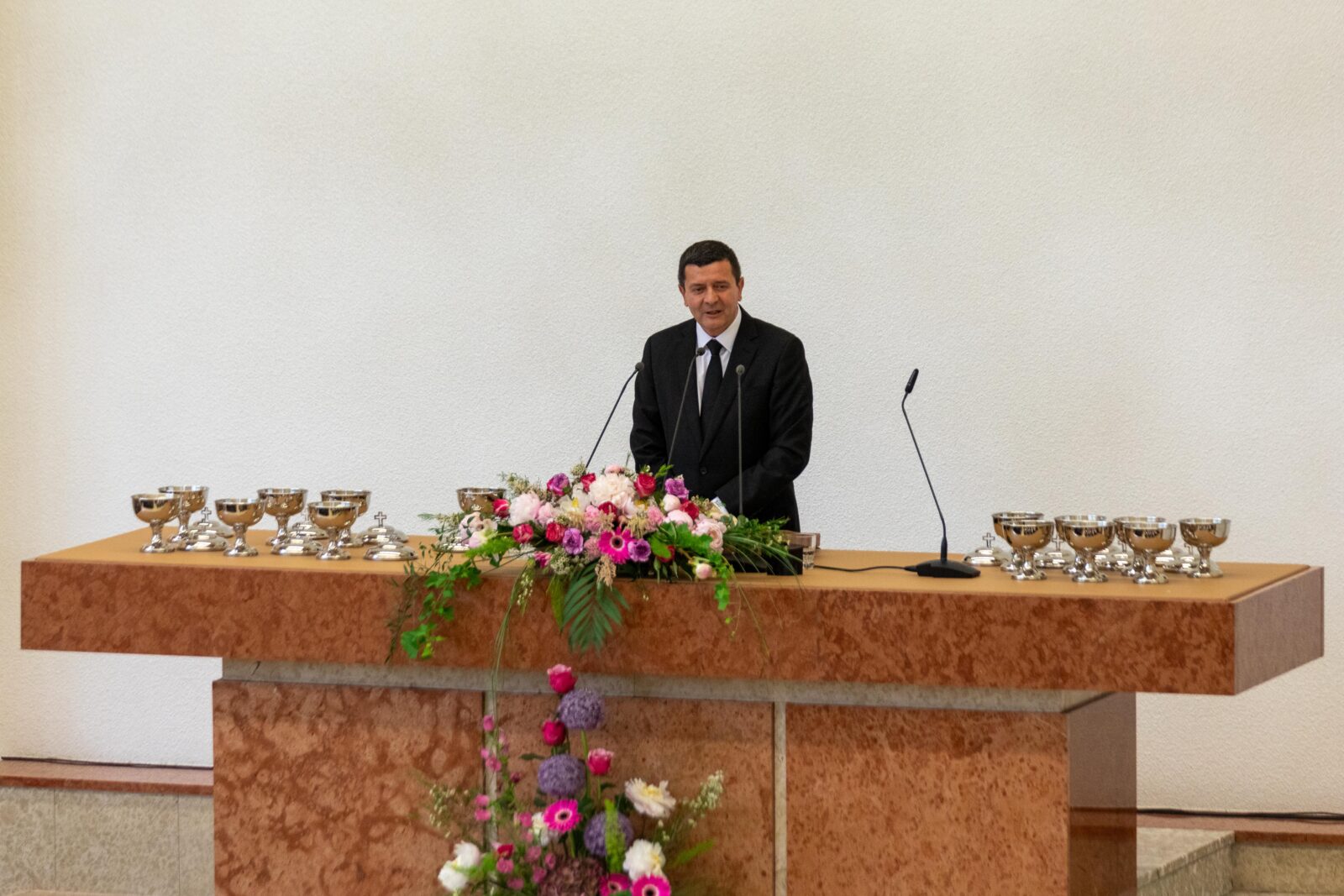
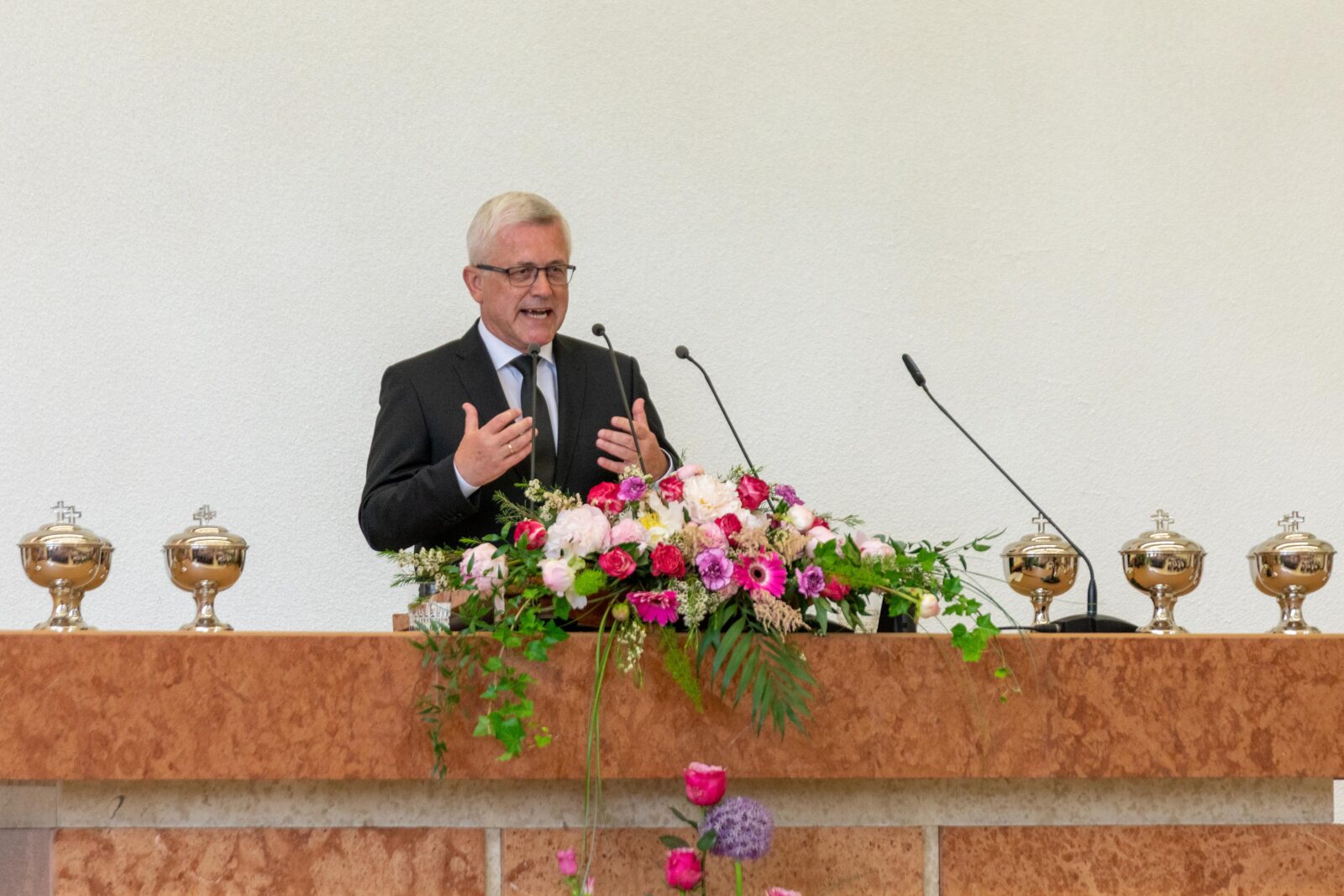
This was the image that Chief Apostle Helge Mutschler drew upon during his first divine service as Chief Apostle on 31 May 2026 in Stendal, Germany. He based his sermon on John 17: 20–21: “I do not pray for these alone, but also for those who will believe in Me through their word; that they all may be one, as You, Father, are in Me, and I in You; that they also may be one in Us, that the world may believe that You sent Me.”
At the table of the Trinity
One week after Pentecost, the Church celebrates Trinity Sunday, the Christian feast dedicated to the triune God. Reflecting on the course of the church year, the Chief Apostle explained how Advent, Christmas, Good Friday, Easter, Ascension Day, and Pentecost progressively reveal God as Father, Son, and Holy Spirit. On Trinity Sunday, all this comes together.
He captured the mystery of the Trinity with the words of Jesus: “You in me and I in you.” The Father, the Son and the Holy Spirit are distinct, yet perfectly one—in nearness, trust, relationship, and love. To illustrate this, the Chief Apostle referred to a well-known picture of the Trinity: three figures seated around a table, a chalice at its centre, gazing peacefully toward one another. Then he drew attention to a striking detail. The viewer’s eye is drawn to the open space at the table: “The beautiful thing about this picture is the open space at the front of the table. There is another seat.”
“That they also may be one in Us …”
From there, the Chief Apostle led straight into the Bible text. Jesus, he explained, not only prayed for His disciples and Apostles, but also for all who would come to believe through their word. “So, for all of us, for you and for me, wherever we may be right now, Jesus Christ intercedes for us.” This is the first great promise: no one is excluded from this prayer.
“There is still room, a seat at this table for you and for me—for all of us as a congregation. God is love, and love makes room at this table.” This is precisely what Jesus Christ desires: that people do not merely look at God from the outside but are drawn into fellowship with Him. “Jesus Christ intercedes for us that we may be literally drawn into this love of God, that we may be in God and God in us, and that we may be near His heart and He to ours.”
But how do we receive a place at this table? The Chief Apostle pointed to God’s invitation through His word, rebirth out of water and the Spirit, and Holy Communion—the bread and wine served at this table. “God has sent each and every one of us an invitation and has personally invited us through His word, through the word of those whom He sent, that is, through the word of the Apostles. This is the teaching of the Apostles. Be reconciled with God. Come and take your seat at this table.”
This fellowship is not something we must earn. Faith means: trusting in Jesus and taking a seat. “That is faith: to simply sit down on the chair that God has placed before us, and to simply be a child with the Father and a brother with the Son, feeling the unifying power of the Holy Spirit, who makes one out of the ‘I’ and ‘You’.”
“That they may all be one …”
Jesus’ second petition was: “that they may all be one”. And, as the Chief Apostle emphasised, “all” truly means everyone: the small congregation as well as the large one, those on the periphery as well as those at the centre. “The weak as well as the strong; the rich as well as the poor; the progressive as well as the conservative. There are those who have this point of view and those who have that point of view. All are to be one.”
“We are not expected to all think and feel the same way, share the same point of view, or be personal friends with one another. That is not what is meant at all. Rather, I in You, and You in me and us—united by the power of the Holy Spirit.” Unity arises when people with different perspectives focus on the one love and the one goal: the return of Christ.
However, the reality is often quite different. The Chief Apostle spoke of a fellowship that has been broken: with ourselves, with our neighbour, and with God. Since Adam and Eve, relationships have been fractured. “I am aware that chairs have been pushed away, and continue to be pushed away from this fellowship at the table.” Such fractures are evident in our relationship with ourselves, with our neighbour, and with God: when people deem themselves unworthy, push others away inwardly, or exclude God from their lives.
The way back is not one we can walk on our own. It is the cross of Christ. On the cross, God reveals Himself as the Loving One. There reconciliation becomes possible. “It is God, it is Jesus Christ, who pulls our chair back up to the table for us to have fellowship, and who tells us: ‘My child, you are so precious. You need not sit in some corner of the house, but I will pull your chair right up to this table of fellowship.’”
“That the world may believe …”
Jesus’ third petition turns our gaze outward: “that the world may believe”. The world is characterised by mistrust, fear, distance, and broken relationships. Yet beneath it all there is a deep human longing. “….in every heart there is still that longing because that is what unites us as human beings; it is our human nature—the longing to take our place once more and to have peace.” Trust can grow when people experience that within the congregation—despite all its imperfections—there is genuine fellowship: a togetherness sustained by the love of God.
In closing, the Chief Apostle directed everyone’s attention to the future. One day there will be perfect fellowship at the table: with God, with the living and the dead, sincere, and in perfect joy. “And then we will celebrate a feast. Not Trinity Sunday, not Christmas, not Easter, not Pentecost. We will celebrate God because we will recognise how beautiful God is.”
Until then, there is a standing invitation: the table is set, the seat awaits—and Christ draws the chair closer.
Photos: NAK Nord- und Ostdeutschland