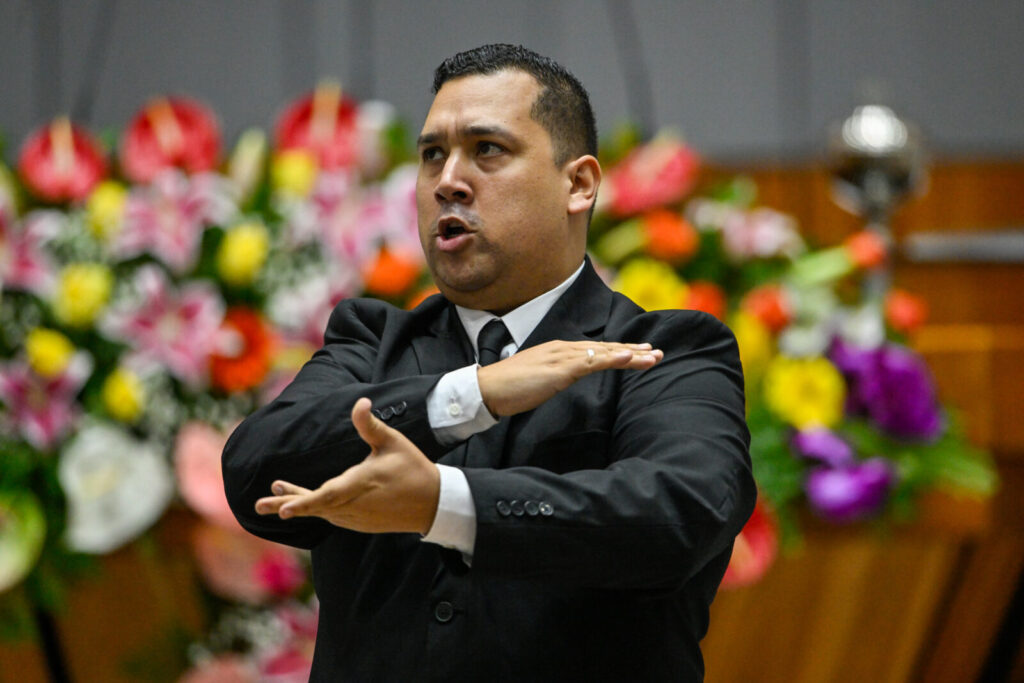




Not every moment can be grasped immediately. Pentecost in Cape Town was such an experience: a divine service, music, silence, global fellowship—and the lingering question of what remains when everyday life resumes its rhythm.
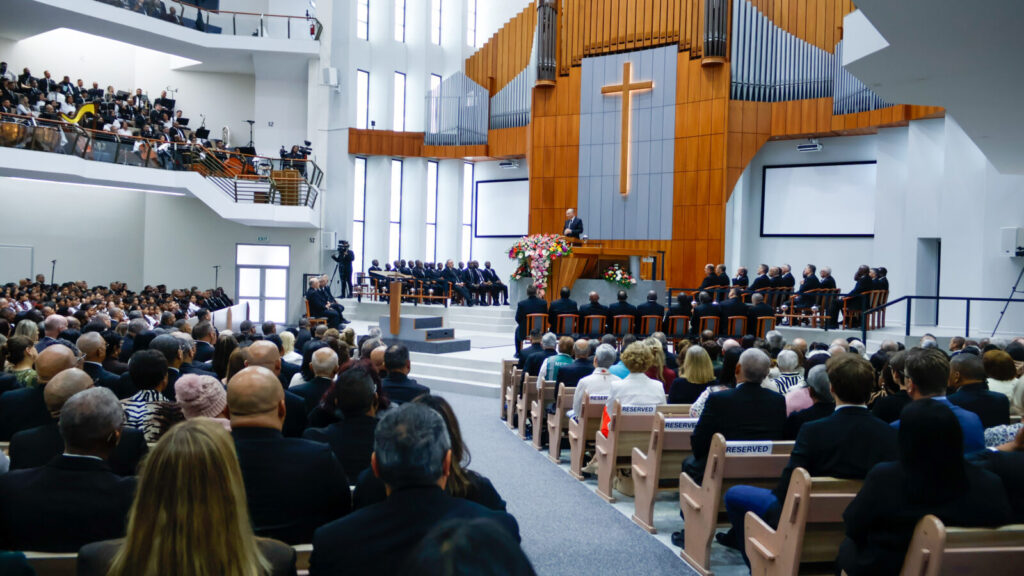
Once inside the church, it takes me quite a while to gather myself and find my inner calm. So, I just sit there for a while, listen to the music, look around the room, and try to slow my thoughts down a little. Then the organ begins to play. The opening hymn begins. The congregation rises. The divine service is about to begin.
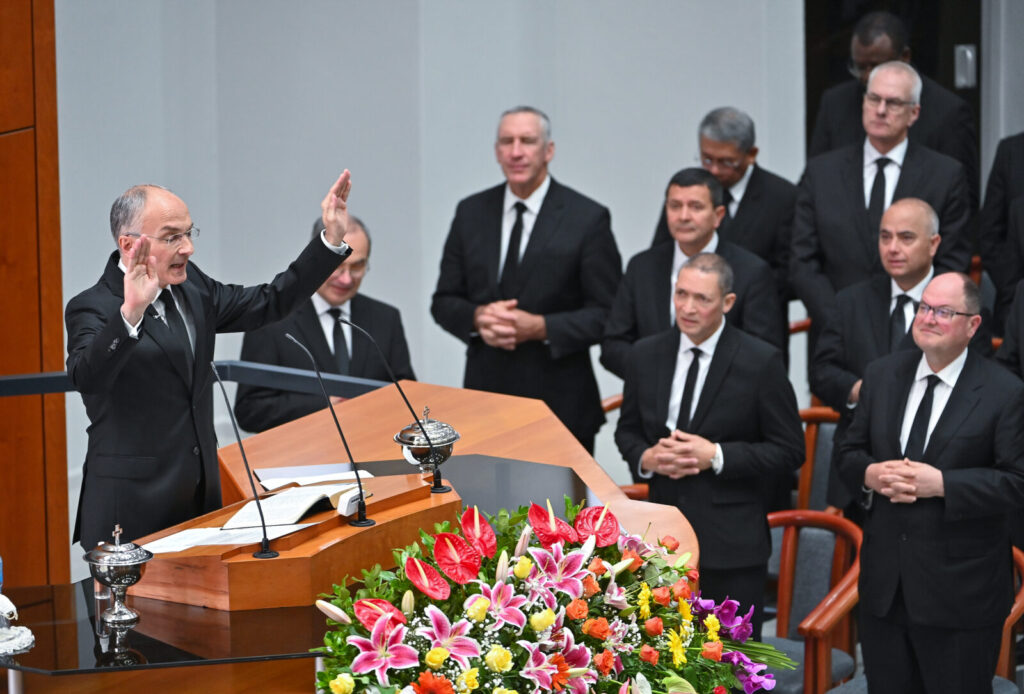
Many people are familiar with the Bible text, especially the ministers. The Chief Apostle bases his sermon on the Bible text printed in the Divine Service Guide. It is, in fact, a remarkable thought: thousands of ministers around the world read the same inspiring thoughts, prepare with them, and preach about them. And the Chief Apostle does the same today: he preaches about the church of Christ, about whom it belongs to, who is its head. And he talks about how its members are meant to treat one another if Christ truly remains the head.
This is followed by Holy Communion. For a moment, everything extraordinary about this day steps back behind what constitutes the very essence of every divine service.
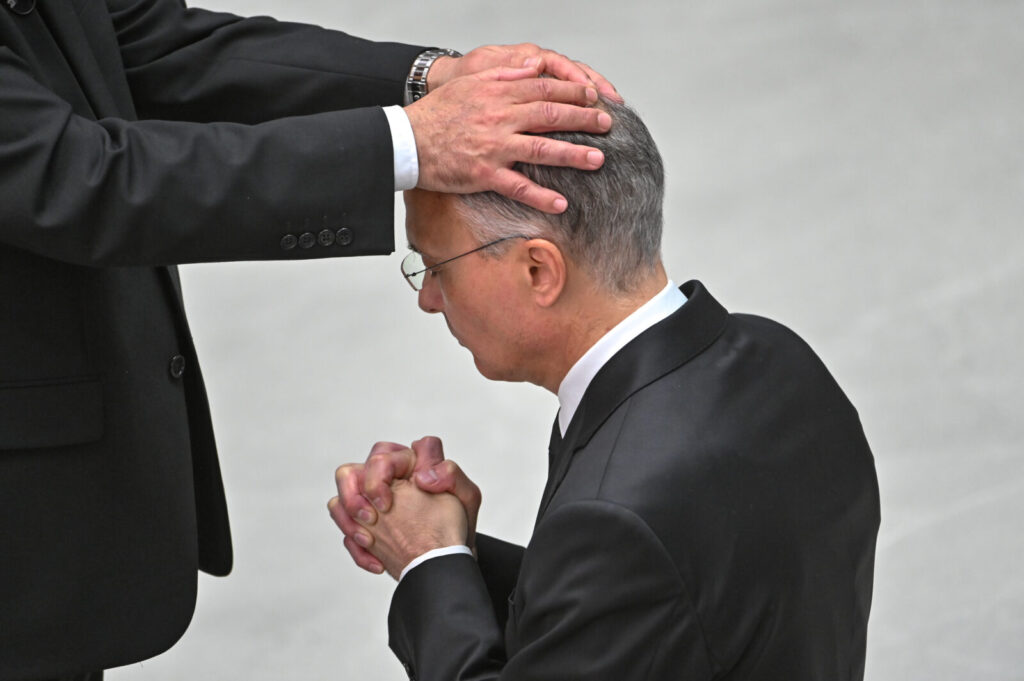
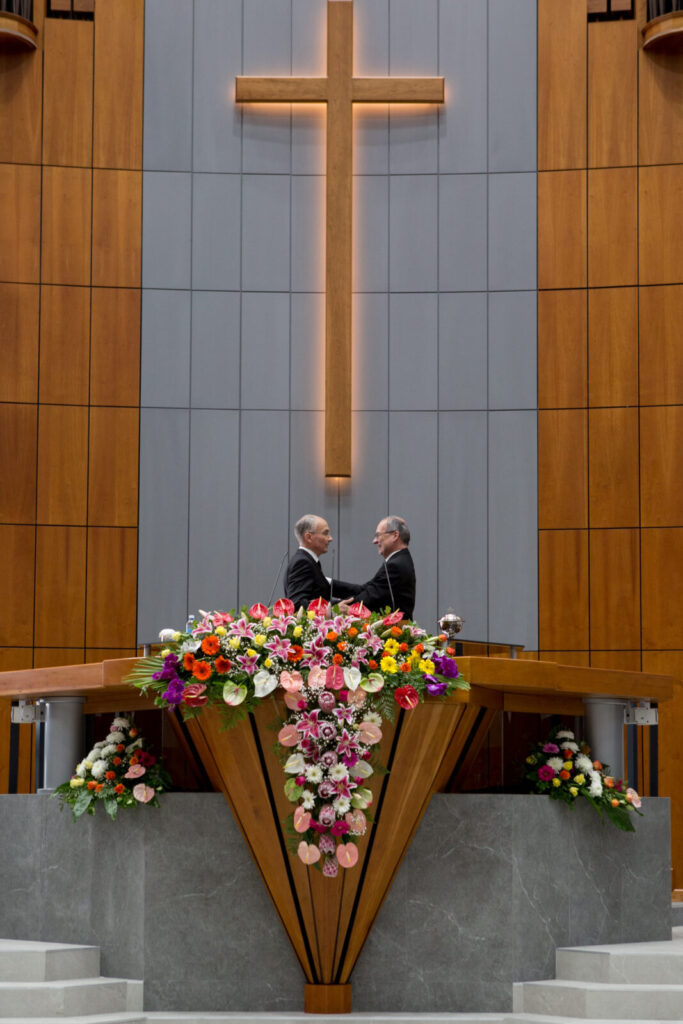
And then comes the moment everyone has been waiting for: the ordination of the new Chief Apostle. This takes place before the altar and, because of the position chosen, right in the midst of the congregation. Although the Chief Apostle Helper had been sitting right next to the altar, it now seems as though he is stepping forward from among the congregation—as part of the congregation—to stand before the Chief Apostle.
What remains particularly vivid for me is his yes.
It is not a quick yes. Not mechanical. Not casual. There is a moment of silence between the question and the answer. It is almost as if he deliberately gives this “yes” the space to take shape. Not hesitantly. Not uncertainly. This “yes” was not merely spoken; it was truly given.
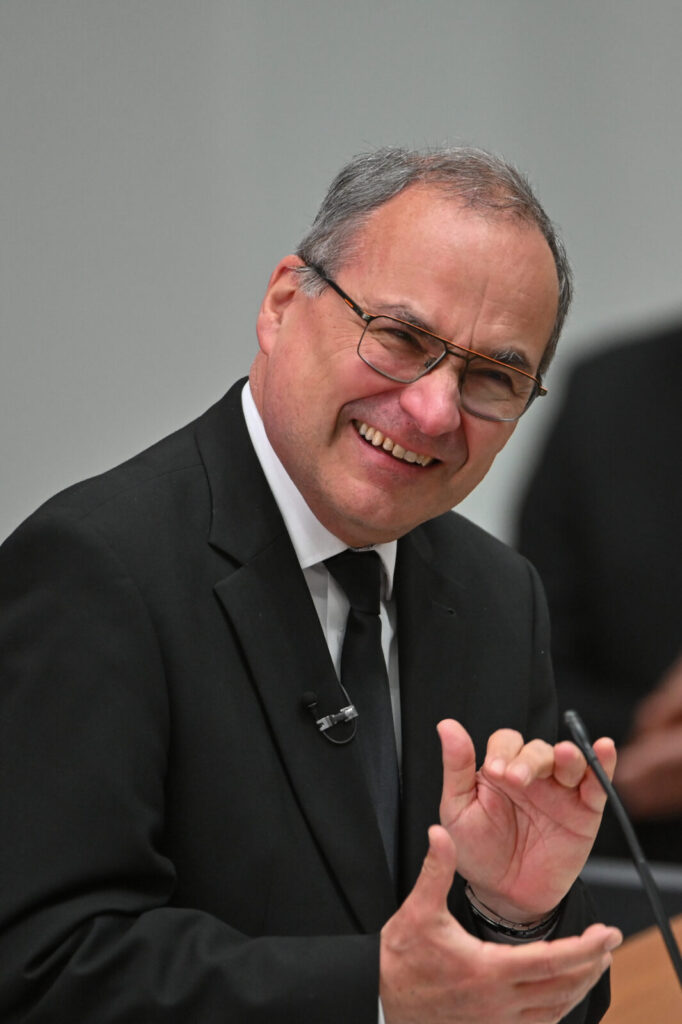
After the ordination, Chief Apostle Schneider ascends the steps to the altar with a spring in his step and exclaims, full of joy and enthusiasm, “We have a new Chief Apostle! What a blessing! What a joy!”
Soft, sporadic, tentative clapping can be heard, as if uncertain: is it OK to clap now? Is it appropriate to clap now? Or is this moment too great for that? And then Chief Apostle Schneider himself resolves this awkwardness.
He begins to clap heartily. Warmly. In his easy, approachable manner, with that distinctive way of never wanting to suppress emotion artificially.
And suddenly the whole church bursts into applause. Not like at a performance, but more like a shared expression of gratitude, relief, and joy.
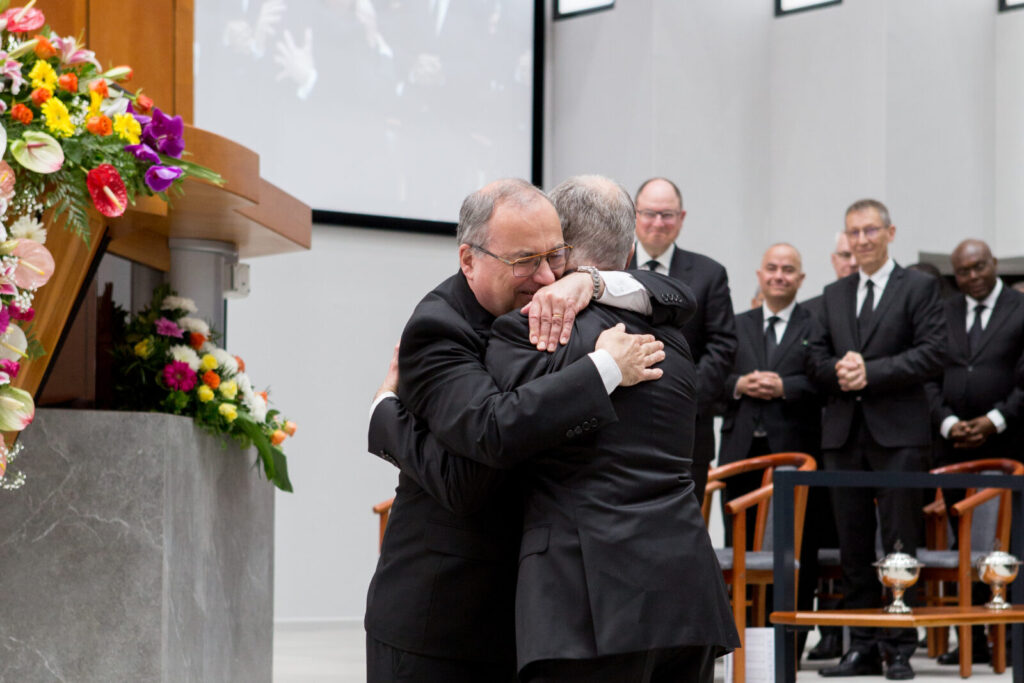
Before Chief Apostle Schneider finally hands over responsibility to his successor, he addresses a few more words to the worldwide congregation. Then he passes on the leadership of the Church to the man who is now going to send him into retirement. And the latter does so in exactly the right way—taking his time for it. Because gratitude, as he makes clear, must not remain unspoken. After all, the man standing before him has led the Church for thirteen years—a church in which diversity is not seen as a disruption, but as a source of richness—and in which unity is nevertheless preserved.
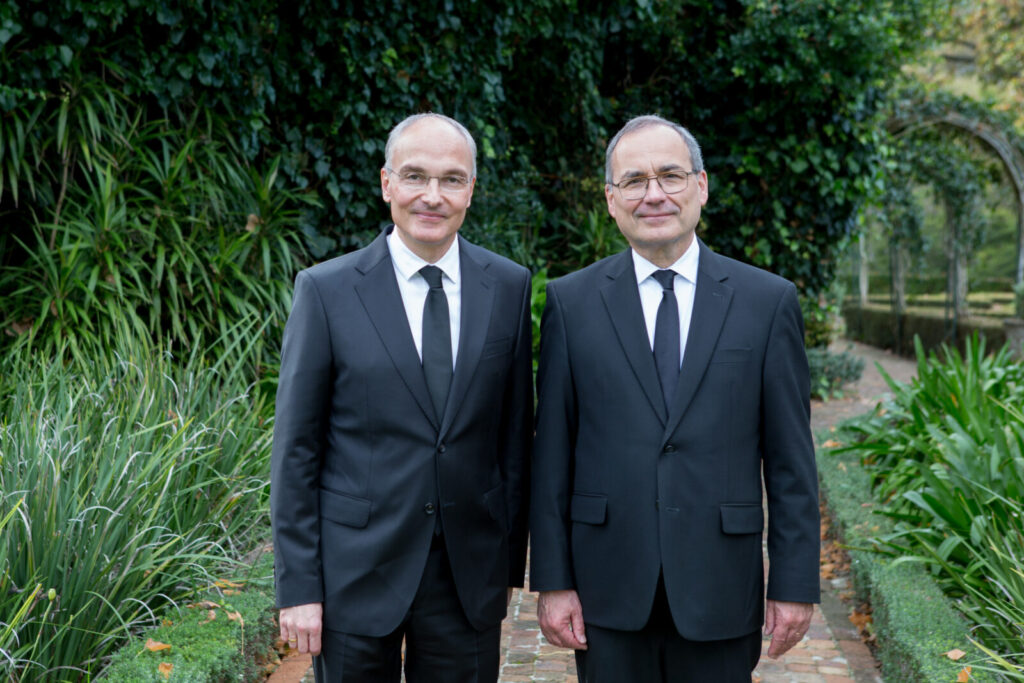
For a few minutes, two active Chief Apostles stand together at the altar. One is only steps away from retirement, the other at the beginning of his ministry. And both belong together, for the Church does not thrive by leaving its past and origins behind, but by shaping its future from them.
When Chief Apostle Schneider is finally formally retired, the church hall falls silent. There is no great outward display. It is rather like a moment when thirteen years of ministry suddenly become strikingly present.
And then the new Chief Apostle concludes the divine service with a prayer and pronounces the benediction over a worldwide congregation—over people in different countries in vastly different life situations, yet united in the fellowship of the Holy Spirit.
As closing hymn, the choir will once more sing a specially composed piece. Chief Apostle Mutschler exclaims enthusiastically, “How beautiful is that! Unbelievable! That is heaven.”
Then he adds something that sounds almost like a personal profession of faith: he has hope for the future. Hope in a time when many people are losing hope. Hope for the church of Christ. Hope for a community that not does not merely respect the otherness of others, but loves them precisely for it.
As the congregation begins the closing hymn, we slowly leave the church. When we arrived, we were immediately drawn into the atmosphere. Now it accompanies us back out. Outside, we board the waiting buses. As they begin to move, everyone grows quiet. Not in a sombre way, but rather as if everyone must sort out for themselves what has just taken place.
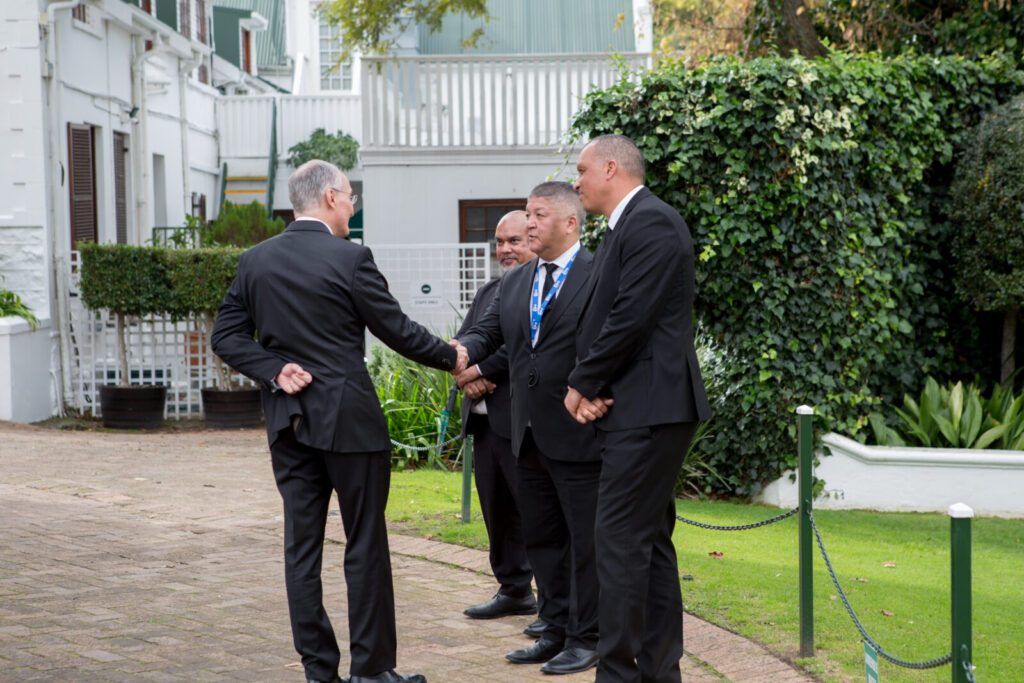
When we arrive at the hotel, everyone goes up to the two Chief Apostles and, in just a few words, expresses what cannot easily be put into words.
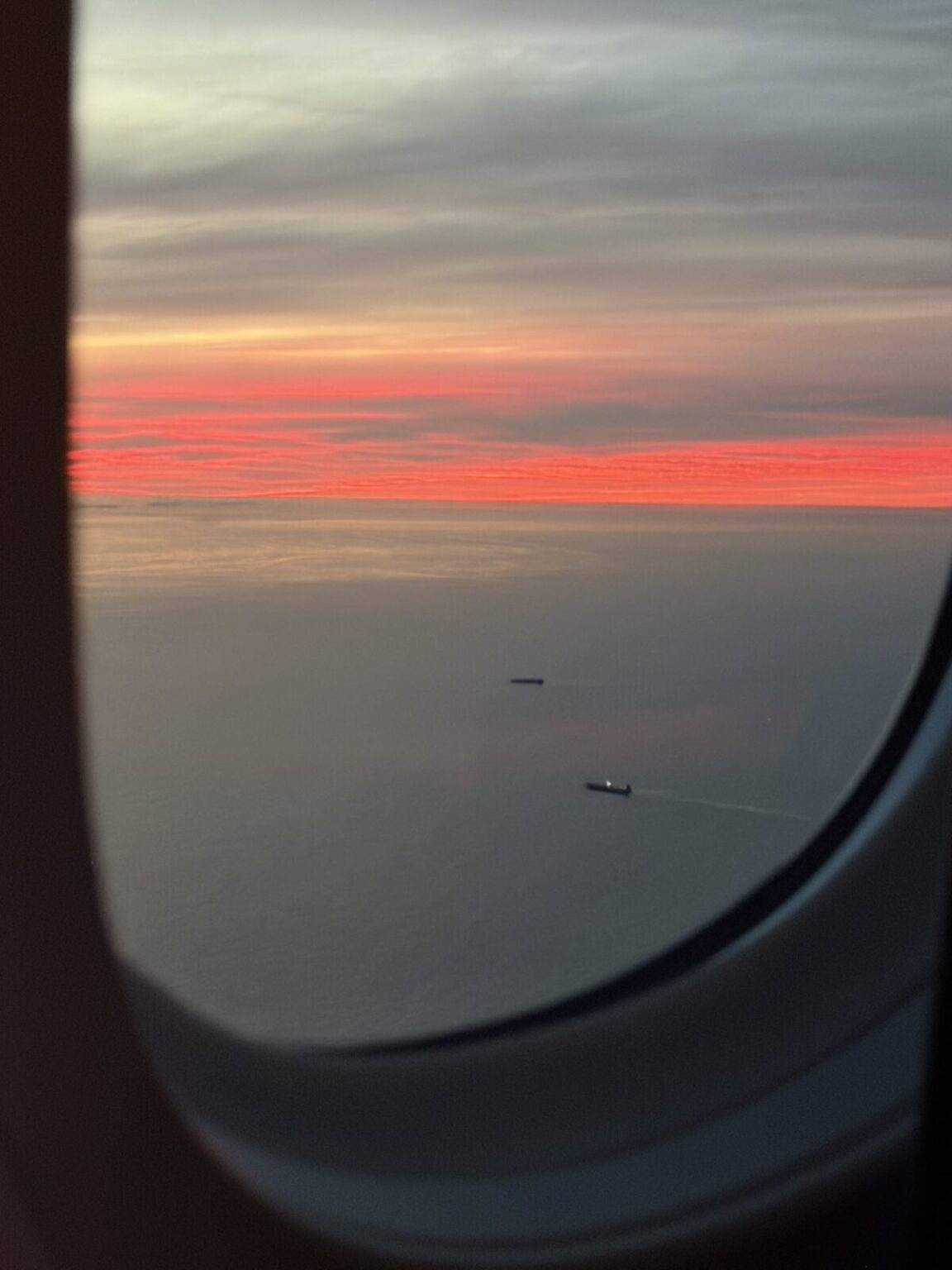
Less than ninety minutes later, we leave the hotel again and head for the airport.
An abrupt transition, in a sense—yet it does not feel like one. In fact, it feels more as if something has come to a truly good conclusion. A conclusion full of gratitude for our former Chief Apostle. And a hopeful beginning with the new Chief Apostle.
At the airport, there is a lively bustle.
A marathon had taken place in Cape Town over the weekend. People from all over the world had come to Cape Town for the event and are now flying home again. Many are still wearing their medals around their necks. I have no medal. And yet it does not feel as though I am returning home empty-handed.
Two weeks have now passed. Two weeks filled with everyday life—full of little joys and little annoyances, full of tasks, conversations, appointments, tiredness, beautiful encounters, and entirely ordinary human thoughts.
And yet I notice: something of this Pentecost celebration has remained. It lies within me as a memory—not concluded, not yet fully sorted out, but alive enough to be revisited time and again. Perhaps such memories require that we make intentional time. Time to think them over again. To listen again. To allow the images, words, and encounters to resonate once more. There is still so much to reflect on: impulses from the sermon, casual conversations, the music, little stories in between. There is too much of it to fit into a single article.
Perhaps this is precisely what such days are intended to do. They do not change our everyday lives as such, but they enrich them with something additional.