




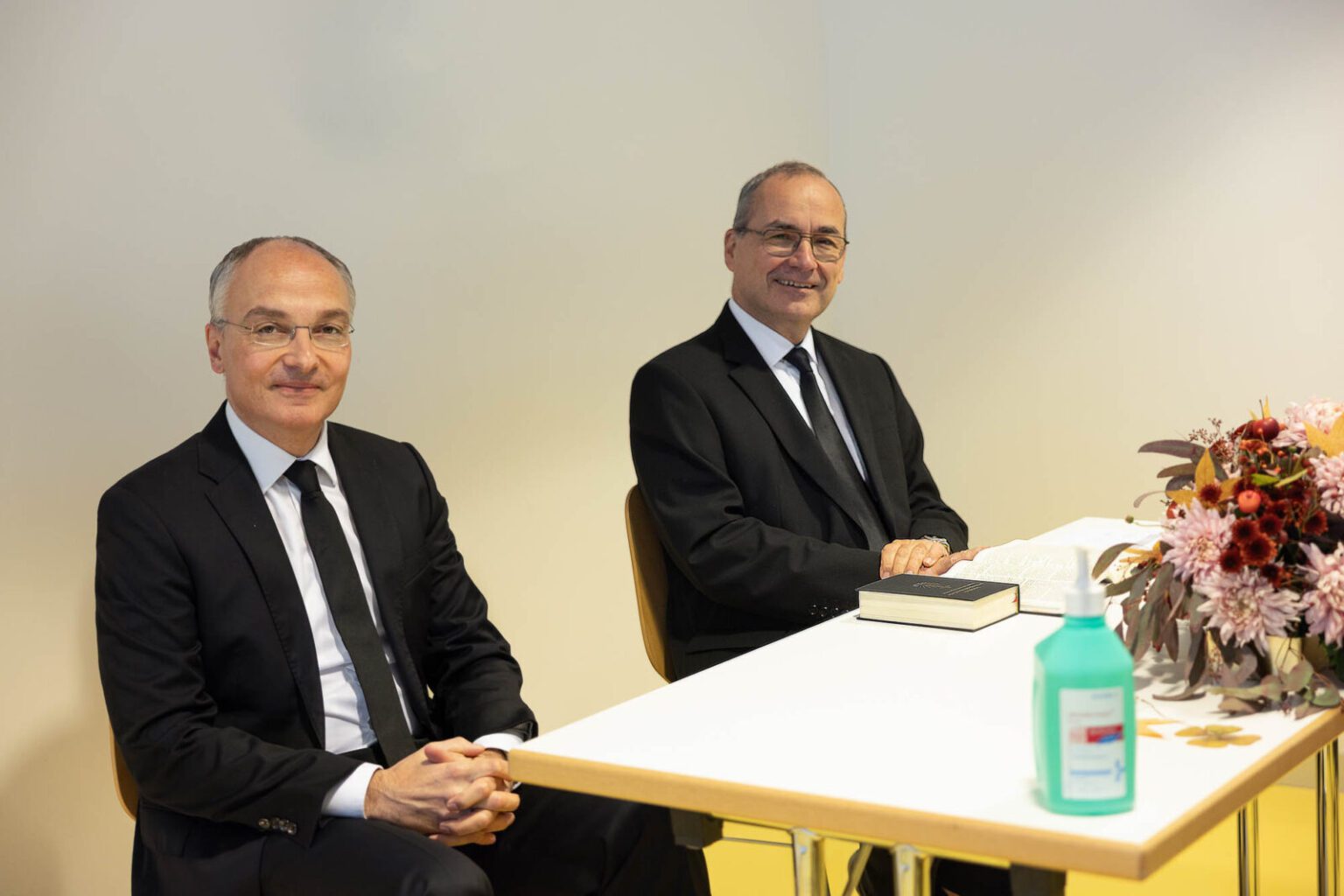
Those who take an interest in the gospel discover the love of Jesus, which carries us through all challenges. If we follow Him, His love will free us from fear and unite us.
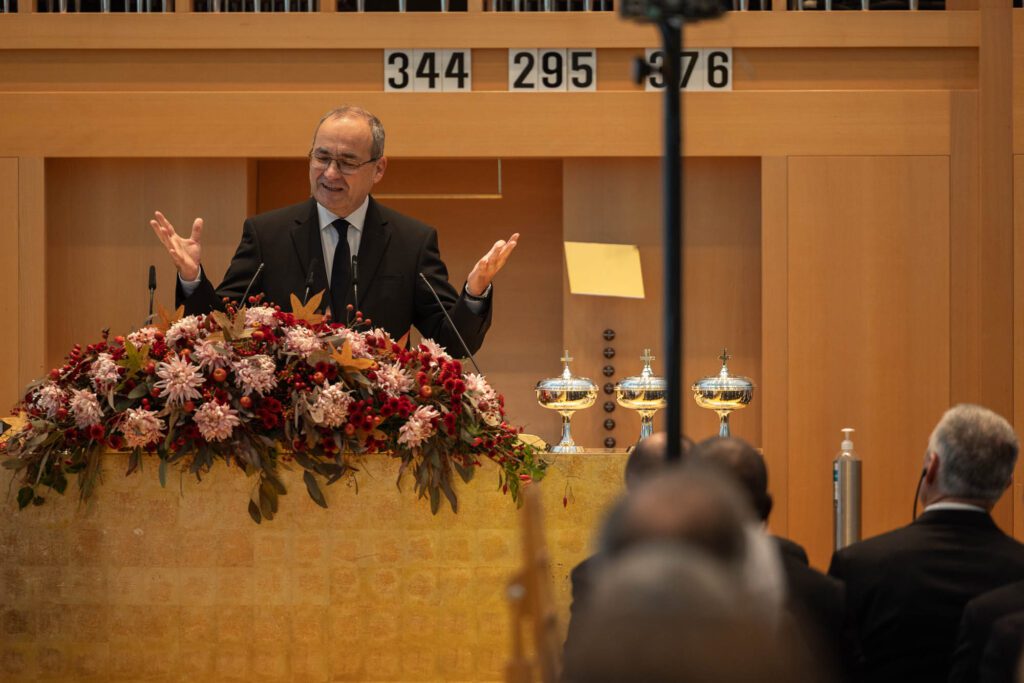
In the divine service in Bülach, Switzerland, on 9 November 2025, Chief Apostle Jean-Luc Schneider focused on a central question: What happens when Christ truly dwells in our hearts? Based on the Bible text: “For this reason I bow my knees to the Father, […] that Christ may dwell in your hearts through faith; that you, being rooted and grounded in love.” (Ephesians 3: 14, 17) he showed how faith, love, and unity go hand in hand.
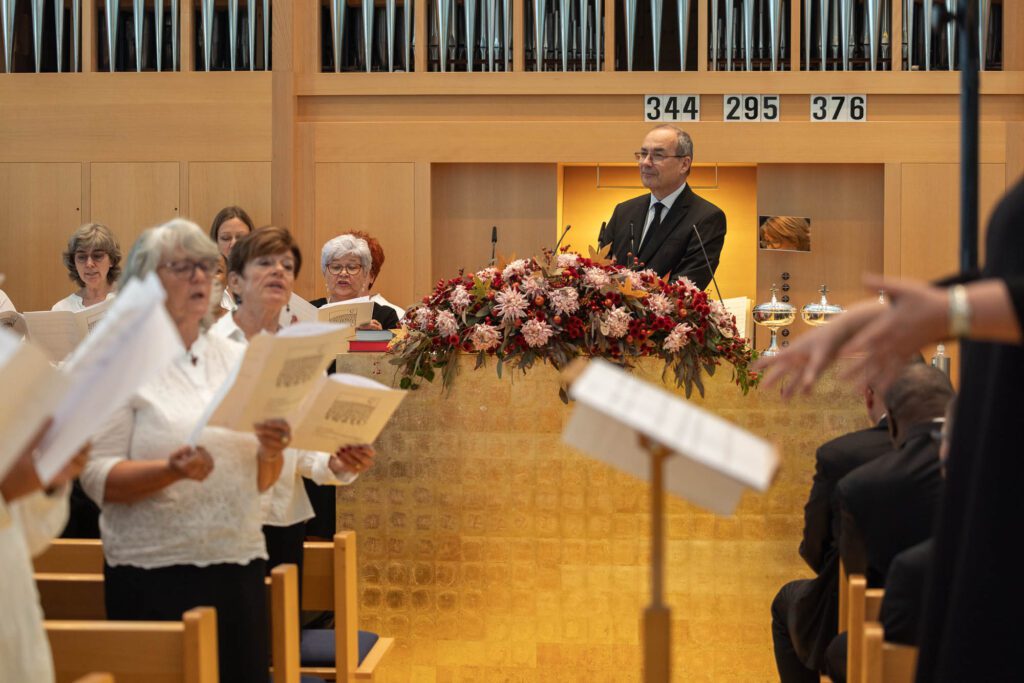
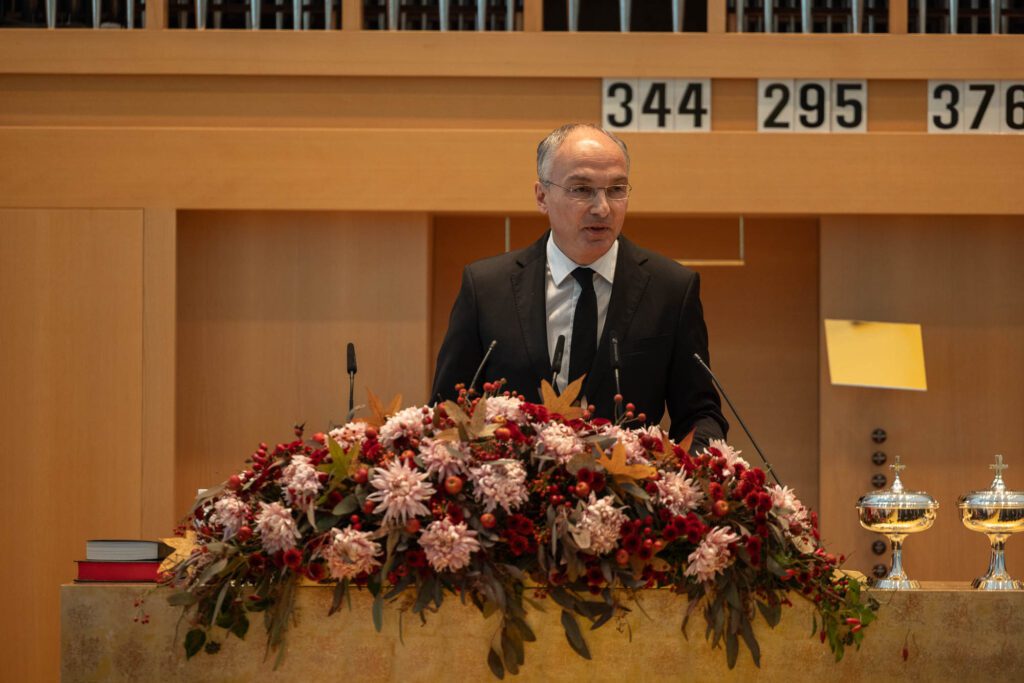
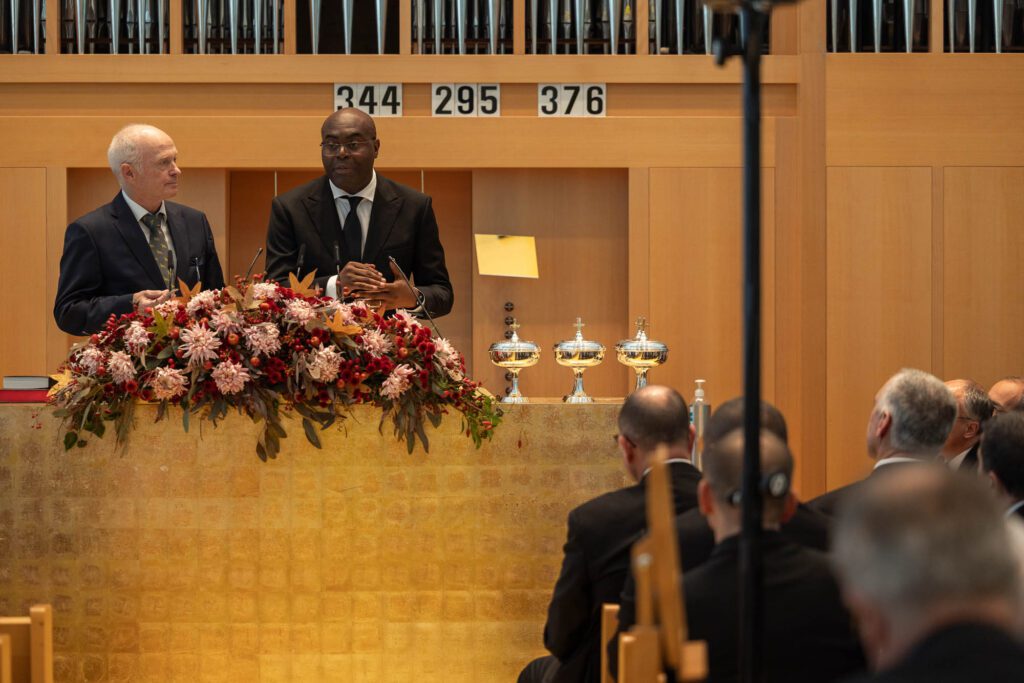
The Chief Apostle said that the fact that the divine service was being broadcast throughout the District Apostle Area Switzerland makes the often very small congregations aware that they are part of a large, worldwide community. Completing this picture was the fact that all the District Apostles active around the globe, who had gathered for a meeting that week, were present and made the international dimension of the Church tangible. “The work of God is much greater than what you see.” Based on this image of the worldwide Church, the Chief Apostle explained the mission of the apostolate: to prepare the believers for the return of Christ and to shape the Church in such a way that it can fulfil its mission in the coming decades. Another mission is to be a “fellow worker for the joy of the believers”. However, this joy is in danger of becoming emotionally flat, of going lost. Everything is on the same level: the news, opinions, social media, and the gospel. “Knowing what your neighbours did on holiday has become as important as knowing what is written in the gospel.” The mission of the Apostles here is to help restore priority to that which is truly important, namely the good news and the gospel of Jesus Christ.
Keep your eyes on Jesus!
In order to rediscover this joy, the Chief Apostle urged everyone to consciously focus on Jesus. He reminded them how the Son of God left His glory, became man, suffered, and died. In the gospel, we can encounter this Jesus: courageous, consistent, full of trust in God. Chief Apostle Schneider invited the congregation to take a renewed interest in the gospel: “Take the time to read in it. And let us simply talk about Jesus again: how He behaved, how He overcame, how He reacted. The more we occupy ourselves with this, the more Christ can live in us.”
He then sharpened the congregation’s awareness of how radically Jesus reacted to human being’s distancing themselves from Him: “He humbled Himself, became a human being, renounced His glory, His omniscience, His omnipotence, and became a normal, simple human being.” The Chief Apostle Helper added in his sermon, “He became a small child, had to learn to eat and drink, learn to walk, learn to write, and learn to read.” In a world where hatred is met with hatred and fear with fear, Jesus allowed Himself to be beaten, spat upon, and mocked. And He responded to all this suffering with, “Father, forgive them.” After His resurrection, Jesus asked Peter another well-known question that shows “that this faith and this love are neither theoretical nor complicated. The question was so simple, “Peter, do you love me?”
When love is resolute
Responding to this love with love and discipleship is, however, no easy matter. Jesus clearly said, “‘Follow Me, leave everything you have, deny yourself and follow Me.’ This is simply too much for many Christians.” We are too quick in modifying and playing things down and saying that we don’t need to see things quite that way: “That is the problem with some Christians, and I fear also with some New Apostolic Christians.” We think things are being exaggerated. It is too much and too extreme, and it does not necessarily have to be meant that way.
But those who follow Jesus in love will have no problem keeping God’s commandments, even if they are inconvenient. There is no problem in “giving up those things that separate us from Jesus Christ, from His mind and spirit. Then we also accept that trials arise from time to time precisely because we follow Jesus Christ.”
Fearlessly open – one in Christ
The Chief Apostle clearly identified a decisive opponent of this love: fear. Drawing on the expression “There is no fear in love”, he described how uncertainty about the future and social tensions induce us to withdraw and “secure our own little world” and think primarily of ourselves and our families. In this way, the horizon of love becomes increasingly narrow. Christ, on the other hand, “went to all people. He loves everyone without exception. Because He trusts in God, He opened Himself up instead of closing Himself off. He went to sinners and to strangers.”
This was emphasised by Chief Apostle Helge Mutschler, who addressed the widespread fear “of the future and of encountering one’s neighbour”. But when people truly understand how much Jesus loves them, this love dispels fear and frees them to reach out to others.
This fearless love gives rise to a willingness to serve one’s neighbour. Discipleship means giving the needs of others as much weight as our own—without denying ourselves and without retreating into our comfort zone. The Chief Apostle drew attention to the unity of the congregation, “We then become aware that we are together because Jesus has brought us together.” This means accepting one another, making concessions, and seeing conflicts from Christ’s perspective. “Let us be one in Jesus Christ because that is the condition for entering into fellowship with Jesus Christ.”
Thus, the Chief Apostle and Chief Apostle Helper painted a clear picture together: Christ wants to dwell in our hearts so that His love may dispel fear, strengthen our faith, ignite love for our neighbour, and unite the congregation. Those who focus on Him again, read the gospel, talk about Him, and trust Him can experience a foretaste of heaven today—in a love that unites and liberates.
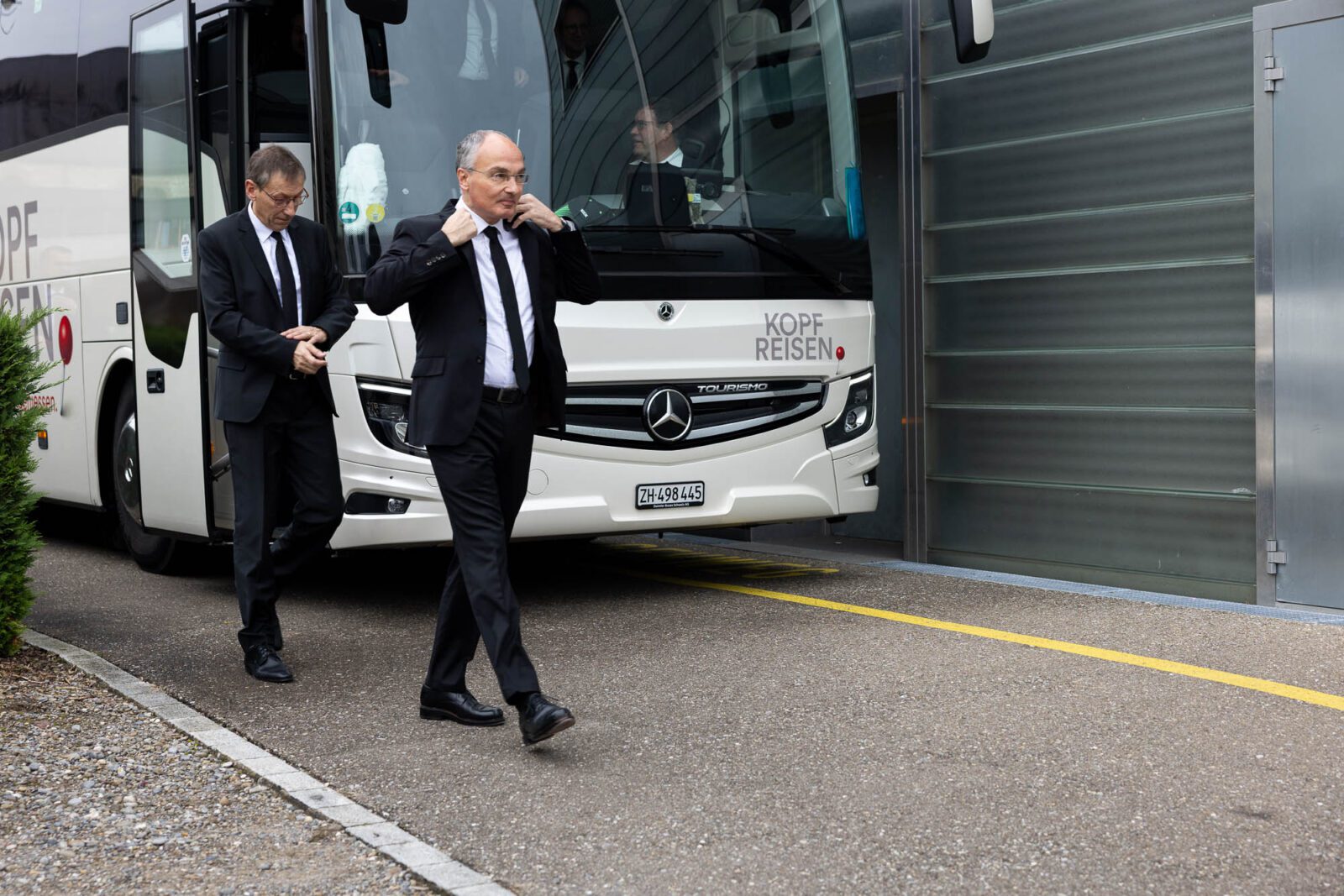
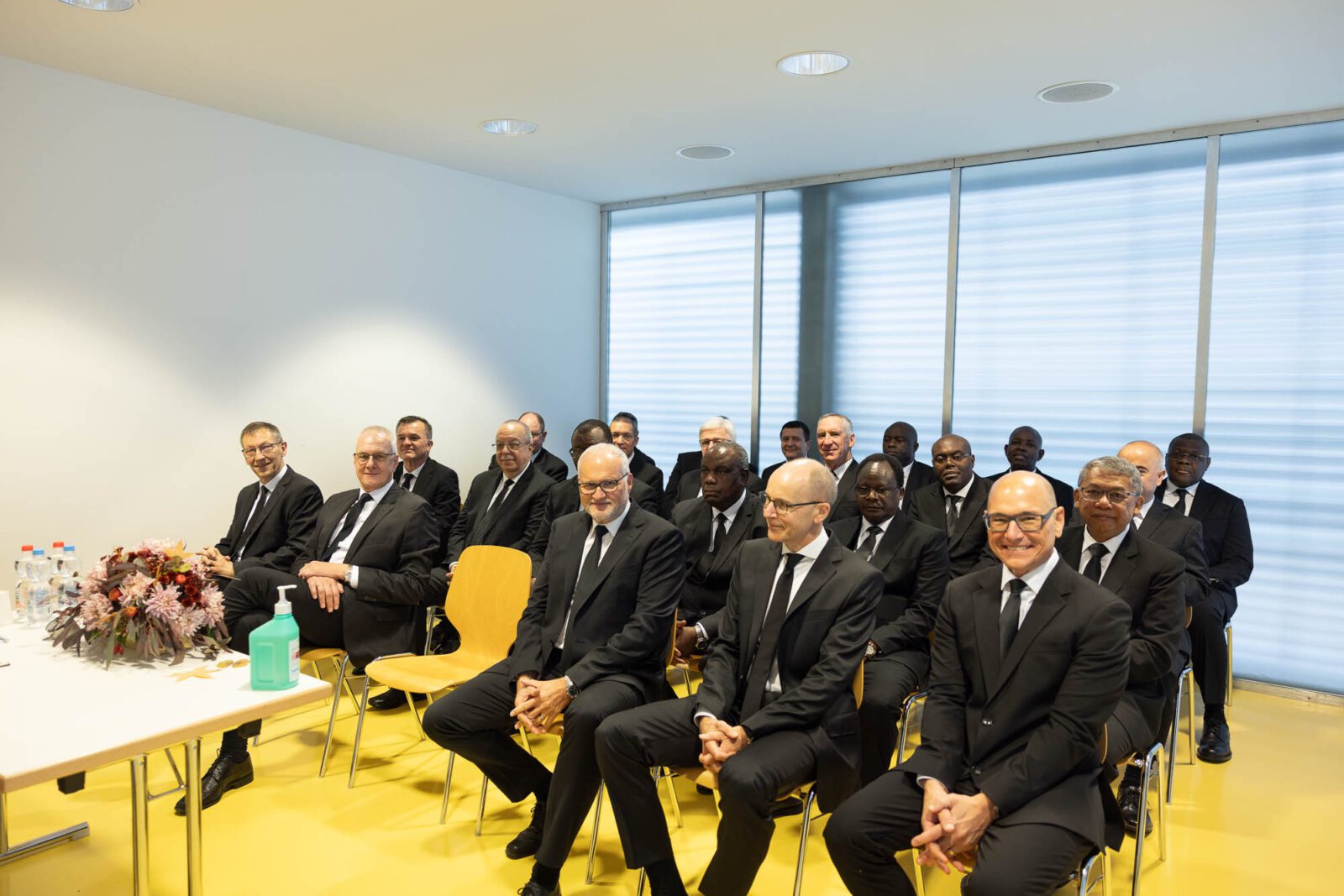

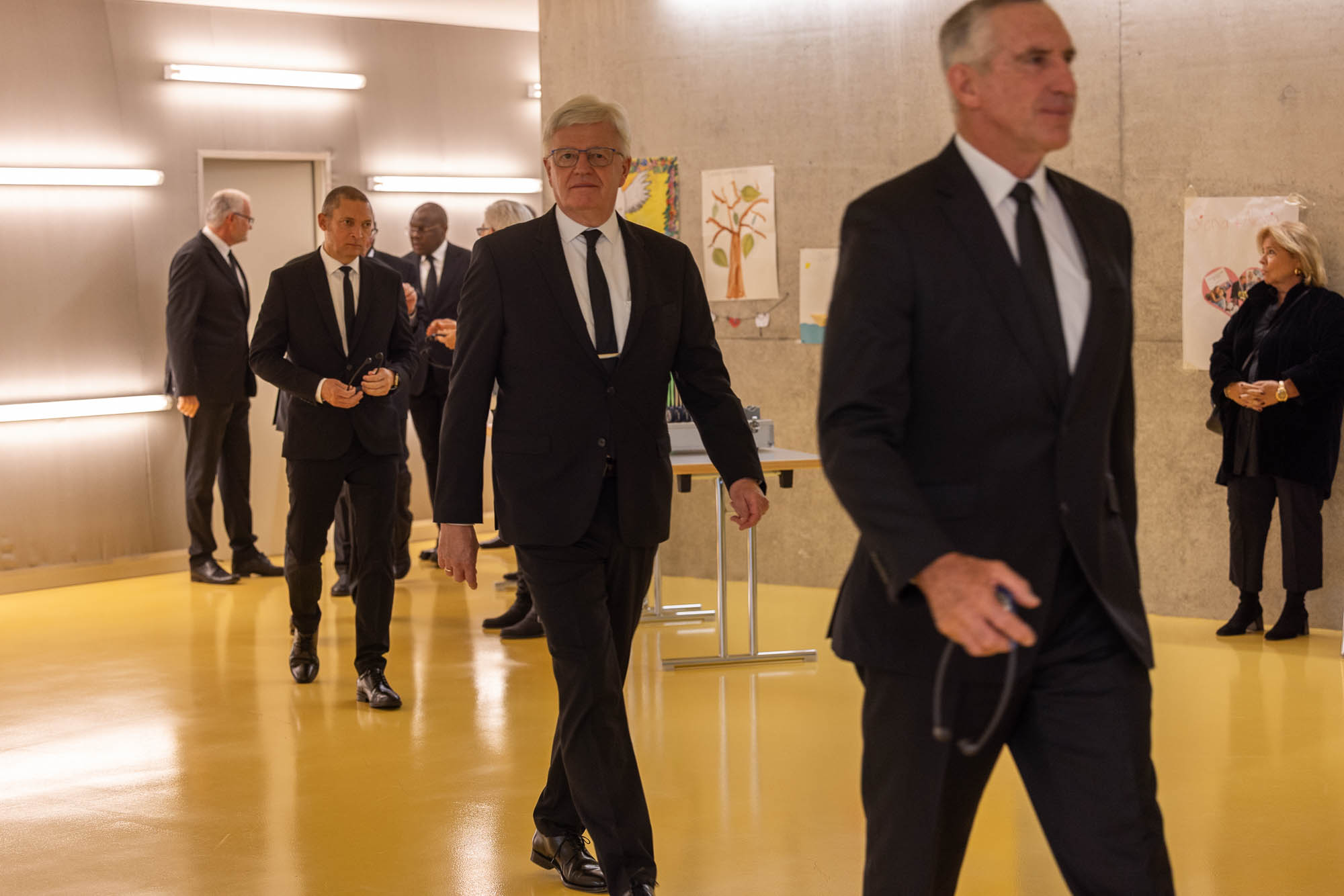
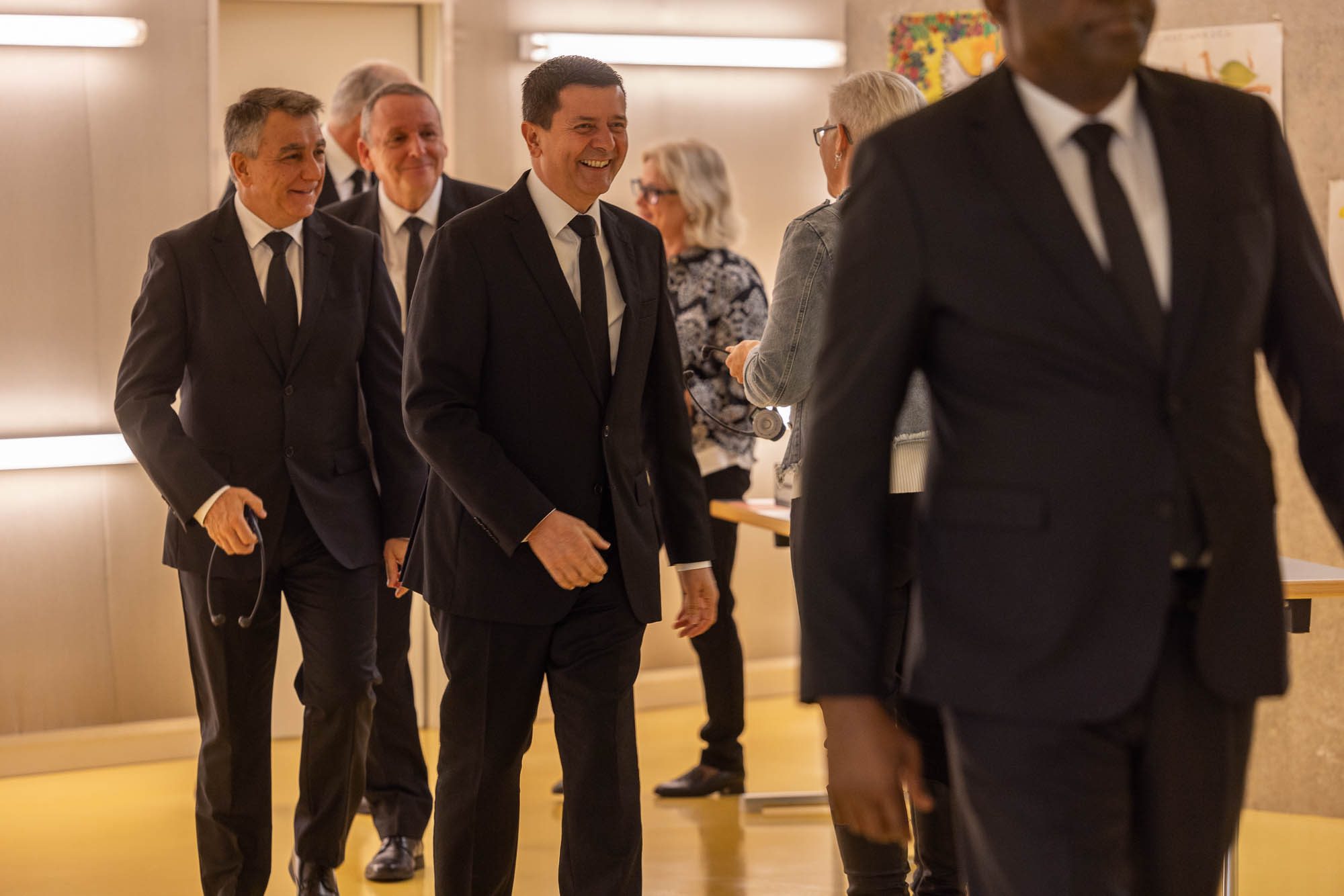
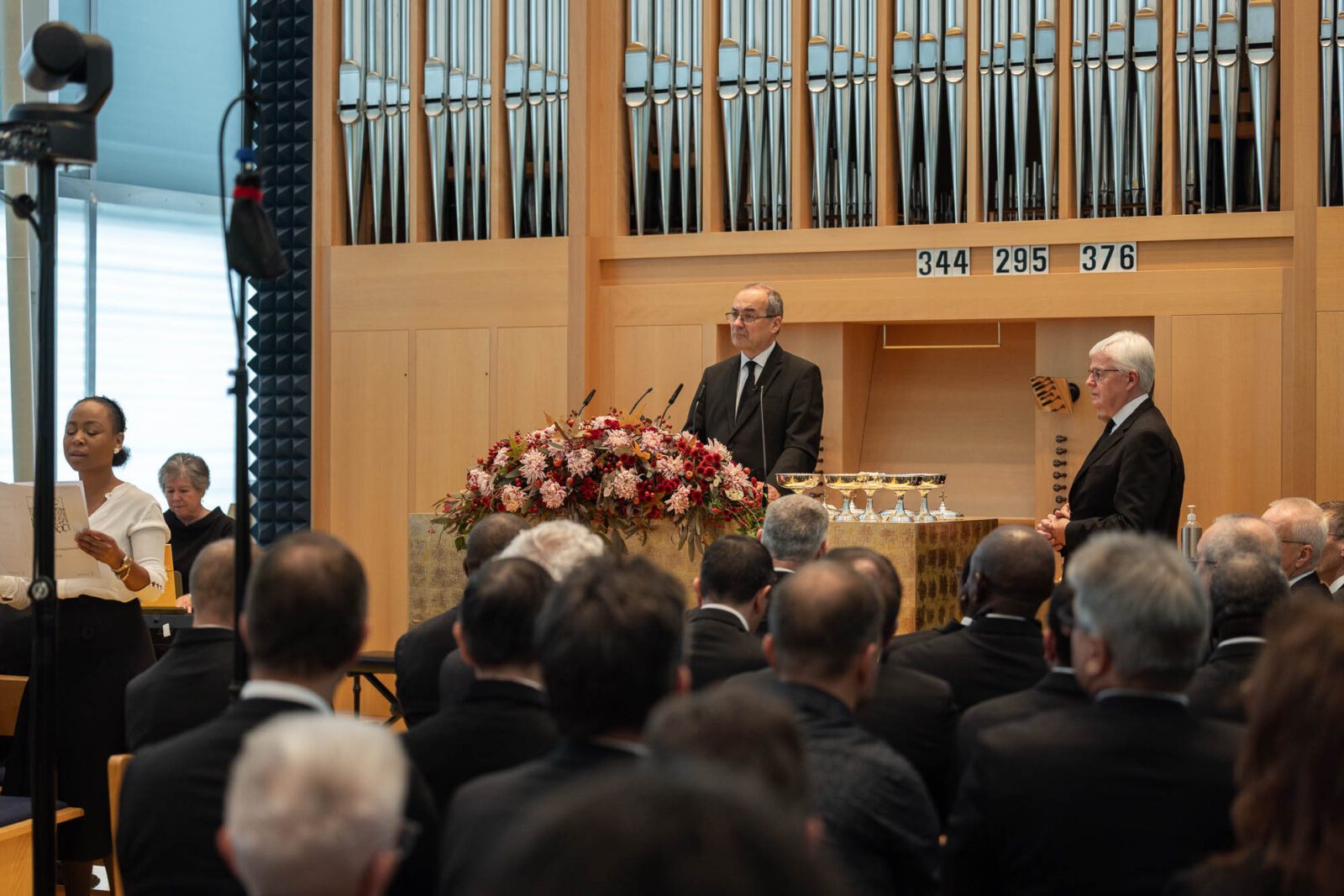
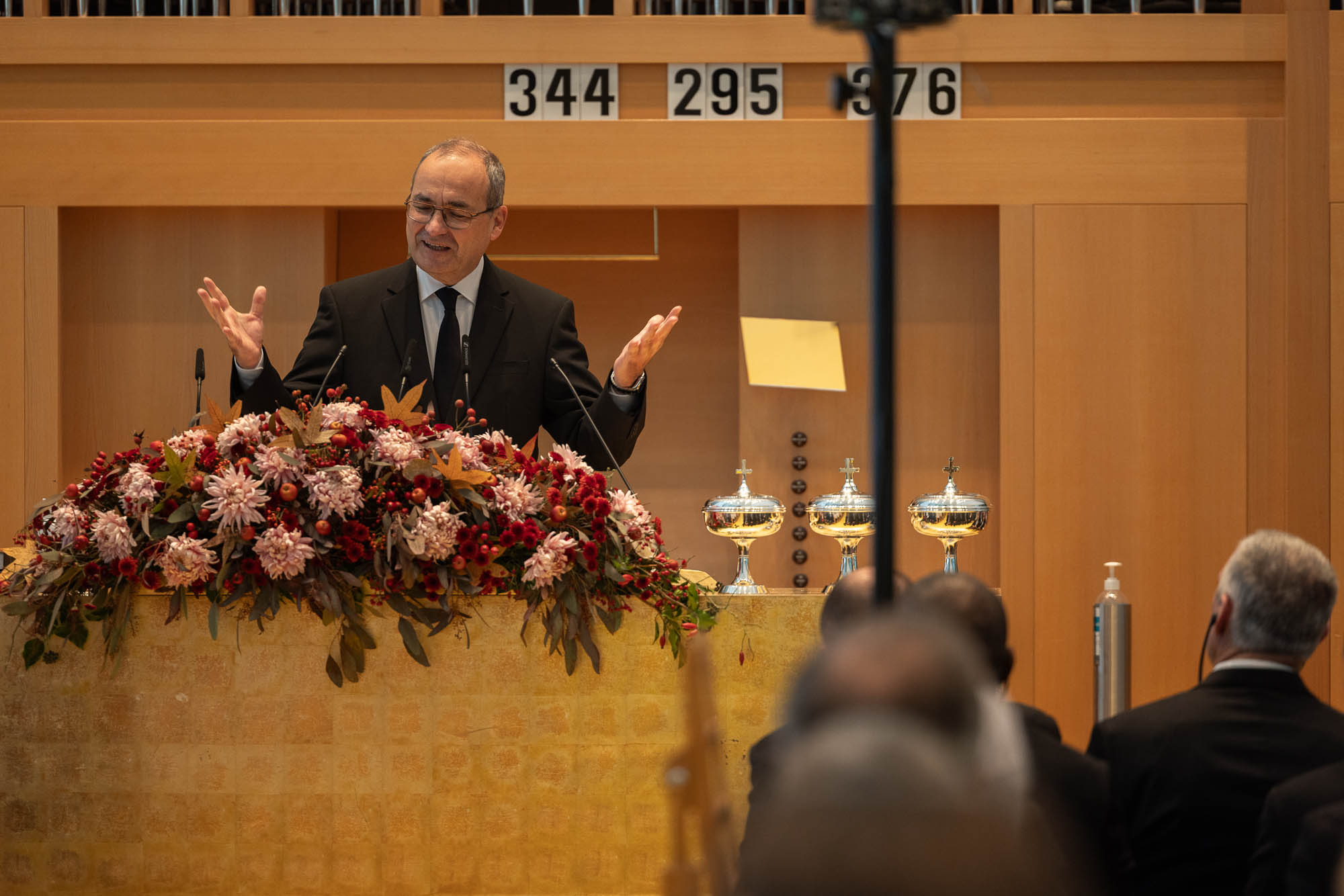
Photo: Neuapostolische Kirche Schweiz