


September 10, 2026
world.today
God’s kingdom on Roman soil
Listen to it
Who’s in charge? In Jesus’ time, this was a matter of faith, for Rome’s power reached right into the temple. A look at life in the Roman Empire reveals the tremendous impact of the message of the kingdom of God.
The first relations between the Judeans and Rome developed during the Maccabean revolt. Its leaders were seeking an ally. Around a century later, the great power exploited a succession dispute between two great-grandsons of the founding fathers to deal a crushing blow.
The emperor’s extended arm
In 63 BC, the Romans conquered the city of Jerusalem and desecrated the temple. As a result, Judea lost its independence. At times, it was ruled by Roman governors. At other times, by kings who owed their positions to Rome. Whoever was in charge locally had to collect tribute—taxes and duties—on Rome’s behalf and maintain order. Herod the Great embodied this system of rule.
The king of Judea controlled the appointment of the high priest and cracked down hard on any resistance. Although he had the temple in Jerusalem expanded into something of a wonder of the world, he also built temples and founded towns in honour of the emperor. For many people in Judea, this went too far. Protests and uprisings erupted repeatedly.
Resistance in words
The Roman occupation gave rise to many Jewish writings. The Psalms of Solomon, for example, appeal to God to raise up a king from the house of David who will restore order. The War Scroll from Qumran details the conflict as a final battle between the Sons of Light and the Sons of Darkness.
And in the First Book of Enoch, a Son of Man executes final judgement over the world. The dead rise, and God’s reign renews the earth. Such extra-biblical texts reveal the Jewish worldview that also shaped the gospels’ understanding of judgement, the Son of Man, and the kingdom of God.
Not one stone left upon another
Economic hardship, Roman oppression, conflicts over the temple, and tensions within society erupted in a revolt in the year 66. But the empire struck back. It took the Romans four years to capture Jerusalem. And the temple went up in flames.
The Romans executed prisoners and sold others into slavery. With the destruction of the temple, Judaism lost not only the centre of its religious life but also the heart of its entire worldview and way of life.
The gospels emerged during this period. What Jesus says in Mark’s gospel about the destruction of the temple took on particular significance in those years. And Revelation uses imagery that its readers would have recognised from their everyday lives. Anyone in Asia Minor who witnessed the emperor being worshipped could recognise that practice in the worship of the beast.
Travelling on Roman roads
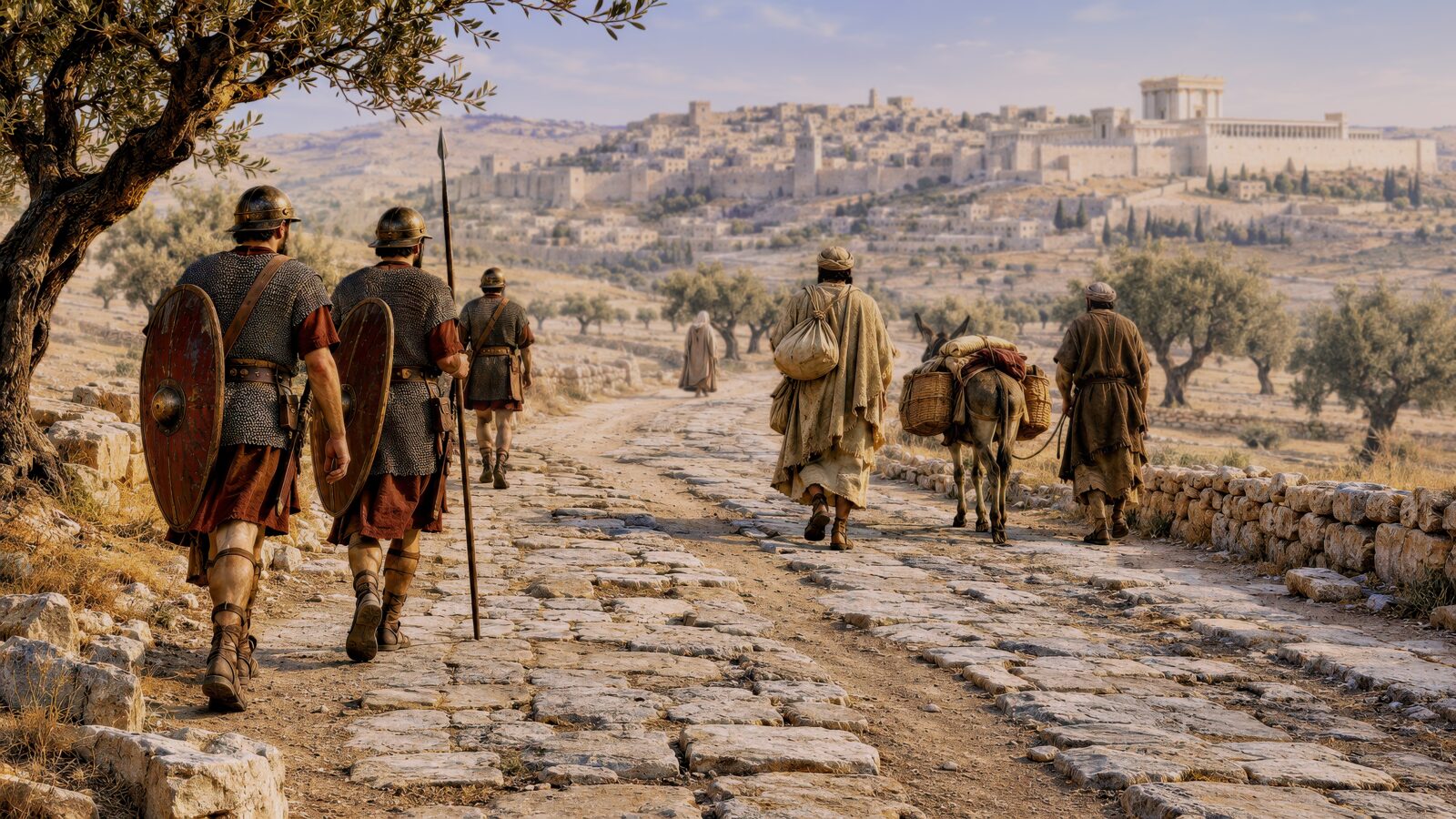
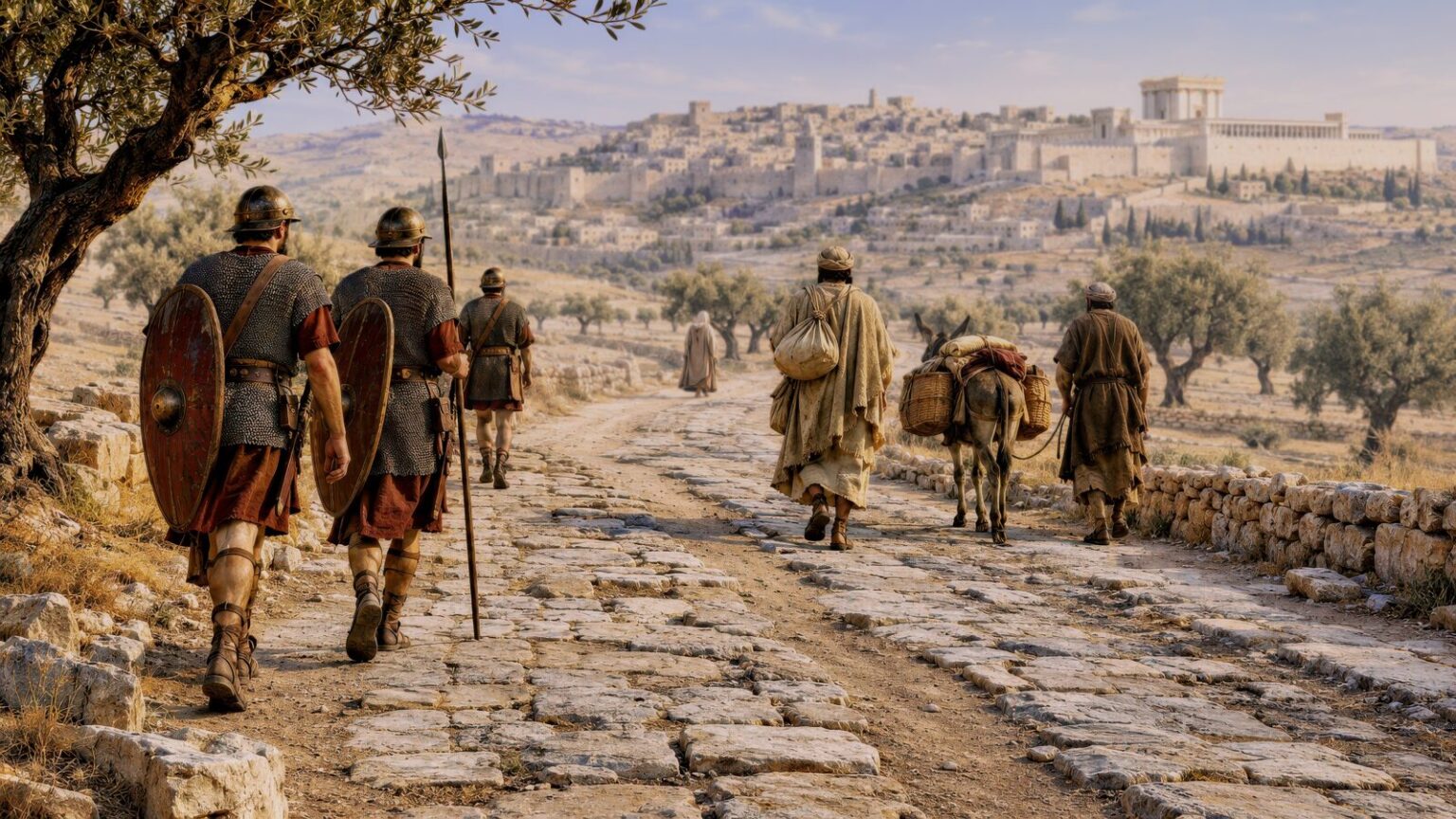
The Roman system of order created the conditions for the spread of Christianity. The relative peace throughout the empire and its network of roads made travel easier for missionaries such as Paul. Even the origins of Christianity were shaped by Rome: Jesus was executed by crucifixion, a Roman method of execution. The Christians proclaimed the Crucified One as their Lord.
But how were they to deal with Rome’s absolute claim to authority? Revelation makes clear just how threatening the emperor’s power could become. The letter to the Romans and the first letter of Peter therefore call on Christians to submit to the governing authorities. In this way, Christians were able to recognise state authority while reserving their worship for God alone.
The churches offered a glimpse of what God’s kingdom could look like. People from different backgrounds came together as one community. They shared what they had and passed on what strengthened them in their faith. In this way, they responded without violence to a world in which status, taxes, and weapons determined people’s lives. They placed their hope in the day when God would bring His reign to completion.
Image: AI-generated