




February 6, 2026
Listen to it
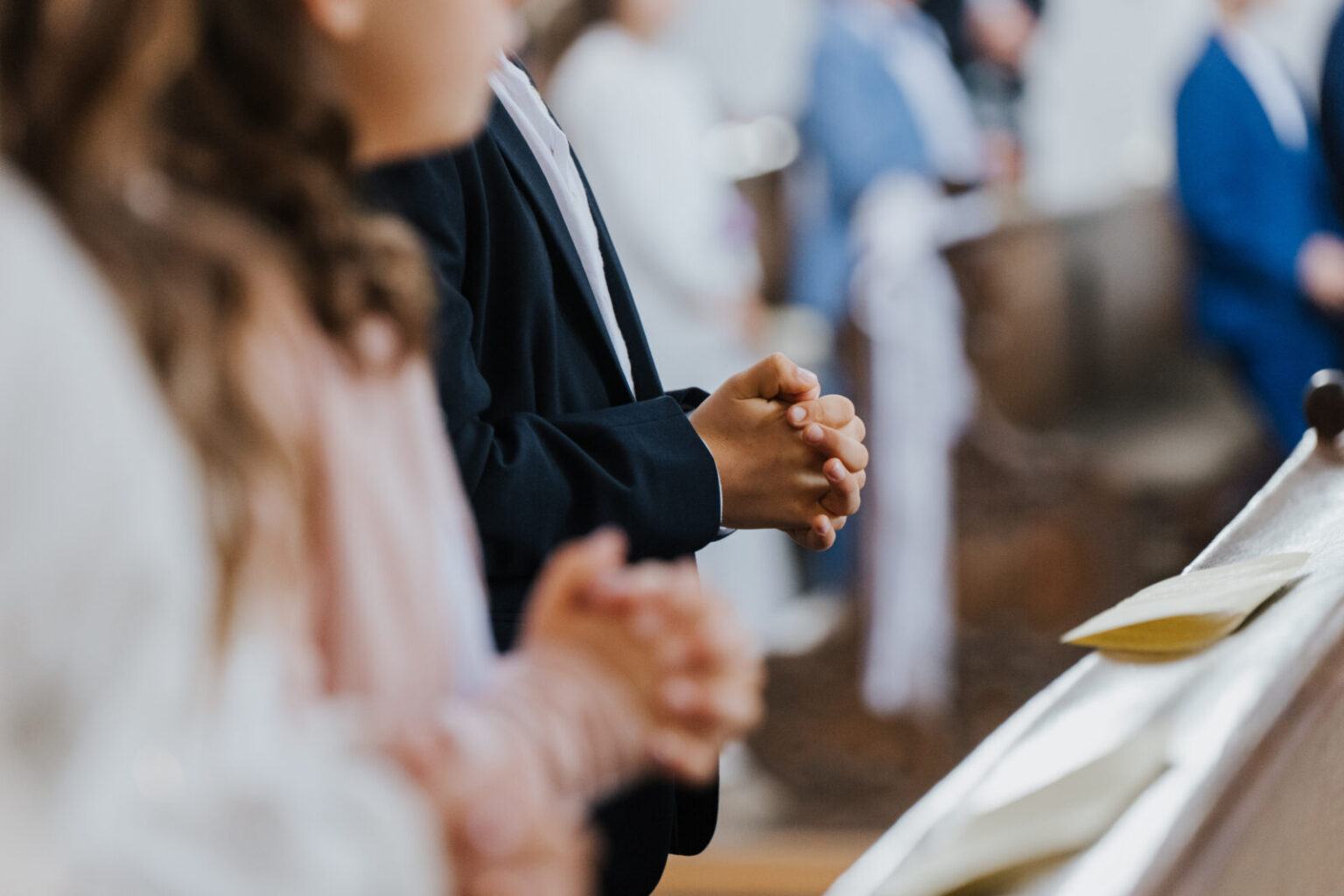
Anyone can pray, but a prayer in a divine service is more than a personal conversation with God. How are these prayers different from private prayers? A module on nac.academy provides answers to this question and more.
“Lord, bless us!” Words such as these can be heard in any divine service, but a closer inspection will reveal that all of the prayers uttered in a divine service serve a special purpose. They unite the members of the congregation and focus their collective attention on God. And this is precisely the kind of information that is featured in the e-learning module on “Prayers in the divine service”.
The learning unit takes approximately 20 minutes to complete and demonstrates how familiar words can be crafted into a conscious collective prayer. The unit is based on biblical statements, liturgical associations, and practical tips for everyday divine service.
Not about God, but with God
The difference sounds simple, but it is of fundamental importance: while the officiant speaks about God in the sermon, he or she speaks with God in the prayers.
This also changes the role of the minister. When praying, the minister is no longer speaking to the congregation as a teacher or preacher, but instead appears before God to intercede on behalf of the congregation. The attention should therefore not be directed to the person praying, but on the One to whom the prayer is addressed.
The nac.academy module goes on to remind visitors of the words of Jesus from the Semon on the Mount: prayers are not a stage for self-promotion, nor are they a competition for the most beautiful formulations.
Three prayers, three functions
There are several prayers in a divine service—and each one has its own particular emphasis.
- The opening prayer leads the congregation out of daily life and into the presence of God. It creates space for worship, gratitude, and reflection. The believers thus come into the presence of God together and prepare themselves for His word.
- The Eucharistic prayer focuses the attention of the believers on the celebration of Holy Communion. Here, gratitude for the faithfulness of God is combined with the plea for the Holy Spirit to become active and make it possible for the members to partake worthily of the sacrament.
- The closing prayer summarises the experiences of the divine service and carries them into everyday life. The focus here is on thanksgiving, intercession, and the plea for God’s ongoing presence and guidance.
More is not necessarily better
Using a lot of words in prayer does not automatically make the prayer better. This is yet another of the module’s core messages. Prayers in a divine service are to be concise and make it easy for the congregation to pay attention. They are not to comprise a second sermon, nor are they to incorporate detailed explanations for God.
What matters most is not the length, but the spiritual intensity of the prayer. It should be noted that each of the three prayers pursues different objectives and should therefore be structured differently.
God is present
Ultimately, it all boils down to one idea: prayer is to help make the presence of God tangible to the believers. This is achieved not only through words, but also through the minister’s inner attitude and personal preparation.
Those who pray bring the congregation before God. And this is precisely why it is worthwhile to pay special attention to these elements of the divine service as well.
nac.academy is the online training platform of the New Apostolic Church International. It offers courses on topics such as pastoral care, preaching, and the concept of ministry. These courses are open to everyone and can be accessed anytime, anywhere.
Photo: Hendrik – stock.adobe.com